. Scientific Frontline: Search results for Extinction
Showing posts sorted by relevance for query Extinction. Sort by date Show all posts

Wednesday, June 29, 2022

Shrimps and worms among first animals to recover after largest mass extinction

Reconstructed sea bed scenes (A) Pre-extinction, (B-D) Induan (early Early Triassic), (E) Smithian, (F) Spathian
Credit: Yaqi Jiang

Researchers studying ancient sea bed burrows and trails have discovered that bottom burrowing animals were among the first to bounce back after the end-Permian mass extinction.

In a new study, published today in the journal Science Advances, researchers from China, the USA and the UK, reveal how life in the sea recovered from the event, which killed over 90 percent of species on Earth, from their observations of trace fossils.

Life was devastated by the end-Permian mass extinction 252 million years ago, and recovery of life on Earth took millions of years for biodiversity to return to pre-extinction levels. But by examining trails and burrows on the South China sea bed, the international team were able to piece together sea life’s revival by pinpointing what animal activity was happening when.

Professor Michael Benton from the University of Bristol’s School of Earth Sciences, a collaborator on the new paper, said: “The end-Permian mass extinction and the recovery of life in the Early Triassic are very well documented throughout South China.

“We were able to look at trace fossils from 26 sections through the entire series of events, representing seven million crucial years of time, and showing details at 400 sampling points, we finally reconstructed the recovery stages of all animals including benthos, nekton, as well as these soft-bodied burrowing animals in the ocean.”

Thursday, January 15, 2026

Woolly rhino genes recovered from Ice Age wolf stomach

The autopsy of the Tumat-1 wolf puppy, when a fragment of a woolly rhinoceros tissue was found in the stomach.
Photo Credit: Courtesy of Cardiff University

Scientific Frontline: "At a Glance" Summary

  • Main Discovery: Researchers successfully sequenced the first complete genome of an extinct woolly rhinoceros (Coelodonta antiquitatis) using a tissue fragment preserved inside the stomach of a frozen Ice Age wolf puppy.
  • Methodology: The team extracted DNA from the 14,400-year-old stomach tissue—originally misidentified as cave lion—and compared it against high-quality genomes from specimens dated to 18,000 and 49,000 years ago to assess genetic changes over time.
  • Specific Data: The sample originates from Tumat, northeastern Siberia, and represents one of the youngest woolly rhino specimens ever found, dating to the period immediately preceding the species' extinction.
  • Context: Genomic analysis revealed no significant increase in inbreeding or accumulation of harmful mutations, indicating the population remained genetically diverse and stable despite 15,000 years of overlapping human presence.
  • Significance: The absence of genetic deterioration suggests the woolly rhinos' extinction was not caused by a slow decline or human overhunting, but rather by a rapid collapse driven by sudden climate warming at the end of the last Ice Age.

Monday, June 8, 2026

End-Cretaceous Plankton Survival Traits

Plankton species diversity
Photo Credit: Christian Sardet/CNRS/Tara expeditions
(CC BY 4.0)

Scientific Frontline: Extended "At a Glance" Summary
: End-Cretaceous Marine Survival Mechanisms

The Core Concept: Following the asteroid impact 66 million years ago, select marine organisms survived the mass extinction due to specific biological advantages. A recent trait-based numerical model reveals that small body size and high tolerance to darkness were the primary attributes enabling the survival of basal food chain species such as plankton.

Key Distinction/Mechanism: Unlike larger, light-dependent species adapted to warm waters, smaller planktonic organisms required significantly less energy to sustain themselves. Their inherent adaptability to lower light levels and turbulent waters allowed them to endure the catastrophic, darkness-inducing environmental shifts following the Chicxulub impact.

Major Frameworks/Components:

  • Numerical trait-based modeling: Mapped global ecosystem traits to analyze the physical and chemical requirements of millions of organisms with unprecedented accuracy.
  • Energy and predation trade-offs: Evaluated the balance between predation risk, food availability, and specific physical attributes such as temperature tolerance, light level dependency, and body size.
  • Century-timescale causality: Addressed previous limitations regarding the lack of high-resolution fossil and environmental proxy data at the K-Pg boundary.

Tuesday, August 25, 2026

AI Confirms Spotted Owl Extinction Crisis

Northern Spotted Owl
Photo Credit: Courtesy of Oregon State University

Scientific Frontline: Extended "At a Glance" Summary
: Northern Spotted Owl Functional Extinction Assessment

The Core Concept: An extensive, artificial intelligence-driven acoustic monitoring study has determined that northern spotted owl (Strix occidentalis caurina) populations in the Pacific Northwest have crossed or are rapidly approaching functional extinction thresholds.

Key Distinction/Mechanism: The research utilizes widespread passive acoustic monitoring combined with advanced machine learning algorithms to process millions of hours of ecosystem audio, accurately differentiating the calls of the native northern spotted owl from the competing barred owl (Strix varia).

Origin/History: The northern spotted owl was listed as threatened under the Endangered Species Act in 1990, prompting the adoption of the Northwest Forest Plan in 1994. The current study is based on passive acoustic data collected between February and September 2023.

Major Frameworks/Components:

  • Deployment of passive acoustic recording devices across 1,027 randomly selected, 5-kilometer hexagon sampling units, representing over 38,000 square miles of federally managed habitat.
  • Application of machine learning models to efficiently analyze more than 2.1 million hours of bioacoustic data for species-specific vocalizations.
  • Evaluation of interspecific competition dynamics, revealing that barred owls are detected at a rate eight times higher than northern spotted owls.
  • Assessment of functional extinction thresholds, indicating populations in regions such as the Washington Cascades are now too low to perform meaningful ecological roles or sustain reproductive viability.

Thursday, June 30, 2022

Wildfires May Have Sparked Ecosystem Collapse During Earth’s Worst Mass Extinction

Credit: Victor O. Leshyk During the worst mass extinction event in Earth’s history, vast wetlands suffered increased wildfires, turning the world’s largest carbon sinks into carbon sources.
Resized Image using AI by SFLORG
Credit: Victor O. Leshyk 

Researchers at University College Cork (UCC) and the Swedish Museum of Natural History examined the end-Permian mass extinction (252 million years ago) that eliminated almost every species on Earth, with entire ecosystems collapsing. The researchers discovered a sharp spike in wildfire activity from this most devastating of mass extinctions. Promoted by rapid greenhouse gas emissions from volcanoes, extreme warming and drying led to wildfires across vast regions that were previously permanently wet. Instead of capturing carbon from the atmosphere, these wetlands became major sources of atmospheric carbon, enhancing the sharp warming trend. The research is published in PALAIOS today (30th June).

Fossils examined in eastern Australia & Antarctica

By studying fossil plant and charcoal records of the Sydney & Bowen basins in eastern Australia and Antarctica (Lambert Graben), the researchers discovered that the wetlands were regularly disturbed by fires leading up to the extinction event. In response, the plants had evolved a range of fire-coping mechanisms. However, the severe climate change and peak in fire activity during the extinction event seems to have pushed even these fire-adapted plants over a tipping point, from which the entire ecosystem could not recover for millions of years.

“Sifting through the fossil plant records of eastern Australia and Antarctica, we found high abundances of burnt, or charcoalified, plants throughout the late Permian Period. From this high baseline, charcoal abundances reached a prominent peak right at the top of the last Permian coal beds, indicating a major but short-lived increase in wildfires. This was followed by low charcoal for the next three million years of the Early Triassic Period. It was an end-Permian burnout, followed by an Early Triassic depression” comments Dr Chris Mays, Lecturer in Paleontology at University College Cork (UCC) and lead author of the study.

Earth on a path to a similar mass extinction?

The researchers highlight that in today’s world, wildfires have caused shocking mass animal die-offs in several regions around the world (e.g. California 2018, 2020, Australia 2019-20). Over the same time, our warming global climate has led to prolonged droughts and increased wildfires in typically wet habitats, such as the peat forests of Indonesia and the vast Pantanal wetlands of South America. These major ‘carbon sinks’―regions of natural capture of carbon from the atmosphere―are crucial in our fight against climate change. As the fossil record reveals, without these regions of carbon capture, the world can stay intolerably warm for hundreds of millennia.

“The potential for wildfires as a direct extinction driver during hyperthermal events, rather than a symptom of climatic changes deserves further examination. Unlike the species that suffered the mass extinctions of the past, we have the opportunity to prevent the burning of the world’s carbon sinks and help avoid the worst effects of modern warming” comments Dr Mays.

Source/Credit: Coláiste na hOllscoile Corcaigh (University College Cork)

en063022_03

Saturday, October 1, 2022

What a reptile’s bones can teach us about Earth’s perilous past

An illustration of how Palacrodon may have looked.
Credit: K.M. Jenkins

An extinct reptile’s oddly shaped chompers, fingers, and ear bones may tell us quite a bit about the resilience of life on Earth, according to a new study.

In fact, paleontologists at Yale, Sam Houston State University, and the University of the Witwatersrand say the 250-million-year-old reptile, known as Palacrodon, fills in an important gap in our understanding of reptile evolution. It’s also a signal that reptiles, plants, and ecosystems may have fared better or recovered more quickly than previously thought after a mass extinction event wiped out most of the plant and animal species on the planet.

“We now know that Palacrodon comes from one of the last lineages to branch off the reptile tree of life before the evolution of modern reptiles,” said Kelsey Jenkins, a doctoral student in Yale’s Department of Earth and Planetary Sciences in the Faculty of Arts and Sciences and first author of the study, which appears in the Journal of Anatomy. “We also know that Palacrodon lived in the wake of the most devastating mass extinction in Earth’s history.”

That would be the Permian-Triassic extinction event, which occurred 252 million years ago. Known as “the Great Dying,” it killed off 70% of terrestrial species and 95% of marine species.

Although a large number of reptile species eventually bounced back from this extinction event, the details of how that happened are murky. Researchers have spent decades trying to fill in the gaps in our understanding of key adaptations that enabled reptiles to flourish after the Permian-Triassic extinction — and what those adaptations may reveal about the ecosystems where they lived.

Thursday, January 30, 2025

Conservation paradox: Invasive species are often threatened in their native range

The wild rabbit is endangered in its native Europe. In other parts of the world, such as Australia, this species has been introduced and has large populations.
Photo Credit: ©Alexis Lours

Non-native animals are a threat to biodiversity, yet many are themselves threatened with extinction in their areas of origin

Non-native species introduced by humans are among the main causes of global species decline – they were partly responsible for 60 percent of the species that have become extinct worldwide in recent decades. In Central Europe, non-native mammals include species such as the Norway rat, the mouflon and the mink. Now a study led by biologists from the University of Vienna and La Sapienza University in Rome shows that some of these species introduced by humans are themselves endangered in their native range. The study has been published in the current issue of the journal Conservation Letters.

The globalization of the earth is contributing to the introduction of many animal and plant species into new parts of the world. Invasive species can displace native species through competition or transmit new diseases. At the same time, however, some of these non-native species are threatened with extinction in their native ranges. This creates a conservation paradox – because the question now is, should non-native occurrences of species that are endangered in their native range be protected or controlled? However, it was previously unknown how many non-native mammal species this paradox actually applies to. In the new study, the scientists have now quantified this in order to come one step closer to an answer to this paradox.

Tuesday, November 22, 2022

Earth might be experiencing 7th mass extinction, not 6th

Diorama depicting Ediacaran-era sea creatures.
Photo Credit: Smithsonian Institution

Earth is currently in the midst of a mass extinction, losing thousands of species each year. New research suggests environmental changes caused the first such event in history, which occurred millions of years earlier than scientists previously realized.

Most dinosaurs famously disappeared 66 million years ago at the end of the Cretaceous period. Prior to that, a majority of Earth’s creatures were snuffed out between the Permian and Triassic periods, roughly 252 million years ago.

Thanks to the efforts of researchers at UC Riverside and Virginia Tech, it’s now known that a similar extinction occurred 550 million years ago, during the Ediacaran period. This discovery is documented in a Proceedings of the National Academy of Sciences paper.

Although unclear whether this represents a true “mass extinction,” the percentage of organisms lost is similar to these other events, including the current, ongoing one.

Researchers believe environmental changes are to blame for the loss of approximately 80% of all Ediacaran creatures, which were the first complex, multicellular life forms on the planet.

Monday, February 16, 2026

New study maps key species threats in Costa Rica

Blue-sided treefrog in San José, Costa Rica. This species is threatened with extinction, according to the IUCN Red List.
Photo: Chris Lima / Inaturalist
(CC BY-NC 4.0)

Scientific Frontline: "At a Glance" Summary

  • Main Discovery: The first on-the-ground application of the Species Threat Abatement and Restoration (STAR) metric identifies habitat loss from livestock farming, urban expansion, and invasive species as the primary drivers of extinction risk in northern San JosĂ©, Costa Rica.
  • Methodology: Researchers refined global "Estimated STAR" data into "Calibrated STAR" by integrating local specialist knowledge and geospatial analysis to verify species presence and assess the intensity of specific threats.
  • Key Data: Historical records indicate only one Fleischmann’s robber frog (Craugastor fleischmanni) was documented in the region between 2000 and 2019, signaling an urgent need to confirm the persistence of this Critically Endangered species.
  • Significance: This pilot study demonstrates that calibrating global metrics with local expertise is essential for accuracy, as it revealed that certain threats affect a significantly higher number of species than global datasets previously suggested.
  • Future Application: The validated STAR metric supports the Rapid High-Integrity Nature-positive Outcomes (RHINO) approach, enabling the translation of local conservation actions into measurable contributions toward the Kunming-Montreal Global Biodiversity Framework.
  • Branch of Science: Conservation Biology
  • Additional Detail: The research highlights the necessity of proactive management for emerging threats, specifically recommending the monitoring of chytrid fungus impacts on local amphibian populations.

Tuesday, October 5, 2021

Scientists find oxygen levels explain ancient extinction slowdown

Brachiopod and crinoid fossils from the Late Ordovician,
about 445 million years ago.
(Image credit: Seth Finnegan)
Not long after the dawn of complex animal life, tens of millions of years before the first of the “Big Five” mass extinctions, a rash of die-offs struck the world’s oceans. Then, for reasons that scientists have debated for at least 40 years, extinctions slowed down.

A new Stanford University study shows rising oxygen levels may explain why global extinction rates slowed down throughout the Phanerozoic Eon, which began 541 million years ago. The results, published Oct. 4 in Proceedings of the National Academy of Sciences, point to 40 percent of present atmospheric oxygen levels as a key threshold beyond which viable ocean habitat expands and the global extinction rate sharply falls.

“There’s a whole set of high-magnitude extinctions earlier in the history of animal life, and then they taper off until there’s just these huge mass extinctions. And there’s never been an explanation for why we have all those high-magnitude extinctions early on,” said senior study author Erik Sperling, an assistant professor of geological sciences at Stanford’s School of Earth, Energy & Environmental Sciences (Stanford Earth).

The new study reveals that even five degrees of warming – extreme for our current climate but common in Earth’s deep past – would be more than enough to trigger mass die-offs early in the Phanerozoic. The research shows this is because, in a low oxygen world, marine animals were already on the razor’s edge of their ability to breathe and maintain their body temperatures. The finding has implications for understanding the fate of ocean creatures in today’s warming world.

Thursday, June 18, 2026

Temperate Zone Local Extinctions Outpace Tropics

A European fire salamander (Salamandra salamandra), one of the temperate species included in the study that has experienced climate-related local extinctions.
Photo Credit: John Wiens

Scientific Frontline: Extended "At a Glance" Summary
: Climate-Driven Local Extinctions

The Core Concept: Local extinction occurs when a specific plant or animal population disappears from a given area while continuing to survive elsewhere. A recent global analysis reveals that climate-driven local extinctions are currently occurring at significantly higher rates in temperate regions than in the tropics.

Key Distinction/Mechanism: Unlike global extinction, which eliminates an entire species, local extinction represents the collapse of isolated populations unable to adapt or migrate. This shift is primarily driven by temperate zones warming at nearly twice the rate of tropical latitudes, which rapidly overwhelms the thermal tolerance of local organisms.

Major Frameworks/Components:

  • Latitudinal Warming Discrepancy: The observation that maximum temperature increases over a 25-year period reached approximately six degrees Fahrenheit in temperate regions, compared to 3.3 degrees in the tropics.
  • Physiological Thermal Sensitivity: The updated ecological understanding that temperate species, despite experiencing normal seasonal variations, are just as sensitive to baseline climate warming as tropical organisms.
  • Range Contraction vs. Migration: The data showing that over 70 percent of affected species are dying out locally rather than successfully migrating to cooler habitats or higher mountain elevations.
  • Longitudinal Biodiversity Resurveying: The comparative analysis of historical species presence records against modern ecological surveys across marine, freshwater, and terrestrial environments.

Tuesday, December 20, 2022

Diving birds are more prone to extinction, says new study

Diving birds like puffins are highly adapted for their environment, but that means they can't adapt so well to changing conditions.
Photo Credit: Michael Blum

Diving birds like penguins, puffins and cormorants may be more prone to extinction than non-diving birds, according to a new study by the Milner Centre for Evolution at the University of Bath. The authors suggest this is because they are highly specialized and therefore less able to adapt to changing environments than other birds.

The ability to dive is quite rare in birds, with less than a third of the 727 species of water bird using this way of hunting for food.

Evolutionary scientists Joshua Tyler and Dr Jane Younger studied of the evolution of diving in modern waterbirds to investigate how diving impacted: the physical characteristics of the birds (morphology); how the species evolved to increase diversity (rate of speciation); and how prone the species were to extinction.

The study, published in Proceedings of the Royal Society B, found that diving evolved independently 14 times, and that once a group had evolved the ability to dive, subsequent evolution didn’t reverse this trait.

The researchers found that body size amongst the diving birds had evolved differently depending on the type of diving they did.

Sunday, February 5, 2023

Rates of hatching failure in birds almost twice as high as previously estimated

Hatching failure rates in birds are almost twice as high as experts previously estimated, according to the largest ever study of its kind.
Photo Credit: Michaela Wenzler

New study from the University of Sheffield, IoZ, and UCL found more than one in six bird eggs fail to hatch. Hatching failure increases as species decline, so the new research could be used to predict what species are most at risk of extinction.

The work provides evidence that conservation managers can use to support their decision making, creating the best possible outcomes for threatened bird species recovery.

The new report highlights how conservationists can best support the recovery of threatened bird species, as it outlines how different conservation practices may affect hatching rates.

Researchers from the University of Sheffield, Institute of Zoology, and University College London (UCL) looked at 241 bird species across 231 previous studies to examine hatching failure. They found that nearly 17 per cent of bird eggs fail to hatch - almost double the figure reported 40 years ago of just over nine per cent.

Friday, January 2, 2026

What Is: The Anthropocene

Image Credit: Scientific Frontline / stock image

At a Glance

  • The Core Concept: The Anthropocene, or "Age of Man," is a proposed geological epoch positing that human activity has superseded natural forces to become the primary driver of Earth's geological and ecological systems.
  • Key Distinction/Mechanism: Unlike the Holocene—the stable epoch of the last 11,700 years that fostered human civilization—the Anthropocene represents a fundamental rupture in Earth's history where humanity operates as a geological force rather than merely a biological one. It is characterized by the human-driven alteration of the atmosphere, hydrosphere, cryosphere, and biosphere, shifting the planet into a volatile and unstable interval.
  • Origin/History: The term was popularized by atmospheric chemist Paul Crutzen at the turn of the millennium (c. 2000) to describe the profound impact of humanity on the planet.

Major Frameworks/Components

  • A Diachronous "Event": The scientific community increasingly views the Anthropocene not strictly as a defined epoch with a singular start date (a "golden spike"), but as an unfolding, diachronous geological event comparable to the Great Oxidation Event.
  • Planetary Health Indicators: The framework highlights critical shifts such as the disruption of nitrogen and phosphorus cycles, rapid ocean acidification, and accelerating species extinction.
  • Stratigraphic Alteration: The concept suggests that humanity has fundamentally altered the physical stratigraphic record of the Earth.
  • Why It Matters: The Anthropocene redefines the current environmental crisis not as a series of isolated issues, but as a systemic transformation of the Earth caused by a single species. It serves as the dominant conceptual framework for understanding planetary instability and signals that the conditions necessary for known civilization are ending.

Sunday, February 8, 2026

What Is: Conservation

The Architecture of Co-Extinction.
This conceptual model illustrates the cascading failure of biophysical systems, from trophic peaks to the microscopic foundations of the soil, demonstrating why the defense of a single species is the defense of an entire functional web.
Image Credit: Scientific Frontline

Scientific Frontline: Extended "At a Glance" Summary

The Core Concept: Conservation is the active, mission-oriented defense of the biophysical systems—including species, genetic sequences, and hydrological cycles—that sustain life on Earth. Far from a passive preservation of wilderness, it is a "crisis discipline" functioning as the applied science of preventing the structural collapse of the biological tapestry.

Key Distinction/Mechanism: While ecology is the study of relationships between organisms and their environment, conservation is the interventionist practice of maintaining those relationships against anthropogenic disruption. It operates on a "non-equilibrium paradigm," rejecting the old idea of nature as a static, self-balancing painting in favor of viewing ecosystems as dynamic, chaotic engines where the loss of a single component can trigger cascading failures.

Major Frameworks/Components:

  • Trophic Cascades: The "top-down" regulation of ecosystems where the presence of apex predators (like wolves) alters prey behavior and physical geography (e.g., river hydrology).
  • Co-Extinction: The phenomenon where the extinction of a host species triggers the "hidden extinction" of dependent affiliates, such as specialized parasites or pollinators.
  • The Landscape of Fear: A mechanism where predators force prey to avoid vulnerable areas, allowing riparian vegetation to recover and stabilize stream banks.
  • Biofiltration: The use of biological agents, from freshwater mussels to wetland root zones, to filter pollutants and cycle nutrients like nitrogen.
  • Rewilding: A strategy of active restoration involving the reintroduction of keystone species (e.g., beavers) to jumpstart stalled ecosystem processes.

Branch of Science: Conservation Biology, Ecology, Environmental Science, and Restoration Ecology.

Future Application:

  • Industrial Biofiltration: Engineering biofilters and bioscrubbers that utilize microorganisms to metabolize industrial toxins from air and wastewater streams.
  • Urban Phytoremediation: Strategic afforestation in megacities (e.g., Beijing's "Million Mu" project) to physically intercept particulate matter and metabolize gaseous pollutants.
  • Corridor Design: Creating continental-scale wildlife corridors (like "Yellowstone to Yukon") to facilitate species migration in response to climate change.

Why It Matters: Conservation preserves the literal machinery of the planet. It prevents the "domino effect" of biodiversity loss, where the removal of a single species compromises global carbon sequestration, soil stability, and water filtration, demonstrating that the defense of a single species is ultimately the defense of the entire functional web.

Thursday, October 7, 2021

The Climate-Driven Mass Extinction No One Had Seen


Fossils of the key groups used to unveil the Eocene-Oligocene extinction in Africa with primates on the left, the carnivorous hyaenodont, upper right, rodent, lower right. These fossils are from the Fayum Depression in Egypt. (Credit: Matt Borths)

Sixty-three percent. That’s the proportion of mammal species that vanished from Africa and the Arabian Peninsula around 30 million years ago, after Earth’s climate shifted from swampy to icy. But we are only finding out about it now.

Compiling decades of work, a new study published this week in the journal Communications Biology reports on a previously undocumented extinction event that followed the transition between the geological periods called the Eocene and Oligocene.

That time period was marked by dramatic climate change. In a reverse image of what is happening today, the Earth grew cooler, ice sheets expanded, sea levels dropped, forests started changing to grasslands, and carbon dioxide became scarce. Nearly two-thirds of the species known in Europe and Asia at that time went extinct.

Monday, June 20, 2022

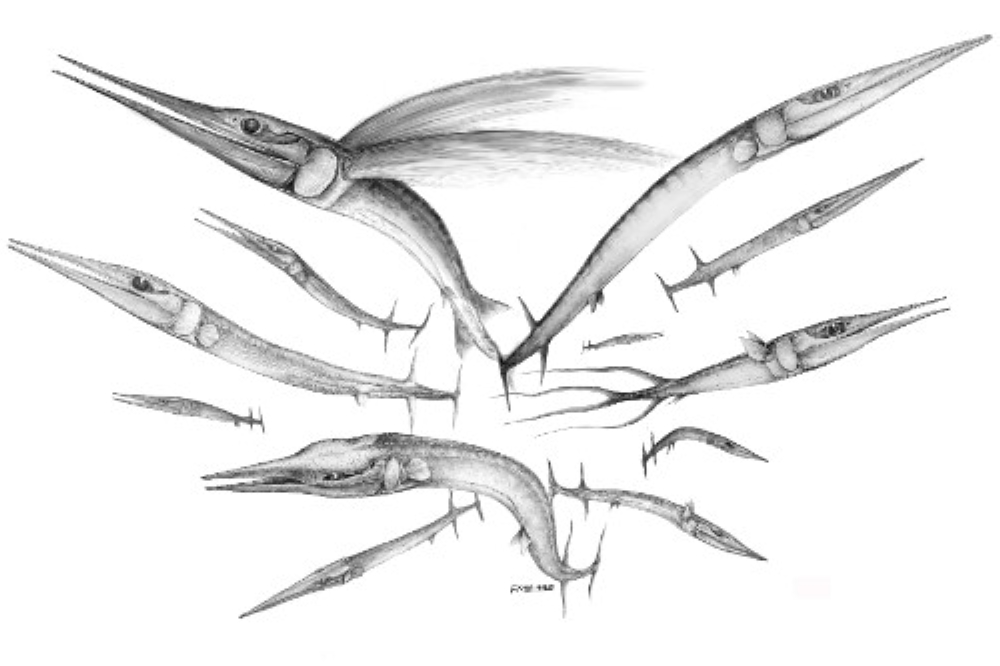
Triassic revolution: animals grew back faster and smarter after mass extinction

The diversification of the saurichthyiform fishes (‘lizard fish’) in the Middle Triassic of South China (eastern paleo-Tethys), reflecting the establishment of a complexly tiered marine ecosystem (or marine fish communities) with intensive predator-prey interactions along the food chains.
Credit: Drawing by Feixiang Wu

Paleontologists in the UK and China have shown that the natural world bounced back vigorously following the End-Permian Extinction.

In a review, published today in the journal Frontiers in Earth Science, scientists reveal that predators became meaner and prey animals adapted rapidly to find new ways to survive. On land, the ancestors of mammals and birds became warm-blooded and could move around faster.

At the end of the Permian period, 252 million years ago, there was a devastating mass extinction, when nearly all of life died out, and this was followed by one of the most extraordinary times in the history of life. The Triassic period, from 252–201 million years ago, marks a dramatic re-birth of life on land and in the oceans, and was a time of massively rising energy levels.

“Everything was speeding up,” said Professor Michael Benton of the University of Bristol School of Earth Sciences, the lead author of the new study.

“Today, there is a huge difference between birds and mammals on the one hand, and reptiles on the other. Reptiles are cold-blooded, meaning they do not generate much body heat themselves and, although they can nip about quite quickly, they have no stamina, and they cannot live in the cold, said Prof Benton.

Thursday, December 1, 2022

Mammoth problem with extinction timeline

Cameron Schwalbach, paleontology collections manager for the Cincinnati Museum Center’s Geier Collections and Research Center, and UC assistant professor Joshua Miller examine a mammoth skull. Photo Credit: Andrew Higley/UC Marketing + Brand

Exactly when mammoths went extinct has fascinated paleontologists for generations, perhaps because their decline coincided with the arrival of people to North and South America.

So, it’s only natural to wonder if humans more than contributed to the extinction of these enormous beasts of the ice age more than 10,000 years ago.

A University of Cincinnati paleontologist refutes the latest timeline published in 2021 in the journal Nature that suggested mammoths met their end much more recently than we believed. An international team of researchers examined environmental DNA of mammoth remains and more than 1,500 arctic plants to conclude that a wetter climate quickly changed the landscape from tundra grassland steppe to forested wetlands that could not support many of these big grazing animals, driving mammoths to extinction as recently as 3,900 years ago.

But in a rebuttal paper to be published Dec. 1 in Journal Nature, UC College of Arts and Sciences assistant professor Joshua Miller and co-author Carl Simpson at the University of Colorado Boulder argue that the environmental DNA used to establish their updated timeline is more complex than previously recognized.

Tuesday, March 28, 2023

Climate change threatens lemurs on Madagascar

A female grey mouse lemur (Microcebus murinus) carrying an infant.
Photo Credit: Manfred Eberle

They are small, have a high reproductive output and live in the forests of Madagascar. During the 5-month rainy season, offspring are born and a fat pad is created to survive the cool dry season when food is scarce. But what happens when the rainy season becomes drier and the dry season warmer? Can mouse lemurs adapt to climate change thanks to their high reproductive output? Researchers from the German Primate Center – Leibniz Institute for Primate Research, together with colleagues from the University of Zurich, have analyzed long-term data from Madagascar and found that climate change is destabilizing mouse lemur populations and increasing their risk of extinction. The fact that climate change is leading to greater fluctuations in population density and thus increases extinction risk in a fast-paced, ecological generalist is an alarming warning signal for potential biodiversity losses in the tropics.

Effects of climate change have mostly been studied in large, long-lived species with low reproductive output. Small mammals with high reproductive rates can usually adapt well to changing environmental conditions, so they have been studied little in the context of climate change. Claudia Fichtel and Peter Kappeler from the German Primate Center – Leibniz Institute for Primate Research (DPZ) have been researching lemurs on Madagascar for many years and have thus built up a unique data set to fill this knowledge gap.

Friday, December 10, 2021

Dinosaurs’ Last Spring: Study Pinpoints Timing of Asteroid Impact

Credit: Florida Atlantic University/Getty Images

A groundbreaking study led by researchers at Florida Atlantic University and an international team of scientists conclusively confirms the time year of the catastrophic Chicxulub asteroid, responsible for the extinction of dinosaurs and 75 percent of life on Earth 66 million years ago. Springtime, the season of new beginnings, ended the 165-million-year reign of dinosaurs and changed the course of evolution on Earth. 

Robert DePalma (left) and Anton Oleinik, Ph.D. at the site in North Dakota.
Credit: Florida Atlantic University
Results of the study, published in the journal Scientific Reports , greatly enhances the ability to trace the first stages of damage to life on Earth. FAU’s Robert DePalma, senior author and an adjunct professor in the Department of Geosciences, Charles E. Schmidt College of Science, and a doctoral student at the University of Manchester; and Anton Oleinik, Ph.D., second author and an associate professor, FAU’s Department of Geosciences, contribute to a major scientific advancement in the ability to understand the massive impact that brought an end to the dinosaurs.

“Time of year plays an important role in many biological functions such as reproduction, feeding strategies, host-parasite interactions, seasonal dormancy, and breeding patterns,” said DePalma. “Hence, it is no surprise that the time of year for a global-scale hazard can play a big role in how harshly it impacts life. The seasonal timing of the Chicxulub impact has therefore been a critical question for the story of the end-Cretaceous extinction. Until now, the answer to that question has remained unclear.”

Featured Article

What Is: Prions and Chronic Wasting Disease

Photo Credit: Heidi-Ann Fourkiller Scientific Frontline: Extended "At a Glance" Summary : Prions and Chronic Wasting Disease The C...

Top Viewed Articles