
 |
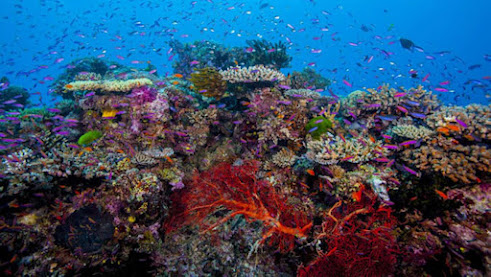
| Coral reef in Fiji. Photo credit: Joao Paulo Krajewski |
Scientific Frontline: "At a Glance" Summary
- Main Discovery: Larval connectivity between coral reefs significantly influences their biodiversity and biomass, with "sink" reefs (which receive larvae) showing greater resilience and biomass compared to "source" reefs.
- Methodology: Researchers utilized ocean biophysical models to simulate fish larval dispersal across coral reefs globally, combining ocean current movement data with biological characteristics of four distinct fish groups.
- Key Data: Reefs functioning as larval "sinks" contain approximately twice as much biomass as larval "sources," and 70% of reefs identified as functionally important for biodiversity and fisheries currently lack protection.
- Significance: The study provides the first global-scale simulation of coral reef larval connectivity, revealing that a reef's role as a source, sink, or corridor is a critical determinant of its ability to support fisheries and maintain biodiversity.
- Future Application: These findings offer a science-based framework for strategically positioning future Marine Protected Areas (MPAs) and Other Effective area-based Conservation Measures (OECMs) to maximize conservation outcomes by 2030.
- Branch of Science: Marine Ecology and Conservation Biology
- Additional Detail: While "sink" reefs are potential "sweet spots" for local subsistence fisheries due to high biomass, they still require managed fishing restrictions to maintain their ecological function.




.png)


.jpg)