
 |
| Guy German is an associate professor at Binghamton University's biomedical engineering department. Image Credit: Jonathan Cohen. |
As someone who has extensively studied what nature has produced, Associate Professor Guy German likes to tell his students: You think you’re a good engineer, but evolution is a better one.
Reinforcing this point is newly published research from German’s lab regarding the structure of human skin and the amount of damage it can sustain.
The paper, “Biomechanical fracture mechanics of composite layered skin-like materials,” was published in the journal Soft Matter. German co-authored the study with two former students from his lab, Christopher Maiorana, PhD ’21, and Rajeshwari Jotawar, MS ’21.
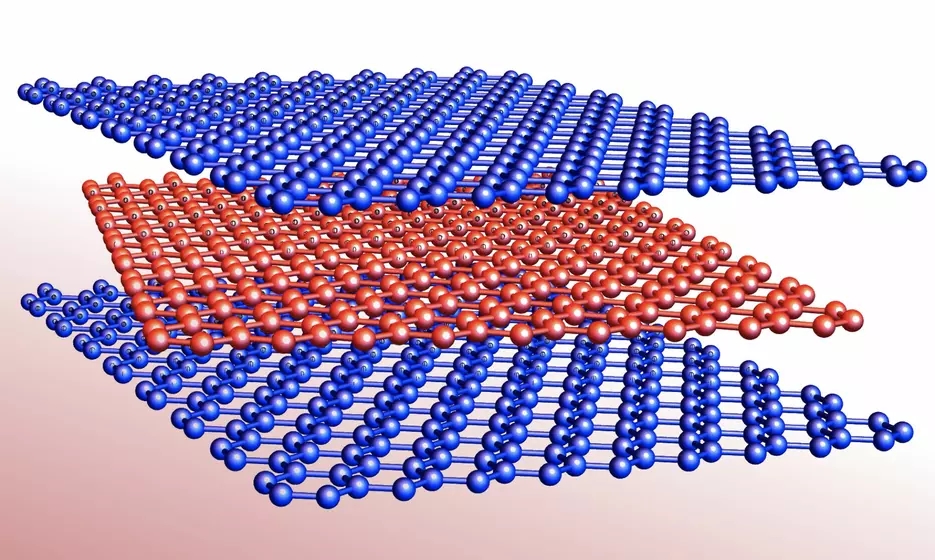
The team created membranes from polydimethylsiloxane (PDMS), an inert and nontoxic material used in biomedical research. They mimicked the structure of mammalian skin by covering a soft, compliant layer with a thinner, stiffer outer later.
The “artificial skin” then underwent a series of tests to see how much stress it could take to break. Under the pressure of a sharp or blunt rod, the samples indented to form huge divots before breaking. The researchers also made an interesting discovery.




.jpg)