
 |
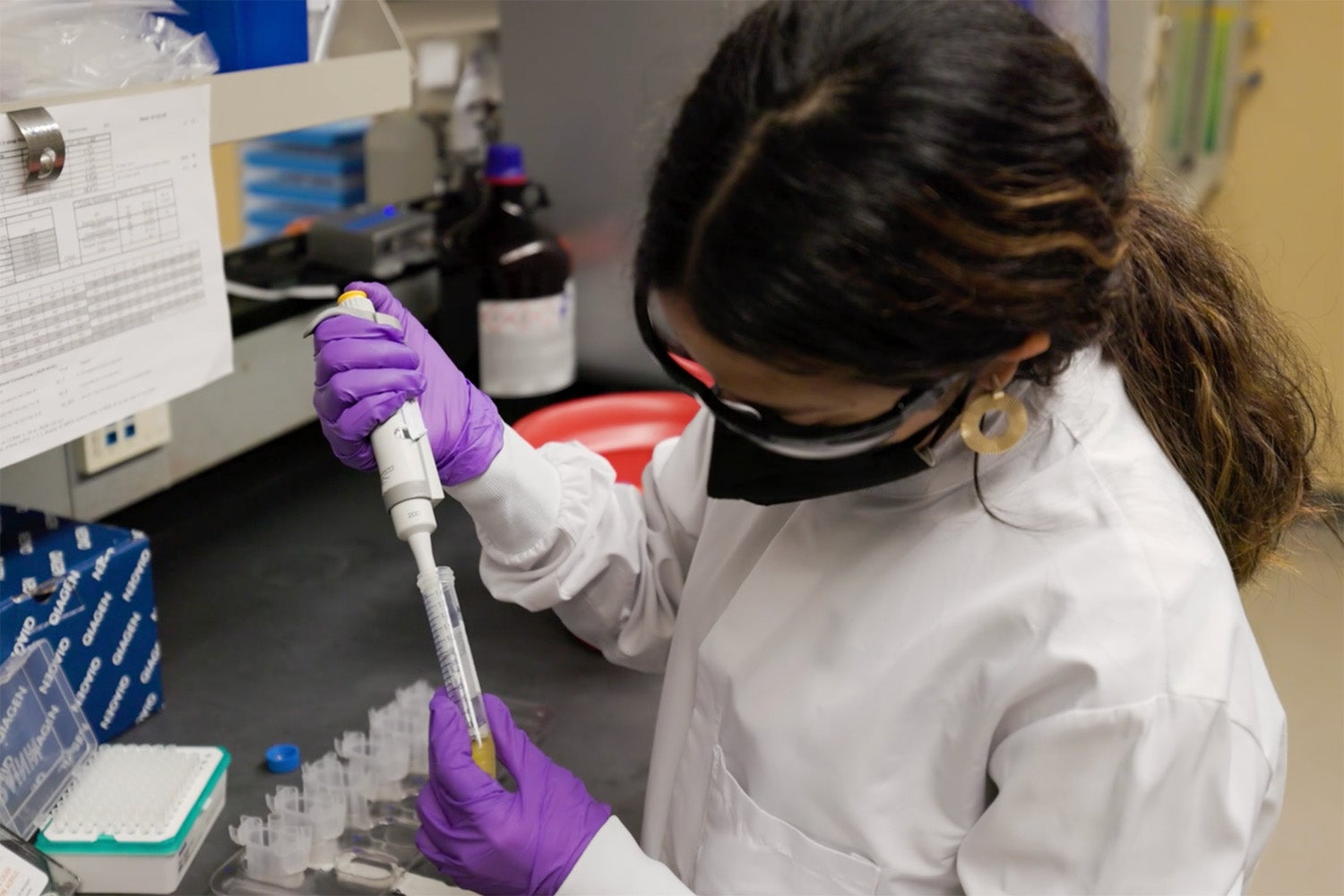
| Boehm lab graduate student Winnie Zambrana showing how wastewater samples are processed to test for evidence of viruses. Photo Credit: Harry Gregory |
Researchers have developed methods for using wastewater to track the levels of various respiratory viruses in a population. This can provide real-time information about virus circulation in a community.
Public health experts commonly track spikes in flu, respiratory syncytial virus (RSV), and rhinovirus circulating in a population through weekly reports from sentinel laboratories. These laboratories process samples from only severely ill patients, and it can take weeks for the results to get into the database. Now, for the first time, researchers at Stanford University, in collaboration with Emory University and Verily Life Sciences, have collected fast and accurate readings of a whole suite of respiratory viruses in their local Santa Clara sewer system.
Wastewater is currently the only source for accurate information about COVID-19 rates in communities. PCR testing is no longer widely available, and most people swab themselves at home where their results never reach public health agencies.
Prior to COVID-19, respiratory viruses had not been tracked through wastewater. Most of the viruses the scientists tested for in this study had never been measured in wastewater before. The findings are published in the March 22 issue of The Lancet Microbe.


.jpg)


.png)


.jpg)