. Scientific Frontline

Saturday, October 23, 2021

Machine learning predicts antibiotic resistance spread

Genes aren’t only inherited through birth. Bacteria have the ability to pass genes to each other, or pick them up from their environment, through a process called horizonal gene transfer, which is a major culprit in the spread of antibiotic resistance.

Cornell researchers used machine learning to sort organisms by their functions and use this information to predict with near-perfect accuracy how genes are transferred between them, an approach that could potentially be used to stop the spread of antibiotic resistance.

The team’s paper, “Functions Predict Horizontal Gene Transfer and the Emergence of Antibiotic Resistance,” published Oct. 22 in Science Advances. The lead author is doctoral student Hao Zhou.

“Organisms basically can acquire resistance genes from other organisms. And so it would help if we knew which organisms bacteria were exchanging with, and not only that, but we could figure out what are the driving factors that implicate organisms in this transfer,” said Ilana Brito, assistant professor and the Mong Family Sesquicentennial Faculty Fellow in Biomedical Engineering in the College of Engineering, and the paper’s senior author. “If we can figure out who is exchanging genes with who, then maybe it would give insight into how this actually happens and possibly even control these processes.”

Many novel traits are shared through gene transfer. But scientists haven’t been able to determine why some bacteria engage in gene transfer while others do not.

Friday, October 22, 2021

A new vision for farming would help the world tackle climate change and restore biodiversity

A coalition of agroecological and regenerative farming organizations are calling on leaders to be bold on sustainable agriculture in tackling the climate and nature emergency at COP26 in Glasgow.

The coalition is pleased to see the Government publish its Net Zero Strategy this week. There are certainly many elements that are welcome, particularly around agroforestry and tree planting, as well as a focus on the need to curtail excess nitrogen from slurry and synthetic fertilizers.

However, the Strategy failed to recognize the power of agroecology to help reduce emissions and the value of species-rich grasslands as a nature-based solution. Whilst a step in the right direction, the strategy lacks ambition and vague statements on emerging technology take priority over concrete commitments.

The Government’s Net Zero Strategy echoed the Climate Change Committee’s recommendations for land use outlined in their 6th Carbon Budget. Both documents demonstrate siloed thinking that could be detrimental to nature’s recovery and the transition to sustainable farming. Both demonstrate siloed thinking that could be detrimental to nature’s recovery and the transition to sustainable farming.

The coalitions briefing outlines how farming and land use can deliver for climate, nature and public health, while still providing food security through the wider adoption of agroecology and regenerative farming.

Pioneering new process creates versatile moldable wood

Structures and vehicles built with sustainable materials are in high demand to meet today’s needs and for future generations.

Natural wood already boasts an inherently lower life cycle cost than other materials and is a naturally strong, lightweight, and durable composite material that could offer an attractive alternative to commonly used polymers, metals and alloys, if its properties and functionality could be improved.

Previous approaches, such as delignification and densification, have been tried and so far failed to provide the same formability offered by metals and plastics.

That’s why the development of an innovative new technique, using a rapid ‘water-shock’ process, able to create strong and moldable wood is so exciting and made the cover story of Science.

After extracting the lignin – a polymer which binds the cell walls inside wood that give it strength – which softens it, and then closing the fibers via evaporation, the research team, involving the University of Bristol, re-swelled the wood by "shocking" it with water.

"The rapid water-shock process forms a distinct partially open, wrinkled cell wall structure that provides space for compression as well as the ability to support high strain, allowing the material to be easily folded and molded," said lead author Professor Liangbig Hu, Director of the Center of Materials Innovation, University of Maryland.

Infant planet discovered

Discovery image of planet, which lies about 100 times the Earth-Sun distance from its parent star.

One of the youngest planets ever found around a distant infant star has been discovered by an international team of scientists led by University of Hawaiʻi at Mānoa faculty, students, and alumni.

Thousands of planets have been discovered around other stars, but what sets this one apart is that it is newly-formed and can be directly observed. The planet, named 2M0437b, joins a handful of objects advancing our understanding of how planets form and change with time, helping shed new light on the origin of the Solar System and Earth. The in-depth research was recently published in Monthly Notices of the Royal Astronomical Society.

“This serendipitous discovery adds to an elite list of planets that we can directly observe with our telescopes,” explained lead author Eric Gaidos, a professor in the UH Mānoa Department of Earth Sciences. “By analyzing the light from this planet we can say something about its composition, and perhaps where and how it formed in a long-vanished disk of gas and dust around its host star.”

A third of leukemia patients do not generate any antibody response to two doses of COVID-19 vaccination

A University of Birmingham-led study has shown that a third of patients with the most common type of leukemia fail to generate any measurable antibody response following two doses of COVID-19 vaccination.

Furthermore, the research showed that in the two thirds of patients who do develop antibodies, levels are much lower than compared to healthy people and also have a profoundly reduced ability to ‘neutralize’ the globally dominant Delta variant.

The largest study of its kind, the research identified a number of important new findings which researchers say will be crucial to shaping future management and public health policy for patients with this type of blood cancer, who are immunosuppressed and at an increased clinical risk from SARS-CoV-2 infection.

Key new findings are:

  • Only 67% of the leukemia patients generated any measurable antibody response to double COVID-19 vaccination, compared to 100% of the age-matched healthy population.
  • In those patients with leukemia who did have an antibody response, antibody levels were 3.7 times lower than that seen in the healthy control group.
  • Antibody levels declined by 33% at four months after leukemia patients’ second vaccine.
  • No difference in antibody responses were observed between those participants receiving the Oxford/AstraZeneca vaccine and those receiving the Pfizer/BioNTech vaccine.
  • Antibody responses showed weak ability to neutralize the spike protein from the now globally dominant SARS-CoV-2 Delta variant compared to healthy controls.

500 patients with chronic lymphocytic leukemia - the most common leukemia in adults - were recruited to the study. 41% had received two doses of the Pfizer/BioNTech vaccine, whilst 59% had received two doses of the Oxford/AstraZeneca vaccine. The average age of participants was 67 and 53% of the cohort was male. Their antibody response to double COVID-19 vaccination was compared to that of 94 age-matched healthy ‘controls’. Blood samples were obtained from all study participants between two to three weeks following their second vaccination, and again up to 30 weeks later.

Subconscious Bias Drives Negative Attitudes Toward Snakes

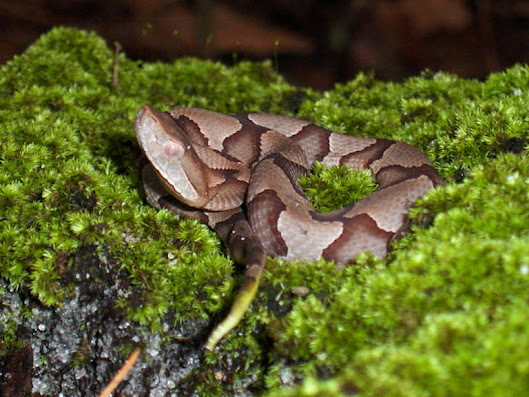
Baby copperhead snake. Credit: Peter Pattavina, U.S. Fish and Wildlife Service.

Snakes rank among Americans’ top animal phobias, and are among the most disliked animals globally. A new study from North Carolina State University finds that the dislike of snakes is subconscious and, to some extent, learned.

“Snakes are important,” said the study’s first author Audrey Vaughn, a former graduate student at NC State. “They serve as both important predators and sources of prey for other wildlife. They can also serve as important ecological indicators. This disdain that people have for them is something that impacts our ability to make sure they are well conserved. That in and of itself is a reason to better understand these attitudes and to try to figure out what can be done about them.”

In the study, researchers used the implicit association test (IAT) to understand the attitudes of 175 people, including adults and children, toward snakes versus songbirds. They compared results for parents aged 21 to 76 years, and children 7 to 17 years, and attitudes between households. They used a software system developed at NC State to deliver the test, which has been used to test people for subconscious gender and racial biases.

“Studies can be divided into two types: explicit studies, which often use surveys and allow people to think and have a rationale for why they feel a certain way, and the other is implicit, which is subconscious,” said study co-author Nils Peterson, a professor in NC State’s Fisheries, Wildlife and Conservation Biology program. “The test is somewhat of an imperfect tool in large part because implicit attitudes aren’t great predictors of what people actually do.”

Bat study reveals secrets of the social brain

In one experiment, the researchers used an infra-red camera to track the positions of the bats as they socialized within a darkened enclosure. They found that, while most bats preferred to spend most of their time tightly clustered with other bats, a few “less friendly” bats would often break away from the group — and, when these less friendly bats vocalized, their calls did not cause the brain waves of the other bats to “sync up” as well as did calls from the friendlier bats.
 (Video courtesy the NeuroBat Lab)

Whether chatting with friends at a dinner party or managing a high-stakes meeting at work, communicating with others in a group requires a complex set of mental tasks. Our brains must track who is speaking and what is being said, as well as what our relationship to that person may be — because, after all, we probably give the opinion of our best friend more weight than that of a complete stranger.

A study published in the journal Science provides the first glimpse into how the brains of social mammals process these types of complex group interactions.

In the study, neuroscientists at the University of California, Berkeley, used wireless neural recording devices to track the brain activity of Egyptian fruit bats as they freely interacted in groups and occasionally vocalized to each other through high-pitched screeches and grunts.

“Most studies of communication, particularly vocalization, are typically performed with single animals or with pairs of animals, but basically none have been conducted in actual group settings,” said study co-first author Maimon Rose, a graduate student in the NeuroBat Lab at UC Berkeley. “However, many social mammals, including humans, typically interact in groups. Egyptian fruit bats, specifically, like to interact within large colonies.”

Thursday, October 21, 2021

Lab-grown ‘mini brains’ hint at treatments for neurodegenerative diseases

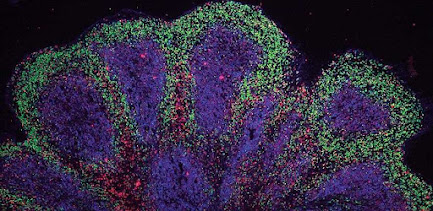
Mini brain organoids showing cortical-like structures 
Credit: Andras Lakatos
A common form of motor neuron disease, amyotrophic lateral sclerosis, often overlaps with frontotemporal dementia (ALS/FTD) and can affect younger people, occurring mostly after the age of 40-45. These conditions cause devastating symptoms of muscle weakness with changes in memory, behavior and personality. Being able to grow small organ-like models (organoids) of the brain allows the researchers to understand what happens at the earliest stages of ALS/FTD, long before symptoms begin to emerge, and to screen for potential drugs.

In general, organoids, often referred to as ‘mini organs’, are being used increasingly to model human biology and disease. At the University of Cambridge alone, researchers use them to repair damaged livers, SARS-CoV-2 infection of the lungs and model the early stages of pregnancy, among many other areas of research.

Typically, researchers take cells from a patient’s skin and reprogram the cells back to their stem cell stage – a very early stage of development at which they have the potential to develop into most types of cell. These can then be grown in culture as 3D clusters that mimic particular elements of an organ. As many diseases are caused in part by defects in our DNA, this technique allows researchers to see how cellular changes – often associated with these genetic mutations – lead to disease.

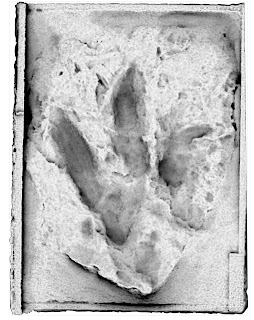
'Raptor-like’ dinosaur revealed to be a timid vegetarian

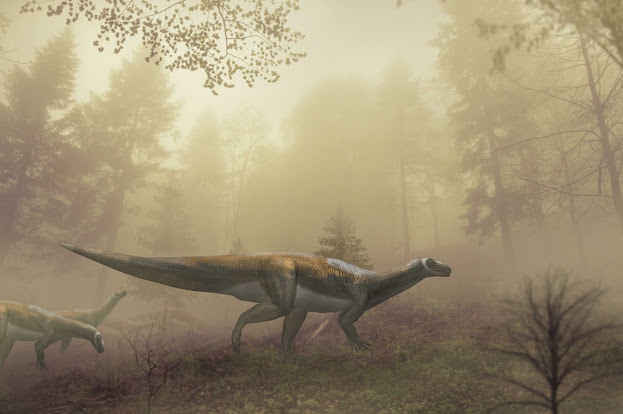
A life-reconstruction of herbivorous dinosaurs based on 220-million-year-old fossil footprints from Ipswich, Queensland, Australia.Image credit: Anthony Romilio.

The dinosaur footprint is on display at the
Queensland Museum, Brisbane.
Fossil footprints found in an Ipswich coal mine have long been thought to be that of a large ‘raptor-like’ predatory dinosaur, but scientists have found they were instead left by a timid long-necked herbivore.

University of Queensland paleontologist Dr Anthony Romilio recently led an international team to re-analyze the footprints, dated to the latter part of the Triassic Period, around 220 million-year-ago.

“For years it’s been believed that these tracks were made by a massive predator that was part of the dinosaur family Eubrontes, with legs over two meters tall,” Dr Romilio said.

“This idea caused a sensation decades ago because no other meat-eating dinosaur in the world approached that size during the Triassic period.

“But our research shows the tracks were instead made by a dinosaur from the Evazoum family – vegetarian dinosaurs that were smaller, with legs about 1.4 meters tall and a body length of six meters.”

The research team suspected there was something not-quite-right with the original size estimates and there was a good reason for their doubts.

A crab’s inland odyssey


Researchers have discovered the oldest known modern crab — trapped in amber since the time of the dinosaurs.

The 100-million-year-old fossil of the crab, Cretapsara athanata, comes from Myanmar, in Southeast Asia. It fills a major gap in the fossil record for crabs and resets the timetable for when marine crabs made their way inland.

Yale and Harvard paleontologists led the research, which appears in the journal Science Advances.

“This discovery, in a pristine and spectacular 3D preservation — including fine details of the eyes, antennae, mouthparts, and even the gills — represents the oldest evidence of incursions into land and freshwater by crabs,” said co-lead author Javier Luque, a former Yale researcher who is now a research associate at Harvard. “Crabs are primarily a marine group that only conquered land and freshwater much later, about 75 to 50 million years ago. They are largely known by bits and pieces of their claws — never in the stunning detail of our new discovery.”

The researchers said the new species, Cretapsara, was most likely neither a marine crab nor a fully terrestrial creature. Rather, Cretapsara was a freshwater-to-amphibious crab that lived either on the forest floor or in shallow bodies of water near the forest floor.

To selectively kill cancer cells, target a protein channel in the cell's lysosome

Cancer treatments necessarily target unchecked cell growth, and selectively kill cancer cells while sparing normal cells and avoiding general toxicity in the human body.

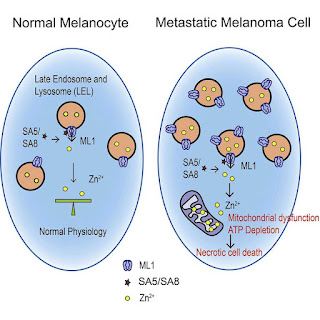
To develop new treatments for cancer, scientists are focused on finding the malfunctioning machinery within cancer cells that can be targeted using small molecule pharmaceuticals. Now, University of Michigan researchers have identified one of these targets: a zinc and calcium ion permeable channel within a cell’s lysosome, the organelle responsible for recycling cellular waste, nutrient sensing and cell metabolism.

The researchers discovered that this channel is upregulated—meaning both its protein expression and channel activity were substantially increased—in metastatic melanoma cells compared with healthy melanocytes. They found that targeting this channel protein with small pharmaceutical compounds triggers the rapid and selective death of cancer cells while completely sparing normal cells. Their research is published in the journal Cell Reports.

“Many traditional cancer therapies target a well-known cell death pathway called apoptosis to trigger cancer cell death. However, many aggressive cancer cells harbor numerous mutations of genes that help them escape these treatments. We saw an urgent need to develop new therapeutic strategies that target nonapoptotic cell death pathways to eradicate cancer cells,” said Wanlu Du, an assistant research scientist in the U-M Department of Molecular, Cellular, and Developmental Biology.

In metastatic cancers, lysosomes turn hypertrophic, which means they actively contribute to tumor progression by increasing their ability to provide nutrients to the rapidly dividing cells and secreting enzymes to digest extracellular matrix—the material that provides the physical scaffolding for cells to help cancer cell invasion. But designing cancer therapies that target lysosomes may also harm normal cells and tissues by compromising lysosomes’ ability to provide nutrients for healthy cells.

Changing Ocean Currents Are Driving Extreme Winter Weather

Transmission towers and lines were covered in snow in East Texas. The state experienced a power crisis during severe winter storms in February, resulting in about $20 billion in socioeconomic damages, according to NOAA. Credit: Matthew Rader

Throughout Earth's oceans runs a conveyor belt of water. Its churning is powered by differences in the water's temperature and saltiness, and weather patterns around the world are regulated by its activity.

A pair of researchers studied the Atlantic portion of this worldwide conveyor belt called the Atlantic Meridional Overturning Circulation, or AMOC, and found that winter weather in the United States critically depends on this conveyor belt-like system. As the AMOC slows because of climate change, the U.S. will experience more extreme cold winter weather.

The study, published in the journal Communications Earth & Environment was led by Jianjun Yin, an associate professor in the University of Arizona Department of Geosciences and co-authored by Ming Zhao, a physical scientist at the National Oceanic and Atmospheric Administration's Geophysical Fluid Dynamics Laboratory.

AMOC works like this: Warm water travels north in the upper Atlantic Ocean and releases heat into the atmosphere at high latitudes. As the water cools, it becomes denser, which causes it to sink into the deep ocean where it flows back south.

Researchers identify new pathways to target breast cancer


A pathway helping the breast cancer protein BRCA1 repair damaged DNA has been identified by University of Queensland researchers in a study that will inform future targeted therapies.

Professor Robert Parton, Professor Alpha Yap and Dr Kerrie-Ann McMahon from UQ’s Institute for Molecular Bioscience (IMB) identified an association between two proteins that are lost in cancer cells – the well-known BReast CAncer gene 1 (BRCA1) and a new player - cavin3.

“In healthy cells, BRCA1 repairs DNA damage and suppresses tumor formation, but cells with mutations in their BRCA1 genes struggle to keep up with DNA repairs, which is when cancer can take over,” Dr McMahon said.

“We discovered that cavin3 helps BRCA1 function when cells are stressed and that when it’s absent, levels of BRCA1 decrease.

Putting the fire lookout in orbit

Image: iStockphoto.com / Alexpunker

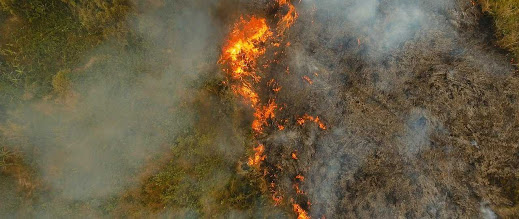
OroraTech, a startup formed at the Technical University of Munich (TUM), is preparing to launch a fleet of small satellites. They will use infrared cameras to detect temperature anomalies at high temporal and spatial resolutions. With the data, the young entrepreneurs want to localize forest fires quickly and track their spread in real time.

Extreme weather events are becoming more frequent everywhere in the world: Even at higher latitudes where heat waves and droughts were rare in the past, the risk of forest fires is on the increase. Dry conditions and winds cause the fires to spread and go out of control faster. Forest and bush fires not only destroy vegetation − they also fuel climate change.

“If we want to fight forest and bush fires, stop illegal slash-and-burn activity and thus reduce CO2 emissions, we need a global early warning system,” says Thomas Grübler, one of the founders of the OroraTech startup. At present it can take several hours or even days before a fire source is identified and reported by ground-based fire watch crews, aircraft or drones, he explains. That may be long enough for a fire to spread over a considerable area. "Satellites facilitate quicker and more targeted tracking of forest fires. With this information, fire crews on the ground can fight fires faster and more precisely,” adds Grübler.

Wednesday, October 20, 2021

Researchers Join Fight to Save the Coral

An underwater view of one of the ark structures
being used by SDSU researchers to protect coral reefs.
(Photo: Jason Baer)
Ph.D. candidate Jason Baer and the Rohwer Lab team are deploying first-of-their-kind floating structures in an attempt to rebuild damaged reefs.

San Diego State University Ph.D. candidate Jason Baer is on a mission to restore coral reefs that have been damaged by climate change, overfishing or tourism by using ark structures, the first of their kind.

Baer and his fellow lab members, led by SDSU microbial ecologist and virologist Forest Rohwer, deploy the large, geodesic structures in the midwater above the ocean floor and seed them with corals and organisms that support their health. The arks, similar to the Noah’s Ark concept, give the threatened communities of coral a second chance to thrive.

Their positioning in midwater, where there’s higher light and flow, offers an improved environment for corals and their allies and distances them from some of the stressors they face on the seafloor, such as sedimentation and suffocation.

Baer, along with Rohwer lab members Anneke van der Geer, Andres Sanchez-Quinto, and Mark Little, spent six weeks in Curaçao, a Caribbean island, working with the CARMABI marine station this past summer. Together they deployed the first arks on coral reefs and began studying the communities that recruited them, with the goal of watching a reef community “build” itself.

Featured Article

Ketamine high NOT related to treatment success for people with alcohol problems

Photo Credit:  Treedeo.St Studios Scientific Frontline: "At a Glance" Summary Main Discovery : The intensity of the acute psychede...

Top Viewed Articles