. Scientific Frontline

Monday, January 31, 2022

Individuals with immunodeficiency at high risk of mortality following SARS-CoV-2 infection

Patients with primary and secondary immunodeficiency are at higher risk of mortality following SARS-CoV-2 infection compared with the general population, according to a new study led by the University of Birmingham.

The COVID-19 pandemic has disproportionately affected individuals with primary immunodeficiency (PID) and secondary immunodeficiency (SID). These conditions arise when the immune system’s ability to fight infectious disease is compromised or entirely absent as a result of genetic mutations (PID) or other factors, such as immunosuppressive drugs, blood cancers or chemotherapy (SID).

In a significant national effort, and the largest study of its kind to date, the United Kingdom Primary Immunodeficiency Network (UKPIN) collated the outcomes of individuals with PID and SID following infection and treatment for COVID-19.

This retrospective study, published in the journal Clinical & Experimental Immunology, aims to better understand the risk of severe disease and death following SARS-CoV-2 infection in patients with primary or secondary immunodeficiency. The outcomes of 310 individuals from across the United Kingdom were reported to a UKPIN case series between March 2020 and July 2021.

The team found that 45.8% of patients with PID or SID were hospitalized with COVID-19, a significantly higher rate than for the UK general population, and died up to 26 years younger than the median age of death from COVID-19 in the UK. The risk of dying in patients with primary or secondary immunodeficiency was also higher than the general population, varying between subgroups of these conditions. For example, 16.3% of individuals with primary immunodeficiency receiving immunoglobulin replacement and 27.2% with secondary immunodeficiency died from infection during the first three waves of the SARS-CoV-2 pandemic in the UK.

Sunday, January 30, 2022

Hubble Captures Chameleon Cloud I

Image Credit: NASA, ESA, K. Luhman and T. Esplin (Pennsylvania State University), et al., and ESO; Processing: Gladys Kober (NASA/Catholic University of America)
Hi-Res Zoomable Image


This NASA Hubble Space Telescope image captures one of three segments that comprise a 65-light-year wide star-forming region named the Chamaeleon Cloud Complex. The segment in this Hubble composite image, called Chamaeleon Cloud I (Cha I), reveals dusty-dark clouds where stars are forming, dazzling reflection nebulae glowing by the light of bright-blue young stars, and radiant knots called Herbig-Haro objects.

Herbig-Haro objects are bright clumps and arcs of interstellar gas shocked and energized by jets expelled from infant “protostars” in the process of forming. The white-orange cloud at the bottom of the image hosts one of these protostars at its center. Its brilliant white jets of hot gas are ejected in narrow torrents from the protostar’s poles, creating the Herbig-Haro object HH 909A.

Saturday, January 29, 2022

Modern Day Gold Rush Turns Pristine Rainforests into Heavily Polluted Mercury Sinks

Illegal gold miners use mercury to bind gold particles, then separate the two metals by burning gold-mercury pellets in open fire ovens, releasing clouds of highly toxic mercury particles into the atmosphere.
Credit – Melissa Marchese

If you had to guess which part of the world has the highest levels of atmospheric mercury pollution, you probably wouldn’t pick a patch of pristine Amazonian rainforest. Yet, that’s exactly where they are.

In a new study appearing in the journal Nature Communications, an international team of researchers show that illegal gold mining in the Peruvian Amazon is causing exceptionally high levels of atmospheric mercury pollution in the nearby Los Amigos Biological Station.

One stand of old-growth pristine forest was found to harbor the highest levels of mercury ever recorded, rivaling industrial areas where mercury is mined. Birds from this area have up to twelve times more mercury in their systems than birds from less polluted areas.

The spread of mercury pollution from gold mining has primarily been studied in aquatic systems. In this study, a team of researchers led by Jacqueline Gerson, who completed this research as part of her Ph.D. at Duke, and Emily Bernhardt, professor of Biology, provide the first measurements of terrestrial inputs, storage and impact of atmospheric mercury to forests and measurements of methylmercury, the most toxic form of mercury.

Illegal miners separate gold particles from river sediments using mercury, which binds to gold, forming pellets large enough to be caught in a sieve. Atmospheric mercury is released when these pellets are burned in open fire ovens. The high temperature separates the gold, which melts, from the mercury, which goes up in smoke. This mercury smoke ends up being washed into the soil by rainfall, deposited onto the surface of leaves, or absorbed directly into the leaves’ tissues.

Thawing permafrost can accelerate global warming

Outcrop of Yedoma sediments with the thick ice masses underlain by river sediments exposed on an arm of the Lena River in the river delta.
Credit: Janet Rethemeyer

Thawing permafrost in the Arctic could be emitting greenhouse gases from previously unaccounted-for carbon stocks, fueling global warming. That is the result of a study conducted by a team of geologists led by Professor Dr Janet Rethemeyer at the University of Cologne’s Institute of Geology and Mineralogy, together with colleagues from the University of Hamburg and the Helmholtz Centre Potsdam – GFZ German Research Centre for Geosciences. In the Siberian Arctic, the research team determined the origin of carbon dioxide released from permafrost that is thousands of years old. This research endeavor is part of the German-Russian research endeavor ‘Kopf – Kohlenstoff im Permafrost’, funded by the German Federal Ministry of Education and Research (BMBF). The paper ‘Sources of CO2 Produced in Freshly Thawed Pleistocene-Age Yedoma Permafrost’ has now appeared in Frontiers in Earth Science.

Global climate change is causing temperatures to rise sharply, especially in the Arctic. Among other things, higher temperatures are causing more and more permafrost soils, which have been frozen for thousands of years, to thaw. Particularly affected is so-called ‘yedoma’ permafrost, which is widespread in areas that were not covered by ice sheets during the last ice age. Yedoma contains up to 80 per cent ice and is therefore also called ice complex. The ground ice can thaw very abruptly, causing the bedrock to collapse and erode. Such processes, known as thermokarst, make carbon previously stored in the frozen ground accessible to microorganisms, which break it down and release it as carbon dioxide and methane. The greenhouse gas release amplifies global warming, which is known as permafrost-carbon feedback.

New species of 'incredibly rare' insect discovered

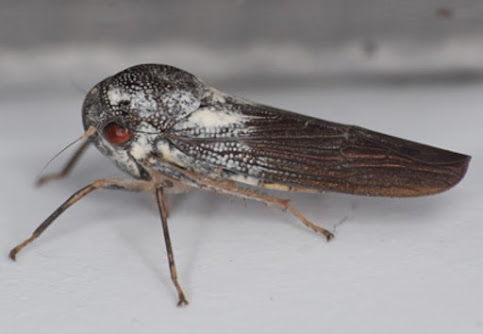
The newly discovered leafhopper Phlogis kibalensis
Credit: Dr Alvin Helden, Anglia Ruskin University 

An Anglia Ruskin University (ARU) scientist has discovered a new species that belongs to a group of insects so rare that its closest relative was last seen in 1969.

Dr Alvin Helden found the new species of leafhopper, which he has named Phlogis kibalensis, during field work with students in the rainforest of the Kibale National Park in western Uganda, and the discovery has been announced in the journal Zootaxa.

The new species, which has a distinctive metallic sheen, pitted body, and, in common with most leafhoppers, uniquely-shaped male reproductive organs – in this case partially leaf-shaped – belongs to a group, or genus, called Phlogis.

Prior to this new discovery, the last recorded sighting of a leafhopper from this rare genus was in Central African Republic in 1969.

Friday, January 28, 2022

A 3D View of an Atmospheric River


Features in Earth’s atmosphere, spawned by the heat of the Sun and the rotation of the Earth, transport water and energy around the globe. Clouds and precipitation shown here are from NASA’s MERRA-2 reanalysis, a retrospective blend of a weather model and conventional and satellite observations.

Video: NASA's Scientific Visualization Studio
Final Editing and Conversion: Scientific Frontline

en012822_01

Invisible machine-readable labels that identify and track objects

Caption:MIT scientists built a user interface that facilitates the integration of common tags (QR codes or ArUco markers used for augmented reality) with the object geometry to make them 3D printable as InfraredTags.
Credits: Photos courtesy of MIT CSAIL.

If you download music online, you can get accompanying information embedded into the digital file that might tell you the name of the song, its genre, the featured artists on a given track, the composer, and the producer. Similarly, if you download a digital photo, you can obtain information that may include the time, date, and location at which the picture was taken. That led Mustafa Doga Dogan to wonder whether engineers could do something similar for physical objects. “That way,” he mused, “we could inform ourselves faster and more reliably while walking around in a store or museum or library.”

The idea, at first, was a bit abstract for Dogan, a 4th-year PhD student in the MIT Department of Electrical Engineering and Computer Science. But his thinking solidified in the latter part of 2020 when he heard about a new smartphone model with a camera that utilizes the infrared (IR) range of the electromagnetic spectrum that the naked eye can’t perceive. IR light, moreover, has a unique ability to see through certain materials that are opaque to visible light. It occurred to Dogan that this feature, in particular, could be useful.

Researchers identify proteins that could predict liver transplant rejection


Northwestern University scientist have discovered families of proteins in the body that could potentially predict which patients may reject a new organ transplant, helping inform decisions about care.

The advancement marks the beginning of a new era for more precise study of proteins in specific cells.

Scientists tend to look at shifting patterns of proteins as if through goggles underwater, taking in just a fraction of available information about their unique structures. But in a new study in the journal Science, scientists took a magnifying glass to these same structures and created a clarified map of protein families. They then held the map up in front of liver transplant recipients and found new indicators in immune cell proteins that changed with rejection. The study is available online and will be published tomorrow (Jan. 28).

The result, the Blood Proteoform Atlas (BPA), outlines more than 56,000 exact protein molecules (called proteoforms) as they appear in 21 different cell types — almost 10 times more of these structures than appeared in similar previous studies.

Climate change in the Early Holocene - archaeology report

New insight into how our early ancestors dealt with major shifts in climate is revealed in research by an international team, led by Professor Rick Schulting from Oxford University’s School of Archaeology.

  • Radiocarbon dating from a prehistoric cemetery in Northern Russia reveals human stress caused by a global cooling event 8,200 years ago.
  • Early hunter gatherers developed more complex social systems and, unusually, a large cemetery when faced by climate change

Published in Nature Ecology & Evolution, the report reveals, new radiocarbon dates show the large Early Holocene cemetery of Yuzhniy Oleniy Ostrov, at Lake Onega, some 500 miles north of Moscow, previously thought to have been in use for many centuries, was, in fact, used for only one to two centuries. Moreover, this seems to be in response to a period of climate stress.

"The team believes the creation of the cemetery reveals a social response to the stresses caused by regional resource depression...[it] would have helped define group membership for what would have been previously dispersed bands of hunter-gatherers - mitigating potential conflict over access to the lake’s resources"

The team believes the creation of the cemetery reveals a social response to the stresses caused by regional resource depression. At a time of climate change, Lake Onega, as the second largest lake in Europe, had its own ecologically resilient microclimate. This would have attracted game, including elk, to its shores while the lake itself would have provided a productive fishery. Because of the fall in temperature, many of the region’s shallower lakes could have been susceptible to the well-known phenomenon of winter fish kills, caused by depleted oxygen levels under the ice.

Thursday, January 27, 2022

Expanded University of Hawaiʻi asteroid tracking system can monitor entire sky

Left: Sutherland ATLAS station during construction in South Africa.
Credit: Willie Koorts (SAAO)
Right: Chilean engineers and astronomers installing the ATLAS telescope at El Sauce Observatory.

A state-of-the-art asteroid alert system operated by the University of Hawaiʻi Institute for Astronomy (IfA) can now scan the entire dark sky every 24 hours for dangerous bodies that could plummet toward Earth.

The NASA-funded Asteroid Terrestrial-impact Last Alert System (ATLAS) has expanded its reach to the southern hemisphere, from two existing northern-hemisphere telescopes on Haleakalā and Maunaloa. Construction is now complete and operations are underway on two additional telescopes in South Africa and Chile.

Telescope unit on Haleakalā, Maui.
Photo credit: Henry Weiland

Large Herbivores Help Rare Species Persist in a Warming Arctic

A herd of caribou in arctic Greenland. Caribou at this study site have been declining over the past several years, while muskoxen have been increasing. Such herbivores help rare plant species persist in a rapidly changing climate.
Credit: Eric Post/UC Davis

Being common is rather unusual. It’s far more common for a species to be rare, spending its existence in small densities throughout its range. How such rare species persist, particularly in an environment undergoing rapid climate change, inspired a 15-year study in arctic Greenland from the University of California, Davis.

Arctic wintergreen, a very rare species,
grows among birch and willow
shrubs near Kangerlussuaq, Greenland.
Credit: Eric Post/UC Davis
The study, published in the journal Scientific Reports, found that caribou and muskoxen helped mitigate the effects of climate change on rare arctic plants, lichens and mushrooms at the study site.

The authors suggest that by constraining the abundance of the two most common plant species — dwarf birch and gray willow — large herbivores may allow other, less common species to persist rather than be shaded or outcompeted for nutrients by the woody shrub’s canopy, or suppressed by leaf litter and cooler soils.

“This is more evidence that conserving large herbivores is really important to maintaining the compositional integrity of species-poor systems like the arctic tundra,” said lead author Eric Post, director of the UC Davis Polar Forum and a professor in the UC Davis Department of Wildlife, Fish and Conservation Biology.

Microbes help hibernating animals recycle nutrients, maintain muscle through winter

Like many hibernators, thirteen-lined ground squirrels retain muscle tone and healthy gut microbiomes through hibernation even though they aren’t eating or moving around. Their success at rest may help humans make long space voyages.
Credit: Rob Streiffer

To get through a long winter without food, hibernating animals — like the 13-lined ground squirrel — can slow their metabolism by as much as 99 percent, but they still need important nutrients like proteins to maintain muscles while they hibernate. A new study from the University of Wisconsin–Madison shows that hibernating ground squirrels get help from microbes in their guts.

The discovery could help people with muscle-wasting disorders and even astronauts on extended space voyages.

“The longer any animal doesn’t exercise, bones and muscles start to atrophy and lose mass and function,” says Hannah Carey, an emeritus professor in the UW–Madison School of Veterinary Medicine and co-author of the new study, published today (Jan. 27) in the journal Science. “Without any dietary protein coming in, hibernators need another way to get what their muscles need.”

One source of nitrogen, a vital building block for amino acids and proteins, accumulates in the bodies of all animals (including humans) as urea, a component of urine. The researchers knew that urea that moved into the squirrels’ digestive tract could be broken down by some gut microbes, which also need nitrogen for their own proteins. But the researchers wanted to see if some of that urea nitrogen freed up by the microbes was also being incorporated into the squirrels’ bodies.

Chemist Identifies New Way of Finding Extraterrestrial Life

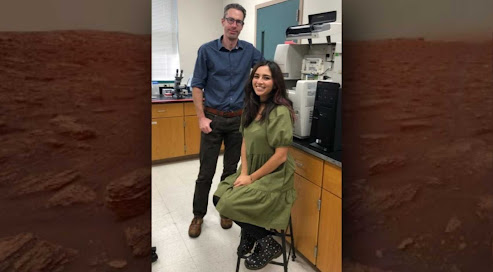
SDSU researchers Chris Harrison and Jessica Torres, seen above in Harrison's lab, are using lasers and liquids to detect amino acids in extraterrestrial rocks. In the background, an image of Mars.
Source: San Diego State University

Have we been looking for extraterrestrials in all the wrong places? San Diego State University chemists are developing methods to find signs of life on other planets by looking for the building blocks of proteins in a place they've never been able to test before: inside rocks.

After collaborating with researchers at NASA’s Jet Propulsion Laboratory (JPL) in La Cañada Flintridge in 2019, Jessica Torres, a doctoral student studying chemistry at SDSU, is experimenting with ways to extract amino acids from porous rocks that could be used on future rovers.

Previous research has looked for evidence of other life forms in water and soil, but not from solid materials.

Current methods for identifying amino acids can’t differentiate versions created by a living organism from those formed through random chemical reactions. And existing techniques usually require water — which would freeze or evaporate if placed on a space probe traveling to Mars or Europa, the ice-covered saltwater moon of Jupiter that some regard as a prime candidate for extraterrestrial life because of its subsurface ocean.

Tumors dramatically shrink with new approach to cell therapy

Graphic of tumor-infiltrating lymphocites, natural immune cells that invade tumors.
Credit: Shana O. Kelley Lab/Northwestern University

Northwestern University researchers have developed a new tool to harness immune cells from tumors to fight cancer rapidly and effectively.

Their findings, published January 27 in the journal Nature Biomedical Engineering, showed a dramatic shrinkage in tumors in mice compared to traditional cell therapy methods. With a novel microfluidic device that could be 3D printed, the team multiplied, sorted through and harvested hundreds of millions of cells, recovering 400% more of the tumor-eating cells than current approaches.

Most treatments for cancer involve toxic chemicals and foreign substances, which cause harmful side effects and weaken the body’s immune response. Using tissue from one’s own body can eliminate side effects and risk of rejection, and many disease therapies in regenerative medicine and cancer treatment have gained traction in the clinic. But sometimes the wheels skid.

“People have been cured in the clinic of advanced melanoma through treatment with their own immune cells that were harvested out of tumor tissue,” said Shana O. Kelley, a pioneer in translational biotechnology and corresponding author on the paper. “The problem is, because of the way the cells are harvested, it only works in a very small number of patients.”

Uncontrolled Blood Pressure Is Sending More People to the Hospital

New research from the Smidt Heart Institute shows that more
people are being hospitalized for dangerously high blood pressure.
Photo by Cedars-Sinai.
The number of people hospitalized for a hypertensive crisis—when blood pressure increases so much it can cause a heart attack, stroke or other sudden cardiovascular event—more than doubled from 2002 to 2014, according to Cedars-Sinai investigators.

The increase occurred during a period when some studies reported overall progress in blood pressure control and a decline in related cardiovascular events in the U.S. The findings are published in the Journal of the American Heart Association.

“Although more people have been able to manage their blood pressure over the last few years, we’re not seeing this improvement translate into fewer hospitalizations for hypertensive crisis,” said Joseph E. Ebinger, MD, a clinical cardiologist and director of clinical analytics at the Smidt Heart Institute and first author of the study.

Featured Article

What Is: Psychopathy | Part three of the "Dark Tetrad"

Scientific Frontline: Extended "At a Glance" Summary : Psychopathy The Core Concept : Psychopathy is a profound personality disord...

Top Viewed Articles