
 |
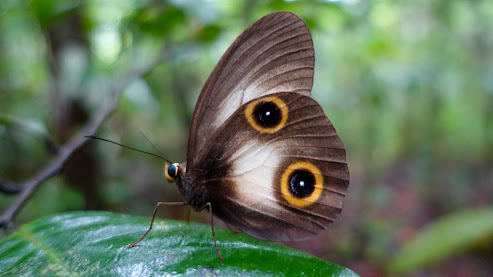
| A silky owl (Taenaris catopsv) butterfly with distinctive eyespots on its wings. Photo credit: Kristof Zyskowski and Yulia Bereshpolova |
Findings highlight those novel complex traits, such as eyespots, evolve from gene networks that already pattern pre-existent complex traits in the body
Eyespots, the circular markings of contrasting colors found on the wings of many butterfly species, are used by these fluttering creatures to intimidate or distract predators. A team of scientists led by Professor Antónia Monteiro from the National University of Singapore (NUS) conducted a research study to better understand the evolutionary origins of these eyespots, and they discovered that eyespots appear to have derived from the recruitment of a complex network of genes that was already operating in the body of the butterflies to build antennae, legs, and even wings.
“This new study addresses how novel complex traits might originate. These complex traits require the input of many interacting genes for their development, and are often illustrated by the vertebrate eye, or the bacteria flagellum. In our study, we looked at how butterfly eyespots – an example of a complex trait - came about and concluded that a network recruitment approach is adopted by butterflies for the creation of eyespots. We have also identified the specific network of genes that was likely recruited,” said Prof Monteiro, who is from the NUS Department of Biological Sciences.
The findings were first published in the journal Proceedings of the National Academy of Sciences.











.jpg)