. Scientific Frontline

Thursday, April 28, 2022

Unchecked global emissions on track to initiate mass extinction of marine life

Princeton University researchers report that unless greenhouse gas emissions are curbed, marine biodiversity could be on track to plummet to levels not seen since the extinction of the dinosaurs. The study authors modeled future marine biodiversity under projected climate scenarios and found that species such as dolphinfish (shown) would be imperiled as warming oceans decrease the ocean’s oxygen supply while increasing marine life’s metabolic demand for it. 
Credit: Evan Davis

As greenhouse gas emissions continue to warm the world’s oceans, marine biodiversity could be on track to plummet within the next few centuries to levels not seen since the extinction of the dinosaurs, according to a recent study in the journal Science by Princeton University researchers.

Princeton University researchers report that unless greenhouse gas emissions are curbed, marine biodiversity could be on track to plummet to levels not seen since the extinction of the dinosaurs. The study authors modeled future marine biodiversity under projected climate scenarios and found that species such as dolphinfish (shown) would be imperiled as warming oceans decrease the ocean’s oxygen supply while increasing marine life’s metabolic demand for it.

The paper’s authors modeled future marine biodiversity under different projected climate scenarios. They found that if emissions are not curbed, species losses from warming and oxygen depletion alone could come to mirror the substantial impact humans already have on marine biodiversity by around 2100. Tropical waters would experience the greatest loss of biodiversity, while polar species are at the highest risk of extinction, the authors reported.

Large bodies helped extinct marine reptiles with long necks swim, study finds

3D models of aquatic tetrapods
Credit: S. Gutarra Díaz

Scientists at the University of Bristol have discovered that body size is more important than body shape in determining the energy economy of swimming for aquatic animals.

This study, published today in Communications Biology, shows that big bodies help overcome the excess drag produced by extreme morphology, debunking a long-standing idea that there is an optimal body shape for low drag.

One important finding of this research is that the large necks of extinct elasmosaurs did add extra drag, but this was compensated for by the evolution of large bodies.

Tetrapods or ‘four-limbed vertebrates’, have repeatedly returned to the oceans over the last 250 million years, and they come in many shapes and sizes, ranging from streamlined modern whales over 25 meters in length, to extinct plesiosaurs, with four flippers and extraordinarily long necks, and even extinct fish-shaped ichthyosaurs.

Dolphins and ichthyosaurs have similar body shapes, adapted for moving fast through water producing low resistance or drag. On the other hand, plesiosaurs, who lived side by side with the ichthyosaurs in the Mesozoic Era, had entirely different bodies. Their enormous four flippers which they used to fly underwater, and variable neck lengths, have no parallel amongst living animals. Some elasmosaurs had really extreme proportions, with necks up to 20 feet (6 meters) long. These necks likely helped them to snap up quick-moving fish, but were also believed to make them slower.

Boeing Unveils First T-7A Red Hawk Advanced Trainer Jet to be Delivered to the U.S. Air Force

The first T-7A Red Hawk advanced trainer has rolled out of the production facility in St. Louis, Missouri. Ushering in a new era of training for U.S. Air Force fighter and bomber pilots. The jets have red tails to honor the legendary Tuskegee Airmen who flew their aircraft with red tails during World War II. First jets scheduled to arrive at Joint Base San Antonio- Randolph next year.
Photo Credit- Eric Shindelbower

Boeing [NYSE: BA] has unveiled the first T-7A Red Hawk advanced trainer jet to be delivered to the U.S. Air Force. The jet, one of 351 the U.S. Air Force plans to order, was unveiled prior to official delivery.

The fully digitally designed aircraft was built and tested using advanced manufacturing, agile software development and digital engineering technology significantly reducing the time from design to first flight. The aircraft also features open architecture software, providing growth and flexibility to meet future mission needs.

“We’re excited and honored to deliver this digitally advanced, next-generation trainer to the U.S. Air Force,” said Ted Colbert, president and CEO, Boeing Defense, Space & Security. “This aircraft is a tangible example of how Boeing, its suppliers and partners are leading the digital engineering revolution. T-7A will prepare pilots for future missions for decades to come.”

Childhood obesity increases risk of Type 1 diabetes

Being overweight in childhood increases the risk of developing type 1 diabetes in later life, according to the findings of a new study that analyzed genetic data on over 400,000 individuals. The study, co-led by researchers from the Universities of Bristol and Oxford and published today in Nature Communications, also provides evidence that being overweight over many years from childhood influences the risk of other diseases including asthma, eczema and hypothyroidism.

The number of individuals being diagnosed with type 1 diabetes has increased drastically in the last 20 years. One possible explanation is the rising prevalence of childhood obesity in an increasingly obesogenic environment. Poor diets with high fat, salt and carbohydrate may compromise early life health-promoting effects of the bacteria in the gut and pancreatic beta-cell fragility in childhood and subsequently increase type 1 diabetes risk.

In contrast to type 1 diabetes, there is irrefutable evidence that children who are overweight are more likely to develop type 2 diabetes and that weight loss can lead to its sustained remission. However, detecting reliable evidence for the factors that contribute to type 1 has been challenging, particularly given that individuals are typically diagnosed early in life before reaching adulthood.

New Study Could Help Reduce Agricultural Greenhouse Gas Emissions

Researchers developed a first-of-its-kind knowledge-guided machine learning model for agroecosystem, called KGML-ag that includes less obvious variables such as soil water content, oxygen level, and soil nitrate content related to nitrous oxide production and emission.
Credit: University of Minnesota College of Science and Engineering

A team of researchers led by the University of Minnesota has significantly improved the performance of numerical predictions for agricultural nitrous oxide emissions. The first-of-its-kind knowledge-guided machine learning model is 1,000 times faster than current systems and could significantly reduce greenhouse gas emissions from agriculture.

The research was recently published in Geoscientific Model Development, a not-for-profit international scientific journal focused on numerical models of the Earth. Researchers involved were from the University of Minnesota, the University of Illinois at Urbana-Champaign, Lawrence Berkeley National Laboratory, and the University of Pittsburgh.

Compared to greenhouse gases such as carbon dioxide and methane, nitrous oxide is not as well-known. In reality, nitrous oxide is about 300 times more powerful than carbon dioxide in trapping heat in the atmosphere. Human-induced nitrous oxide emissions (mainly from agricultural synthetic fertilizer and cattle manure) have also grown by at least 30 percent over the past four decades.

Origin of complex cells started without oxygen

Since the 1960s, many experts have argued that the emergence of eukaryotes (cells containing a clearly defined nucleus) happened in response to the oxygenation of Earth’s surface environment.

But a team led by the universities of Stanford and Exeter say recent advances in the Earth and life sciences challenge this view.

Their review says these breakthroughs "decouple" the emergence of eukaryotes (known as eukaryogenesis) from rising oxygen levels, and suggest eukaryotes in fact emerged in an anoxic (no-oxygen) environment in the ocean.

"We can now independently date eukaryogenesis and key oxygenation transitions in Earth history," said Dr Daniel Mills, of Stanford University.

"Based on fossil and biological records, the timing of eukaryogenesis does not correlate with these oxygen transitions in the atmosphere (2.22 billion years ago) or the deep ocean (0.5 billion years ago).

"Instead, mitochondria-bearing eukaryotes are consistently dated to between these two oxygenation events, during an interval of deep-sea anoxia and variable surface-water oxygenation."

The emergence of mitochondria – the energy-producing "powerhouses" of eukaryote cells – is now thought to be the defining step in eukaryogenesis.

Mitochondria have different DNA to the cells in which they live, and the new paper addresses the possible origin of this symbiotic relationship, famously championed by the biologist Lynn Margulis.

Wednesday, April 27, 2022

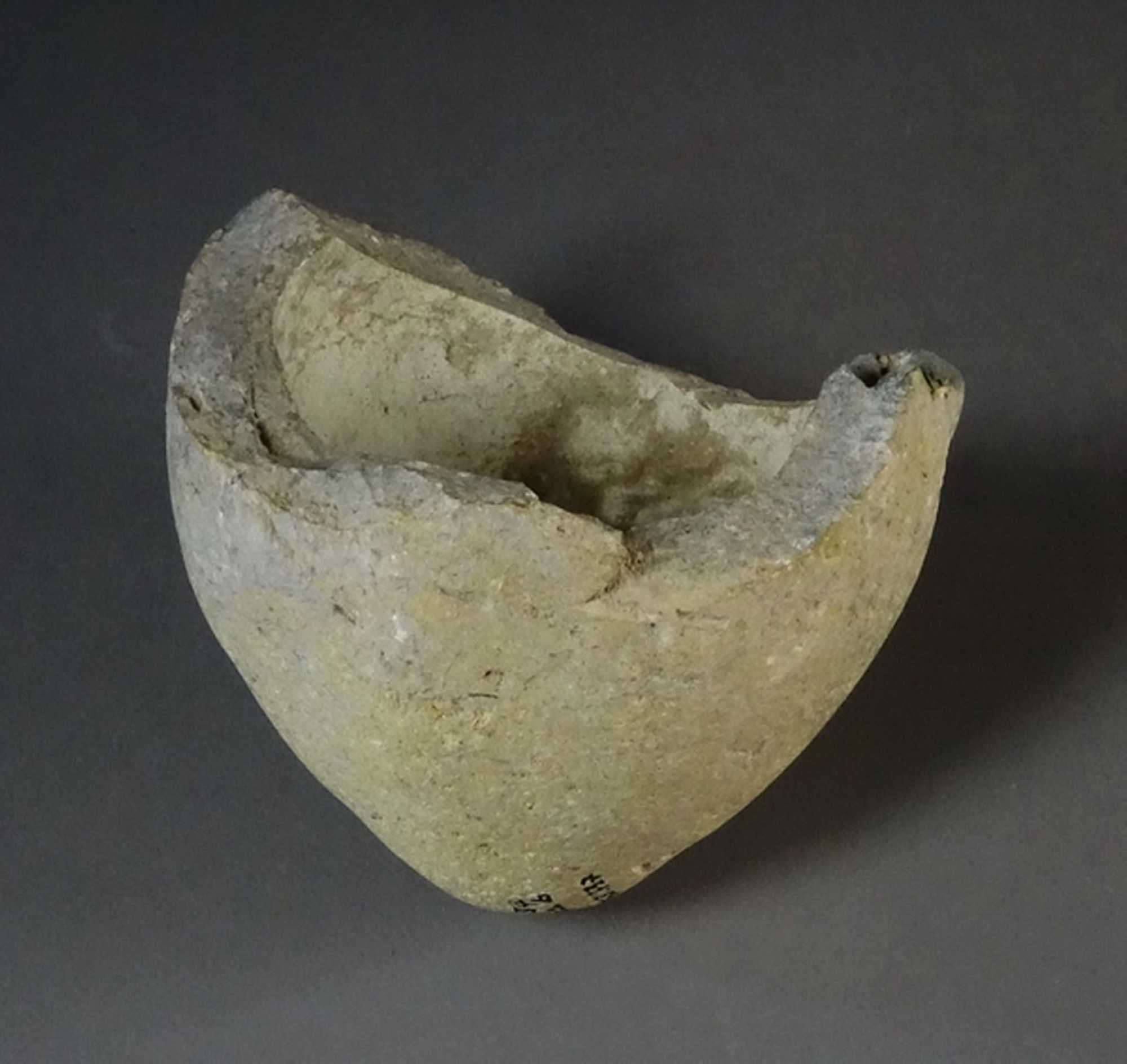
Ancient hand grenades: explosive weapons in medieval Jerusalem during Crusades

A fragment of the sphero-conical vessel that was identified as containing a possibly explosive material from Jerusalem.
Credit: Robert Mason, Royal Ontario Museum.

New analysis into the residue inside ancient ceramic vessels from 11th-12th century Jerusalem has found that they were potentially used as hand grenades.

Previous research into the diverse sphero-conical containers, which are within museums around the world, had identified that they were used for a variety of purposes, including beer drinking vessels, mercury containers, containers for oil and containers for medicines.

This latest research, led by Griffith University’s Associate Professor Carney Matheson, confirmed that some vessels did indeed contain oils and medicines, and some contained scented oils, consistent with other recent research into the use of the vessels.

However, his findings also revealed that some of the vessels contained a flammable and probably explosive material that indicated they may have been used as ancient hand grenades.

Associate Professor Matheson, from Griffith’s Australian Research Centre for Human Evolution, said the explosive material he analyzed within the vessels suggested that there may have been a locally developed ancient explosive.

New research finds the risk of psychotic-like experiences can start in childhood


It has long been understood that environmental and socio-economic factors – including income disparity, family poverty, and air pollution – increase a person’s risk of developing psychotic-like experiences, such as subtle hallucinations and delusions that can become precursors to a schizophrenia diagnosis later in life. Research has long focused on young adults but now, thanks to data from the Adolescent Brain Cognitive Development (ABCD) Study, researchers at the University of Rochester have found these risk factors can be observed in pre-adolescent children.

“These findings could have a major impact on public health initiatives to reduce the risk of psychotic-like experiences,” said Abhishek Saxena, a graduate student in the department of Psychology at the University of Rochester and first author of the study recently published in Frontiers in Psychiatry. “Past research has largely focused on the biological factors that lead to development of schizophrenia spectrum disorders, but we now know that social and environmental factors can also play a large role in the risk and development of schizophrenia. And this research shows these factors impact people starting at a very young age.”

Researchers looked at data collected from 8,000 kids enrolled in the ABCD study. They found that the more urban of an environment a child lived in – proximity to roads, houses with lead paint risks, families in poverty, and income disparity – the greater number of psychotic-like experiences they had over a year’s time. These findings are in line with past research conducted in young adults, but have not been found like this in pre-adolescences.

New research provides better understanding of skin’s durability

Guy German is an associate professor at Binghamton University's biomedical engineering department. Image Credit: Jonathan Cohen.

As someone who has extensively studied what nature has produced, Associate Professor Guy German likes to tell his students: You think you’re a good engineer, but evolution is a better one.

Reinforcing this point is newly published research from German’s lab regarding the structure of human skin and the amount of damage it can sustain.

The paper, “Biomechanical fracture mechanics of composite layered skin-like materials,” was published in the journal Soft Matter. German co-authored the study with two former students from his lab, Christopher Maiorana, PhD ’21, and Rajeshwari Jotawar, MS ’21.

The team created membranes from polydimethylsiloxane (PDMS), an inert and nontoxic material used in biomedical research. They mimicked the structure of mammalian skin by covering a soft, compliant layer with a thinner, stiffer outer later.

The “artificial skin” then underwent a series of tests to see how much stress it could take to break. Under the pressure of a sharp or blunt rod, the samples indented to form huge divots before breaking. The researchers also made an interesting discovery.

Plastic-eating Enzyme Could Eliminate Billions of Tons of Landfill Waste


An enzyme variant created by engineers and scientists at The University of Texas at Austin can break down environment-throttling plastics that typically take centuries to degrade in just a matter of hours to days.

This discovery, published today in Nature, could help solve one of the world’s most pressing environmental problems: what to do with the billions of tons of plastic waste piling up in landfills and polluting our natural lands and water. The enzyme has the potential to supercharge recycling on a large scale that would allow major industries to reduce their environmental impact by recovering and reusing plastics at the molecular level.

“The possibilities are endless across industries to leverage this leading-edge recycling process,” said Hal Alper, professor in the McKetta Department of Chemical Engineering at UT Austin. “Beyond the obvious waste management industry, this also provides corporations from every sector the opportunity to take a lead in recycling their products. Through these more sustainable enzyme approaches, we can begin to envision a true circular plastics economy.”

The project focuses on polyethylene terephthalate (PET), a significant polymer found in most consumer packaging, including cookie containers, soda bottles, fruit and salad packaging, and certain fibers and textiles. It makes up 12% of all global waste.

UBC team discovers ‘silver bullet’ to keep medical devices free of bacteria

Photo of a coated versus an uncoated catheter.
Credit: Kizhakkedathu Lab

University of British Columbia researchers have found a ‘silver bullet’ to kill bacteria and keep them from infecting patients who have medical devices implanted.

The team from UBC and the Vancouver Coastal Health Research Institute has developed a silver-based coating that can easily be applied to devices such as catheters and stents. Their novel formulation, discovered by screening dozens of chemical components, overcomes the complications of silver that have challenged scientists for years.

Dr. Jayachandran Kizhakkedathu
“This is a highly effective coating that won’t harm human tissues and could potentially eliminate implant-associated infections. It could be very cost-effective and could also be applicable to many different products,” said Dr. Jayachandran Kizhakkedathu, professor in UBC’s department of pathology and laboratory medicine, Centre for Blood Research and Life Sciences Institute and co-senior author of the study published today in ACS Central Science.

Implanted medical devices can save lives, but they carry a great risk of infection which usually arises from contamination as the device is being implanted. Urinary tract infections from catheters, for example, are among the most common hospital-acquired infections.

Meet the forest microbes that can survive megafires

The image highlights the diversity in colors and morphologies of microbes obtained from Soberanes Fire-burned soil.
Credit: Jenna Maddox/UCR

New UC Riverside research shows fungi and bacteria able to survive redwood tanoak forest megafires are microbial “cousins” that often increase in abundance after feeling the flames.

Fires of unprecedented size and intensity, called megafires, are becoming increasingly common. In the West, climate change is causing rising temperatures and earlier snow melting, extending the dry season when forests are most vulnerable to burning.

Though some ecosystems are adapted for less intense fires, little is known about how plants or their associated soil microbiomes respond to megafires, particularly in California’s charismatic redwood tanoak forests.

“It’s not likely plants can recover from megafires without beneficial fungi that supply roots with nutrients, or bacteria that transform extra carbon and nitrogen in post-fire soil,” said Sydney Glassman, UCR mycologist and lead study author. “Understanding the microbes is key to any restoration effort.”

The UCR team is contributing to this understanding with a paper in the journal Molecular Ecology.

Rare, endangered insects illegally for sale online

Brazilian salmon pink bird-eating tarantula (Lasiodora Parahybana) in the lab of Linda Rayor, senior research associate in CALS.
Credit: Jason Koski/Cornell University 

A survey has found that endangered and threatened insects and spiders, as well as common species that provide valuable ecological services, can be easily purchased– without adequate oversight – through basic internet searches, according to a new Cornell study.

For example, the Luzon peacock swallowtail, one of the rarest butterflies, which is listed as endangered both internationally and, in the U.S., and is illegal to trade, was found for sale at Amazon.com pinned in a display box for around $110.

Many species of live tarantulas, which are not threatened with extinction but whose trade is strictly controlled, were also readily discovered for sale as pets without any oversight or enforcement.

These results are concerning given that insects are in steep decline globally due to habitat loss, pesticides, invasive species, urbanization, pollution, and climate change. Some entomologists have estimated that the Earth is losing about 10 to 20% of all insect species every decade, and researchers said an insect or spider species’ survival can be greatly impacted when it is collected and sold.

John Losey, professor of entomology and the lead author of the paper, “Insects and Spiders on the Web: Monitoring and Mitigating Online Exploitation of Species and Services,” which published in the journal Global Ecology and Conservation, said the study began as a project for his Insect Conservation Biology course. The paper included 18 student co-authors who were undergraduates in 2019 when the research was done. Paul Curtis, extension wildlife specialist in the Department of Natural Resources and the Environment, is a senior co-author.

New climate modeling predicts increasing occurrences of flash flooding across most of the U.S.

a illustration of calculated flood characteristics; b the percentage change of flood occurrences comparing the future (PGW) and retrospective analysis (CTL) at 1-km spatial resolution; c conditional plot of frequency changes against drainage area (shaded contour plot) and standard error of the mean in dark red line. Maps and figures are produced using the Python package Matplotlib and Cartopy.
Source/Credit: University of Oklahoma

The latest U.N. report on climate change documented researchers’ efforts that have shown some measures of global warming are now unavoidable, and current research efforts are focusing on mitigation and adaptation strategies. The National Aeronautics and Space Administration describes this as a global problem, felt on local scales. Likewise, National Oceanic and Atmospheric Administration researchers are providing the data, tools and information to better understand and prepare for climate change. One of the effects being impacted by the warming climate is a change in frequency of flash flooding events, as well as the locations in which they most often occur.

A research team led by the University of Oklahoma, with the NOAA National Severe Storms Laboratory and collaborators at the National Center for Atmospheric Research, have created simulations from coupled climate and hydrologic models that demonstrate widespread increases in the occurrences of flash flooding events across most of the United States.

The study is led by Yang Hong, a professor of hydrology and remote sensing in the School of Civil Engineering and Environmental Sciences and in the School of Meteorology at OU. He is the director of the Hydrometeorology and Remote Sensing Laboratory and the founding director of the hydrology and water security online master’s program at OU. The research team’s findings are published in Nature Communications Earth and Environment. Zhi Li, a doctoral student with the HyDROS Lab, is the first author.

Five diseases attack language areas in brain

Each condition causes a different type of language impairment in primary progressive aphasia (PPA)

  • Word comprehension is lost for some patients, others lose grammar
  • Most extensive study to date on PPA
  • Disease is often misdiagnosed in early stages, missing chance for treatment
  • Not all dementia is caused by Alzheimer’s disease

There are five different diseases that attack the language areas in the left hemisphere of the brain that slowly cause progressive impairments of language known as primary progressive aphasia (PPA), reports a new Northwestern Medicine study.

“We’ve discovered each of these diseases hits a different part of the language network,” said lead author Dr. M. Marsel Mesulam, director of Northwestern’s Mesulam Center for Cognitive Neurology and Alzheimer’s Disease. “In some cases, the disease hits the area responsible for grammar, in others the area responsible for word comprehension. Each disease progresses at a different rate and has different implications for intervention.”

This study published in the journal Brain is based on the largest set of PPA autopsies — 118 cases — ever assembled.

“The patients had been followed for more than 25 years, so this is the most extensive study to date on life expectancy, type of language impairment and relationship of disease to details of language impairment,” said Mesulam, also chief of behavioral neurology at Northwestern University Feinberg School of Medicine.

Patients with PPA were prospectively enrolled in a longitudinal study that included language testing and imaging of brain structure and brain function. The study included consent to brain donation at death.

Featured Article

What Is: Quantum Biology

Scientific Frontline: Extended "At a Glance" Summary : Quantum Biology The Core Concept : Quantum biology is the study of non-triv...

Top Viewed Articles