. Scientific Frontline

Thursday, May 26, 2022

A unique catalyst paves the way for plastic upcycling

Visual of two variations of the catalyst, with a segment of the shell removed to show the interior. The white sphere represents the silica shell, the holes are the pores. The bright green spheres represent the catalytic sites, the ones on the left are much smaller than the ones on the right. The longer red strings represent the polymer chains, and the shorter strings are products after catalysis. All shorter strings are similar in size, representing the consistent selectivity across catalyst variations. Additionally, there are smaller chains produced by the smaller catalyst sites because the reaction occurs more quickly.
Credit: Ames Laboratory

A recently developed catalyst for breaking down plastics continues to advance plastic upcycling processes. In 2020, a team of researchers led by Ames Laboratory scientists developed the first processive inorganic catalyst to deconstruct polyolefin plastics into molecules that can be used to create more valuable products. Now, the team has developed and validated a strategy to speed up the transformation without sacrificing desirable products.

The catalyst was originally designed by Wenyu Huang, a scientist at Ames Lab. It consists of platinum particles supported on a solid silica core and surrounded by a silica shell with uniform pores that provide access to catalytic sites. The overall amount of platinum needed is quite small, which is important because of platinum's high cost and limited supply. During deconstruction experiments, the long polymer chains thread into the pores and contact the catalytic sites, and then the chains are broken into smaller sized pieces that are no longer plastic material (see image for more details).

The secret to a longer lifespan? Gene regulation holds a clue

In comparing the gene expression patterns of 26 species with diverse lifespans, Rochester biologists Vera Gorbunova and Andrei Seluanov found that the characteristics of the different genes were controlled by circadian or pluripotency networks. 
Credit: University of Rochester illustration / Julia Joshpe

Rochester biologists who study the genetics of lifespan suggest novel targets to combat aging and age-related diseases.

Natural selection has produced mammals that age at dramatically different rates. Take, for example, naked mole rats and mice; the former can live up to 41 years, nearly ten times as long as similar-size rodents such as mice.

What accounts for longer lifespan? According to new research from biologists at the University of Rochester, a key piece of the puzzle lies in the mechanisms that regulate gene expression.

In a paper published in Cell Metabolism, the researchers, including Vera Gorbunova, the Doris Johns Cherry professor of biology and medicine; Andrei Seluanov, professor of biology and medicine; and Jinlong Yu, a postdoctoral research associate in Gorbunova’s lab and the first author of the paper, investigated genes connected to lifespan. Their research uncovered specific characteristics of these genes and revealed that two regulatory systems controlling gene expression—circadian and pluripotency networks—are critical to longevity. The findings have implications both in understanding how longevity evolves and in providing new targets to combat aging and age-related diseases.

Arc volcanoes are wetter than previously thought

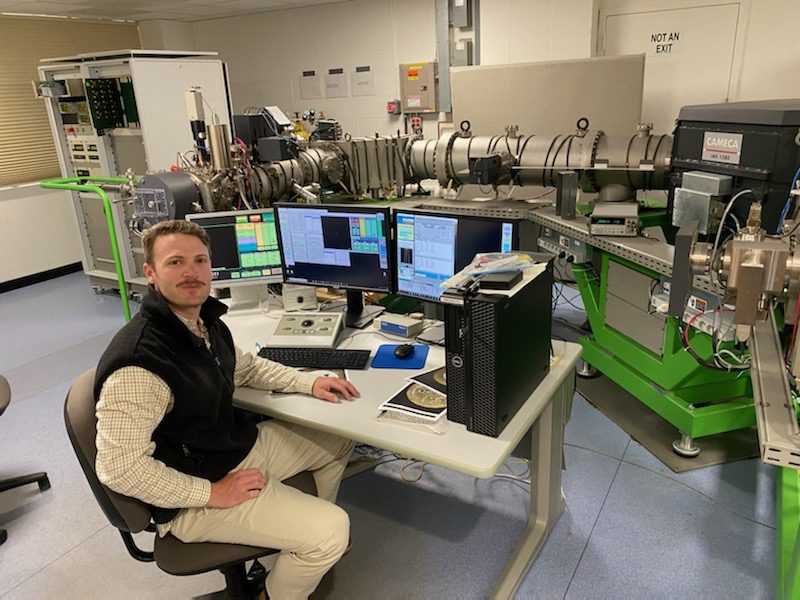
Benjamin Urann, who graduated from the MIT-WHOI Joint Program in 2021 and is now a NSF postdoctoral fellow at University of Wyoming, analyzes water in minerals with a secondary ion mass spectrometer at the Woods Hole Oceanographic Institution.
Photo by Ben Urann, © Woods Hole Oceanographic Institution

The percentage of water in arc volcanoes, which form above subduction zones, may be far more than many previous studies have calculated.

This increased amount of water has broad implications for understanding how Earth’s lower crust forms, how magma erupts through the crust, and how economically important mineral ore deposits form, according to a new paper led by authors from the Woods Hole Oceanographic Institution (WHOI), “High water content of arc magmas recorded in cumulates from subduction zone lower crust,” published in Nature Geoscience.

The estimated water concentrations in primitive arc magmas from this study are more variable and significantly higher than the average of about four weight percent of water found in other studies, according to the paper. The results show that primitive arc H2O after extensive crystal fractionation in the lower arc crust, the paper adds.

Geology from 50 Light-Years: Webb Gets Ready to Study Rocky Worlds

Comparison of Exoplanets 55 Cancri e and LHS 3844 b to Earth and Neptune
Credit: NASA, ESA, CSA, Dani Player (STScI)

With its mirror segments beautifully aligned and its scientific instruments undergoing calibration, NASA’s James Webb Space Telescope is just weeks away from full operation. Soon after the first observations are revealed this summer, Webb’s in-depth science will begin.

Among the investigations planned for the first year are studies of two hot exoplanets classified as “super-Earths” for their size and rocky composition: the lava-covered 55 Cancri e and the airless LHS 3844 b. Researchers will train Webb’s high-precision spectrographs on these planets with a view to understanding the geologic diversity of planets across the galaxy, and the evolution of rocky planets like Earth.

New Combined Therapy Helps Extend Lives of Men With Prostate Cancer

Howard Sandler, MD
Source: Cedars-Sinai
Practice-changing research from Cedars-Sinai Cancer shows that a combination of androgen deprivation therapy—a commonly used hormone injection—plus pelvic lymph node radiation, kept nearly 90% of clinical trial patients’ prostate cancer at bay for five years. The findings were published in the peer-reviewed journal The Lancet.

The study also shows that patients with prostate cancer who didn’t receive androgen deprivation therapy—and who did not receive pelvic lymph node radiation—had a five-year survival of 70%.

“We can now confirm that pelvic lymph node treatment used together with androgen deprivation therapy, or even used as a stand-alone treatment option greatly improves outcomes in patients with postoperative prostate cancer,” said Howard Sandler, MD, chair of the Department of Radiation Oncology at Cedars-Sinai Cancer and senior author of the study. “These findings are an encouraging step forward, both for the medical community and for the patients and their loved ones seeking curative treatment options.”

The international Phase III clinical trial that served as the basis of The Lancet study enrolled 1,716 patients between March 31, 2008, and March 30, 2015. Enrollees were separated into three groups.

Group one received salvage prostate bed radiotherapy—a standard radiation targeted to the area in which the prostate used to exist before its surgical removal. These patients had a median five-year survival of 71%.

The second group received the standard radiation treatment, in combination with androgen deprivation therapy. They had a median five-year survival of 81%.

A helping hand for robotic manipulator design

MIT researchers have created an integrated design pipeline that enables a user with no specialized knowledge to quickly craft a customized 3D-printable robotic hand.
Credits: Lara Zlokapa

MIT researchers have created an interactive design pipeline that streamlines and simplifies the process of crafting a customized robotic hand with tactile sensors.

Typically, a robotics expert may spend months manually designing a custom manipulator, largely through trial-and-error. Each iteration could require new parts that must be designed and tested from scratch. By contrast, this new pipeline doesn’t require any manual assembly or specialized knowledge.

Akin to building with digital LEGOs, a designer uses the interface to construct a robotic manipulator from a set of modular components that are guaranteed to be manufacturable. The user can adjust the palm and fingers of the robotic hand, tailoring it to a specific task, and then easily integrate tactile sensors into the final design.

Once the design is finished, the software automatically generates 3D printing and machine knitting files for manufacturing the manipulator. Tactile sensors are incorporated through a knitted glove that fits snugly over the robotic hand. These sensors enable the manipulator to perform complex tasks, such as picking up delicate items or using tools.

An alarming prevalence of smell, taste loss during COVID’s delta surge

Kai Zhao
The loss of smell and taste with a COVID-19 infection during the delta surge was a prevalent symptom and wasn’t prevented by vaccination, new research suggests.

The small Ohio State University study also found that some people with the earliest COVID-19 infections were continuing to experience loss of these senses months later and didn’t even realize it.

In participants with active infections during the delta surge, a majority (22 of 25) had been vaccinated. Objective screenings found that 100% were experiencing a diminished or lost sense of smell – but only 54.5% self-reported any problem with odor detection.

“We’re getting this quick communication out as an early warning. We need to continue to take a closer look at COVID infection’s impact on smell and taste,” said Dr. Kai Zhao, associate professor of otolaryngology in Ohio State’s College of Medicine and senior author of the study. “Even if COVID doesn’t cause death or hospitalization, it can have long-lasting effects on some of our sensory functions.

“A lot of people are potentially suffering, which is probably not appreciated by society.”

The study is published in the journal Med.

Sea turtle conservation gets boost from new DNA detection method


DNA “fingerprints” left behind by sea turtles offer scientists a simple, powerful way of tracking the health and whereabouts of these endangered animals, a key step forward in their conservation.

A study led by University of Florida researchers is the first to sequence environmental DNA, or eDNA, from sea turtles — genetic material shed as they travel over beaches and in water. The research project is also the first to successfully collect animal eDNA from beach sand. The techniques could be used to trace and study other kinds of wildlife, advancing research and informing conservation strategies.

“We wanted to test the boundaries of this technology, which hadn't really been applied to sea turtles before and certainly not on sand,” said David Duffy, UF assistant professor of wildlife disease genomics and Rising Star Condron Family Endowed Assistant Professor. “This is a way to survey areas for elusive animals or species that can be hard to study otherwise. It’s essentially wildlife forensics.”

Nearly all of the planet’s sea turtle species are endangered and face a multitude of threats, including warming temperatures, habitat destruction and degradation, disease, hunting and pollutants such as plastics. Conserving sea turtles is further complicated by the fact that current survey methods rely on spotting them in one of their multiple habitats — in the open sea, coastal ecosystems or on beaches where they nest. This makes it difficult to monitor their numbers, genetic diversity and overall health and tailor conservation efforts accordingly, Duffy said.

Drugs used to treat blood cancer could activate “sleeping” cancer-causing gene

Hypomethylating agents (HMA) are currently used as a first-line treatment for patients with myelodysplastic syndrome (MDS) - a group of disorders where there is insufficient production of healthy mature blood cells in the bone marrow - and increasingly in other diseases, but their mechanism of action remains unclear. One potential risk is that they could potentially activate a sleeping oncogene, although this has not been clearly demonstrated to date.

In a recent study, scientists from the Cancer Science Institute of Singapore (CSI Singapore) at the National University of Singapore (NUS), working in close collaboration with the Brigham and Women’s Hospital (BWH), and the Harvard Medical School (HMS) in Boston have established that HMA can and does activate the oncofetal protein, SALL4.

The study, which was also conducted in collaboration with University of Tor Vergata in Rome, Italy, and the Institute of Hematology and Blood Diseases Hospital, Tianjin, China, was published in scientific journal New England Journal of Medicine on 26 May 2022.

Tsunami threats are greatly underestimated in current models

USC researchers found that large earthquake-generated tsunamis emerge after horizontal oceanic water movement is transferred to uplift in the tsunami excitation zone, the outer wedge of sediment between the continental shelf and the deep ocean trench. 
USC Graphic/Mesa Schumacher and Edward Soleto

The 2004 Sumatra earthquake generated one of the most destructive tsunamis ever recorded, with 100-foot waves that killed nearly 230,000 and resulted in an estimated $10 billion in damage. It also ushered in a new understanding that potent tsunamis are triggered by shallow earthquake ruptures of underwater fault lines. Future tsunamis are likely to be just as severe, if not worse, potentially killing even more people and wiping out whole communities. Although current research points to rupture depth as a key factor in predicting tsunami severity, those models fail to explain why large tsunamis still occur following relatively small earthquakes.

Now, USC researchers have found a correlation between tsunami severity and the width of the outer wedge — the area between the continental shelf and deep trenches where large tsunamis emerge — that helps explain how underwater seismic events generate large tsunamis. Drawing insights from a survey of previous tsunamis, the authors analyzed the geophysical, seismic and bathymetric data of global subduction zones to identify and discuss potential tsunami hazards.

Wednesday, May 25, 2022

Newly discovered ancient Amazonian cities reveal how urban landscapes were built without harming nature

Lidar image of the large settlement site Cotoca with cross sections A–B and C–D. m.a.s.l., meters above sea level.
Credit: University of Exeter

A newly discovered network of “lost” ancient cities in the Amazon could provide a pivotal new insight into how ancient civilizations combined the construction of vast urban landscapes while living alongside nature.

A team of international researchers, including Professor Jose Iriarte from the University of Exeter, has uncovered an array of intricate settlements in the Llanos de Mojos savannah-forest, Bolivia – that have laid hidden under the thick tree canopies for centuries.

The cities, built by the Casarabe communities between 500-1400 AD, feature an unprecedented array of elaborate and intricate structures unlike any previously discovered in the region – including 5m high terraces covering 22 hectares – the equivalent of 30 football pitches – and 21m tall conical pyramids.

Researchers also found a vast network of reservoirs, causeways and checkpoints, spanning several kilometers.

Bat Brains Organized for Echolocation and Flight

Researchers at the UC Davis Center for Neuroscience mapped the brain regions controlling movements in Egyptian fruit bats. Large regions of motor cortex are dedicated to the tongue, which makes sonar sounds, and coordinated movements of fore- and hindlimbs for flying

A new study shows how the brains of Egyptian fruit bats are highly specialized for echolocation and flight, with motor areas of the cerebral cortex that are dedicated to sonar production and wing control. The work by researchers at the University of California, Davis, and UC Berkeley was published May 25 in Current Biology.

Professor Leah Krubitzer’s lab at the UC Davis Center for Neuroscience studies how evolution produces variation in brain organization across a wide variety of mammals, including opossums, tree shrews, rodents and primates. This comparative neurobiology approach shows how both evolution and development influence brain organization.

Although bats represent a quarter of all living mammalian species, this is the first time the full motor cortex of any bat has been mapped, said first author Andrew Halley, a postdoctoral researcher in Krubitzer’s lab.

Secrets of tree hyraxes uncovered with new research techniques

Tree hyraxes of Taita mountain forests are vociferous nocturnal mammals.
Credit: Hanna Rosti

Tree hyraxes are medium-sized mammals living in the canopies of tropical forests. They are shy and only move at night, which is why next to nothing has been known about their living habits or behavior so far.

However, researchers from the University of Helsinki have now, by combining various techniques, been able to observe the life of a local tree hyrax species living in the fragmented mountain forests of Taita Hills in Kenya.

The movements of nocturnal tree hyraxes were monitored with the help of a thermal imaging camera. The camera revealed which tree and vine species were particularly favored by the tree hyraxes, which species’ leaves they ate and which species provided them with suitable hiding places for the day. Among other things, the new data revealed that tree hyraxes are social. They do not sulk in a fork of a tree, as has been previously commonly assumed.

Tiny robotic crab is smallest-ever remote-controlled walking robot


Northwestern University engineers have developed the smallest-ever remote-controlled walking robot — and it comes in the form of a tiny, adorable peekytoe crab.

Just a half-millimeter wide, the tiny crabs can bend, twist, crawl, walk, turn and even jump. The researchers also developed millimeter-sized robots resembling inchworms, crickets and beetles. Although the research is exploratory at this point, the researchers believe their technology might bring the field closer to realizing micro-sized robots that can perform practical tasks inside tightly confined spaces.

The research was published today (May 25) in the journal Science Robotics. Last September, the same team introduced a winged microchip that was the smallest-ever human-made flying structure (published on the cover of Nature).

“Robotics is an exciting field of research, and the development of microscale robots is a fun topic for academic exploration,” said John A. Rogers, who led the experimental work. “You might imagine micro-robots as agents to repair or assemble small structures or machines in industry or as surgical assistants to clear clogged arteries, to stop internal bleeding or to eliminate cancerous tumors — all in minimally invasive procedures.”

Common drug offers fertility hope for women with obesity

Researchers may have found a solution to improving fertility in women with obesity, following a successful trial in mice using diabetes medication to reduce blood glucose levels.

The University of Queensland study found the common type 2 diabetes medication, Dapagliflozin, altered reproductive hormones in obese mice, and could be the key to improving fertility in humans.

Professor Chen Chen, from UQ’s School of Biomedical Sciences, said the results were a promising sign, as human and mouse reproductive cycles are similar.

“After eight weeks of treatment, blood glucose levels in the mice normalized, body weight reduced, reproductive cycles recovered, and reproductive hormones and ovulation were largely restored, compared with mice that were not treated,” Professor Chen said.

“The drug we used – Dapagliflozin – is known for reducing blood glucose levels and improving other biomarkers of metabolic health, but its effects on reproductive health and fertility have yet to be fully investigated.

“Our findings suggest that normalizing blood glucose metabolism with Dapagliflozin in obesity may be a promising route for restoring reproductive function, at the very least.”

Featured Article

What Is: Psychopathy | Part three of the "Dark Tetrad"

Scientific Frontline: Extended "At a Glance" Summary : Psychopathy The Core Concept : Psychopathy is a profound personality disord...

Top Viewed Articles