. Scientific Frontline

Friday, May 27, 2022

Same symptom – different cause?

Head of the LipiTUM research group Dr. Josch Konstantin Pauling (left) and PhD student Nikolai Köhler (right) interpret the disease-related changes in lipid metabolism using a newly developed network.
Credit: LipiTUM

Machine learning is playing an ever-increasing role in biomedical research. Scientists at the Technical University of Munich (TUM) have now developed a new method of using molecular data to extract subtypes of illnesses. In the future, this method can help to support the study of larger patient groups.

Nowadays doctors define and diagnose most diseases on the basis of symptoms. However, that does not necessarily mean that the illnesses of patients with similar symptoms will have identical causes or demonstrate the same molecular changes. In biomedicine, one often speaks of the molecular mechanisms of a disease. This refers to changes in the regulation of genes, proteins or metabolic pathways at the onset of illness. The goal of stratified medicine is to classify patients into various subtypes at the molecular level in order to provide more targeted treatments.

To extract disease subtypes from large pools of patient data, new machine learning algorithms can help. They are designed to independently recognize patterns and correlations in extensive clinical measurements. The LipiTUM junior research group, headed by Dr. Josch Konstantin Pauling of the Chair for Experimental Bioinformatics has developed an algorithm for this purpose.

Autistic individuals have poorer health and healthcare

Autistic man at home looking out of a window 
Credit: NicolasMcComber

These findings, published in Molecular Autism, have important implications for the healthcare and support of autistic individuals.

Many studies indicate that autistic people are dying far younger than others, but there is a paucity of research on the health and healthcare of autistic people across the adult lifespan. While some studies have previously suggested that autistic people may have significant barriers to accessing healthcare, only a few small studies have compared the healthcare experiences of autistic people to others.

In the largest study to date on this topic, the team at the Autism Research Centre (ARC) in Cambridge used an anonymous, self-report survey to compare the experiences of 1,285 autistic individuals to 1,364 non-autistic individuals, aged 16-96 years, from 79 different countries. 54% of participants were from the UK. The survey assessed rates of mental and physical health conditions, and the quality of healthcare experiences.

The team found that autistic people self-reported lower quality healthcare than others across 50 out of 51 items on the survey. Autistic people were far less likely to say that they could describe how their symptoms feel in their body, describe how bad their pain feels, explain what their symptoms are, and understand what their healthcare professional means when they discuss their health. Autistic people were also less likely to know what is expected of them when they go to see their healthcare professional, and to feel they are provided with appropriate support after receiving a diagnosis of any kind.

Researchers from Goethe University Frankfurt develop new biobattery for hydrogen storage

Model of a potential bacterial hydrogen storage system: during the day, electricity is generated with the help of a photovoltaic unit, which then powers the hydrolysis of water. The bacteria bind the hydrogen produced in this way to CO2, resulting in the formation of formic acid. This reaction is fully reversible, and the direction of the reaction is steered solely by the concentration of the starting materials and end products. During the night, the hydrogen concentration in the bioreactor decreases and the bacteria begin to release the hydrogen from the formic acid again. This hydrogen can then be used as an energy source.
Credit: Goethe University

A team of microbiologists from Goethe University Frankfurt has succeeded in using bacteria for the controlled storage and release of hydrogen. This is an important step in the search for carbon-neutral energy sources in the interest of climate protection. The corresponding paper has now been published in the renowned scientific journal Joule.

The fight against climate change is making the search for carbon-neutral energy sources increasingly urgent. Green hydrogen, which is produced from water with the help of renewable energies such as wind or solar power, is one of the solutions on which hopes are pinned. However, transporting and storing the highly explosive gas is difficult, and researchers worldwide are looking for chemical and biological solutions. A team of microbiologists from Goethe University Frankfurt has found an enzyme in bacteria that live in the absence of air and bind hydrogen directly to CO2, in this way producing formic acid. The process is completely reversible – a basic requirement for hydrogen storage. These acetogenic bacteria, which are found, for example, in the deep sea, feed on carbon dioxide, which they metabolize to formic acid with the aid of hydrogen. Normally, however, this formic acid is just an intermediate product of their metabolism and further digested into acetic acid and ethanol. But the team led by Professor Volker Müller, head of the Department of Molecular Microbiology and Bioenergetics, has adapted the bacteria in such a way that it is possible not only to stop this process at the formic acid stage but also to reverse it. The basic principle has already been patented since 2013.

New sensors allow the exact measurement of the messenger substance dopamine

Sebastian Kruss (right) and Björn Hill belong to the team that was able to measure the messenger substance dopamine directly.
Credit: RUB, Kramer

Carbon nanotubes shine brighter in the presence of the messenger. In this way, signals between nerve cells can be measured easily and precisely.

Dopamine is an important signaling molecule for nerve cells. So far, its concentration could not be determined spatially and temporally. Thanks to a new process, this is now possible: A research team from Bochum, Göttingen and Duisburg used modified carbon nanotubes that glow brighter in the presence of the messenger substance dopamine. With these sensors, the release of dopamine from nerve cells with a resolution that has not yet been achieved has been made visible. The researchers around Prof. Dr. Sebastian Kruss from the Physical Chemistry of the Ruhr University Bochum (RUB) and Dr. James Daniel and Prof. Dr. Nils Brose from the Max Planck Institute for Multidisciplinary Natural Sciences in Göttingen reports on this in the journal PNAS.

Fluorescence changes in the presence of dopamine

The messenger substance dopamine controls, among other things, the reward center of the brain. If this signal transmission no longer works, diseases such as Parkinson's can occur. In addition, the chemical signals are changed by drugs such as cocaine and play a role in addiction. "However, there was previously no method with which the dopamine signals could be made visible at the same time with high spatial and temporal resolution," explains Sebastian Kruss, head of the functional interfaces and biosystems group at the RUB and member of the Ruhr Explores Solvation Cluster of Excellence, in short RESOLV, and the Research Training Group International Graduate School of Neuroscience (IGSN).

Thursday, May 26, 2022

Non-invasive liquid biopsy tracks cancer treatment success in real time

 A non-invasive, blood-based biopsy for kidney cancer can tell doctors how a patient’s disease is responding to treatment.

Known as liquid biopsies, these blood tests could help physicians better treat their patients by allowing them to see which treatments are working in real time without the need for repeated, invasive biopsies of solid tumors.

A clinical study published May 26 in the Journal of Clinical Oncology and led by University of Wisconsin–Madison scientists followed more than 100 patients undergoing treatment for renal cell carcinoma. Researchers isolated and measured circulating tumor cells, which tumors release into the blood. These cells can act as a signal of disease burden in a patient.

Changes in both the number of circulating tumor cells and their molecular profiles were able to predict how long a patient would survive while undergoing either new immune system-based treatments or receiving more traditional kidney cancer drugs.

“Cancer is not a static disease. As the disease progresses, molecular characteristics change over time, and these changes are important to understand how the disease responds to treatment as well as how resistance develops,” says Matthew Bootsma, a researcher in the UW School of Medicine and Public Health and one of the lead authors of the report. “That makes it really important for a clinician to have real-time access to these metrics.”

Finding coherence in quantum chaos

A theoretical breakthrough in understanding quantum chaos could open new paths into researching quantum information and quantum computing, many-body physics, black holes, and the still-elusive quantum to classical transition.

“By applying balanced energy gain and loss to an open quantum system, we found a way to overcome a previously held limitation that assumed interactions with the surrounding environment would decrease quantum chaos,” said Avadh Saxena, a theoretical physicist at Los Alamos National Laboratory and member of the team that published the paper on quantum chaos in Physical Review Letters. “This discovery points to new directions in studying quantum simulations and quantum information theory.”

Quantum chaos differs from classical-physics chaos theory. The latter seeks to understand deterministic, or non-random, patterns and systems that are highly sensitive to initial conditions. The so-called butterfly effect is the most familiar example, whereby the flap of a butterfly’s wings in Texas could, through a bewilderingly complicated but not random chain of cause and effect, lead to a tornado in Kansas.

On the other hand, quantum chaos describes chaotic classical dynamical systems in terms of quantum theory. Quantum chaos is responsible for the scrambling of information occurring in complex systems such as blackholes. It reveals itself in the energy spectra of the system, in the form of correlations between its characteristic modes and frequencies.

It has been believed that as a quantum system loses coherence, or its “quantumness,” by coupling to the environment outside the system—the so-called quantum to classical transition—the signatures of quantum chaos are suppressed. That means they can’t be exploited as quantum information or as a state that can be manipulated.

Models predict that planned phosphorus reductions will make Lake Erie more toxic

Photo by Aerial Associates Photography, Inc. (Zachary Haslick) via NOAA cc 2.0

Reducing levels of the nutrient phosphorus to control harmful algal blooms in places like Lake Erie is actually advantageous to toxic cyanobacteria strains, which can lead to an increase in toxins in the water, according to a new modeling study.

Researchers from Technische Universität Berlin (TU Berlin) detail their findings in a paper published online May 26 in the interdisciplinary journal Science. Two University of Michigan scientists are among the co-authors.

“The big advance here was to integrate our understanding of the microbiology of the blooms into predictive models,” said U-M environmental microbiologist and study co-author Gregory Dick. “The results suggest that biologically informed models are able to reproduce emergent properties of blooms that are not predicted by traditional models.”

Cyanobacteria, also known as blue-green algae, can produce toxins and deplete lakes of oxygen when they die. Phosphorus is an important nutrient for these algae, and efforts are underway worldwide to reduce phosphorus levels and inhibit the growth of cyanobacteria.

Discovery offers starting point for better gene-editing tools

CRISPR has ushered in the era of genomic medicine. A line of powerful tools has been developed from the popular CRISPR-Cas9 to cure genetic diseases. However, there is a last-mile problem – these tools need to be effectively delivered into every cell of the patient, and most Cas9s are too big to be fitted into popular genome therapy vectors, such as the adenovirus-associated virus (AAV).

In new research, Cornell scientists provide an explanation for how this problem is solved by nature: they define with atomic precision how a transposon-derived system edits DNA in RNA-guided fashion. Transposons are mobile genetic elements inside bacteria. A lineage of transposon encodes IscB, which is less than half the size of Cas9 but equally capable of DNA editing. Replacing Cas9 with IscB would definitively solve the size problem.

The researchers’ paper, “Structural Basis for RNA-Guided DNA Cleavage by IscB-ωRNA and Mechanistic Comparison with Cas9,” published May 26 in Science.

The researchers used cryo-electron microscopy (Cryo-EM) to visualize the IscB-ωRNA molecule from a transposon system in high resolution. They were able to capture snapshots of the system in different conformational states. They were even able to engineer slimmer IscB variants, by removing nonessential parts from IscB.

“Next-generation fancy applications require the gene editor to be fused with other enzymes and activities and most Cas9s are already too big for viral delivery. We are facing a traffic jam at the delivery end,” said corresponding author Ailong Ke, professor of molecular biology and genetics in the College of Arts and Sciences. “If Cas9s can be packaged into viral vectors that have been used for decades in the gene therapy field, like AAV, then we can be confident they can be delivered and we can focus research exclusively on the efficacy of the editing tool itself.”

A unique catalyst paves the way for plastic upcycling

Visual of two variations of the catalyst, with a segment of the shell removed to show the interior. The white sphere represents the silica shell, the holes are the pores. The bright green spheres represent the catalytic sites, the ones on the left are much smaller than the ones on the right. The longer red strings represent the polymer chains, and the shorter strings are products after catalysis. All shorter strings are similar in size, representing the consistent selectivity across catalyst variations. Additionally, there are smaller chains produced by the smaller catalyst sites because the reaction occurs more quickly.
Credit: Ames Laboratory

A recently developed catalyst for breaking down plastics continues to advance plastic upcycling processes. In 2020, a team of researchers led by Ames Laboratory scientists developed the first processive inorganic catalyst to deconstruct polyolefin plastics into molecules that can be used to create more valuable products. Now, the team has developed and validated a strategy to speed up the transformation without sacrificing desirable products.

The catalyst was originally designed by Wenyu Huang, a scientist at Ames Lab. It consists of platinum particles supported on a solid silica core and surrounded by a silica shell with uniform pores that provide access to catalytic sites. The overall amount of platinum needed is quite small, which is important because of platinum's high cost and limited supply. During deconstruction experiments, the long polymer chains thread into the pores and contact the catalytic sites, and then the chains are broken into smaller sized pieces that are no longer plastic material (see image for more details).

The secret to a longer lifespan? Gene regulation holds a clue

In comparing the gene expression patterns of 26 species with diverse lifespans, Rochester biologists Vera Gorbunova and Andrei Seluanov found that the characteristics of the different genes were controlled by circadian or pluripotency networks. 
Credit: University of Rochester illustration / Julia Joshpe

Rochester biologists who study the genetics of lifespan suggest novel targets to combat aging and age-related diseases.

Natural selection has produced mammals that age at dramatically different rates. Take, for example, naked mole rats and mice; the former can live up to 41 years, nearly ten times as long as similar-size rodents such as mice.

What accounts for longer lifespan? According to new research from biologists at the University of Rochester, a key piece of the puzzle lies in the mechanisms that regulate gene expression.

In a paper published in Cell Metabolism, the researchers, including Vera Gorbunova, the Doris Johns Cherry professor of biology and medicine; Andrei Seluanov, professor of biology and medicine; and Jinlong Yu, a postdoctoral research associate in Gorbunova’s lab and the first author of the paper, investigated genes connected to lifespan. Their research uncovered specific characteristics of these genes and revealed that two regulatory systems controlling gene expression—circadian and pluripotency networks—are critical to longevity. The findings have implications both in understanding how longevity evolves and in providing new targets to combat aging and age-related diseases.

Arc volcanoes are wetter than previously thought

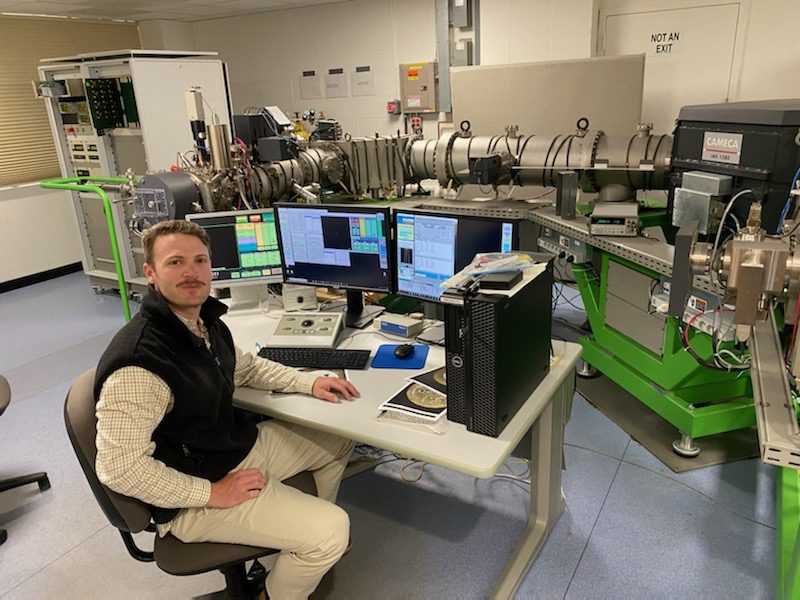
Benjamin Urann, who graduated from the MIT-WHOI Joint Program in 2021 and is now a NSF postdoctoral fellow at University of Wyoming, analyzes water in minerals with a secondary ion mass spectrometer at the Woods Hole Oceanographic Institution.
Photo by Ben Urann, © Woods Hole Oceanographic Institution

The percentage of water in arc volcanoes, which form above subduction zones, may be far more than many previous studies have calculated.

This increased amount of water has broad implications for understanding how Earth’s lower crust forms, how magma erupts through the crust, and how economically important mineral ore deposits form, according to a new paper led by authors from the Woods Hole Oceanographic Institution (WHOI), “High water content of arc magmas recorded in cumulates from subduction zone lower crust,” published in Nature Geoscience.

The estimated water concentrations in primitive arc magmas from this study are more variable and significantly higher than the average of about four weight percent of water found in other studies, according to the paper. The results show that primitive arc H2O after extensive crystal fractionation in the lower arc crust, the paper adds.

Geology from 50 Light-Years: Webb Gets Ready to Study Rocky Worlds

Comparison of Exoplanets 55 Cancri e and LHS 3844 b to Earth and Neptune
Credit: NASA, ESA, CSA, Dani Player (STScI)

With its mirror segments beautifully aligned and its scientific instruments undergoing calibration, NASA’s James Webb Space Telescope is just weeks away from full operation. Soon after the first observations are revealed this summer, Webb’s in-depth science will begin.

Among the investigations planned for the first year are studies of two hot exoplanets classified as “super-Earths” for their size and rocky composition: the lava-covered 55 Cancri e and the airless LHS 3844 b. Researchers will train Webb’s high-precision spectrographs on these planets with a view to understanding the geologic diversity of planets across the galaxy, and the evolution of rocky planets like Earth.

New Combined Therapy Helps Extend Lives of Men With Prostate Cancer

Howard Sandler, MD
Source: Cedars-Sinai
Practice-changing research from Cedars-Sinai Cancer shows that a combination of androgen deprivation therapy—a commonly used hormone injection—plus pelvic lymph node radiation, kept nearly 90% of clinical trial patients’ prostate cancer at bay for five years. The findings were published in the peer-reviewed journal The Lancet.

The study also shows that patients with prostate cancer who didn’t receive androgen deprivation therapy—and who did not receive pelvic lymph node radiation—had a five-year survival of 70%.

“We can now confirm that pelvic lymph node treatment used together with androgen deprivation therapy, or even used as a stand-alone treatment option greatly improves outcomes in patients with postoperative prostate cancer,” said Howard Sandler, MD, chair of the Department of Radiation Oncology at Cedars-Sinai Cancer and senior author of the study. “These findings are an encouraging step forward, both for the medical community and for the patients and their loved ones seeking curative treatment options.”

The international Phase III clinical trial that served as the basis of The Lancet study enrolled 1,716 patients between March 31, 2008, and March 30, 2015. Enrollees were separated into three groups.

Group one received salvage prostate bed radiotherapy—a standard radiation targeted to the area in which the prostate used to exist before its surgical removal. These patients had a median five-year survival of 71%.

The second group received the standard radiation treatment, in combination with androgen deprivation therapy. They had a median five-year survival of 81%.

A helping hand for robotic manipulator design

MIT researchers have created an integrated design pipeline that enables a user with no specialized knowledge to quickly craft a customized 3D-printable robotic hand.
Credits: Lara Zlokapa

MIT researchers have created an interactive design pipeline that streamlines and simplifies the process of crafting a customized robotic hand with tactile sensors.

Typically, a robotics expert may spend months manually designing a custom manipulator, largely through trial-and-error. Each iteration could require new parts that must be designed and tested from scratch. By contrast, this new pipeline doesn’t require any manual assembly or specialized knowledge.

Akin to building with digital LEGOs, a designer uses the interface to construct a robotic manipulator from a set of modular components that are guaranteed to be manufacturable. The user can adjust the palm and fingers of the robotic hand, tailoring it to a specific task, and then easily integrate tactile sensors into the final design.

Once the design is finished, the software automatically generates 3D printing and machine knitting files for manufacturing the manipulator. Tactile sensors are incorporated through a knitted glove that fits snugly over the robotic hand. These sensors enable the manipulator to perform complex tasks, such as picking up delicate items or using tools.

An alarming prevalence of smell, taste loss during COVID’s delta surge

Kai Zhao
The loss of smell and taste with a COVID-19 infection during the delta surge was a prevalent symptom and wasn’t prevented by vaccination, new research suggests.

The small Ohio State University study also found that some people with the earliest COVID-19 infections were continuing to experience loss of these senses months later and didn’t even realize it.

In participants with active infections during the delta surge, a majority (22 of 25) had been vaccinated. Objective screenings found that 100% were experiencing a diminished or lost sense of smell – but only 54.5% self-reported any problem with odor detection.

“We’re getting this quick communication out as an early warning. We need to continue to take a closer look at COVID infection’s impact on smell and taste,” said Dr. Kai Zhao, associate professor of otolaryngology in Ohio State’s College of Medicine and senior author of the study. “Even if COVID doesn’t cause death or hospitalization, it can have long-lasting effects on some of our sensory functions.

“A lot of people are potentially suffering, which is probably not appreciated by society.”

The study is published in the journal Med.

Featured Article

What Is: Quantum Biology

Scientific Frontline: Extended "At a Glance" Summary : Quantum Biology The Core Concept : Quantum biology is the study of non-triv...

Top Viewed Articles