. Scientific Frontline

Sunday, August 7, 2022

‘Green’ poultry farming heats up with geothermal innovation

Professor Guillermo Narsilio in a geothermal plant.
Credit: Peter Casamento

A new hybrid geothermal and solar energy system is set to dramatically reduce emissions and energy costs for many Australian poultry farms.

The University of Melbourne has teamed up with geothermal companies Ground Source Systems and Fourth Element Energy to create a hybrid geothermal and solar heating, ventilation and air conditioning (HVAC) system specifically for the poultry industry.

The project is funded through a $318,000 grant from the Federal Government’s Australian Renewable Energy Agency (ARENA), which supports the global transition to net zero emissions by accelerating pre-commercial innovation.

The project will demonstrate how the energy demands of sheds can be coordinated with on-site renewable energy production, showing both economic and environmental benefits to farmers to further support the uptake of the technology across the industry.

The system includes a ground-source (geothermal) heat pump system and full-scale solar photovoltaic (PV) system with gas back-up, which can supply the HVAC needs of poultry farms.

The first stage of the project will see a demonstration, full-scale hybrid system installed and optimized for efficiency at the commercial poultry farm Bargo in Yanderra, NSW, this year.

No trace of dark matter halos

The dwarf galaxy NGC1427A flies through the Fornax galaxy cluster and undergoes disturbances which would not be possible if this galaxy were surrounded by a heavy and extended dark matter halo, as required by standard cosmology.
Credit: ESO

According to the standard model of cosmology, the vast majority of galaxies are surrounded by a halo of dark matter particles. This halo is invisible, but its mass exerts a strong gravitational pull-on galaxies in the vicinity. A new study led by the University of Bonn and the University of Saint Andrews (Scotland) challenges this view of the Universe. The results suggest that the dwarf galaxies of Earth’s second closest galaxy cluster – known as the Fornax Cluster – are free of such dark matter halos. The study appeared in the journal Monthly Notices of the Royal Astronomical Society.

Dwarf galaxies are small, faint galaxies that can usually be found in galaxy clusters or near larger galaxies. Because of this, they might be affected by the gravitational effects of their larger companions. “We introduce an innovative way of testing the standard model based on how much dwarf galaxies are disturbed by gravitational, tides’ from nearby larger galaxies”, said Elena Asencio, a PhD student at the University of Bonn and the lead author of the story. Tides arise when gravity from one body pulls differently on different parts of another body. These are similar to tides on Earth, which arise because the moon pulls more strongly on the side of Earth which faces the moon.

The Fornax Cluster has a rich population of dwarf galaxies. Recent observations show that some of these dwarfs appear distorted, as if they have been perturbed by the cluster environment. "Such perturbations in the Fornax dwarfs are not expected according to the Standard Model,” said Pavel Kroupa, Professor at the University of Bonn and Charles University in Prague. “This is because, according to the standard model, the dark matter halos of these dwarfs should partly shield them from tides raised by the cluster."

Fishnet Shell Formed by Jumbo Phages Offers Protection Against Bacterial Host Defenses

The chimallin protein assembles as a cube in vitro, consisting of 24 individual chimallin proteins. In the cell, thousands of chimallin protomers assemble into the phage nucleus shell as a sheet made of square tiles.
Credit: Corbett & Villa Labs, UC San Diego

The large viruses known as jumbo phages employ a curious counter-defense strategy to protect their DNA while attacking bacteria. Now, scientists have identified the key protein involved and solved its structure.

It’s a dog-eat-dog world out there, even for those that live on a microscopic scale. Bacteria, battling to survive against invaders, have devised various defense mechanisms over billions of years. In turn, phages — viruses that attack bacteria — have craftily come up with a few evasive maneuvers of their own.

“It’s an arms race,” says biophysicist Elizabeth Villa, a Howard Hughes Medical Institute (HHMI) Investigator at the University of California, San Diego (UC San Diego). “There’s very complex biology in the fight between bacteria and phages.”

In 2017, Villa and her collaborator Joe Pogliano discovered one of the more curious counter-defense strategies, employed by a group of viruses called jumbo phages. When the phages enter bacterial cells, they assemble a special ‘nucleus-like’ shell around their viral DNA, thus preserving their ability to replicate and eventually take over the host bacterium.

“We saw a closed compartment made from a single layer of protein,” says Villa. However, the images obtained at that time were too fuzzy to determine the protein’s exact identity and overall shape.

But now, new research from Villa’s team, published August 3, 2022, in Nature, fills in those missing gaps. The nuclear shell, they discovered, consists primarily of a previously undescribed protein called chimallin, which forms a quadrangular mesh around the phage DNA.

Sniffing out cancer with locust brains

With their antennae and neural circuitry, locusts can differentiate myriad odors, including those released by cancer cells. Spartan researchers are tapping into the insects’ brains to take advantage of that for early detection.
Resized Image using AI by SFLORG
Credit: Derrick L. Turner

Researchers at Michigan State University have shown that locusts can not only “smell” the difference between cancer cells and healthy cells, but they can also distinguish between different cancer cell lines.

However, patients need not worry about locusts swarming their doctors’ offices. Rather, the researchers say this work could provide the basis for devices that use insect sensory neurons to enable the early detection of cancer using only a patient’s breath.

Although such devices aren’t on the immediate horizon, they’re not as far-fetched as they might sound, said the authors of the new research shared May 25 on the website BioRxiv.

Part of that is because people have grown accustomed to technology that augments or outperforms our natural senses. For example, telescopes and microscopes reveal otherwise invisible worlds. The success of engineered devices can make it easy to overlook the performance of our natural tools, especially the sense organ right in front of our eyes.

Researchers unveil key processes in marine microbial evolution

Microbial eukaryotes have made hundreds of great leaps from sea to land, which would explain today's great biodiversity
Credit: Albert Reñé.

An international study in which the ICM-CSIC has participated has reconstructed the evolutionary history of microbial diversity over the last 2,000 million years.

A study published recently in the prestigious journal Nature Ecology and Evolution has unveiled some of the key processes in marine microbial evolution. According to the study, led by the Uppsala University (Sweden) and with the participation of the Institut de Ciències del Mar (ICM-CSIC) of Barcelona, it is the large number of habitat transitions -from sea to land and vice versa- that have occurred in the last millions of years that explains the great current diversity.

According to the authors, "crossing the salinity barrier is not easy for organisms and, when this happens, the resulting transitions are key evolutionary events that can trigger explosions of diversity". However, until now it was not known how frequent these transitions have been in the eukaryotic tree of life, which comprises animals, plants and a wide variety of eukaryotic microorganisms.

Small but very versatile

Specifically, the work published now has shown that microbial eukaryotes have made hundreds of great leaps from sea to land, and also to freshwater habitats, and vice versa, during their evolution. This, in turn, has made it possible to deduce where the ancestors of each of the microbial eukaryote groups were found.

"Thanks to the fact that we have good phylogenetic trees and samples from different environments, we have been able to analyze the habitat transitions in different groups of eukaryotes, which have been hundreds of times during millions of years of eukaryotic evolution, which is more than we thought," explains Ramon Massana, ICM-CSIC researcher and one of the authors of the study.

How bat brains listen out for incoming signals during echolocation

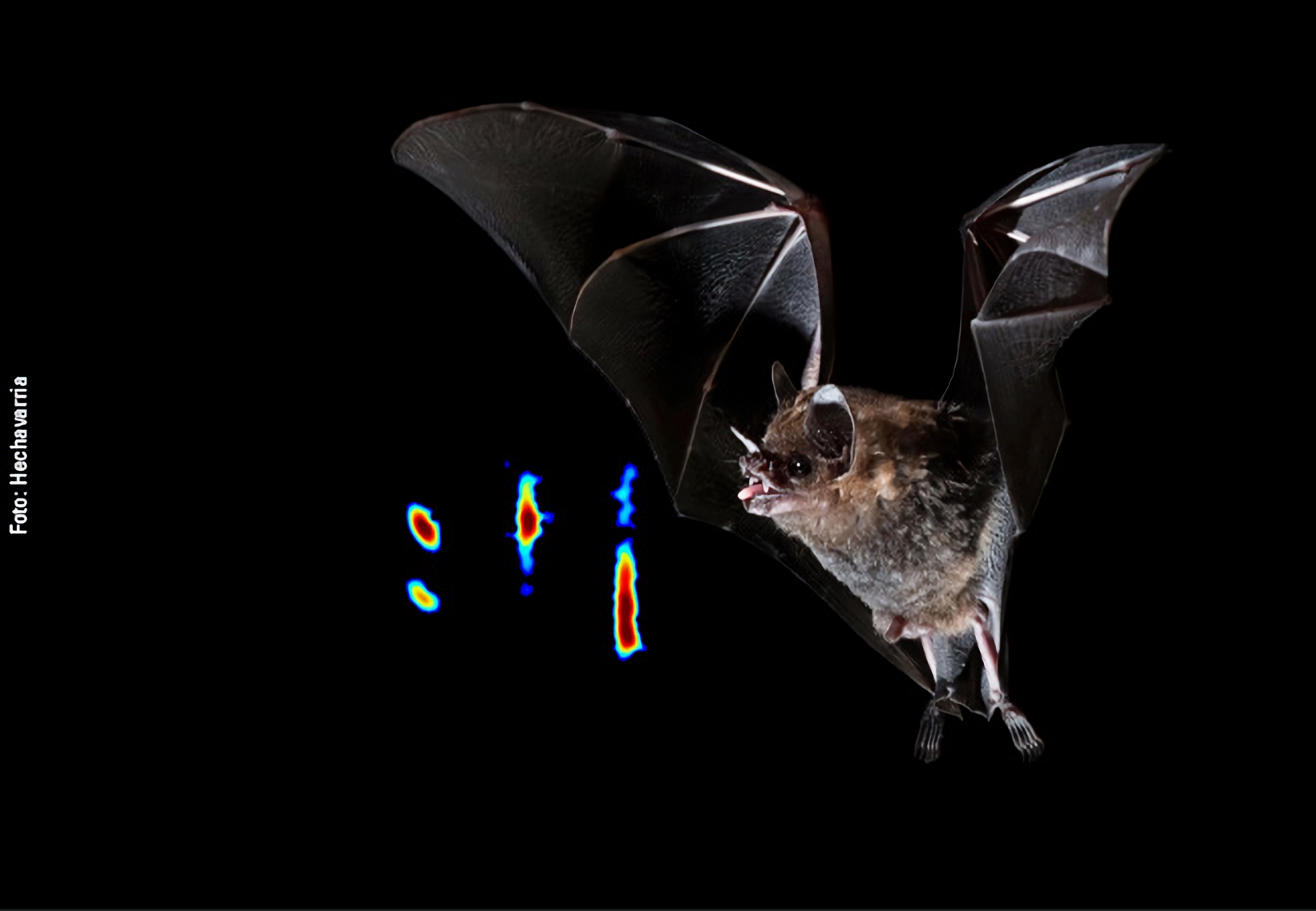
Bats "see" with the ears. Scientists at Goethe University have found out how the auditory cortex is prepared for the incoming acoustic signals.
Credit: Hechavarria

When bats emit sounds for echolocation, a feedback loop modulates the sensitivity of the auditory cortex for incoming acoustic signals. Neuroscientists from the Goethe University Frankfurt found out. In a study published in the journal "Nature Communications", they show that the flow of information in the neuronal circuit involved reversed as the sound was generated. This feedback prepares the auditory cortex for the expected “echoes” of the sounds sent out. The researchers see their results as a sign that the importance of feedback loops in the brain is currently still underestimated.

Bats are famous for their ultrasound navigation: they orientate themselves through their extremely sensitive hearing by emitting ultrasound sounds and getting a picture of their environment based on the sound thrown back. For example, the eyelid nose bat (Carollia perspicillata) the fruits she prefers as food through this echolocation system. At the same time, the bats also use their voice to communicate with their peers, for which they choose a somewhat lower frequency range.

Neuroscientist Julio C. Hechavarria from the Institute for Cell Biology and Neuroscience at Goethe University, together with his team, examines which brain activities in the case of the eyewear nose go hand in hand with the vocalizations. In their latest study, the Frankfurters examined how the front lobes - a region in the front brain that is associated with the planning of actions in humans - and the auditory cortex, in which acoustic signals are processed, work together in the echolocation. For this purpose, the researchers used tiny electrodes on the bats, which recorded the activity of the nerve cells in the frontal lobe and in the auditory cortex.

Saturday, August 6, 2022

The many ways nature nurtures human well-being

Visitors leisurely enjoy an iris garden in Japan. Of all the pathways linking a single cultural ecosystem service to a single constituent of well-being captured from the academic literature, 86.3% represented positive contributions compared to just 11.7% negative contributions. 
Resized Image using AI by SFLORG
Credit: 2022 Nicola Burghall CC-BY-NC

A systematic review of 301 academic articles on “cultural ecosystem services” has enabled researchers to identify how these nonmaterial contributions from nature are linked to and significantly affect human well-being. They identified 227 unique pathways through which human interaction with nature positively or negatively affects well-being. These were then used to isolate 16 distinct underlying mechanisms, or types of connection, through which people experience these effects. This comprehensive review brings together observations from a fragmented field of research, which could be of great use to policymakers looking to benefit society through the careful use and protection of the intangible benefits of nature.

Do you ever feel the need for a bit of fresh air to energize yourself, or to spend time in the garden to relax? Aside from clean water, food and useful raw materials, nature provides many other benefits that we might overlook or find it hard to grasp and quantify. Research into cultural ecosystem services (CESs), the nonmaterial benefits we receive from nature, aims to better understand these contributions, whether they emerge through recreation and social experiences, or nature’s spiritual value and our sense of place.

Hundreds of CESs studies have explored the connections between nature and human well-being. However, they have often used different methods and measurements, or focused on different demographics and places. This fragmentation makes it difficult to identify overarching patterns or commonalities on how these intangible contributions really affect human well-being. Better understanding them could aid real-world decision-making about the environment, which could benefit individuals and the wider society.

Common weed may be ‘super plant’ that holds key to drought-resistant crops

Portulaca oleracea
Source: Yale University

A common weed harbors important clues about how to create drought resistant crops in a world beset by climate change.

Yale scientists describe how Portulaca oleracea, commonly known as purslane, integrates two distinct metabolic pathways to create a novel type of photosynthesis that enables the weed to endure drought while remaining highly productive, they report August 5 in the journal Science Advances.

“This is a very rare combination of traits and has created a kind of ‘super plant’ — one that could be potentially useful in endeavors such as crop engineering,” said Yale’s Erika Edwards, professor of ecology and evolutionary biology and senior author of the paper.

Plants have independently evolved a variety of distinct mechanisms to improve photosynthesis, the process by which green plants use sunlight to synthesize nutrients from carbon dioxide and water. For instance, corn and sugarcane evolved what is called C4 photosynthesis, which allows the plant to remain productive under high temperatures. Succulents such as cacti and agaves possess another type called CAM photosynthesis, which helps them survive in deserts and other areas with little water. Both C4 and CAM serve different functions but recruit the same biochemical pathway to act as “add-ons” to regular photosynthesis.

UC gets NASA grant to improve drone navigation

UC will work with the Pennsylvania company VISIMO to develop better autonomous navigation for drones as part of a NASA grant.
Resized Image using AI by SFLORG
Credit: Andrew Higley/UC Marketing + Brand

NASA awarded a small business grant to the University of Cincinnati and a Pennsylvania company to develop better autonomous navigation for drones.

UC is among 41 public institutions and 257 small businesses across the United States that will share $50 million in Small Business Innovation Research grants.

“NASA is working on ambitious, groundbreaking missions that require innovative solutions from a variety of sources, especially our small businesses,” NASA Deputy Administrator Pam Melroy said.

UC College of Engineering and Applied Science aerospace engineering professor Kelly Cohen will work with the company VISIMO, based in Carnegie, Pennsylvania, to develop a testing environment that helps evaluate the safety and stability of artificial intelligence models used in autonomous drones. Using a 3D simulation, the project will test the complex sensor fusion and decision-making routines needed for real-time autonomous navigation.

According to the grant application, the simulations will help put the artificial intelligence to the test in situations that feature cascading failures in emergency situations such as a sudden storm that knocks out a drone’s sensor or cameras.

Thursday, August 4, 2022

How plants regulate their sugar balance

Work in the laboratory begins with these tiny Arabidopsis seedlings.
Credit: RUB, Klaus Hagemann

The function of the regulator protein SPL7 in nutrient absorption from the soil was already known. Now it turns out that this protein also plays a role in a completely different context.

As important nutrients, metals, such as copper, convey the functions of many proteins. If this element is in short supply, plants can increase its absorption and switch to copper-independent metabolic pathways. The decisive factor for this is the protein Squamosa Promoter-Binding Protein-Like 7, or SPL7 for short. It belongs to the group of proteins that can regulate which genes are increasingly read and which proteins are increasingly produced. As researchers at the Ruhr University Bochum (RUB) have now found, SPL7 is also essential for energy metabolism.

A team led by Prof. Dr. Ute Krämer from the Chair of Molecular Genetics and Physiology of Plants at the RUB together with colleagues from the Max Planck Institute for Plant Breeding Research in Cologne and for Molecular Plant Physiology in Potsdam in the journal "The Plant Cell".

In photosynthesis, plants produce sugar from carbon dioxide and water using light energy alone. This results in high-energy substances that are the basis of all life on earth. "The improved understanding of how plants control their sugar balance in this study can be useful for the development of new plant-based biotechnological processes," says Ute Krämer. “The findings could also help to increase agricultural yields on copper deficiency soils."

Study tracks plant pathogens in leafhoppers from natural areas

Leafhoppers that are known – or are likely – to transmit phytoplasmas to plants include, clockwise, from top left, species of the genera Hishimonoides, Macrosteles, Amplicephalus, Osbornellus and Amplicephalus. The leafhopper on the lower right, Osbornellus auronitens, was found for the first time to harbor a phytoplasma strain.
Credit: Christopher Dietrich

Phytoplasmas are bacteria that can invade the vascular tissues of plants, causing many different crop diseases. While most studies of phytoplasmas begin by examining plants showing disease symptoms, a new analysis focuses on the tiny insects that carry the infectious bacteria from plant to plant. By extracting and testing DNA from archival leafhopper specimens collected in natural areas, the study identified new phytoplasma strains and found new associations between leafhoppers and phytoplasmas known to harm crop plants.

Reported in the journal Biology, the study is the first to look for phytoplasmas in insects from natural areas, said Illinois Natural History Survey postdoctoral researcher Valeria Trivellone, who led the research with INHS State Entomologist Christopher Dietrich. It also is the first to use a variety of molecular approaches to detect and identify phytoplasmas in leafhoppers.

“We compared traditional molecular techniques with next-generation sequencing approaches, and we found that the newer techniques outperformed the traditional ones,” Trivellone said. These methods will allow researchers to target more regions of the phytoplasma genomes to get a clearer picture of the different bacterial strains and how they damage plants, she said.

“One thing that is really novel about this study is that we’ve focused on the vectors of disease, on the leafhoppers, and not on the plants,” Dietrich said. The standard approach of looking for phytoplasmas in plants is much more labor-intensive, requiring that scientists extract the DNA from a plant that appears to be diseased and checking for phytoplasmas, he said.

Monday, August 1, 2022

Mystery in the Gulf

The Hillsborough River at Rotary River Park. One of several sites where project scientists will collect samples to measure the iron and nitrogen content of the Hillsborough River,which carries nutrients into Tampa Bay and into the Gulf of Mexico.
Credit: Tim Conway, USF.

West of St. Petersburg in the Gulf of Mexico is an area called the West Florida Shelf. It’s a marine desert, cut off from many of the elements that are essential for life.

But in this nutrient-deficient region, some forms of phytoplankton — microscopic plants that float through the water — are thriving and supporting other forms of life. But how?

Florida State University Associate Professor Angie Knapp and a team of researchers from around the country have received a $2.3 million grant from the National Science Foundation to investigate this oceanographic mystery. Knapp, part of the Department of Earth, Ocean and Atmospheric Science in the College of Arts and Sciences, will lead the project to examine how iron and nitrogen released from submarine groundwater discharge potentially serves as a fertilizer for phytoplankton in this area and beyond.

“Plant growth in the ocean plays an important role in regulating atmospheric carbon dioxide concentrations, which plays an important role in regulating climate,” Knapp said. “However, plant growth in the ocean is often limited by the availability of nitrogen; thus, we’re focusing on the processes that add and remove nitrogen to and from the ocean.”

Enzyme, proteins work together to tidy up tail ends of DNA in dividing cells

From left, Qixiang He, Ci Ji Lim, Xiuhua Lin. 
Resized Image using AI by SFLORG
Credit: University of Wisconsin–Madison

Researchers at the University of Wisconsin–Madison have described the way an enzyme and proteins interact to maintain the protective caps, called telomeres, at the end of chromosomes, a new insight into how a human cell preserves the integrity of its DNA through repeated cell division.

DNA replication is essential for perpetuating life as we know it, but many of the complexities of the process — how myriad biomolecules get where they need to go and interact over a series of intricately orchestrated steps — remain mysterious.

“The mechanisms behind how this enzyme, called Polα-primase, works have been elusive for decades,” says Ci Ji Lim, an assistant professor of biochemistry and principal investigator on new research into DNA replication published recently in Nature. “Our study provides a big breakthrough in understanding DNA synthesis at the ends of chromosomes, and it generates new hypotheses about how Polα-primase — a central cog in the DNA replication machine — operates.”

Every time a cell divides, the telomeres at the end of the long DNA molecule that makes up a single chromosome shorten slightly. Telomeres protect chromosomes like an aglet protects the end of a shoelace. Eventually, the telomeres are so short that vital genetic code on a chromosome is exposed and the cell, unable to function normally, enters a zombie state. Part of a cell’s routine maintenance includes preventing excessive shortening by replenishing this DNA using Polα-primase.

Study finds nickelate superconductors are intrinsically magnetic

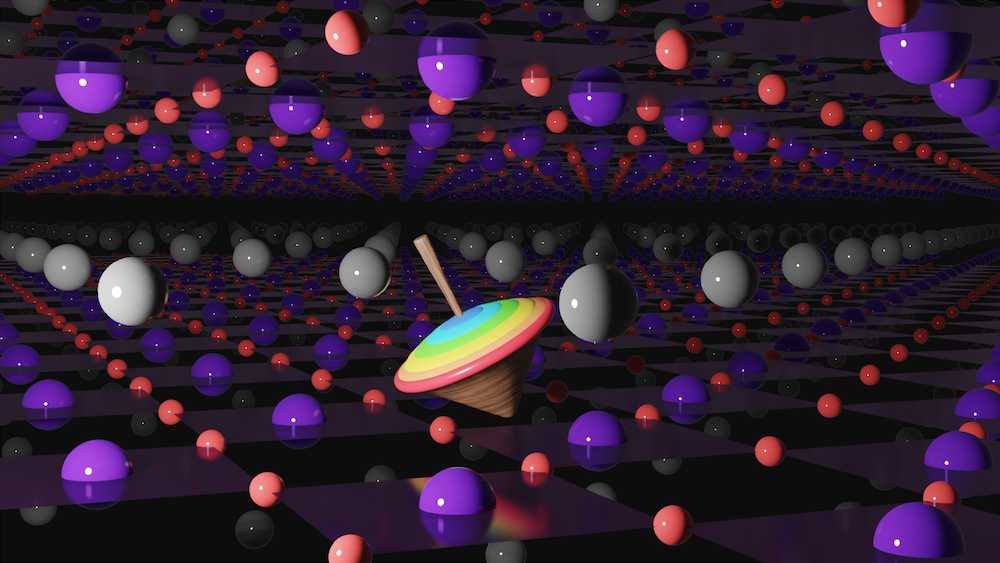
A muon, center, spins like a top within the atomic lattice of a thin film of superconducting nickelate. These elementary particles can sense the magnetic field created by the spins of electrons up to a billionth of a meter away. By embedding muons in four nickelate compounds at the Paul Scherrer Institute in Switzerland, researchers at SLAC and Stanford discovered that the nickelates they tested host magnetic excitations whether they’re in their superconducting states or not – another clue in the long quest to understand how unconventional superconductors can conduct electric current with no loss.
 Credit: Jennifer Fowlie/SLAC National Accelerator Laboratory

Electrons find each other repulsive. Nothing personal – it’s just that their negative charges repel each other. So, getting them to pair up and travel together, like they do in superconducting materials, requires a little nudge.

In old-school superconductors, which were discovered in 1911 and conduct electric current with no resistance, but only at extremely cold temperatures, the nudge comes from vibrations in the material’s atomic lattice.

But in newer, “unconventional” superconductors – which are especially exciting because of their potential to operate at close to room temperature for things like zero-loss power transmission – no one knows for sure what the nudge is, although researchers think it might involve stripes of electric charge, waves of flip-flopping electron spins that create magnetic excitations, or some combination of things.

In the hope of learning more by looking at the problem from a slightly different angle, researchers at Stanford University and the Department of Energy’s SLAC National Accelerator Laboratory synthesized another unconventional superconductor family – the nickel oxides, or nickelates. Since then, they’ve spent three years investigating the nickelates’ properties and comparing them to one of the most famous unconventional superconductors, copper oxides or cuprates.

Super-earth skimming habitable zone of red dwarf

 The green region represents the habitable zone where liquid water can exist on the planetary surface. The planetary orbit is shown as a blue line. Ross 508 b skims the inner edge of the habitable zone (solid line), possibly crossing into the habitable zone for part of the orbit (dashed line).
Credit: Astrobiology Center

A super-Earth planet has been found near the habitable zone of a red dwarf star only 37 light-years from the Earth. This is the first discovery by a new instrument on the Subaru Telescope and offers a chance to investigate the possibility of life on planets around nearby stars. With such a successful first result, we can expect that the Subaru Telescope will discover more, potentially even better, candidates for habitable planets around red dwarfs.

Red dwarfs, stars smaller than the Sun, account for three-quarters of the stars in the Milky Way Galaxy, and are abundant in the neighborhood around the Sun. As such, they are important targets in the search for nearby extra-solar planets and extraterrestrial life. But red dwarfs are cool and don’t emit much visible light compared to other types of stars, making it difficult to study them.

In the infrared wavelengths red dwarfs are brighter. So, the Astrobiology Center in Japan developed an infrared observational instrument mounted on the Subaru Telescope to search for signs of planets around red dwarf stars. The instrument is called IRD for Infrared Doppler, the observational method used in this search.

Featured Article

What Is: Psychopathy | Part three of the "Dark Tetrad"

Scientific Frontline: Extended "At a Glance" Summary : Psychopathy The Core Concept : Psychopathy is a profound personality disord...

Top Viewed Articles