. Scientific Frontline

Wednesday, September 21, 2022

No evidence that dehorning black rhinos negatively impacts the species’ reproduction or survival

A sedated black rhino in the process of being dehorned, with a cap over its eye to protect it from the dust
Credit: Piet Beytell, Namibian Ministry of Environment, Forestry and Tourism

There are no statistically significant differences in key factors of population growth - breeding, birth, survival, life span and death - between dehorned or horned black rhinos new research, conducted by the University of Bristol Vet School, Namibian Ministry of Environment, Forestry and Tourism, and Save the Rhino Trust has found.

The black rhino is critically endangered, with poaching one of several threats to the species’ survival. Many reserves across a number of African countries, including Namibia, South Africa, and Zimbabwe, now dehorn their rhinos in an attempt to reduce poaching but few studies have looked at the impacts of dehorning, particularly in black rhinos.

The study aimed to build on existing knowledge of population productivity between dehorned and horned individuals in four sub-populations of black rhino (of the sub-species Diceros bicornis bicornis) in Namibia.

Three of the populations had undergone some level of dehorning at least once while one of the populations had never been dehorned. The measures investigated included: age of females at the birth of their first calf (age at first reproduction or AFR); average time between the birth of calves for each female (inter-calving interval); birth sex ratios, calf survival, life span and cause of death

Tuesday, September 20, 2022

Octopuses prefer certain arms when hunting and adjust tactics to prey

A California two-spot octopus hunts a shrimp in an experiment, striking with its second arm.
Credit: Wardill Lab, University of Minnesota

Famous for their eight arms, octopuses leverage all of their appendages to move, jet through the water and capture prey. But their movements can look awkward and seemingly unplanned at times, more closely resembling aliens than earthly creatures.

“Normally when you look at an octopus for a short while, nothing is repeatable. They squirm around and just look weird in their exploratory movements,” said Trevor Wardill, an assistant professor in the College of Biological Sciences who studies octopuses and other cephalopods.

For a new study in Current Biology, Wardill and colleagues investigated whether octopuses preferred certain arms over others when hunting, rather than using each arm equally. A better understanding of how they use their arms will aid efforts to develop next-generation, highly-manipulative soft robots.

The research team studied the California two-spot octopus, which live for about two years and grow to the size of tennis balls. Octopus arms are numbered on each side of its body, starting at the center. Researchers dropped different types of prey, including crabs and shrimp, into the tanks and recorded video as the octopuses, who were hiding in ornamental SpongeBob “dens” with one eye facing outward, lunged for the snack. Because crabs move slowly while shrimp can flick their tails to escape quickly, each type of prey potentially requires different hunting tactics.

Mysterious soil virus gene seen for first time

Crystals of the soil virus AMG product (chitosanase) at 400x magnification. Individual crystals were cryo-cooled in liquid nitrogen before being exposed to the powerful SSRL X-rays beams for structure analysis.
Credit: Clyde Smith/SLAC National Accelerator Laboratory

In every handful of soil, there are billions of bacteria, fungi, and viruses, all working to sustain the cycle of life. Understanding how these microorganisms interact with one another helps scientists analyze soil health, soil carbon and nutrient cycling, and even the ways in which dead insects decompose.

Soil viruses contain genes that appear to have some metabolic function, but they are clearly not required for normal viral replication. These genes are called auxiliary metabolic genes (AMGs) and they produce proteins, some of which are enzymes that have a variety of functions. Until now, scientists have wondered whether some AMG proteins play a role in critical soil processes, like carbon cycling. To find out more about soil AMGs, researchers determined the atomic structure of a protein that is expressed by a particular AMG.

Specifically, researchers irradiated fragile crystallized protein samples with high-brightness X-rays generated by the Stanford Synchrotron Radiation Lightsource’s (SSRL) Beam Line 12-2 at the Department of Energy’s (DOE) SLAC National Accelerator Laboratory. The X-rays struck the proteins within the crystal samples, revealing their molecular structures and a bit of the mystery behind their makeup.

AMGs do not, like many viral genes, help a virus replicate. Instead, they encode a variety of proteins, each with their own predicted function. The AMG that was expressed was a putative enzyme that plays a key role in how soils process and cycle carbon in the biosphere.

Scientists find that wolves can show attachment toward humans

The wolf pup Hendrix.
Photo credit: Christina Hansen Wheat/Stockholm University.

When it comes to showing affection towards people, many dogs are naturals. Now comes word reported in the journal Ecology and Evolution on September 20th that the remarkable ability to show attachment behavior toward human caregivers also exists in wolves.

The findings were made when researchers at Stockholm University, Sweden, tested 10 wolves and 12 dogs in a behavioral test specifically designed to quantify attachment behaviors in canids. During this test 23-week-old wolves spontaneously discriminated between a familiar person and a stranger just as well as dogs did, and showed more proximity seeking and affiliative behaviors towards the familiar person. Additionally, the presence of the familiar person acted as a social stress buffer for the wolves, calming them in a stressful situation. These discoveries build on a slowly accumulating body of evidence contradicting the hypothesis that the abilities necessary to form attachment with humans arose in dogs only after humans domesticated them at least 15,000 years ago.

“We felt that there was a need to thoroughly test this,” says Dr. Christina Hansen Wheat, PhD in Ethology from Stockholm University, Sweden. “Together with earlier studies making important contributions to this question, I think it is now appropriate to entertain the idea that if variation in human-directed attachment behavior exists in wolves, this behavior could have been a potential target for early selective pressures exerted during dog domestication.”

Risk of blood clots remains for almost a year after COVID-19 infection, study suggests

Credit: pixabay

COVID-19 infection increases the risk of potentially life-threatening blood clots for at least 49 weeks, according to a new study of health records of 48 million unvaccinated adults from the first wave of the pandemic.

The findings suggest that the COVID-19 pandemic may have led to an additional 10,500 cases of heart attacks, strokes and other blood clot complications such as deep vein thrombosis in England and Wales in 2020 alone, although the excess risk to individuals remains small and reduces over time.

The research – involving a large team of researchers led by the Universities of Bristol, Cambridge, and Edinburgh, and Swansea University – shows that people with only mild or moderate disease were also affected. The authors suggest that preventive strategies, such as giving high-risk patients medication to lower blood pressure, could help reduce cases of serious clots.

Researchers studied de-identified electronic health records across the whole population of England and Wales from January to December 2020 to compare the risk of blood clots after COVID-19 with the risk at other times. Data were accessed securely and safely via the NHS Digital Trusted Research Environment for England, and the SAIL Databank for Wales.

In the first week after a COVID-19 diagnosis, people were 21 times more likely to have a heart attack or stroke, conditions which are mainly caused by blood clots blocking arteries. This dropped to 3.9 times more likely after 4 weeks.

Scientists Unveil New System for Naming Majority of the World’s Microorganisms

Fluorescent-stained bacteria (pink) and archaea (green) from near-boiling water from Great Boiling Spring in Gerlach, Nevada.
Photo credit: Jeremy Dodsworth.

What’s in a name? For microorganisms, apparently a lot.

Prokaryotes are single-celled microorganisms - bacteria are an example - that are abundant the world over. They exist in the oceans, in soils, in extreme environments like hot springs, and even alongside and inside other organisms including humans.

In short, they’re everywhere, and scientists worldwide are working to both categorize and communicate about them. But here’s the rub: Most don’t have a name.

Less than 0.2% of known prokaryotes have been formally named because current regulations – described in the International Code of Nomenclature of Prokaryotes (ICNP) – require new species to be grown in a lab and freely distributed as pure and viable cultures in collections. Essentially, to name it you have to have multiple physical specimens to prove it.

In an article published in the journal Nature Microbiology, a team of scientists present a new system, the SeqCode, and a corresponding registration portal that could help microbiologists effectively categorize and communicate about the massive number of identified yet uncultivated prokaryotes.

Discovery explains cancer chemotherapy resistance, offers solution

 Experimental DNA fibers with fluorescence (pictured) were used to reveal the speed of DNA replication forks.
Credit: Diego Dibitetto/Smolka Lab

Researchers have uncovered a novel pathway that explains how cancer cells become resistant to chemotherapies, which in turn offers a potential solution for preventing chemo-resistance.

The study, “DNA-PKcs Promotes Fork Reversal and Chemoresistance,” was published Sept. 20 in the journal Molecular Cell.

The research describes for the first time how a type of enzyme – previously known for its roles in DNA repair – prevents DNA damage in cancer cells, making them tolerant to chemotherapy drugs.

“It provides us tools to manipulate and then break chemo-resistance in cancer cells,” said Marcus Smolka, interim director of the Weill Institute for Cell and Molecular Biology and professor of molecular biology and genetics in the College of Agriculture and Life Sciences. Diego Dibitetto, a former postdoctoral researcher in Smolka’s lab who is currently at the University of Bern in Switzerland, is the paper’s first author.

Many anti-cancer drugs work by creating blocks on the DNA of cancer cells as they replicate. During replication, DNA strands entwined in a double helix separate into two individual strands so each strand can be copied, eventually leading to two new double helixes. The junction where this separation and copying occurs is called a replication fork, which unzips down the double helix.

Malaria Spike Linked to Amphibian Die-Off

The Panamanian golden frog is endemic to Panama and is among the species whose populations collapsed following the deadly fungal pathogen "Bd."
Credit: Brian Gratwicke, Wikimedia Common

Dozens of species of frogs, salamanders and other amphibians quietly disappeared from parts of Latin America in the 1980s and 2000s, with little notice from humans, outside of a small group of ecologists. Yet the amphibian decline had direct health consequences for people, according to a study from the University of California, Davis.

The study, published in the journal Environmental Research Letters, links an amphibian die-off in Costa Rica and Panama with a spike in malaria cases in the region. At the spike’s peak, up to 1 person per 1,000 annually contracted malaria that normally would not have had the amphibian die-off not occurred, the study found.

“Stable ecosystems underpin all sorts of aspects of human well-being, including regulating processes important for disease prevention and health,” said lead author Michael Springborn, a professor in the UC Davis Department of Environmental Science and Policy. “If we allow massive ecosystem disruptions to happen, it can substantially impact human health in ways that are difficult to predict ahead of time and hard to control once they’re underway.”

The first look at how rabies affects vampire bat social behavior

Researchers said no previous studies had tried to quantify changes in grooming habits in vampire bats infected with rabies – despite the possibility that they might infect each other through the licking and chewing that constitute the grooming behavior they engage in for up to 5% of their active time in the roost.
Photo credit: Rachel Moon

Vampire bats infected with the rabies virus aren’t likely to act stereotypically “rabid,” according to a new study – instead, infected male bats tended to withdraw socially, scaling back on the common habit of grooming each other before they died of the disease.

The study was the first to observe how rabies affects vampire bat social behavior, and one of only a few research efforts to understand how rabies infection impacts behavior in one of the species most responsible for causing rabies outbreaks in humans and livestock in Latin America. The virus is typically transmitted to other species by direct contact between vampire bats’ infected saliva and the broken skin of the livestock or other animals (and, rarely, humans) they bite to feed on blood.

In the roost, vampire bats might infect each other through the licking and chewing that constitute the grooming behavior they engage in for up to 5% of their active time, said Gerald Carter, senior author of the study and assistant professor of evolution, ecology and organismal biology at The Ohio State University.

Supercomputing and 3D printing capture the aerodynamics of F1 cars

A photo of the 3D color printed McLaren 17D Formula One front wing endplate. The colors visualize the complex flow a fraction of a millimeter away from the wing's surface.
Photo credit: KAUST

In Formula One race car design, the manipulation of airflow around the car is the most important factor in performance. A 1% gain in aerodynamics performance can mean the difference between first place and a forgotten finish, which is why teams employ hundreds of people and spend millions of dollars perfecting this manipulation.

Of special interest is the design of the front wing endplate, which is critical for the drag and lift of the car. Dr. Matteo Parsani, associate professor of applied mathematics and computational science at King Abdullah University of Science and Technology (KAUST), has led a multidisciplinary team of scientists and engineers to simulate and 3D color print the solution of the McLaren 17D Formula One front wing endplate. The work is the result of a massively high-performance computing simulation, with contributing expertise by research scientist Dr. Lisandro Dalcin of the KAUST Extreme Computing Research Center (ECRC), directed by Dr. David Keyes, and also the Advanced Algorithm and Numerical Simulations Lab (AANSLab), and Prototyping and Product Development Core Lab (PCL).

Creating diamonds to shed light on the quantum world

Sandia National Laboratories’ Andy Mounce makes microscopic sensors to try to understand quantum materials at the Center for Integrated Nanotechnologies. He is one of four employees to earn DOE’s Early Career Research Award.
Photo credit: Bret Latter

Diamonds are a scientist’s best friend. That much is at least true for physicist Andy Mounce, whose work with diamond quantum sensors at Sandia National Laboratories has earned him the DOE’s Early Career Research Award.

As a scientist in Sandia’s Center for Integrated Nanotechnologies, he specializes in making microscopic sensors to try to understand the nature of quantum materials and their electrons’ behavior. Mounce is an expert in creating nitrogen-vacancy defects in artificial diamonds, which are extremely sensitive to the electric and magnetic fields at a nanoscale.

“With these quantum sensors we can study basic properties of low dimensional quantum materials, such as superconducting phases, magnetic phases,” he said. “A quantum material can be anything from a nanostructure to a large material that just has electrons that interact with each other very strongly. The distinguishing property of a quantum material, is that their behavior is defined by quantum mechanics, so not your typical copper conductor”.

A new study explains the relationship between diabetes and urinary tract infections

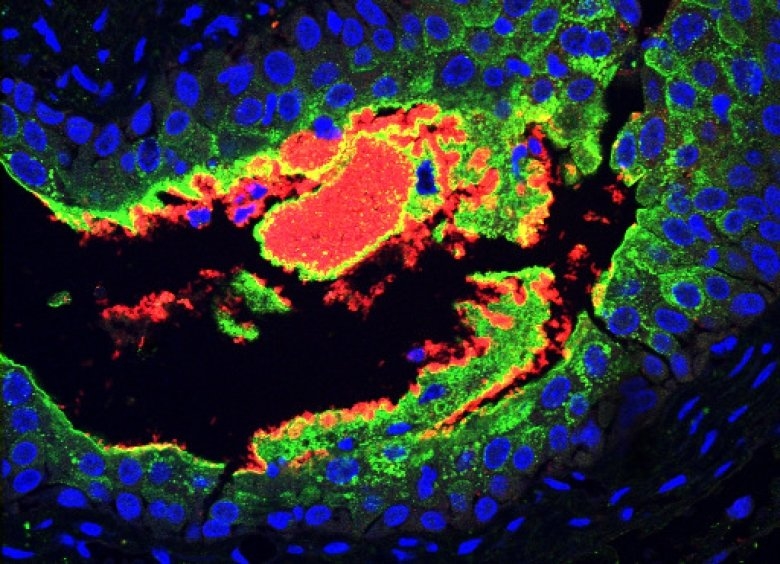
The picture shows large lumps of E. coli (in red) that infects the bladder of a mouse with diabetes.
 Photo: Soumitra Mohanty

Reduced immune systems and recurrent infections are common in type 1 and type 2 diabetes. Now researchers at Karolinska Institutet show that people with diabetes have lower levels of the antimicrobial peptide psoriasis, which is part of the body's immune system, which impacts the leaves' cell barrier with increased risk of urinary tract infection. The study is published in Nature Communications.

Diabetes is due to insulin deficiency or reduced insulin sensitivity. The hormone insulin regulates glucose (sugar) and thus energy to the body's cells. In people with type 1 diabetes, the body has stopped making insulin and in type 2 diabetes, cells have become less sensitive to insulin, which contributes to high blood glucose levels. Diabetes is a common disease that affects health in several ways.

Among other things, the innate immune system determinants and many get recurrent infections, such as urinary tract infections caused by E. colibacteria. In people with diabetes, there is an increased risk that these will lead to general blood poisoning, sepsis, which is based on the urinary tract.

Monday, September 19, 2022

New method for measuring high energy density plasmas and facilitating inertial confinement fusion

Physicist Sophia Malko with figures from her ion-stopping paper.
Photo credit: Valeria Ospina-Bohorquez; collage by Kiran Sudarsanan

An international team of scientists has uncovered a new method for advancing the development of fusion energy through increased understanding of the properties of warm dense matter, an extreme state of matter similar to that found at the heart of giant planets like Jupiter. The findings, led by Sophia Malko of the U.S. Department of Energy’s (DOE) Princeton Plasma Physics Laboratory (PPPL), detail a new technique to measure the “stopping power” of nuclear particles in plasma using high repetition-rate ultraintense lasers. The understanding of proton stopping power is particularly important for inertial confinement fusion (ICF).

Powering the sun and stars

This process contrasts with the creation of fusion at PPPL, which heats plasma to million-degree temperatures in magnetic confinement facilities. Plasma, the hot, charged state of matter composed of free electrons and atomic nuclei, or ions, fuels fusion reactions in both types of research, which aim to reproduce on Earth the fusion that powers the sun and stars as a source of safe, clean and virtually limitless energy to generate the world’s electricity.

“Stopping power” is a force acting on charged particles due to collisions with electrons in the matter that result in energy loss. “For example, if you don’t know the proton stopping power you cannot calculate the amount of energy deposited in the plasma and hence design lasers with the right energy level to create fusion ignition,” said Malko, lead author of a paper that outlines the findings in Nature Communications. “Theoretical descriptions of the stopping power in high-energy density matter and particularly in warm dense matter are difficult, and measurements are largely missing,” she said. “Our paper compares experimental data of the loss of proton energy in warm dense matter with theoretical models of stopping power.”

Fossil eggs show dinosaur decline before extinction

Artist’s depiction of Late Cretaceous oviraptorosaurs, hadrosaurs, and tyrannosaurs living in central China
Credit: IVPP 

Nearly 66 million years ago, a large asteroid hit Earth and contributed to the global extinction of dinosaurs, leaving birds as their only living descendants.

Scientists know that a wide variety of dinosaurs lived around the world at the end of the Cretaceous period just before their extinction. However, scientists have debated whether dinosaurs were at their zenith or already in decline prior to their demise. In other words, did dinosaurs go out with a bang or a whimper?

Researchers from the Institute of Vertebrate Paleontology and Paleoanthropology (IVPP) of the Chinese Academy of Sciences, along with their collaborators, now have an answer. They've found evidence to support the hypothesis that dinosaurs were not very diverse before their extinction and had declined overall during the last part of the Cretaceous.

Their findings were published in PNAS on Sept. 19.

Most of the scientific data on the last days of the dinosaurs comes from North America. Although some published studies suggest that dinosaur populations there were thriving quite well before extinction, other more detailed research has suggested that dinosaurs were instead in decline, which set the stage for their eventual mass extinction.

Statin use is not justified for healthy people with high cholesterol

Professor David Diamond, Department of Psychology
Credit: University of South Florida
About 40 million adults in the United States regularly take statins to lower their cholesterol levels and reduce their risk of heart disease and stroke, according to American Heart Association data from 2020.

However, many of them don’t stand to benefit from these drugs based on new research from David Diamond, a neuroscientist and cardiovascular disease researcher in the Department of Psychology at the University of South Florida.

Diamond and his co-authors reviewed literature from medical trials involving patients taking either a statin or placebo. They then narrowed their review to look at study participants with elevated levels of low-density lipoprotein-cholesterol (LDL), the so-called “bad cholesterol,” which can be reduced with a statin. Some individuals with high LDL also had high triglycerides (fat in the blood) and low high-density lipoprotein (HDL), the “good cholesterol,” which put them at the highest risk of having a heart attack.

But others with high LDL were very different. They had low triglycerides and high HDL, which meant they were healthier. People with optimal triglycerides and HDL levels typically exercise, have low blood pressure and low blood sugar, and are at a low risk of a heart attack.

Diamond and his co-authors asked two questions: If people are at a low risk of a heart attack based on having optimal triglycerides and HDL, but they also have high LDL, does that raise their risk? Further, would these people benefit from lowering their LDL with a statin?

Featured Article

What Is: Quantum Biology

Scientific Frontline: Extended "At a Glance" Summary : Quantum Biology The Core Concept : Quantum biology is the study of non-triv...

Top Viewed Articles