. Scientific Frontline

Monday, November 14, 2022

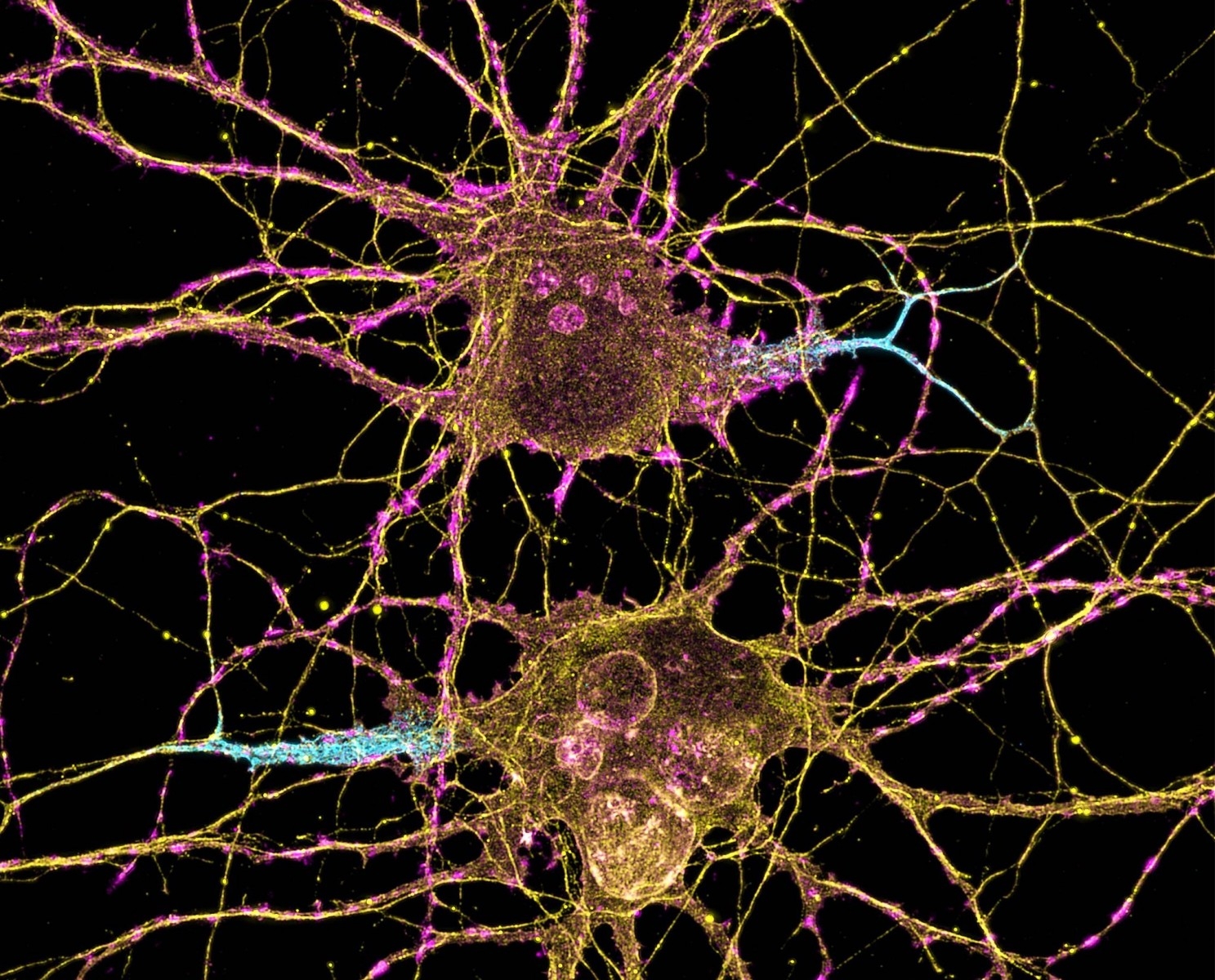
The hunt for disrupted brain signals behind autism

The researchers delete one copy of a gene in specific neurons in mice to examine where circuit changes go wrong in ways that could lead to symptoms associated with autism.
Image Credit: National Institutes of Health

Part of understanding the underlying causes of autism spectrum disorder relies on figuring out which cells’ signaling patterns in the brain are disrupted, and when during nervous system development the disruption occurs.

New research findings in mouse models of one genetic risk for autism support the idea that loss of a specific gene interferes with cells in the brain whose role is to inhibit signaling. Though there are fewer of these cells than other neurons and their signals don’t travel very far, they have enormous influence on patterns of information transmission within the brain and to the rest of the body.

Ohio State University researchers found that deleting a copy of the autism-risk gene Arid1b from specific brain cells decreased the number of inhibitory cells and lowered signaling between inhibitory cells and the excitatory cells they help control. Previous research has suggested reduced inhibitory signals in mouse models of the disorder result in a range of autism-related behaviors.

In separate experiments, the scientists found that signaling changes linked to inhibitory cells can be seen in the same genetic mouse models of autism spectrum disorder (ASD) very shortly after birth, but the disruption might not be strong enough to interfere with normal brain development powered by a host of other genes.

California Academy of Sciences researchers produce first-ever ‘family tree’ for aquarium-bred corals

Two-year-old corals sampled for this study in the Academy's Coral Spawning Lab.
Photo Credit: California Academy of Sciences

Corals bred in public aquaria provide novel research opportunities and a healthy stock for outplanting into the wild, essential components of a thriving future for coral reef ecosystems, which support around 25% of all life in Earth’s oceans. But the long-term success of such efforts hinges in part on maintaining genetic diversity in aquarium-bred corals which leads to increased resilience to threats like ocean warming and acidification. In a study published today in Frontiers in Marine Science, a diverse team of Steinhart Aquarium biologists and researchers from the California Academy of Sciences' Coral Spawning Lab produce the first-ever pedigree, or ‘family tree’, for corals bred in an aquarium and provide a list of best practices to maintain genetic diversity in aquarium-bred corals.

“Genetic diversity is what enables species to adapt to the myriad threats resulting from climate change,” says Academy Curator Rebecca Albright, PhD, who founded the Coral Spawning Lab, one of only a handful of facilities on Earth capable of successfully breeding corals. Albright’s work is an integral part of the Academy’s Hope for Reefs initiative, which is aimed at halting the decline of coral reefs in this generation. “For facilities like ours at the Coral Spawning Lab, ensuring each generation of corals is diverse allows us to conduct more robust experiments, which is a critical element of better understanding how corals can thrive on our changing planet. For organizations that do outplantings, increased genetic diversity translates to a greater chance of survival in the wild.”

FRIB Experiment Pushes Elements to the Limit

A multi-institutional team of scientific users have published the results of the first scientific experiment at the Facility for Rare Isotope Beams in the journal Physical Review Letters. The experiment studied the decay of isotopes so unstable that they only exist for fractions of a second. To perform the study, the rare isotopes were implanted into the center of a sensitive detector known as the FRIB Decay Station initiator.
Photo Credit: Facility for Rare Isotope Beams

A new study led by the Department of Energy’s Lawrence Berkeley National Laboratory (Berkeley Lab) has measured how long it takes for several kinds of exotic nuclei to decay. The paper, published today in Physical Review Letters, marks the first experimental result from the Facility for Rare Isotope Beams (FRIB), a DOE Office of Science user facility operated by Michigan State University.

Scientists used the one-of-a-kind facility to better understand nuclei, the collection of protons and neutrons found at the heart of atoms. Understanding these basic building blocks allows scientists to refine their best models and has applications in medicine, national security, and industry.

“The breadth of the facility and the programs that are being pursued are really exciting to watch,” said Heather Crawford, a physicist at Berkeley Lab and lead spokesperson for the first FRIB experiment. “Research is going to be coming out in different areas that will impact things we haven’t even thought of yet. There’s so much discovery potential.”

The first experiment is just a small taste of what’s to come at the facility, which will become 400 times more powerful over the coming years. “It’s going to be really exciting – mind-blowing, honestly,” Crawford said.

Researchers discover immunity genetics leading to worse COVID outcomes for men

Olga Troyanskaya 
Photo bySameer A. Khan/Fotobuddy

Why do men have worse outcomes than women from COVID-19? A new study suggests it’s not something wrong with males, it’s something right with females. Specifically, females’ innate immune systems.

A team of researchers from Princeton University, Flatiron Institute of the Simons Foundation, the Icahn School of Medicine at Mount Sinai and the Naval Medical Research Center had begun studying a group of nearly 3,000 members of the U.S. Marine Corps before a COVID-19 outbreak during their training in 2020, and continued to follow them through the infections and afterwards. The results of their study appear in the current issue of the journal Cell Systems.

Using RNA sequencing and clinical measure analysis, the research team found that even though infected females had higher rates of symptoms, their average viral load was 2.6 times lower than that of the males. They also identified molecular signatures that pointed to a sex-specific genetic basis for the difference. “Sex-specific responses to COVID-19 are notoriously challenging to study, due to the many confounding variables, including comorbidities, differences in environment, fitness, etc,” said Olga Troyanskaya, a professor of computer science and the Lewis-Sigler Institute for Integrative Genomics (LSI) and director of Princeton Precision Health at Princeton University, the associate director for genomics at the Flatiron Institute of the Simons Foundation, and one of two co-senior authors of the study.

Repeat COVID-19 infections increase risk of organ failure, death

Ziyad Al-Aly, MD, a clinical epidemiologist at Washington University School of Medicine in St. Louis and the Veterans Affairs St. Louis Health Care system, examines data from a new study. Researchers led by Al-Aly found that repeat SARS-CoV-2 infections contribute significant additional risk of adverse health conditions in multiple organ systems.
Photo Credit: Matt Miller/School of Medicine

Since the COVID-19 pandemic began almost three years ago, scientists have learned that an initial infection can lead to short- and long-term health risks affecting nearly every organ system in the body. They’ve also determined that people can get COVID-19 a second or a third time, despite acquiring natural antibodies after the first infection and receiving vaccination and booster shots.

Now, a new study from Washington University School of Medicine in St. Louis and the Veterans Affairs St. Louis Health Care system shows the health consequences of reinfection. The researchers found that repeat SARS-CoV-2 infections contribute significant additional risk of adverse health conditions in multiple organ systems.

Such outcomes include hospitalization; disorders affecting the lungs, heart, brain, and the body’s blood, musculoskeletal and gastrointestinal systems; and even death. Reinfection also contributes to diabetes, kidney disease and mental health issues.

The findings are published in Nature Medicine.

Study of ‘polluted’ white dwarfs finds that stars and planets grow together

Study of ‘polluted’ white dwarfs finds that stars and planets grow together 
Credit: Amanda Smith

A team of astronomers have found that planet formation in our young Solar System started much earlier than previously thought, with the building blocks of planets growing at the same time as their parent star.

A study of some of the oldest stars in the Universe suggests that the building blocks of planets like Jupiter and Saturn begin to form while a young star is growing. It had been thought that planets only form once a star has reached its final size, but new results, published in the journal Nature Astronomy, suggest that stars and planets ‘grow up’ together.

The research, led by the University of Cambridge, changes our understanding of how planetary systems, including our own Solar System, formed, potentially solving a major puzzle in astronomy.

“We have a pretty good idea of how planets form, but one outstanding question we’ve had is when they form: does planet formation start early, when the parent star is still growing, or millions of years later?” said Dr Amy Bonsor from Cambridge’s Institute of Astronomy, the study’s first author.

To attempt to answer this question, Bonsor and her colleagues studied the atmospheres of white dwarf stars – the ancient, faint remnants of stars like our Sun – to investigate the building blocks of planet formation. The study also involved researchers from the University of Oxford, the Ludwig-Maximilians-Universität in Munich, the University of Groningen and the Max Planck Institute for Solar System Research, Gottingen.

“Some white dwarfs are amazing laboratories, because their thin atmospheres are almost like celestial graveyards,” said Bonsor.

Key cause of type 2 diabetes uncovered

Oxford Research reveals high blood glucose reprograms the metabolism of pancreatic beta-cells in diabetes.
Photo Credit: Steve Buissinne

Glucose metabolites (chemicals produced when glucose is broken down by cells), rather than glucose itself, have been discovered to be key to the progression of type 2 diabetes. In diabetes, the pancreatic beta-cells do not release enough of the hormone insulin, which lowers blood glucose levels. This is because a glucose metabolite damages pancreatic beta-cell function.

An estimated 415 million people globally are living with diabetes. With nearly 5 million people diagnosed with the condition in the UK, it costs the NHS some £10 billion each year. Around 90% of cases are type 2 diabetes (T2D), which is characterized by the failure of pancreatic beta-cells to produce insulin, resulting in chronically elevated blood glucose. T2D normally presents in later adult life, and by the time of diagnosis, as much as 50% of beta cell function has been lost. While researchers have known for some time that chronically elevated blood sugar (hyperglycemia) leads to a progressive decline in beta-cell function, what exactly causes beta-cell failure in T2D has remained unclear.

Now a new study led by Dr Elizabeth Haythorne and Professor Frances Ashcroft of the Department of Physiology, Anatomy and Genetics at the University of Oxford has revealed how chronic hyperglycemia causes beta-cell failure. Using both an animal model of diabetes and beta-cells cultured at high glucose, they showed, for the first time, that glucose metabolism, rather than glucose itself, is what drives the failure of beta-cells to release insulin in T2D. Importantly, they also demonstrated that beta-cell failure caused by chronic hyperglycemia can be prevented by slowing the rate of glucose metabolism.

With new heat treatment, 3D-printed metals can withstand extreme conditions

A thin rod of 3D-printed superalloy is drawn out of a water bath, and through an induction coil, where it is heated to temperatures that transform its microstructure, making the material more resilient. The new MIT heat treatment could be used to reinforce 3D-printed gas turbine blades.
Credit: Dominic David Peachey

A new MIT-developed heat treatment transforms the microscopic structure of 3D-printed metals, making the materials stronger and more resilient in extreme thermal environments. The technique could make it possible to 3D print high-performance blades and vanes for power-generating gas turbines and jet engines, which would enable new designs with improved fuel consumption and energy efficiency.

Today’s gas turbine blades are manufactured through conventional casting processes in which molten metal is poured into complex molds and directionally solidified. These components are made from some of the most heat-resistant metal alloys on Earth, as they are designed to rotate at high speeds in extremely hot gas, extracting work to generate electricity in power plants and thrust in jet engines.

There is growing interest in manufacturing turbine blades through 3D-printing, which, in addition to its environmental and cost benefits, could allow manufacturers to quickly produce more intricate, energy-efficient blade geometries. But efforts to 3D-print turbine blades have yet to clear a big hurdle: creep.

In metallurgy, creep refers to a metal’s tendency to permanently deform in the face of persistent mechanical stress and high temperatures. While researchers have explored printing turbine blades, they have found that the printing process produces fine grains on the order of tens to hundreds of microns in size — a microstructure that is especially vulnerable to creep.

“In practice, this would mean a gas turbine would have a shorter life or less fuel efficiency,” says Zachary Cordero, the Boeing Career Development Professor in Aeronautics and Astronautics at MIT. “These are costly, undesirable outcomes.”

Sunday, November 13, 2022

Ruptured ACLs can heal without surgery

A new study challenges the common notion that an ACL injury cannot heal.
Photo Credit:  kinkate

Anterior cruciate ligament (ACL) ruptures can heal without surgery and this could be key to better patient outcomes, according to new findings challenging the common notion that an ACL injury cannot heal.

Published in the British Journal of Sports Medicine, the study analysed trial data and found some ruptured ACLs healed after exercise-based rehabilitation, and that this healing was associated with better patient-reported outcomes compared with ACL reconstruction surgery.

The study, led by physiotherapist and Senior Research Fellow at the University of Melbourne, Dr Stephanie Filbay, undertook a secondary analysis of data from the KANON randomized controlled trial - the first to randomize people with ACL rupture to either management with early ACL reconstruction, or rehabilitation and optional delayed surgery. Participants in the trial were active adults – not professional athletes - aged 18-35 years.

The study found 53 per cent of trial participants whose ACL ruptures were managed with rehabilitation only, and did not decide to have surgery, had a healed ACL on MRI two years after injury. Signs of ACL healing were observed as early as three months after injury on MRI in this group.

Participants in this group reported better sport and recreational function and quality of life two years post-injury, compared to the non-healed, early ACL reconstruction surgery and delayed ACL reconstruction surgery groups.

Surfing scientists conduct 3D reef research at epic surf break

MEGA Lab Research Technician Kailey Pascoe mapping Cloudbreak in Fiji
Resized Image using AI by SFLORG
Credit: Source University of Hawaiʻi

With more than 80% of the world’s oceans left unexplored, untouched and unseen by humans, researchers know more about the surface of Mars than the ocean. A University of Hawaiʻi at Hilo professor is helping to fill that knowledge gap by leading a team of scientists to 3D map the planet’s premier surf breaks to help better protect reefs around the world.

Professors John H.R. Burns (UH Hilo), Haunani Kane (Arizona State University) and Cliff Kapono (Arizona State University) recently mapped the reef at Kurukuru Mailani in Fiji, also known as Cloudbreak, which is home to some of the biggest and best waves in the world. The team takes high resolution images of the reef and uses a technique called photogrammetry to create 3D reconstructions that can be studied to help provide a better understanding of reef systems.

“These models will help us to understand the composition, characteristics and ecology of the reef and these waves that will help us to protect them in the face of disturbances such as sea level rise,” said Burns, an associate professor of marine science.

Saturday, November 12, 2022

Boeing-Built X-37B Completes Sixth Mission, Sets New Endurance Record

The Boeing-built X-37B Orbital Test Vehicle (OTV) landed at NASA’s Kennedy Space Center in Florida at 5:22 a.m. ET, November 12, 2022.
Photo Credit: Boeing / U.S. Space Force

The Boeing built X-37B Orbital Test Vehicle (OTV) set a new endurance record after spending 908 days in orbit before landing at NASA’s Kennedy Space Center in Florida at 5:22 a.m. ET, November 12, 2022. This surpasses its previous record of 780 days on-orbit.

With the successful completion of its sixth mission the reusable spaceplane has now flown over 1.3 billion miles and spent a total of 3,774 days in space where it conducts experiments for government and industry partners with the ability to return them to Earth for evaluation.

For the first time, the vehicle carried a service module to augment the number of payloads it can haul. The module separated from the OTV prior to de-orbiting ensuring a safe and successful landing.

“This mission highlights the Space Force's focus on collaboration in space exploration and expanding low-cost access to space for our partners, within and outside of the Department of the Air Force (DAF),” said Gen. Chance Saltzman, Chief of Space Operations.

Synthetic black holes radiate like real ones

To make a synthetic black hole, just take a chain of atoms (green), and change how easy it is for an electron to jump between each atomic site, represented here by the color and width of the blue interatomic bonds. The varied bond strength in the lower chain mimics the warping of spacetime in the presence of a black hole. This way, the incredible physics of black holes can be explored in a lab on Earth.
Source/Credit:  Universiteit van Amsterdam

Black holes are the most extreme objects in the universe, packing so much mass into so little space that nothing – not even light – can escape their gravitational pull once it gets close enough.

Understanding black holes is key to unraveling the most fundamental laws governing the cosmos, because they represent the limits of two of the best-tested theories of physics: the theory of general relativity, which describes gravity as resulting from the (large-scale) warping of spacetime by massive objects, and the theory of quantum mechanics, which describes physics at the smallest length scales. To fully describe black holes, we would need to stitch these two theories together and form a theory of quantum gravity.

Radiating black holes

To achieve this goal, we might want to look at what manages to escape from black holes, rather than what gets swallowed. The event horizon is an intangible boundary around each black hole, beyond which there is no way of getting out. However, Stephen Hawking famously discovered that every black hole must emit a small amount of thermal radiation due to small quantum fluctuations around its horizon.

Friday, November 11, 2022

Altered cell behavior behind resistance in neuroblastoma

Credit: National Cancer Institute

Researchers at Lund University in Sweden have identified one of the reasons why the childhood cancer neuroblastoma becomes resistant to chemotherapy. The findings are significant for how future treatments should be designed. The results have been published in Science Advances.

Neuroblastoma is an aggressive cancer of the sympathetic nervous system, especially of the adrenal gland. Despite intense treatment with chemotherapy, the disease can be difficult to cure and the prognosis is poor for children who have the aggressive variant. One of the reasons is that the tumor often develops resistance to drugs. In order to understand what happens when the tumor becomes resistant, good disease models are needed that can mimic the complex drug treatment given to patients today:

“Tumors from patients with neuroblastoma look very different, and it is difficult to produce a model that is representative of many patients. This type of challenge often limits medical research”, explains the study's first author, Adriana Mañas, child cancer researcher at Lund University.

Probiotic ‘backpacks’ show promise for treating inflammatory bowel diseases

Probiotic bacteria (teal) coated in a layer of biomaterial as they travel through a human intestine. Attached to the bacteria are reactive oxygen species nano-scavengers.
Image Credit: Quanyin Hu

Like elite firefighters headed into the wilderness to combat an uncontrolled blaze, probiotic bacteria do a better job quelling gut inflammation when they’re equipped with the best gear.

A new study by researchers at the University of Wisconsin–Madison demonstrates just how much promise some well-equipped gut-friendly bacteria hold for improving treatments of inflammatory bowel disease (IBD), including Crohn’s disease and ulcerative colitis.

Led by Quanyin Hu, a biomedical engineer and professor in the UW–Madison School of Pharmacy, the research builds on technology the team had previously designed. That prior technology encases beneficial bacteria within a very thin protective shell to help them survive an onslaught of stomach acids and competing microbes long enough to establish and multiply in the guts of mice.

While the technology makes orally administered probiotics more effective, IBD is a complex disease that usually involves more than gut microbial communities that are out of whack.

“IBD is a complicated disease, and you need to attack it at different angles,” says Hu.

So, Hu and his colleagues devised specialized nanoparticles to neutralize molecules implicated in IBD. They’ve also figured out a way of attaching these nanoparticle “backpacks” to beneficial bacteria after encasing them in the protective coating.

Researchers Solve Hundred-Year-Old Botanical Mystery that was Key to the Spread of Plant Life on Land

Plant material from Yale-Myers Forest and YSE greenhouses were used to study how their vascular systems are constructed and how they compare to the extinct plants from the fossil record. Without developing their vascular systems, plants would largely still look like mosses. Shown here: Huperzia lucidula, also known as Shining club-moss.
Photo Credit: courtesy of Craig Brodersen Lab.

The earliest land plants were small — just a few centimeters tall at most — and restricted to moist, boggy habitats around streams and ponds. Around 400 million years ago, however, plants developed vascular systems to extract water more efficiently from the soil and use it for photosynthesis, a transition that would forever alter the Earth’s atmosphere and ecosystems. A team of researchers have now solved a 100-year-old paleontology mystery: How did ancient plants emerge from swamps and riverbanks to new habitats with limited access to water?

In a new paper published in Science, YSE Professor of Plant Physiological Ecology Craig Brodersen and his research team, including lead author Martin Bouda ’17 PhD, ’12 MPhil and Kyra A. Prats ’22 PhD, ’16 MFS, discovered that a simple change in the vascular system of plants made them more drought-resistant, which opened up new landscapes for exploration.

The research was spurred by a century-long debate about why the simple, cylindrical vascular system of the earliest land plants rapidly changed to more complex shapes. In the 1920s, scientists noted this increasing complexity in the fossil record but were not able to pinpoint the reason — if there even was one — for the evolutionary changes.

Featured Article

What Is: Abyssopelagic Zone

A master of abyssopelagic survival, the anglerfish overcomes absolute darkness and sparse food supplies with a specialized, light-producing ...

Top Viewed Articles