. Scientific Frontline

Friday, December 9, 2022

New findings on how to avert excessive weight loss from COVID-19

Professor Yihai Cao.
Photo Credit: Dr. Muyi Yang.

Losing too much weight when infected with COVID-19 has been linked to worse outcomes. Now, researchers at Karolinska Institutet have discovered that SARS-CoV-2 infection fuels blood vessel formation in fat tissues, thus revving up the body’s thermogenic metabolism. Blocking this process by using an existing drug curbed weight loss in mice and hamsters that were infected with the virus, according to the study published in the journal Nature Metabolism.

“Our study proposes a completely new concept for treating COVID-19 associated weight loss by targeting the blood vessels in the fat tissues,” says Yihai Cao, professor at the Department of Microbiology, Tumor and Cell Biology, Karolinska Institutet, and the study’s corresponding author.

The researchers examined how different types of fat, including brown fat and visceral and subcutaneous white fat, reacted when exposed to SARS-CoV-2 and how it impacted weight in mice and hamsters. They found that the animals lost significant amounts of weight in four days and that this weight loss was preceded by the activation of brown fat and the browning of both types of white fat. These fat tissues also contained more microvessels and high levels of a signaling protein called vascular endothelial growth factor (VEGF), which promotes the growth of new blood vessels.
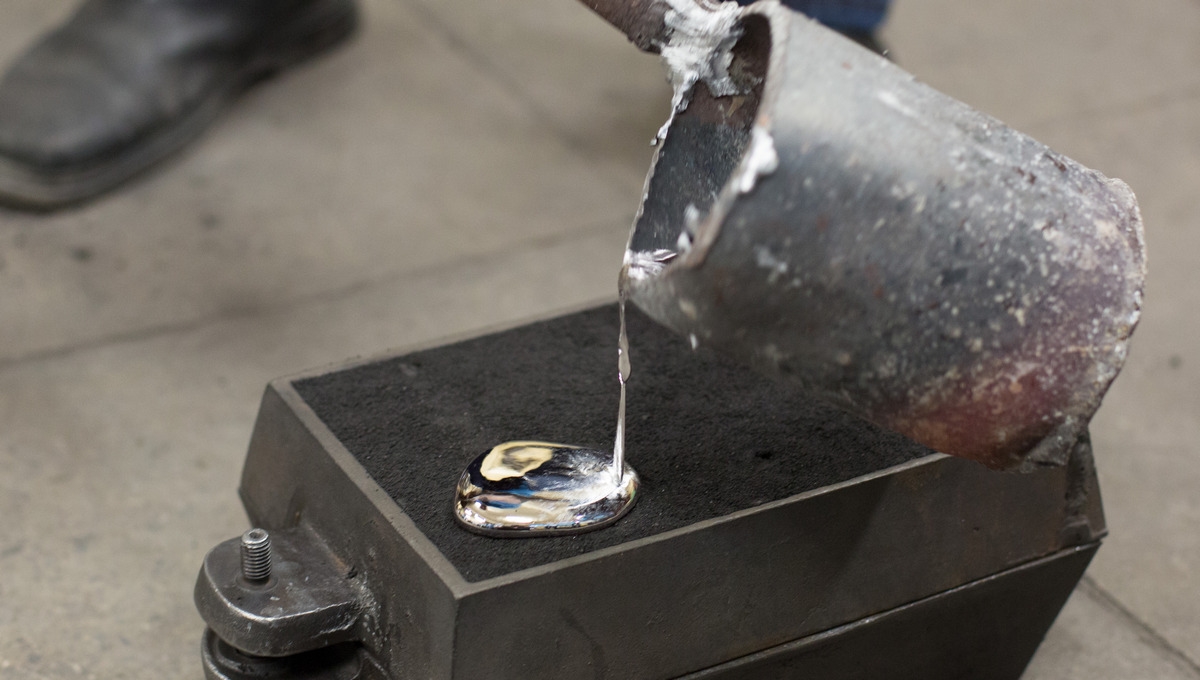
Neural Network Learned to Create a Molecular Dynamics Model of Liquid Gallium

The melt viscosity determines the choice of casting mode, ingot formation conditions and other parameters.
Photo Credit: Ilya Safarov

Scientists at the Institute of Metallurgy, Ural Branch of the Russian Academy of Sciences, and Ural Federal University have developed a method for theoretically high-precision determination of the viscosity of liquid metals using a trained artificial neural network. The method was successfully tested in the process of building the deep learning potential of the neural network on the example of liquid gallium. Scientists were able to significantly increase the spatiotemporal scale of the simulation. The results of molecular dynamics modeling of liquid gallium are particularly accurate. Previous calculations were notoriously inaccurate, especially in the low temperature range. An article describing the research was published in the journal Computational Materials Science.

"First, liquids are in principle difficult to be described theoretically. The reason, in our opinion, lies in the absence of a simple initial approximation for this class of systems (for example, the initial approximation for gases is the ideal gas model). Secondly, the atomistic calculation of viscosity requires processing of a large volume of statistical data and, at the same time, a large accuracy of description of the potential energy surface and forces acting on atoms. Direct calculations cannot achieve such an effect. Thirdly, gallium in the liquid state is difficult to describe theoretically, because, due to certain features, its structure differs from that of most other metals," explains Vladimir Filippov, Senior Researcher at the Department of Rare Metals and Nanomaterials at UrFU, research participant and co-author of the article.

Very fast, but not a supersonic

The computer model of the dinosaur tail used and a diplodocide
Image Credit: Simone Conti / Zachi Evenor

An international research team with the participation of the Department of Biology at the University of Hamburg has analyzed the mobility of dinosaur tails using computer models and methods from engineering. According to a study published in Scientific Reports, the researchers found that these tails could be moved more than 100 kilometers per hour. Unlike previously assumed, however, they did not reach supersonic speed.

Diplodocids were large herbivorous dinosaurs with long necks and long tails. In a previous study, it was believed that a hypothetical structure at the end of a diplodocid's tail, similar to the end of a whip, could move faster than the speed of sound (340 meters per second) and produce a supersonic bang.

To test this hypothesis, the international research team simulated the movements of the tail of diplodocids using a model based on five fossil diplodocid skeletons. The virtual tail model is over 12 meters long, would weigh 1,446 kilograms in real terms and consists of 82 cylinders, which are supposed to represent vertebrae and are attached to an immovable, virtual basin.

“Research was quite a challenge, because we had to tackle the problem with two methods, that are normally used in aerospace technology: multi-body simulation and the estimation of the resilience of the materials”, reports the first author of the study, Simone Conti from the Universidade NOVA de Lisboa and the Politecnico di Milano.

Corona vaccination also protects people infected with HIV

They represent the study team: Clara Bessen, Carlos Plaza Sirvent, Adriane Skaletz-Rorowski, Anja Potthoff and Agit Simsek (from left).
Photo Credit: RUB, Marquard

A study shows that booster vaccination is particularly useful.

HIV-infected people who receive antiretroviral therapy form antibodies against Sars-Cov-2 after the Corona vaccination with mRNA vaccines. However, your immune response to vaccination is less strong than that of healthy people. The difference is reduced by a third vaccination. These results were achieved by a study with a total of 91 participants, which was carried out by a research team led by Prof. Dr. Ingo Schmitz, head of the Molecular Immunology Department at the Ruhr University in Bochum. The researchers report in the journal Frontiers in Immunology.

Vaccination protection for acquired immunodeficiency

Studies have shown that Sars-Cov-2 vaccines protect otherwise healthy people well against a severe course of Covid-19. It has so far been unclear whether this will also be the case for people with acquired immune deficiency. The research team led by Ingo Schmitz and Dr. Anja Potthoff from the Walk in Ruhr (WIR) Center for Sexual Health and Medicine at the RUB University Hospital included 71 people in her study who are HIV positive and receive antiretroviral therapy. 20 HIV-negative control persons also participated. After the first, second and third vaccinations with the mRNA vaccine from Biontech / Pfizer, they examined the immune response of the participants.

Thursday, December 8, 2022

Intricate ‘snowflakes’ created in liquid metal

A snowflake-like zinc crystal synthesized in liquid gallium by researchers at UNSW Sydney.
Image Credit: Dr Jianbo Tang

Researchers, including those from UNSW Sydney, have synthesized complex symmetrical zinc crystals in liquid gallium which can potentially be used in a range of catalysis applications.

It’s beginning to look a lot like Christmas at UNSW Sydney’s School of Chemical Engineering where researchers have grown crystals made of zinc that look like snowflakes - inside a liquid metal.

The team predominantly used zinc metal dissolved in liquid gallium as the solvent, creating distinctive structures that often resembled those of six-branched snowflake crystals.

Apart from their structural beauty, these liquid metal-grown crystals can enable future processes for making catalytic materials for producing hydrogen from organic fuels. The metallic crystals can also be specially formulated, during their synthesis and extraction, to make semiconductors for electronic and optical devices of computers, mobile phones and solar cells of the future.

Cities on asteroids? It could work—in theory

In what they deem a “wildly theoretical” paper, Rochester researchers imagine covering an asteroid in a flexible, mesh bag made of ultralight and high-strength carbon nanofibers as the key to creating human cities in space.
Illustration Credit: University of Rochester | Michael Osadciw

Rochester scientists use physics and engineering principles to show how asteroids could be future viable space habitats.

This past year, Jeff Bezos launched himself into space, while Elon Musk funded a space flight for a non-astronaut crew. Space collaborations between government and private entities, including Musk’s SpaceX and Bezos’s Blue Origin have become increasingly common. But with the recent emergence of the so-called “New Space” movement, aerospace companies are working to develop low-cost access to space for everyone, not only billionaires.

For a future beyond Earth, however, humans need places to accommodate homes, buildings, and other structures for millions of people to live and work.

Right now, space cities exist only in science fiction. But are space cities feasible in reality? And, if so, how?

According to new research from University of Rochester scientists, our future may lie in asteroids.

In what they deem a “wildly theoretical” paper published in the journal Frontiers in Astronomy and Space Sciences, the researchers, including Adam Frank, the Helen F. and Fred H. Gowen Professor of Physics and Astronomy, and Peter Miklavčič, a PhD candidate in mechanical engineering and the paper’s first author, outline a plan for creating large cities on asteroids.

Say Hello to the Toughest Material on Earth

Microscopy-generated images showing the path of a fracture and accompanying crystal structure deformation in the CrCoNi alloy at nanometer scale during stress testing at 20 kelvin (-424 F). The fracture is propagating from left to right.
Image Credit: Robert Ritchie/Berkeley Lab

Scientists have measured the highest toughness ever recorded, of any material, while investigating a metallic alloy made of chromium, cobalt, and nickel (CrCoNi). Not only is the metal extremely ductile – which, in materials science, means highly malleable – and impressively strong (meaning it resists permanent deformation), its strength and ductility improve as it gets colder. This runs counter to most other materials in existence.

The team, led by researchers from Lawrence Berkeley National Laboratory (Berkeley Lab) and Oak Ridge National Laboratory, published a study describing their record-breaking findings in Science. “When you design structural materials, you want them to be strong but also ductile and resistant to fracture,” said project co-lead Easo George, the Governor’s Chair for Advanced Alloy Theory and Development at ORNL and the University of Tennessee. “Typically, it’s a compromise between these properties. But this material is both, and instead of becoming brittle at low temperatures, it gets tougher.”

CrCoNi is a subset of a class of metals called high entropy alloys (HEAs). All the alloys in use today contain a high proportion of one element with lower amounts of additional elements added, but HEAs are made of an equal mix of each constituent element. These balanced atomic recipes appear to bestow some of these materials with an extraordinarily high combination of strength and ductility when stressed, which together make up what is termed “toughness.” HEAs have been a hot area of research since they were first developed about 20 years ago, but the technology required to push the materials to their limits in extreme tests was not available until recently.

Argentine ants will do anything for sugar, but they won’t do this

 An Argentine ant tending aphids, plant parasites that secrete a sugar-rich substance the ants consume.
 Photo Credit: UCLA/Noa Pinter-Wollman

It might seem like common sense that a starving animal is more likely to take dangerous risks to obtain food than one with a full belly. But new research from UCLA shows that groups of Argentine ants, who forage boldly when they’re well fed, exercise far more caution when they’ve been deprived of carbohydrates and the risks from competitors are high.

This counterintuitive foraging strategy might contribute to the success of these insects, known as Linepithema humile, an invasive species that displaces native ant populations in California and elsewhere and has become a significant agricultural pest, the researchers said.

Their findings, published in the journal Current Zoology, suggest that the unwillingness of Argentine ants to expose themselves to danger when weakened by hunger could possibly give them a competitive edge over other species by helping to preserve their colonies’ foraging capabilities.

“While not foraging may lead to a reduction in food stores when those stores are already low, foraging in a high-risk environment exposes the colony to potential loss of foragers,” said the study’s senior author, Noa Pinter-Wollman, a UCLA professor of ecology and evolutionary biology. “So reduced foraging could be interpreted as individual foragers not taking unnecessary risks.”

Researcher Aims to Uncover Plant Invasions in the Tropics

Invasive plants are invading all major ecosystems across Central America compromising the conservation of native species.
Photo Credit: Julissa Rojas-Sandoval

Invasive species of plants have a knack for settling in new settings and making big changes to an ecosystem, even leading to extinctions of native species.

Assistant Research Professor in UConn’s Institute of the Environment Julissa Rojas-Sandoval explains that invasive plants are non-native species that have been introduced into new areas generally as a result of human activities, and that they are actively spreading, causing harm to the environment, the economy, and human health. Invasive plants may have significant long-term implications for the conservation of native biodiversity, but to combat the problem, we need to know which plants are invasive, where they’re from, and how they got there.

Rojas-Sandoval leads an international collaboration including researchers from all Central American countries, working together to compile the most comprehensive databases of invasive plant species in Central America. The collaboration is called FINCA: Flora Introduced and Naturalized in Central America, and their first paper was published this week in Biological Invasions.

The collaboration arose to meet a need, says Rojas-Sandoval. “While we have a good understanding of the processes and mechanisms of plant invasions in temperate regions, there is a huge gap in our knowledge about biological invasions in the tropics, and this lack of information is limiting our ability to respond to invasive plants.”

The Superpowers of the Female Locust

Elongation of the body of the female locust while laying eggs in the ground
Illustration Credit: Tel Aviv University

Every mother will do anything to know that her offspring are in a safe place. The female locust, however, takes it to a whole new level: A new Tel Aviv University study has discovered that these females have superpowers. The female locust’s central nervous system has elastic properties, allowing her to stretch up to two or three times her original length when laying her eggs in the ground, without causing any irreparable damage.

“We are not aware of a similar ability in almost any living creature,” say the researchers. “Nerves in the human nervous system, for example, can stretch only up to 30% without tearing or being permanently damaged. In the future, these findings may contribute to new developments in the field of regenerative medicine, as a basis for nerve restoration and the development of synthetic tissues.”

“The superpower of the locust is almost something out of science fiction. There are only two other known examples in nature of a similar phenomenon: the tongue of the sperm whale, and a certain type of sea snail whose nervous systems are able to extend significantly due to an accordion-like mechanism they have." Prof. Amir Ayali

Environmental DNA uncovers a 2-million-year-old ecosystem in Greenland

Reconstruction of the Kap København formation two-million years ago, in a time where the temperature was significantly warmer than northernmost Greenland today.
Illustration Credit: Beth Zaiken.

Scientific Frontline: "At a Glance" Summary

  • Main Discovery: Researchers recovered the oldest environmental DNA (eDNA) on record, unveiling a 2-million-year-old ecosystem in northern Greenland populated by mastodons, reindeer, and poplar trees.
  • Methodology: The team employed shotgun sequencing on sediment samples from the Kap København Formation and utilized beryllium and aluminum isotope analysis to precisely date the geologic layers.
  • Key Data: The biological material dates back 2 million years, originating from a period when annual temperatures were 11 to 19 degrees Celsius higher than current values, and yielded five times as many plant varieties as previous ancient sediment studies.
  • Significance: This discovery confirms that a highly diverse boreal forest community, including large mammals, thrived in what is now a polar desert, creating a biological composition with no modern analogue.
  • Future Application: These findings provide a critical baseline for predicting long-term ecological shifts due to modern global warming and suggest that detailed genetic records may survive in other high-Arctic localities.
  • Branch of Science: Paleoclimatology and Ancient Genomics.
  • Additional Detail: The detection of mastodon DNA marks the first evidence of these extinct proboscideans ranging as far north as Greenland, significantly expanding their known paleogeographic distribution.

Mekong Delta will continue to be at risk for severe flooding

Mekong River Delta
Photo Credit: Tsuyoshi Watanabe

Reef corals provide an accurate, high-resolution record of the influence of the El Niño Southern Oscillation on rainfall, flooding and droughts in the Mekong River Delta, Vietnam.

The Mekong River Delta is the agricultural heartland of Vietnam; it is affected by droughts and flooding, which have become more severe in recent years. If severe weather events can be more accurately predicted, risk assessments in the regions can be improved. This, in turn, will reduce the negative effects of floods and droughts in the region.

A team led by Tsuyoshi Watanabe at Hokkaido University has revealed the clearest picture yet of how the El Niño Southern Oscillation (ENSO) affected rainfall in the Mekong Delta over the last hundred years. Their findings were published in the journal Scientific Reports. They correlated water salinity data from reef coral samples with historical weather records and uncovered that the ENSO has caused seasons of heavy and light rainfall, resulting in patterns of both flooding and droughts, respectively.

The ENSO occurs in the central and Eastern tropical Pacific Ocean, in irregular cycles of two to seven years. It consists of the El Niño (warming of the ocean surface), La Niña (cooling of the ocean surface) and neutral (neither warming, nor cooling).

Common medicine can stop the transmission of HIV infection from mother to child

The risk of transmission of HIV infection from mother to child has been reduced in resource-poor countries.
Photo Credit: Antony Trivet

Antiviral drugs almost completely reduce the risk of mothers passing on HIV infection to their children, even in a low-income country with a high HIV incidence such as Tanzania, according to a new study in The Lancet HIV by researchers from Karolinska Institutet. The discovery raises hopes of achieving the World Health Organization’s goal of eliminating the spread of infection from mother to child.

Only 159 infants were infected

The women were followed for 18 months after giving birth when most of them had stopped breastfeeding. When the researchers examined the mothers’ children, they discovered that only 159 of the more than 13,000 infants had been infected with HIV by the age of 1.5 years. Taking into account the margin of error, this means a risk of 1.4 per cent.

Wednesday, December 7, 2022

Wearable sensor could guide precision drug dosing

 The sensor uses microneedles that are made by cutting down clinical-grade acupuncture needles.
Image Credit: Emaminejad Lab/UCLA

For some of the powerful drugs used to fight infection and cancer, there’s only a small difference between a healing dose and a dose that’s large enough to cause dangerous side effects. But predicting that margin is a persistent challenge because different people react differently to medications — even to the same dose.

Currently, doctors can calibrate the amount of medication they administer in part by drawing blood to test the amount of medicine in a patient’s body. But results from those tests often take a day to process and only measure dosage at one or two moments in time, so they don’t help much when determining how to adjust dosage amounts in real time.

Now, a UCLA-led research team has developed a wearable patch that uses inexpensive microneedles to analyze the fluid between cells less than a millimeter underneath the skin and continuously record concentrations of medicine in the body. The technology could be a step toward improving doctors’ ability to administer precise medication doses.

In a study published in Science Advances, the investigators tested the system in rats that had been treated with antibiotics. Using data taken by the device within about 15 minutes after the medication was administered, the researchers reliably forecast how much of that drug would be effectively delivered to the animal’s system in total.

Brookhaven Lab to Lead New 'Saturated Glue' Theory Collaboration

Gluons at the Speed of Light
Gluons are always popping in and out of existence like blinking fireflies. But when nuclei or protons are accelerated to high energies, the gluons inside appear to multiply. That's because time operates in weird ways near the speed of light. The "blinking" appears to slow down, which makes the gluons linger longer. Energetic particle collisions can help physicists study this gluon-dominated state and, guided by new approaches to nuclear theory, search for signs of gluon saturation.
Illustration Credit: Brookhaven National Laboratory

The U.S. Department of Energy (DOE) has announced funding for a new Topical Theory Collaboration to be led by DOE’s Brookhaven National Laboratory that will aid in the discovery and exploration of a saturated state of gluons. These aptly named particles carry the nuclear strong force, acting as the ‘glue’ that holds together quarks, the building blocks of all visible matter. By understanding gluons’ ability to split and recombine and potentially reach a state of saturation, scientists hope to gain deeper insight into the strong force and the role gluons play in generating the mass, spin, and other properties of hadrons—composite particles made of quarks, such as the protons and neutrons of atomic nuclei.

The SatURated GluE (SURGE) Topical Theory Collaboration aims to develop calculations and a theoretical framework for discovering this unique saturated form of gluonic matter. Such a saturated state is predicted by the theory of quantum chromodynamics (QCD) to be observable in particles accelerated to high energies in particle colliders such as the Relativistic Heavy Ion Collider (RHIC) at Brookhaven Lab, the Large Hadron Collider (LHC) at Europe’s CERN laboratory, and the future Electron-Ion Collider (EIC) at Brookhaven.

Featured Article

What Is: Sadism | Part Four of the "Dark Tetrad"

Scientific Frontline: Extended "At a Glance" Summary : Sadism (Part Four of the "Dark Tetrad") The Core Concept : Sadism...

Top Viewed Articles