. Scientific Frontline

Wednesday, February 1, 2023

Solid material that 'upconverts' visible light photons to UV light photons could change how we utilize sunlight

Low-intensity visible blue light or lower energy photons being converted into higher energy UV photons using a solid film formed on a round glass substrate, developed by researchers at Tokyo Tech
 Image Credit: Prof. Yoichi Murakami

Ultraviolet (UV) light has higher energy photons than visible light and, thus, has more applications. Tokyo Tech researchers have now developed a brilliant innovation—a solid-state material that can stably and efficiently upconvert sunlight- intensity visible light photons to UV light photons. This photon upconversion (UC) material can utilize visible light to successfully drive reactions that would conventionally need UV light, broadening the spectrum of utility for the former.

The importance of solar power as a renewable energy resource is increasing. Sunlight contains high-energy UV light with a wavelength shorter than 400 nm, which can be broadly used, for example, for photopolymerization to form a resin and activation of photocatalysts to drive reactions that generate green hydrogen or useful hydrocarbons (fuels, sugars, olefins, etc.). The latter of these is often called "artificial photosynthesis." Photocatalytic reaction by UV light to efficiently kill viruses and bacteria is another important application. Unfortunately, only about 4% of terrestrial sunlight falls within the UV range in the electromagnetic spectrum. This leaves a large portion of sunlight spectrum unexploited for these purposes.

FAT4 Gene Mutations Cause Many Abnormalities in the Lymphatic System

A mutation in a gene can disrupt the lymphatic system
Photo Credit: Sangharsh Lohakare

Defects in this gene cause everything in the body to swell - even the brain

Mutations in the FAT4 gene can cause Hennekam syndrome, which is characterized by various abnormalities of the lymphatic system. An international team of scientists from Russia (Ural Federal University), Afghanistan, Pakistan and China used molecular dynamic modeling to demonstrate the pathogenicity of the identified mutations. The data obtained will help to determine the predisposition to diseases associated with FAT4 gene activation. The study was supported by the Ministry of Science and Higher Education of the Russian Federation in the framework of the Priority 2030 program and published in the journal Informatics in Medicine Unlocked.

"Hennekam syndrome is a relatively rare (less than 1,000 cases have been reported worldwide) inherited disorder caused by mutations in three different genes - FAT4, ADAMTS3, CCBE1. Abnormalities in the lymphatic system cause everything in the body - including the brain - to swell. This is due to impaired lymphatic transport and, as a result, a large accumulation of protein-rich fluid in the intercellular space. As a result, any affected organ can increase in volume. Signs of this syndrome can also be developmental disorders, strange body deformities, a flat face with swollen eyelids," says Mikhail Bolkov, Senior Researcher at the Department of Immunochemistry at the Ural Federal University and the Institute of Immunology and Physiology, Ural Branch of the Russian Academy of Sciences.

Tuesday, January 31, 2023

How sound waves trigger immune responses to cancer in mice

The 700kHz, 260-element histotripsy ultrasound array transducer used in Prof. Xu’s lab.
Photo Credit: Marcin Szczepanski/Lead Multimedia Storyteller, Michigan Engineering

Technique pioneered at the University of Michigan could improve outcomes for cancer and neurological conditions

When noninvasive sound waves break apart tumors, they trigger an immune response in mice. By breaking down the cell wall “cloak,” the treatment exposes cancer cell markers that had previously been hidden from the body’s defenses, researchers at the University of Michigan have shown.

The technique developed at Michigan, known as histotripsy, offers a two-prong approach to attacking cancers: the physical destruction of tumors via sound waves and the kickstarting of the body’s immune response. It could potentially offer medical professionals a treatment option for patients without the harmful side effects of radiation and chemotherapy.

Until now, researchers didn’t understand how histotripsy was activating the immune system. A study from last spring showed that histotripsy breaks down liver tumors in rats, leading to the complete disappearance of the tumor even when sound waves are applied to only 50% to 75% of the mass. The immune response also prevented further spread, with no evidence of recurrence or metastases in more than 80% of the animals.

Astronomers reveal new map of dark matter, mass in universe

Victor M. Blanco 4-meter Telescope, left, at the Cerro Tololo Inter-American Observatory in Chile houses the camera used by the Dark Energy Survey.
Image Credit: Dark Energy Survey

For decades, cosmologists have mapped the distribution of mass in the universe, both visible material and the mysterious dark matter, in an effort to improve our understanding of these fundamental building blocks. Astronomer Eric Baxter from the University of Hawaiʻi Institute for Astronomy co-authored new research that traces the mass distribution in the universe in three dimensions. The updated analysis was published in Physical Review D.

Baxter and his University of Chicago collaborators, Chihway Chang and Yuuki Omori, compiled data using two different sky surveying methods. This new analysis shows that there is six times as much dark matter in the universe compared to matter that is visible—a finding that was already well-known. However, the team also found that the matter is not as clumpy as previously expected when compared to the current best model of the universe.

The researchers claim the findings could add to a growing body of evidence that there may be something missing from the existing standard model of the universe.

Common heart medicine is linked to a reduced risk of committing violent crimes

Yasmina Molero.
Photo Credit: Niklas Faye-Wevle Samuelson

Beta blockers, commonly used to treat heart disease and high blood pressure, can be linked to a reduced risk of committing violent crimes. It shows a new registry study from Karolinska Institutet and the University of Oxford published in the journal PLOS Medicine.

Beta blockers lower blood pressure by blocking the effect of hormones like adrenaline. The medicine is used to treat a variety of conditions including high blood pressure, cardiovascular events, heart failure and anxiety. It has also been suggested to work for clinical depression and aggression, but some studies have found a link to increased suicidal tendencies and the results are contradictory.

In the current study, the researchers investigated the relationship between beta blockers and hospitalization for mental illness, suicidal tendencies, suicide and reports of violent crime. They studied 1.4 million individuals in Sweden and compared periods with and without beta blockers in the same individual over an eight-year period (2006-2013). In this way, the researchers were able to control factors that can affect relationships, such as genetics or disease history.

Periods of medication were associated with a 13 percent lower risk of being charged with violent crime. Since it is an observational study, conclusions about causation should be interpreted with caution.

One way to deal with aggression

- If the results are confirmed in other studies, including randomized controlled trials, beta blocks may be considered as a way to manage aggression in individuals with psychiatric diagnoses, say Yasmina Molero, researchers at Department of Clinical Neuroscience and Department of Medical Epidemiology and Biostatistics at Karolinska Institutet.

Use of beta-blockers was also linked to eight percent lower risk of hospitalization due to mental illness and eight percent increased risk of being treated for suicidal tendencies or dying in suicide. However, these relationships were inconsistent.

- The risk of hospitalization and suicidal tendencies varied depending on psychiatric diagnosis and previous mental health problems, but also on the severity and type of heart problems that the beta blockers were used to treat. This indicates that there are no links between beta blockers and these outcomes, says Yasmina Molero.

Heart problems are associated with depression

Previous research has linked serious heart events to an increased risk of depression and suicide. This may indicate that the mental disorders and other disabilities associated with serious heart problems, rather than the treatment with beta blockers, increase the risk of serious mental illness, according to the researchers.

Funding: The study was funded by the Wellcome Trust, Forte, the American Foundation for Suicide Prevention and the Karolinska Institutet's funds. Co-author Henrik Larsson has received grants from Shire Pharmaceuticals, Medice Speaker Fees, Shire / Takeda Pharmaceuticals and Evolan Pharma as well as sponsorship for a conference on adhd from Shire / Takeda Pharmaceuticals, all outside the current study.

Published in journalPLOS Medicine

Source/CreditKarolinska Institutet

Reference Number: ns013123_02

Privacy Policy | Terms of Service | Contact Us

Deer carry SARS-CoV-2 variants that are extinct in humans

White-tailed deer
Photo Credit: Heidi-Ann Fourkiller | SFLORG

White-tailed deer ­– the most abundant large mammal in North America – are harboring SARS-CoV-2 variants that once widely circulated but are no longer found in humans.

Whether or not deer could act as long-term reservoirs for these variants that have become obsolete in people is unknown, as scientists need more time and study to verify if it’s true.

The study, “White-tailed Deer (Odocoileus virginianus) May Serve as a Wildlife Reservoir for Nearly Extinct SARS-CoV-2 Variants of Concern,” which published Jan. 31 in the journal Proceedings of the National Academy of Sciences, represents one of the most comprehensive studies to date to assess the prevalence, genetic diversity and evolution of SARS-CoV-2 in white-tailed deer. The study focused on the white-tailed deer population in New York.

“One of the most striking findings of this study was the detection of co-circulation of three variants of concern – alpha, gamma and delta – in this wild animal population,” said Dr. Diego Diel, associate professor in the Department of Population Medicine and Diagnostic Sciences and director of the Virology Laboratory at the College of Veterinary Medicine’s (CVM) Animal Health Diagnostic Center. 

Over the course of the pandemic, deer have become infected with SARS-CoV-2 through ongoing contact with humans, possibly from hunting, wildlife rehabilitations, feeding of wild animals or through wastewater or water sources, though no one knows for sure.

Understanding plants can boost wildland-fire modeling in uncertain future

How a fire burns and whether the vegetation survives or dies depend on how the live fuels — plants — use water and carbon. New research creates a framework for bringing those dynamics into wildland-fire models to more accurately predict wildfire and prescribed-burn behavior and resulting effects.
Photo Credit: Pixabay

A new conceptual framework for incorporating the way plants use carbon and water, or plant dynamics, into fine-scale computer models of wildland fire provides a critical first step toward improved global fire forecasting.

“Understanding the influences of vegetation structure and physiology on wildland fire is crucial to accurately predicting the behavior of fire and its effects,” said L. Turin Dickman, a plant ecophysiologist at Los Alamos National Laboratory. Dickman is corresponding author of a paper on plants and fire modeling in the journal New Phytologist. “Our research can be used to improve models that fire managers need to navigate an uncertain future.”

How to make hydrogels more injectable

MIT and Harvard researchers have developed computational models that can predict the properties of materials made from squishy hydrogel blocks.
Image Credit: Courtesy of the researchers

Gel-like materials that can be injected into the body hold great potential to heal injured tissues or manufacture entirely new tissues. Many researchers are working to develop these hydrogels for biomedical uses, but so far very few have made it into the clinic.

To help guide in the development of such materials, which are made from microscale building blocks akin to squishy LEGOs, MIT and Harvard University researchers have created a set of computational models to predict the material’s structure, mechanical properties, and functional performance outcomes. The researchers hope that their new framework could make it easier to design materials that can be injected for different types of applications, which until now has been mainly a trial-and-error process.

“It’s really exciting from a material standpoint and from a clinical application standpoint,” says Ellen Roche, an associate professor of mechanical engineering and a member of the Institute for Medical Engineering and Science at MIT. “More broadly, it’s a nice example of taking lab-based data and synthesizing it into something usable that can give you predictive guidelines that could be applied to things beyond these hydrogels.”

Groundbreaking Biomaterial Heals Tissues From the Inside Out

The biomaterial is based on a hydrogel that Christman's lab developed.
Photo Credit: University of California, San Diego

A new biomaterial that can be injected intravenously, reduces inflammation in tissue and promotes cell and tissue repair. The biomaterial was tested and proven effective in treating tissue damage caused by heart attacks in both rodent and large animal models. Researchers also provided proof of concept in a rodent model that the biomaterial could be beneficial to patients with traumatic brain injury and pulmonary arterial hypertension.

“This biomaterial allows for treating damaged tissue from the inside out,” said Karen Christman, a professor of bioengineering at the University of California San Diego, and the lead researcher on the team that developed the material. “It’s a new approach to regenerative engineering.”

A study on the safety and efficacy of the biomaterial in human subjects could start within one to two years, Christman added. The team, which brings together bioengineers and physicians, presented their findings in Nature Biomedical Engineering.

Lockheed Martin’s First LM 400 Multi-Mission Spacecraft Completed, Ready For Final Testing

Lockheed Martin’s first LM 400 mid-sized, multi-mission spacecraft will launch in 2023 as a technology demonstrator.
Resized Image using AI by SFLORG
Photo Credit: Lockheed Martin Corporation

The first Lockheed Martin LM 400, a flexible, mid-sized satellite customizable for military, civil or commercial users, rolled off the company’s digital factory production line and is advancing toward its planned 2023 launch.

The agile LM 400 spacecraft bus design enables one platform to support multiple missions, including remote sensing, communications, imaging, radar and persistent surveillance. Lockheed Martin invested in common satellite designs to support demand for more proliferated systems, high-rate production and affordable solutions. The LM 400 is scalable and versatile starting at the size of the average home refrigerator, with capability to grow for higher power and larger payloads and packaged to enable multiple satellites per launch.

The LM 400 bus can operate in low, medium or geosynchronous earth orbits, providing greater flexibility than other buses in this class. The LM 400 space vehicle is compatible with a wide range of launch vehicles in a single, ride-share or multi-launch configuration.

Focused ultrasound mediated liquid biopsy in a tauopathy mouse model

Hong Chen and her collaborators found that using focused-ultrasound-mediated liquid biopsy in a mouse model released more tau proteins and another biomarker for neurodegenerative disorders into the blood than without the intervention. This noninvasive method could facilitate diagnosis of neurodegenerative disorders.
Illustration Credit: Chen lab

Several progressive neurodegenerative disorders, including Alzheimer’s disease, are defined by having tau proteins in the brain. Researchers are seeking to identify the mechanisms behind these tau proteins to develop treatments, however, their efforts to detect biomarkers in blood has been hampered by the protective blood-brain barrier.

At Washington University in St. Louis, new research from the lab of Hong Chen, associate professor of biomedical engineering in the McKelvey School of Engineering and of radiation oncology in the School of Medicine, and collaborators found that using focused-ultrasound-mediated liquid biopsy in a mouse model released more tau proteins and another biomarker into the blood than without the intervention. This noninvasive method could facilitate diagnosis of neurodegenerative disorders, the researchers said.

The method, known as sonobiopsy, uses focused ultrasound to target a precise location in the brain. Once located, the researchers inject microbubbles into the blood that travel to the ultrasound-targeted tissue and pulsate, which safely opens the blood-brain barrier. The temporary openings allow biomarkers, such as tau proteins and neurofilament light chain protein (NfL), both indicative of neurodegenerative disorders, to pass through the blood-brain barrier and release into the blood.

New blood test could save lives of heart attack victims

NPY receptors (in green) on human iPS cardiomycytes
Image Credit: Ms Carla Handford, Dr Kun Liu, Dr Dan Li | Herring Group

Researchers from the Herring group in Oxford's Department of Physiology, Anatomy and Genetics have developed a blood test that measures stress hormone levels after heart attacks. The test – costing just £10 – could ensure patients receive timely life-saving treatment.

Cardiovascular disease is the main cause of death in the UK. One of the most common ways in which that manifests is through heart attacks. Clinicians treat around 100,000 patients with very large heart attacks using an emergency procedure called primary percutaneous coronary intervention (PCI). While some of these patients do very well, around a third do not, and some 25,000 people die from heart attacks each year.

New research from Herring lab researchers shows that routine testing for the stress hormone Neuropeptide Y (NPY) in the hours after a heart attack has the potential to save thousands of lives.

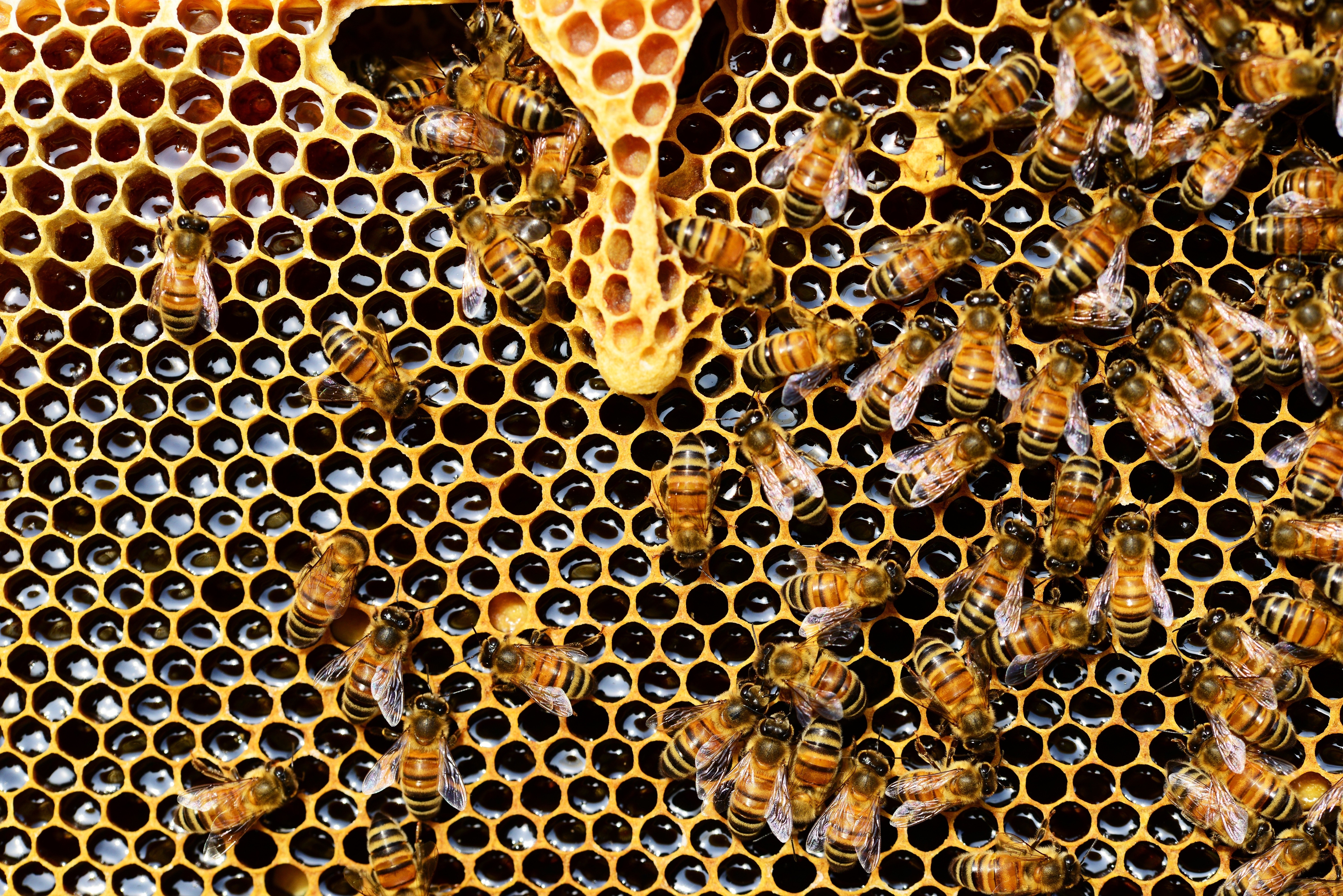
Honey bee colony loss in the U.S. linked to mites, extreme weather, pesticides

A new study by Penn State researchers is is the first to concurrently consider a variety of potential honey bee stressors at a national scale and suggests several areas of concern to prioritize in beekeeping practices.
Photo Credit: Pixabay

About one-third of the food eaten by Americans comes from crops pollinated by honey bees, yet the insect is dying off at alarming rates. In one year alone, between April of 2019 and April of 2020, one study reported a 43% colony loss in honey bees across the United States.

A new study led by Penn State researchers provides preliminary insight on the potential effects of several variables, including some linked to climate change, on honey bees. Their findings show that honey bee colony loss in the U.S. over the last five years is primarily related to the presence of parasitic mites, extreme weather events, nearby pesticides, as well as challenges with overwintering. The study took advantage of novel statistical methods and is the first to concurrently consider a variety of potential honey bee stressors at a national scale. The study, published online in the journal Scientific Reports, suggests several areas of concern to prioritize in beekeeping practices.

A fresh look at restoring power to the grid

Sandia National Laboratories computer scientists Casey Doyle, left, and Kevin Stamber stand in front of an electrical switching station. Their team has developed a computer model to determine the best way to restore power to a grid after a disruption, such as a complete blackout caused by extreme weather.
Photo Credit: Craig Fritz

Climate change can alter extreme weather events, and these events have the potential to strain, disrupt or damage the nation’s grid.

Sandia National Laboratories computer scientists have been working on an innovative computer model to help grid operators quickly restore power to the grid after a complete disruption, a process called “black start.”

Their model combines a restoration-optimization model with a computer model of how grid operators would make decisions when they don’t have complete knowledge of every generator and distribution line. The model also includes a physics-based understanding of how the individual power generators, distribution substations and power lines would react during the process of restoring power to the grid.

“We’ve spent a lot of time thinking about how we go beyond simply looking at this as a multi-layered optimization problem,” said project lead Kevin Stamber. “When we start to discuss disruptions to the electric grid, being able to act on the available information and provide a response is critical. The operator still has to work that restoration solution against the grid and see whether or not they are getting the types of reactions from the system that they expect to see.”

The overarching model also can simulate black starts triggered by human-caused disruptions such as a successful cyberattack.

Carnivorous plants change their diet: traps as toilet bowls

Pitcher plants of the genus Nepenthes on the island of Borneo.
Photo Credit: Antony van der Ent.

In tropical mountains, the number of insects declines with increasing altitude. This intensifies in high altitudes competition between plant species that specialize in catching insects as an important source of nutrients. How creatively some of these plant species have reacted to this situation is shown by an international research team with Prof. Dr. Gerhard Gebauer from the University of Bayreuth in the "Annals of Botany". In mountain regions on Borneo, some species of the pitcher plant Nepenthes have changed their diet: With their traps, which originally served to capture insects, they catch the excrement of mammals and are thus even better supplied with nutrients than before.

Featured Article

Ketamine high NOT related to treatment success for people with alcohol problems

Photo Credit:  Treedeo.St Studios Scientific Frontline: "At a Glance" Summary Main Discovery : The intensity of the acute psychede...

Top Viewed Articles