. Scientific Frontline

Thursday, March 30, 2023

Predatory dinosaurs such as T. rex sported lizard-like lips

A juvenile Edmontosaurus disappears into the enormous, lipped mouth of Tyrannosaurus.
Illustration Credit Dr Mark Witton

A new study suggests that predatory dinosaurs, such as Tyrannosaurus rex, did not have permanently exposed teeth as depicted in films such as Jurassic Park, but instead had scaly, lizard-like lips covering and sealing their mouths.

Researchers and artists have debated whether theropod dinosaurs, the group of two-legged dinosaurs that includes carnivores and top predators like T. rex and Velociraptor, as well as birds, had lipless mouths where perpetually visible upper teeth hung over their lower jaws, similar to the mouth of a crocodile.

However, an international team of researchers challenge some of the best-known depictions, and say these dinosaurs had lips similar to those of lizards and their relative, the tuatara - a rare reptile found only in New Zealand, which are the last survivors of an order of reptiles that thrived in the age of the dinosaurs.

In the most detailed study of this issue yet, the researchers examined the tooth structure, wear patterns and jaw morphology of lipped and lipless reptile groups and found that theropod mouth anatomy and functionality resembles that of lizards more than crocodiles. This implies lizard-like oral tissues, including scaly lips covering their teeth.

Watch nanoparticles grow into crystals

Liquid-phase TEM video of layer-by-layer growth of a crystal with smooth surface from gold concave nanocubes. Surface particles on the growing crystal are tracked (center positions overlaid with yellow dots).

For the first time ever, researchers have watched the mesmerizing process of nanoparticles self-assembling into solid materials. In the stunning new videos, particles rain down, tumble along stairsteps and slide around before finally snapping into place to form a crystal’s signature stacked layers.

Led by Northwestern University and the University of Illinois, Urbana-Champaign, the research team says these new insights could be used to design new materials, including thin films for electronic applications.

The research was published today (March 30) in the journal Nature Nanotechnology

Described by the researchers as an “experimental tour de force,” the study used a newly optimized form of liquid-phase transmission electron microscopy (TEM) to gain unprecedented insights into the self-assembly process. Before this work, researchers used microscopy to watch micron-sized colloids — which are 10 to 100 times larger than nanoparticles — self-assemble into crystals. They also have used X-ray crystallography or electron microscopy to visualize single layers of atoms in a crystalline lattice. But they were unable to watch atoms individually move into place.

“We know that atoms use a similar scheme to assemble into crystals, but we have never seen the actual growth process,” said Northwestern’s Erik Luijten, who led the theoretical and computational work to explain the observations. “Now we see it coming together right in front of our eyes. By viewing nanoparticles, we are watching particles that are larger than atoms, but smaller than colloids. So, we have completed the whole spectrum of length scales. We are filling in the missing length.”

Was plate tectonics occurring when life first formed on Earth?

Plate tectonics melts and mixes rocks to create magmas with specific chemical makeups. Rochester geologists are using that chemical evidence to unlock information about plate tectonic activity on Earth more than 4 billion years ago.
Photo Credit: Tetiana Grypachevska

Zircon crystals and magmas reveal new information about plate tectonic activity on Earth billions of years ago.

Earth is a dynamic and constantly changing planet. From the formation of mountains and oceans to the eruption of volcanoes, the surface of our planet is in a constant state of flux. At the heart of these changes lies the powerful force of plate tectonics—the movements of Earth’s crustal plates. This fundamental process has shaped the current topography of our planet and continues to play a role in its future.

But what was plate tectonic activity like during early Earth? And was the process even occurring during the time when life is thought to have formed?

“The dynamic tectonic nature of the modern Earth is one of the reasons why life exists today,” says Wriju Chowdhury, a postdoctoral research associate in the lab of Dustin Trail, an associate professor of earth and environmental sciences at the University of Rochester. “Exploring the geodynamics and the lithological diversity of the early Earth could lead to revelations of how life first began on our planet.”

AI predicts enzyme function better than leading tools

An Illinois research team created an AI tool to predict an enzyme’s function from its sequence using the campus network and resource group servers. Pictured, from left: Tianhao You, Haiyang (Ocean) Cui, Huimin Zhao and Guangde Jiang.   
Photo Credit: Fred Zwicky

A new artificial intelligence tool can predict the functions of enzymes based on their amino acid sequences, even when the enzymes are unstudied or poorly understood. The researchers said the AI tool, dubbed CLEAN, outperforms the leading state-of-the-art tools in accuracy, reliability and sensitivity. Better understanding of enzymes and their functions would be a boon for research in genomics, chemistry, industrial materials, medicine, pharmaceuticals and more.

“Just like ChatGPT uses data from written language to create predictive text, we are leveraging the language of proteins to predict their activity,” said study leader Huimin Zhao, a University of Illinois Urbana-Champaign professor of chemical and biomolecular engineering. “Almost every researcher, when working with a new protein sequence, wants to know right away what the protein does. In addition, when making chemicals for any application – biology, medicine, industry – this tool will help researchers quickly identify the proper enzymes needed for the synthesis of chemicals and materials.”

The researchers will publish their findings in the journal Science and make CLEAN accessible online March 31.

Allies or enemies of cancer: the dual fate of neutrophils

Neutrophils infiltrating tumors are heterogeneous and different neutrophil types can have opposing effects on cancer progression. The image shows artistic rendering of a lung tumor nodule (in blue) infiltrated by various neutrophil types (shown in green, orange and red) including some (in red) that are expanded by immunotherapy and are required for tumor elimination.
Illustration Credit: © Mate Kiss, Evangelia Bolli and Mikael Pittet

An international team including scientists from the UNIGE and Harvard has discovered a new type of immune cell whose action is essential for the success of immunotherapies.

Why do cancer immunotherapies work so extraordinarily well in a minority of patients, but fail in so many others? By analyzing the role of neutrophils, immune cells whose presence usually signals treatment failure, scientists from the University of Geneva (UNIGE), from Harvard Medical School, and from Ludwig Cancer Center have discovered that there is not just one type of neutrophils, but several. Depending on certain markers on their surface, these cells can either promote the growth of tumors, or fight them and ensure the success of a treatment. By boosting the appropriate factors, neutrophils could become great agents of anti-tumor immunity and reinforce the effects of current immunotherapies. These results can be read in Cell.

Ultrasmall swirling magnetic vortices detected in iron-containing material

Simulation capturing the different swirling textures of skyrmions and merons observed in ferromagnet thin film.
Image Credit: University of Edinburgh/based on microscopy images collected by Argonne on samples prepared at MagLab

Microelectronics forms the foundation of much modern technology today, including smartphones, laptops and even supercomputers. It is based on the ability to allow and stop the flow of electrons through a material. Spin electronics, or spintronics, is a spinoff. It is based on the spin of electrons, and the fact that the electron spin along with the electric charge creates a magnetic field.

“This property could be exploited for building blocks in future computer memory storage, brain-like and other novel computing systems, and high-efficiency microelectronics,” said Charudatta Phatak, group leader in the Materials Science division at the U.S. Department of Energy’s (DOE) Argonne National Laboratory.

A team including researchers at Argonne and the National High Magnetic Field Laboratory (MagLab) discovered surprising properties in a magnetic material of iron, germanium and tellurium. This material is in the form of a thin sheet that is only a few to 10 atoms in thickness. It is called a 2D ferromagnet.

The team discovered that two kinds of magnetic fields can coexist in this ultrathin material. Scientists call them merons and skyrmions. They are like miniature swirling storm systems dotting the flat landscape of the ferromagnet. But they differ in their size and swirling behavior.

A key mechanism that controls human heart development discovered

A human cardiac organoid (Cardioid), one of the models the researchers used to reconstruct human cardiac development in 3D. Cardiac mesoderm stage human Cardioid visualizing Phalloidin (grey) and β-catenin (Magenta).
Image Credit: Deniz Bartsch

Writing in ‘Science Advances’ researchers of the University of Cologne describe a key mechanism that controls the decision-making process that allows human embryonic stem cells to make the heart. These discoveries enable better insights into how the human heart forms in an embryo and what can go wrong during heart formation, causing cardiac disease or, in the worst case, embryo termination.

In humans, a specialized mRNA translation circuit predetermines the competence for heart formation at an early stage of embryonic development, a research team at the Center for Molecular Medicine Cologne (CMMC) and the University of Cologne’s Cluster of Excellence in Aging Research CECAD led by Junior Professor Dr Leo Kurian has discovered. While it is well known that cardiac development is prioritized at the early stages of embryogenesis, the regulatory program that controls the prioritization of the development of the heart remained unclear until now. Kurian and his team investigated how the prioritization of heart development is regulated at the molecular level. They found that the protein RBPMS (RNA-binding protein with multiple splicing) is responsible for the decision to make the heart by programming mRNA translation to approve future cardiac fate choice. The study is published under the title ‘mRNA translational specialization by RBPMS presets the competence for cardiac commitment’ in Science Advances.

“Exquisite” sabertooth skull offers clues about Ice Age predator

Dave Easterla, left, Distinguished University Professor Emeritus of Biology at Northwest Missouri State University and Matthew Hill, associate professor of anthropology at Iowa State, with a fossilized complete skull from a sabertooth cat from southwest Iowa.
Photo Credit: Christopher Gannon/Iowa State University.

The recent discovery of a sabertooth cat skull in southwest Iowa is the first evidence the prehistoric predator once inhabited the state.

The chance of finding any fossilized remains from a sabertooth cat is slim, said Matthew Hill, an associate professor of archaeology at Iowa State and expert on animal bones. The remarkably well-preserved skull found in Page County is even rarer, and its discovery offers clues about the iconic Ice Age species before its extinction roughly 12-13,000 years ago.

“The skull is a really big deal,” said Hill. “Finds of this animal are widely scattered and usually represented by an isolated tooth or bone. This skull from the East Nishnabotna River is in near perfect condition. It’s exquisite.”

Hill analyzed the specimen in collaboration with David Easterla, Distinguished University Professor Emeritus of Biology at Northwest Missouri State University. Their findings are newly published in Quaternary Science Reviews.

Machine learning models rank predictive risks for Alzheimer’s disease

Xiaoyi Raymond Gao, PhD Associate Professor
Photo Credit: Courtesy of Ohio State University

Once adults reach age 65, the threshold age for the onset of Alzheimer’s disease, the extent of their genetic risk may outweigh age as a predictor of whether they will develop the fatal brain disorder, a new study suggests. 

The study, published recently in the journal Scientific Reports, is the first to construct machine learning models with genetic risk scores, non-genetic information and electronic health record data from nearly half a million individuals to rank risk factors in order of how strong their association is with eventual development of Alzheimer’s disease.

Researchers used the models to rank predictive risk factors for two populations from the UK Biobank: White individuals aged 40 and older, and a subset of those adults who were 65 or older. 

Results showed that age – which constitutes one-third of total risk by age 85, according to the Alzheimer’s Association – was the biggest risk factor for Alzheimer’s in the entire population, but for the older adults, genetic risk as determined by a polygenic risk score was more predictive. 

“We all know Alzheimer’s disease is a later-onset disease, so we know age is an important risk factor. But when we consider risk only for people age 65 or older, then genetic information captured by a polygenic risk score ranks higher than age,” said lead study author Xiaoyi Raymond Gao, associate professor of ophthalmology and visual sciences and of biomedical informatics in The Ohio State University College of Medicine. “That means it’s really important to consider genetic information when we work on Alzheimer’s disease.” 

Lab-made antibodies offer potential cure for yellow fever

Captured through a microscope, this enlarged image illustrates how yellow fever virus (purple coloring) is below detectable levels in the blood of research animals given a monoclonal antibody after being exposed to the virus (bottom squares). By comparison, yellow fever virus is clearly visible in the blood of research animals that didn’t receive a monoclonal antibody (top squares). This research suggests lab-made antibodies may be able to cure people who get sick with yellow fever, a disease for which there is no approved treatment.
Image Credit: Oregon Health & Science University

New research from Oregon Health & Science University and collaborators indicates lab-made antibodies may be able to cure people infected with yellow fever, a virus for which there is no treatment.

The natural immune response to invading pathogens normally involves making protective proteins called antibodies. A study published in Science Translational Medicine suggests that a single monoclonal antibody infusion can strengthen the body’s fight against yellow fever.

In the study, the yellow fever virus was undetectable in all animals that received monoclonal antibody infusions after being exposed to the virus.

“Two monoclonal antibodies that we evaluated completely removed all signs of infection from research animals,” said the study’s corresponding author, Ben Burwitz, Ph.D., associate professor at OHSU’s Vaccine and Gene Therapy Institute and affiliate associate professor at OHSU’s Oregon National Primate Research Center.

Vegan protein supports muscle building as effectively as animal protein

Photo Credit: Daniela

Fungi-derived mycoprotein is just as effective at supporting muscle building during resistance training as animal protein, according to the findings of a new study from the University of Exeter.

The study, published in the Journal of Nutrition, is the first to explore if a vegan diet rich in mycoprotein – the naturally high-fiber fungi that is best known as Quorn – can support muscle growth during resistance training to the same extent as an omnivorous diet. It comes as a growing number of adults are eating less meat1, with latest figures showing that there are approximately 7.2m adults who now follow a meat free diet2.

The randomized trial was split into two phases: in the first phase, 16 healthy young adults completed a three-day diet where their protein was derived from either omnivorous or exclusively vegan (predominantly Quorn’s mycoprotein) sources, whilst detailed measures of metabolism were taken. In phase two, 22 healthy young adults completed a 10-week high volume progressive resistance training program while consuming a high protein omnivorous diet or a vegan diet rich in mycoprotein.

The results demonstrated comparable increases in muscle mass and strength in response to both diets, with no significant differences between the two. The group on the high protein omnivorous diet gained 2.6 kg of whole-body lean mass, while the group on the vegan diet gained 3.1 kg. Both groups also increased the size of their thigh muscles by the same amount (8.3%) over the course of the trial.

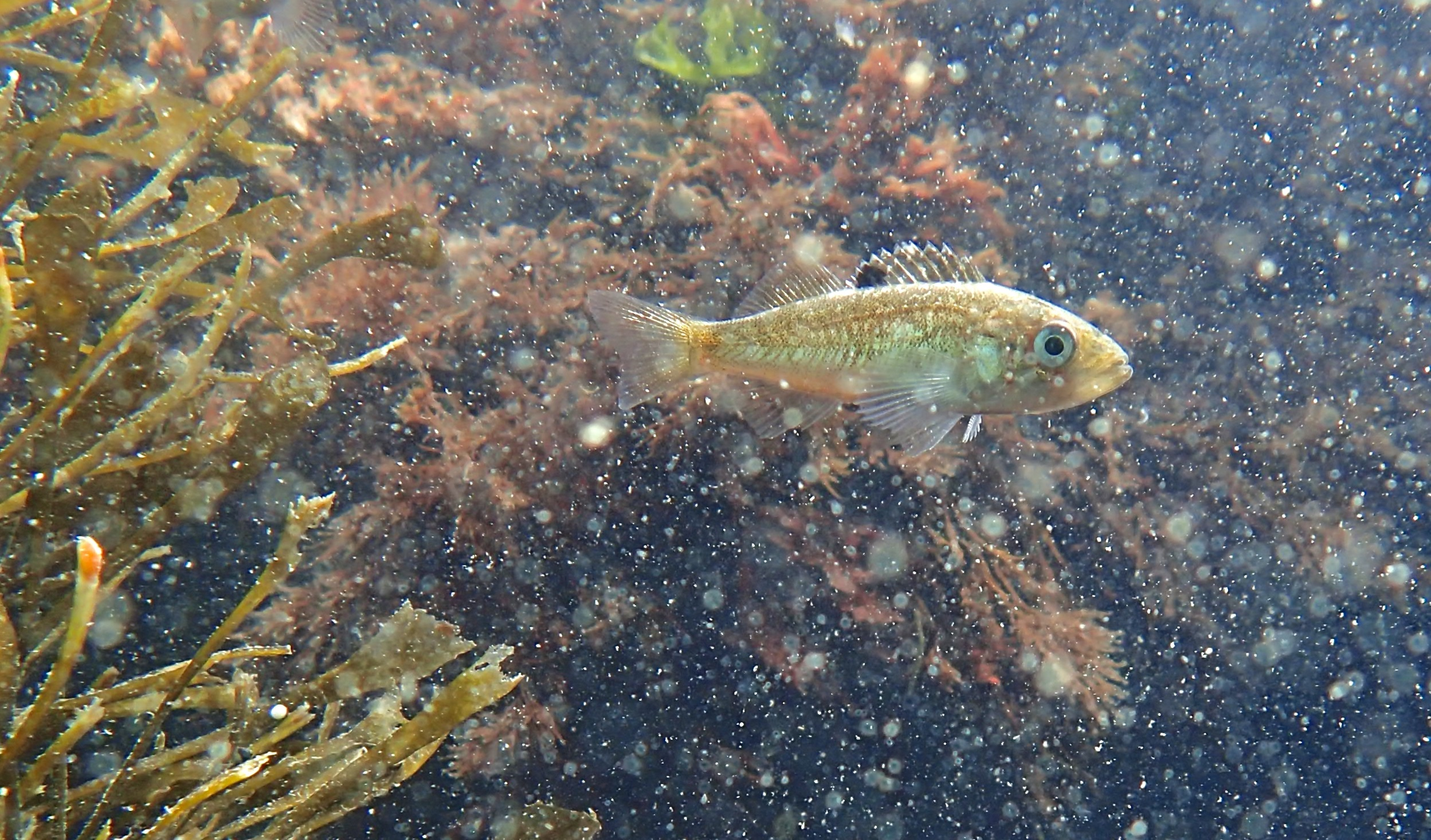
Juvenile black rockfish affected by marine heat wave but not always for the worse, research shows

A juvenile black rockfish
Photo Credit: Will Fennie

Larvae produced by black rockfish, a linchpin of the West Coast commercial fishing industry for the past eight decades, fared better during two recent years of unusually high ocean temperatures than had been feared, new research by Oregon State University shows.

“The study is important for gauging the conditions and making management plans that will affect the species’ survival as the ocean experiences increasing variability because of climate change,” said Will Fennie, the study’s lead author.

Findings were published in Nature’s Scientific Reports.

Rockfish, a diverse genus with many species, are a group of ecologically as well as economically important fishes found from Baja California to British Columbia.

They are known for lifespans that can reach triple digits, an ability to produce prodigious numbers of offspring and variable survival during their early life stages, during which they are highly sensitive to environmental conditions.

Coconuts and lemons enable a thermal wood for indoor heating and cooling

Peter Olsén and Céline Montanari, researchers in the Department of Biocomposites at KTH Royal Institute of Technology in Stockholm, say the new wood composite uses components of lemon and coconuts to both heat and cool homes.
Photo Credit: David Callahan

A building material that combines coconuts, lemons and modified wood could one day be enough to heat and cool your home. The three renewable sources provide the key components of a wood composite thermal battery, which was developed by researchers at KTH Royal Institute of Technology in Stockholm.

Researchers reported the development in the scientific journal Small. Peter Olsén, researcher in the Department of Biocomposites at KTH, says the material is capable of storing both heat and cold. If used in housing construction, the researchers say that 100 kilos of the material can save about 2.5 kWh per day in heating or cooling—given an ambient temperature of 24C.

KTH researcher Céline Montanari says that besides sunlight, any heat source can charge the battery. “The key is that the temperature fluctuates around the transition temperature, 24C, which can of course be tailored depending on the application and location,” she says.

Wednesday, March 29, 2023

Deep ocean currents around Antarctica headed for collapse

Direct measurements taken from the deep ocean have established that warming is already underway.
Photo Credit: Pixabay

Antarctic circulation could slow by more than 40 per cent over the next three decades, with significant implications for oceans and the climate.

The deep ocean circulation that forms around Antarctica could be headed for collapse, say scientists.

Such a decline would stagnate the bottom of the oceans and affect climate and marine ecosystems for centuries to come.

The results are detailed in a new study coordinated by Scientia Professor Matthew England, Deputy Director of the ARC Centre for Excellence in Antarctic Science (ACEAS) at UNSW Sydney. The work, published today in Nature, includes lead author Dr Qian Li – formerly from UNSW and now at the Massachusetts Institute of Technology (MIT) – as well as co-authors from the Australian National University (ANU) and CSIRO.

Cold water that sinks near Antarctica drives the deepest flow of the overturning circulation – a network of currents that spans the world’s oceans. The overturning carries heat, carbon, oxygen and nutrients around the globe. This influences climate, sea level and the productivity of marine ecosystems. 

Drug overdose fatalities among US older adults has quadrupled over 20 years

Photo Credit: Christina Victoria Craft

Overdose mortality among people age 65 and older quadrupled over 20 years, suggesting the need for greater mental health and substance use disorder policies addressed at curbing the trend, a new research paper finds.

The deaths stemmed from both suicides and accidental overdoses, with nearly three-fourths of the unintended fatalities involving illicit drugs such as synthetic opioids like fentanyl, heroin, cocaine, and methamphetamines.  Prescription opioids, antidepressants, benzodiazepines, antiepileptics and sedatives were used in 67% of intentional overdoses.

“The dramatic rise in overdose fatalities among adults over 65 years of age in the past two decades underscores how important it is for clinicians and policymakers to think of overdose as a problem across the lifespan,” said co-author Chelsea Shover, assistant professor of medicine in the division of general internal medicine and health services research at the David Geffen School of Medicine at UCLA. “Updating Medicare to cover evidence-based treatment for substance use disorders is crucial, as is providing harm reduction supplies such as naloxone to older adults.”

Featured Article

Ketamine high NOT related to treatment success for people with alcohol problems

Photo Credit:  Treedeo.St Studios Scientific Frontline: "At a Glance" Summary Main Discovery : The intensity of the acute psychede...

Top Viewed Articles