. Scientific Frontline

Thursday, February 10, 2022

Notches on lions’ teeth reveal poaching in Zambia’s conservation areas

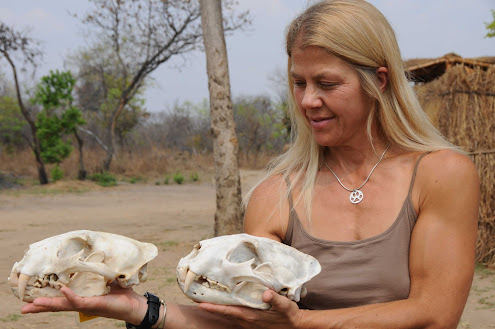
UCLA biologist Paula White displays two leopard skulls.
Credit: Paula White

In a hunting camp in Zambia more than a decade ago, UCLA biologist Paula White puzzled over the heavy skull of a trophy-hunted lion. Zambia permits limited hunting in certain areas to help fund its national conservation program, and White had gained permission to examine the trophy skulls and hides to evaluate how hunting was affecting conservation efforts.

This particular skull had a pronounced horizontal V-shaped notch on one of the canine teeth — a marking White had never seen before from natural wear. Over the next few months, she began noticing similar notches on other lions’ teeth.

It wasn’t until three years later, when she visited lions bred in captivity and saw them gnawing on a wire fence, that it clicked: The tooth notches in wild lions resulted from the animals chewing their way out of wire snares — noose-like traps set by poachers. The sheer number of notched teeth she’d seen suggested that such traps, illegal in conservation areas, were injuring far more lions than experts had estimated.

“It was an odd mix of thrilling to figure out the cause of the notches and horrifying to realize that so many animals had been entangled in a snare at some point in their lives,” said White, director of the Zambia Lion Project and a senior research fellow with the Center for Tropical Research at UCLA’s Institute of the Environment and Sustainability.

Earth's Inner Core: A Mixture of Solid Fe and Liquid-like Light Elements

Earth's interior structure and superionic inner core
Image by IGCAS
Earth's core, the deepest part of our planet, is characterized by extremely high pressure and temperature. It is composed of a liquid outer core and solid inner core.

The inner core is formed and grows due to the solidification of liquid iron at the inner core boundary. The inner core is less dense than pure iron, and some light elements are believed to be present in the inner core.

A joint research team of Prof. LI Heping and Prof. HE Yu from the Institute of Geochemistry of the Chinese Academy of Sciences (IGCAS) and Prof. MAO Ho-kwang and Prof. KIM Duck Young from Center for High Pressure Science & Technology Advanced Research (HPSTAR) has found that the inner core of the Earth is not a normal solid but is composed of a solid iron sublattice and liquid-like light elements, which is also known as a superionic state. The liquid-like light elements are highly diffusive in iron sublattices under inner core conditions.

This study was published in Nature on Feb. 9.

A superionic state, which is an intermediate state between solid and liquid, widely exists in the interior of planets. Using high-pressure and high-temperature computational simulations based on quantum mechanics theory, researchers from IGCAS and the Center for High Pressure Science & Technology Advanced Research (HPSTAR) found that some Fe-H, Fe-C and Fe-O alloys transformed into a superionic state under inner core conditions.

In superionic iron alloys, light elements become disordered and diffuse like a liquid in the lattice, while iron atoms remain ordered and vibrate about their lattice grid, forming the solid iron framework. The diffusion coefficients of C, H and O in superionic iron alloys are the same as those in liquid Fe.

"It is quite abnormal. The solidification of iron at the inner core boundary does not change the mobility of these light elements, and the convection of light elements is continuous in the inner core," said Prof. HE Yu, the first and corresponding author of the study.

Wednesday, February 9, 2022

A new approach for detecting ultra-low-energy photons

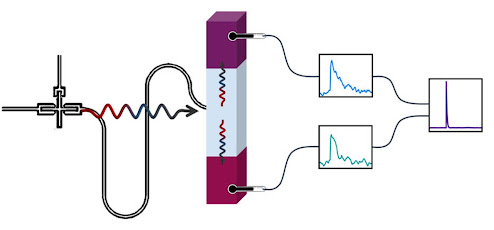
A low energy photon emitted by a qubit can potentially be detected by measuring its energy with two thermometers simultaneously. The two signals are combined into a cross-correlation measurement with superior sensitivity.
Illustration: Bayan Karimi.

Professor Jukka Pekola and Doctoral Candidate Bayan Karimi from Aalto University propose a new approach to measure the energy of single microwave photons. These low energy quanta are emitted by artificial quantum systems such as superconducting qubits. Detecting them continuously has been challenging but would be useful in quantum information processing and other quantum technologies.

A photon is produced when a superconducting qubit transits between states, radiating energy into its environment. The researchers capture the tiny energy of this photon by transferring it into heat. The new technique relies on splitting the energy of a photon across two independent heat baths and making measurements using two uncoupled detectors at once. This would significantly enhance the signal-to-noise ratio, making it easier to detect an absorption event and its energy.

‘In our proposed setup the energy of a qubit is large whereas its typical operating temperature is very low. This contrast opened an opportunity to solve the Schrödinger equation exactly for up to one million external oscillators forming the heat baths in the model describing this measurement,’ Pekola says.

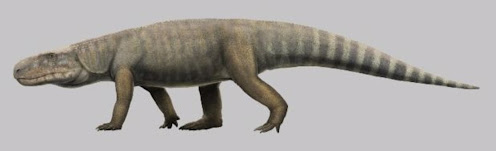
Fossils excavated in the 1960s add missing link to crocodile evolution

Credit: Gabriel Ugueto

A set of Triassic archosaur fossils, excavated in the 1960s in Tanzania, have been formally recognized as a distinct species, representing one of the earliest-known members of the crocodile evolutionary lineage.

Researchers at the University of Birmingham, the Natural History Museum and Virginia Tech University have named the animal Mambawakale ruhuhu. It is among the last to be studied of a collection of fossils dug up nearly 60 years ago from the Manda Beds, a geological formation in southern Tanzania.

The remains, which are the only known example of Mambawakale ruhuhu, include a partial skull, lower jaw, several vertebrae and a hand. From these, the research team were able to identify several distinctive features that set it apart from other archosaurs found in the Manda Beds.

These included a large skull, more than 75 cm in length, and a particularly large nostril, as well as a notably narrow lower jaw and strong variation in the sizes of the teeth at the front of the upper jaws.

A catalyst that can turn carbon dioxide into gasoline 1,000 times more efficiently

Chengshuang Zhou holds vials of ruthenium, left, and the coated catalyst, while Matteo Cargnello holds the pipe used for the reaction experiments.
Image credit: Mark Golden

Captured CO2 can be turned into carbon-neutral fuels, but technological advances are needed. In new research, a new catalyst increased the production of long-chain hydrocarbons in chemical reactions by some 1,000 times over existing methods.

Engineers working to reverse the proliferation of greenhouse gases know that in addition to reducing carbon dioxide emissions we will also need to remove carbon dioxide from power plant fumes or from the skies. But, what do we do with all that captured carbon? Matteo Cargnello, a chemical engineer at Stanford University, is working to turn it into other useful chemicals, such as propane, butane or other hydrocarbon fuels that are made up of long chains of carbon and hydrogen.

“We can create gasoline, basically,” said Cargnello, who is an assistant professor of chemical engineering. “To capture as much carbon as possible, you want the longest chain hydrocarbons. Chains with eight to 12 carbon atoms would be the ideal.”

A new catalyst, invented by Cargnello and colleagues, moves toward this goal by increasing the production of long-chain hydrocarbons in chemical reactions. It produced 1,000 times more butane – the longest hydrocarbon it could produce under its maximum pressure – than the standard catalyst given the same amounts of carbon dioxide, hydrogen, catalyst, pressure, heat and time. The new catalyst is composed of the element ruthenium – a rare transition metal belonging to the platinum group – coated in a thin layer of plastic. Like any catalyst, this invention speeds up chemical reactions without getting used up in the process. Ruthenium also has the advantage of being less expensive than other high-quality catalysts, like palladium and platinum.

'Molecular Velcro' enables tissues to sense, react to mechanical force

University of Illinois professor Deborah Leckband led a study that revealed how Velcro-like cellular proteins called cadherins sense tissue mechanics to regulate cell communication and biological tissue growth. 
Photo courtesy Claire Benjamin

The Velcro-like cellular proteins that hold cells and tissues together also perform critical functions when they experience increased tension. A new University of Illinois Urbana-Champaign study observed that when tugged upon in a controlled manner, these proteins – called cadherins – communicate with growth factors to influence in vitro tumor growth in human carcinoma cells.

The study, led by chemical and biomolecular engineering professor Deborah Leckband, found that cadherins that bond with growth factor receptors can sense mechanical force and respond by altering cell communication and growth.

The findings are published in the Proceedings of the National Academy of Sciences.

When bound to cadherin molecules in normal tissue, growth factor receptors cannot communicate with growth factor proteins – the substance they need to promote tissue growth. However, the study shows that changes in tensional stress on cadherin bonds disrupt the cadherin-growth factor interaction to switch on growth signals in tissues.

Climate drove 7,000 years of dietary changes

A mid-elevation landscape in the Central Andes.
Credit: Kurt Wilson

What a person eats influences a person’s health, longevity and experience in the world. Identifying the factors that determine people’s diets is important to answer bigger questions, such as how changing climates will influence unequal access to preferred foods.

A new study led by University of Utah anthropologists provides a blueprint to systematically untangle and evaluate the power of both climate and population size on the varied diets across a region in the past.

The authors documented that climate had the most influence over diet in the Central Andes between 400 and 7,000 years ago. This makes sense—the climate determines what resources are available for people in the area. The researchers were surprised that population size had little impact on diet variation, despite many complex societies emerging at various points over time that would have brought disparate communities together, fostered trade and increased competition.

The exception was during the Late Horizon (~480-418 yBP), when diets across the region became more similar to one another. This coincides with the Inca Empire that appears to have centralized enough political power to reduce local dietary decisions, and therby dampen influence of climate. The study presents a framework for exploring the relative role of climate and other socio-demographic factors on dietary change through time—including in the future.

Tuesday, February 8, 2022

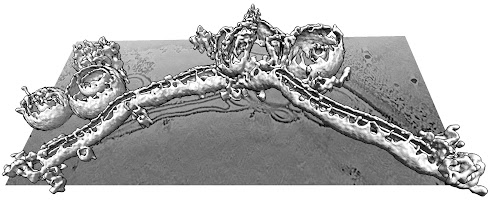
This protein can shred our cells. Or it can help us think.

A 3D ultrahigh-resolution image shows how complexin can distort, shred and elongate simulated cellular membranes. Complexin is important for releasing neurotransmitters in the brain, but must be regulated to not damage cells
Credit: The Chapman Lab

A new study reveals that a protein long known to play a role in communication between cells in the brain is also capable of obliterating cells if left unchecked because of its penchant for twisting and puncturing the membranes surrounding cells.

On its own, the protein — known as complexin — is so toxic it can shred cells. Yet, in the brain, a suite of controls makes sure the protein plays nice and helps cells called neurons communicate by aiding in the release of compounds called neurotransmitters.

The findings, published in Nature Structural and Molecular Biology, emphasize how little we still know about how our brains work. Billions of times every second, the brain’s neurons pass information to one another. While many proteins play a role in this crucial task, just how they accomplish it remains stubbornly mysterious.

It all starts inside a neuron when a tiny packet of neurotransmitters fuses with the cell’s outer membrane. That packet then gets released as cargo to make its way to the next neuron.

Big Data Imaging Shows Rock’s Big Role in Channeling Earthquakes in Japan

The aftermath of a 2011 earthquake and tsunami in Japan.
Credit: Direct Relief/Flickr

Thanks to 20 years of seismic data processed through one of the world’s most powerful supercomputers, scientists have created the first complete, 3D visualization of a mountain-size rock called the Kumano Pluton buried miles beneath the coast of southern Japan. They can now see the rock could be acting like a lightning rod for the region’s megaquakes, diverting tectonic energy into points along its sides where several of the region’s largest earthquakes have happened.

Scientists have known about the pluton for years but were aware of only small portions of it. Thanks to new research by an international team of scientists led by The University of Texas at Austin, researchers now have a view of the entire subterranean formation and its effect on the region’s tectonics.

Climate change can worsen impact of invasive plants

Whalen Dillon recording data in the experiment to assess the effects of invasion, drought and their interaction on longleaf pine responses to fire.
Credit: UF/IFAS Camila Guillen

Synergy isn’t always a good thing — take climate change and invasive plants.

Scientists have long hypothesized that climate change, by intensifying stressors like drought or wildfires, would make an ecosystem more vulnerable to invasive plants. Those invasive plants may in turn alter the environment in ways that amplify the impacts of climate change, explained Luke Flory, a professor of ecology in the UF/IFAS agronomy department.

A new long-term field study conducted by Flory’s lab offers the first experimental evidence to support this hypothesis.

The study, published in the journal Ecology Letters, exposed small plots of long-leaf pine to three scenarios: drought conditions, colonization by the invasive plant cogongrass and a combination of these two factors.

To test how the different scenarios influenced the trees’ survival, scientists added another stressor: fire. But before lighting the first fire, the team waited almost six years for the trees to grow under each scenario.

Nasal Spray Booster Keeps COVID-19 at Bay

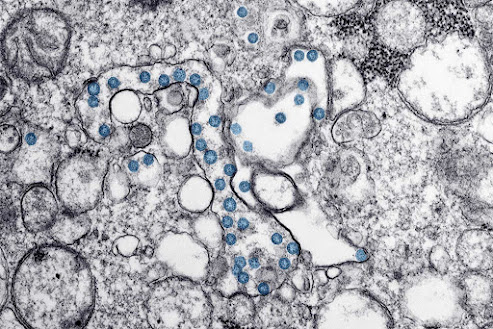
A nasal spray coronavirus vaccine booster helps protect mice from SARS-CoV-2. In this electron microscopy image, viral particles are shown as blue circles.
Credit: CDC/ Hannah A Bullock; Azaibi Tamin

A new coronavirus vaccine guards one body part especially vulnerable to infection: the nose.

Dosing mice with a nasal spray booster recruited an army of immune defenders to both the nasal cavity, where coronaviruses typically enter the body, and the lungs, scientists report in a preprint posted on bioRxiv.org.

Made only of coronavirus spike protein, the vaccine is part of a one-two punch that could one day protect people from infection. Dubbed “Prime and Spike,” the strategy relies on an mRNA coronavirus vaccine injection that primes the immune system to recognize SARS-CoV-2, followed by a nasal spray vaccine that shores up defenses at the mucus membranes.

Such a strategy might offer a way to counter the waning effectiveness of current mRNA coronavirus vaccines, says study author Akiko Iwasaki, a Howard Hughes Medical Institute Investigator at Yale University.

Until now, scientists had not tested nasal vaccines on animals that already had some pre-existing immunity, says Jacco Boon, a virologist at Washington University School of Medicine in St. Louis who was not involved with the new work. “This paper is telling us that the intranasal booster induces a really good immune response in the nose and the lungs,” he says. “It’s a clever strategy, and I hope they test it in people.”

Self-assembling and complex, nanoscale mesocrystals can be tuned for a variety of uses

A magnified view reveals nanoscale mesocrystals (inset) starting to assemble and form an ordered supracrystal structure, seen in green.
Credit: Inna Soroka

A research team from KTH Royal Institute of Technology and Max Planck Institute of Colloids and Interfaces report to have found the key to controlled fabrication of cerium oxide mesocrystals. The research is a step forward in tuning nanomaterials that can serve a wide range of uses —including solar cells, fuel catalysts and even medicine.

Mesocrystals are nanoparticles with identical size, shape and crystallographic orientation, and they can be used as building blocks to create artificial nanostructures with customized optical, magnetic or electronic properties.

In nature, these three-dimensional structures are found in coral, sea urchins and calcite desert rose. Artificially-produced cerium oxide (CeO2) mesocrystals—or nanoceria—are well-known as catalysts, with antioxidant properties that could be useful in pharmaceutical development.

The early cooling of the universe

A look into the past: Cosmic microwave radiation (left) was released 380,000 years after the Big Bang and serves as the background for all galaxies in the universe. The starburst galaxy HFLS3 (centre) is embedded in a cloud of cold-water vapor and appears as it did 880 million years after the Big Bang. Because of its low temperature, the water casts a dark shadow on the microwave background (detail enlargement on the left). This represents a contrast about 10,000-fold stronger than its intrinsic variations of only 0.001% (light/dark spots). 
Credit: ESA and the Planck Collaboration; zoom-in panel: Dominik Riechers/University of Cologne; image composition: Martina Markus/University of Cologne

The shadow of a cosmic water cloud reveals the temperature of the young universe

A telescope in the French Alps has allowed researchers to peer deep into the past of the universe. For the first time, they were able to observe an extremely distant hydrogen cloud that shadows the cosmic background radiation created shortly after the Big Bang. The shadow is created because the colder water absorbs the warmer background radiation on its way to Earth. This provides information about the temperature of the cosmos just 880 million years after the Big Bang. To measure the early history of the universe, an international team used the Northern Extended Millimeter Array (NOEMA), the most powerful radio telescope in the northern hemisphere.

The universe came into being around 13.8 billion years ago with the Big Bang. At that time, a hot, dense fog of radiation and elementary particles wafted in space, which was rapidly expanding. The density and temperature decreased just as quickly, and the light particles (photons) lost increasingly more energy. After about 380,000 years, this plasma had cooled down to 3000 Kelvin. It was then possible for stable atoms to be created. And the photons had a free path and spread out into space. The cosmos became transparent so to speak.

Don’t lose your marbles: realizing the potential of liquid marbles

Griffith University researchers have solved a problem plaguing droplet-sized micro-reactors which could improve the viability for applications like drug delivery and waste management.

Published in Applied Physics Letters, the technique the team developed uses condensation to noninvasively refill the liquid marbles that previously collapse due to evaporation.

“Liquid marbles are droplets of solution that we wrap in a thin layer of microparticles which can be used for a number of biological, chemical, and biochemical applications,” said co-author Professor Nam-Trung Nguyen from the Queensland Micro and Nanotechnology Centre.

“Liquid marbles are used as microreactors to house various chemical, biochemical and biological purposes like growing cells and applications such as the common PCR, a DNA amplification technique used to detect COVID-19.

“Utilizing liquid marbles for these purposes significantly reduces the amounts of reactants and plastic consumables needed.”

To create the marbles a drop of the reaction solution is rolled over a powder bed of hydrophobic (water resistant) particles or oleophobic (oil resistant) particles, so they create a barrier around the drop that isolates its content from the surrounding.

Dog feces and urine could be harming nature reserves

Sign prohibiting dogs at one of the nature reserves.
Credit: Pieter De Frenne

New research finds that dogs being walked in nature reserves contribute a significant amount of nutrients to the environment through their feces and urine, which researchers warn could negatively impact local biodiversity. The research is published in the British Ecological Society journal, Ecological Solutions and Evidence.

Significant levels of fertilization

Researchers at Ghent University have estimated that each year dog feces and urine add an average of 11kg of nitrogen and 5kg of phosphorous per hectare to nature reserves near the Belgian city of Ghent. The researchers say that the nutrients added through this neglected form of fertilizations are substantial and could be detrimental to biodiversity and ecosystem functioning.

The estimates for the amount of nitrogen being added by this previously unrecorded source are particularly significant when compared to the total levels of nitrogen being added across most of Europe through fossil fuel emissions and agriculture, which range from 5 to 25kg of nitrogen per hectare.

Professor Pieter De Frenne of Ghent University and lead author of the research said: “We were surprised by how high nutrient inputs from dogs could be. Atmospheric nitrogen inputs from agriculture, industry and traffic rightfully receive a lot of policy attention, but dogs are entirely neglected in this respect.”

Featured Article

What Is: Macrophage

A realistic scientific visualization of a macrophage, a crucial immune cell, actively engulfing bacteria with its extended pseudopods. The i...

Top Viewed Articles