 |
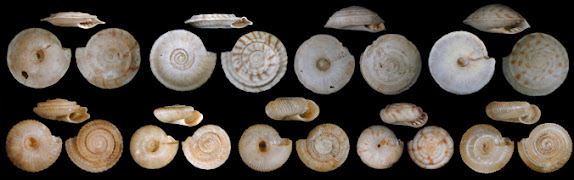
| Shells from recently extinct land snails from French Polynesia. Photo credit: O.Gargominy, A.Sartori. |
Scientific Frontline: "At a Glance" Summary: Sixth Mass Extinction
- Main Discovery: Earth is currently undergoing a human-driven Sixth Mass Extinction, a reality confirmed by a comprehensive assessment of biodiversity loss that accounts for previously overlooked invertebrate species.
- Methodology: Researchers from the University of Hawaiʻi at Mānoa and the Muséum National d’Histoire Naturelle extrapolated global extinction rates by utilizing estimates obtained specifically from land snails and slugs to calculate broader biodiversity loss since the year 1500.
- Key Data: Current estimates indicate that between 7.5% and 13% of the two million known species—amounting to a staggering 150,000 to 260,000 species—have already gone extinct since 1500.
- Significance: This analysis refutes denials of a mass extinction by proving the crisis is deeply impacting invertebrates, which constitute the vast majority of biodiversity. It also reveals that island species are disproportionately affected compared to continental species, while marine environments and terrestrial plants currently face lower extinction rates.
- Future Application: These findings emphasize the urgent necessity of expanding conservation initiatives beyond charismatic vertebrate animals, accelerating the documentation of vulnerable biodiversity before it vanishes, and mobilizing international political action to halt the current extinction trajectory.
- Branch of Science: Evolutionary Biology, Ecology, and Environmental Science.