. Scientific Frontline

Tuesday, May 31, 2022

Making colors out of gold and DNA

In this experiment, the gel is being activated by a red LED before the researchers measure the light it transmits.
Photo: Joonas Ryssy

Folk belief says there’s a pot of gold at the end of the rainbow, but a new technology is turning that idea on its head – using particles of gold to make colors. With further work, the method developed at Aalto University could herald a new display technology.

The technique uses gold nanocylinders suspended in a gel. The gel only transmits certain colors when lit by polarized light, and the color depends on the orientation of the gold nanocylinders. In a clever twist, a collaboration led by Anton Kuzyk’s and Juho Pokki’s research groups used DNA molecules to control the orientation of gold nanocylinders in the gel.

‘DNA isn’t just an information carrier – it can also be a building block. We designed the DNA molecules to have a certain melting temperature, so we could basically program the material,’ says Aalto doctoral candidate Joonas Ryssy, the study’s lead author. When the gel heats past the melting temperature, the DNA molecules loosen their grip and the gold nanocylinders change orientation. When the temperature drops, they tighten up again, and the nanoparticles go back to their original position.

Palms at the Poles: Fossil Plants Reveal Lush Southern Hemisphere Forests in Ancient Hothouse Climate

For decades, paleobotanist David Greenwood has collected fossil plants from Australia – some so well preserved it’s hard to believe they’re millions of years old. These fossils hold details about the ancient world in which they thrived, and Greenwood and a team of researchers including climate modeler and research David Hutchinson, from the University of New South Wales, and UConn Department of Geosciences paleobotanist Tammo Reichgelt, have begun the process of piecing together the evidence to see what more they could learn from the collection. Their findings are published in Paleoceanography & Paleoclimatology.

The fossils date back 55 to 40 million years ago, during the Eocene epoch. At that time, the world was much warmer and wetter, and these hothouse conditions meant there were palms at the North and South Pole and predominantly arid landmasses like Australia were lush and green. Reichgelt and co-authors looked for evidence of differences in precipitation and plant productivity between then and now.

Since different plants thrive under specific conditions, plant fossils can indicate what kinds of environments those plants lived in.

By focusing on the morphology and taxonomic features of 12 different floras, the researchers developed a more detailed view of what the climate and productivity was like in the ancient hothouse world of the Eocene epoch.

Reichgelt explains the morphological method relies on the fact that the leaves of angiosperms — flowering plants — in general have a strategy for responding to climate.

New Artificial Enzyme Breaks Down Tough, Woody Lignin

Researchers Xiao Zhang (L) and Chun-long Chen (R) examine the products of lignin digestion by their novel biomimetic peptoid catalyst.
Photo by Andrea Starr | Pacific Northwest National Laboratory

A new artificial enzyme has shown it can chew through lignin, the tough polymer that helps woody plants hold their shape. Lignin also stores tremendous potential for renewable energy and materials.

Reporting in the journal Nature Communications, a team of researchers from Washington State University and the Department of Energy’s Pacific Northwest National Laboratory showed that their artificial enzyme succeeded in digesting lignin, which has stubbornly resisted previous attempts to develop it into an economically useful energy source.

Lignin, which is the second most abundant renewable carbon source on Earth, mostly goes to waste as a fuel source. When wood is burned for cooking, lignin byproducts help impart that smoky flavor to foods. But burning releases all that carbon to the atmosphere instead of capturing it for other uses.

“Our bio-mimicking enzyme showed promise in degrading real lignin, which is considered to be a breakthrough,” said Xiao Zhang, a corresponding author on the paper and associate professor in WSU’s Gene and Linda Voiland School of Chemical Engineering and Bioengineering. Zhang also holds a joint appointment at PNNL. “We think there is an opportunity to develop a new class of catalysts and to really address the limitations of biological and chemical catalysts.”

Drought, megafires, and flood – citizen scientists reveal impact on river water quality

Upper Macleay River
Source: Southern Cross University

In a few short years Australia’s east coast has experienced drought, blazing bushfires and unprecedented floods, driving discussion about the impacts of climate change. What is less discussed, and also less well understood, are the implications of such extremes for the quality of water in our rivers.

Researchers from Southern Cross University led a unique study published in Water Research with collaboration from dedicated team of citizen scientists to help monitor how these climate extremes impact river water quality.

Professor Scott Johnston, a Landscape Hydrogeochemist from the University’s Faculty of Science and Engineering has overseen this water quality monitoring project in the Macleay River since 2016. The Macleay is a large coastal catchment in Northern New South Wales that stretches across the Great Dividing Range from the tablelands near Armidale to the coast at Kempsey and South West Rocks.

“We collaborated with a trained group of local citizen scientist volunteers who were able to regularly collect river water samples, capturing what took place at a level of detail that is really quite unique,” he said. ‘’Without their hard work on the ground, this study would not have happened and it is a great example of a university and community working closely together to help understand a locally relevant issue.’

Alzheimer’s disease causes cells to overheat and ‘fry like eggs’

Mammalian cell stained with fluorescence polymeric thermometers and falsely-colored based on temperature gradients. 
Credit: Chyi Wei Chung

The researchers, from the University of Cambridge, used sensors small and sensitive enough to detect temperature changes inside individual cells, and found that as amyloid-beta misfolds and clumps together, it causes cells to overheat.

In an experiment using human cell lines, the researchers found the heat released by amyloid-beta aggregation could potentially cause other, healthy amyloid-beta to aggregate, causing more and more aggregates to form.

In the same series of experiments, the researchers also showed that amyloid-beta aggregation can be stopped, and the cell temperature lowered, with the addition of a drug compound. The experiments also suggest that the compound has potential as a therapeutic for Alzheimer’s disease, although extensive tests and clinical trials would first be required.

The researchers say their assay could be used as a diagnostic tool for Alzheimer’s disease, or to screen potential drug candidates. The results are reported in the Journal of the American Chemical Society.

The Sun is spinning round again

The model developed by the scientists includes the history of the rotation of the sun but also the magnetic instabilities that it generates.
Credit: Sylvia Ekström / UNIGE

All was amiss with the Sun! In the early 2000s, a new set of data brought down the chemical abundances at the surface of the Sun, contradicting the values predicted by the standard models used by astrophysicists. Often challenged, these new abundances made it through several new analyses. As they seemed to prove correct, it was thus up to the solar models to adapt, especially since they serve as a reference for the study of stars in general. A team of astronomers from the University of Geneva, Switzerland (UNIGE) in collaboration with the Université de Liège, has developed a new theoretical model that solves part of the problem: considering the Sun’s rotation, that varied through time, and the magnetic fields it generates, they have been able to explain the chemical structure of the Sun. The results of this study are published in Nature Astronomy.

“The Sun is the star that we can best characterize, so it constitutes a fundamental test for our understanding of stellar physics. We have abundance measurements of its chemical elements, but also measurements of its internal structure, like in the case of Earth thanks to seismology”, explains Patrick Eggenberger, a researcher at the Department of astronomy of the UNIGE and first author of the study.

These observations should fall in line with the results predicted by the theoretical models which aim at explaining the Sun’s evolution. How does the Sun burn its hydrogen in the core? How is energy produced there and then transported towards the surface? How do chemical elements drift within the Sun, influenced both by rotation and magnetic fields?

Monday, May 30, 2022

Research finds small modular reactors will exacerbate challenges of highly radioactive nuclear waste

Engineers prepare to test an advanced prototype of a small modular reactor developed by the U.S. Dept. of Energy’s Idaho National Laboratory.
Image credit: Idaho National Laboratory

Small modular reactors, long touted as the future of nuclear energy, will actually generate more radioactive waste than conventional nuclear power plants, according to research from Stanford and the University of British Columbia.

Nuclear reactors generate reliable supplies of electricity with limited greenhouse gas emissions. But a nuclear power plant that generates 1,000 megawatts of electric power also produces radioactive waste that must be isolated from the environment for hundreds of thousands of years. Furthermore, the cost of building a large nuclear power plant can be tens of billions of dollars.

Engineers prepare to test an advanced prototype of a small modular reactor developed by the U.S. Dept. of Energy’s Idaho National Laboratory. (Image credit: Courtesy Idaho National Laboratory)

To address these challenges, the nuclear industry is developing small modular reactors that generate less than 300 megawatts of electric power and can be assembled in factories. Industry analysts say these advanced modular designs will be cheaper and produce fewer radioactive byproducts than conventional large-scale reactors.

But a May 30 study in Proceedings of the National Academy of Sciences has reached the opposite conclusion.

Frontier supercomputer debuts as world’s fastest, breaking exascale barrier


The Frontier supercomputer at the Department of Energy’s Oak Ridge National Laboratory earned the top ranking today as the world’s fastest on the 59th TOP500 list, with 1.1 exaflops of performance. The system is the first to achieve an unprecedented level of computing performance known as exascale, a threshold of a quintillion calculations per second.

Frontier features a theoretical peak performance of 2 exaflops, or two quintillion calculations per second, making it ten times more powerful than ORNL’s Summit system. The system leverages ORNL’s extensive expertise in accelerated computing and will enable scientists to develop critically needed technologies for the country’s energy, economic and national security, helping researchers address problems of national importance that were impossible to solve just five years ago.

“Frontier is ushering in a new era of exascale computing to solve the world’s biggest scientific challenges,” ORNL Director Thomas Zacharia said. “This milestone offers just a preview of Frontier’s unmatched capability as a tool for scientific discovery. It is the result of more than a decade of collaboration among the national laboratories, academia and private industry, including DOE’s Exascale Computing Project, which is deploying the applications, software technologies, hardware and integration necessary to ensure impact at the exascale.”

Revelations of genetic diversity of bass species can enhance conservation


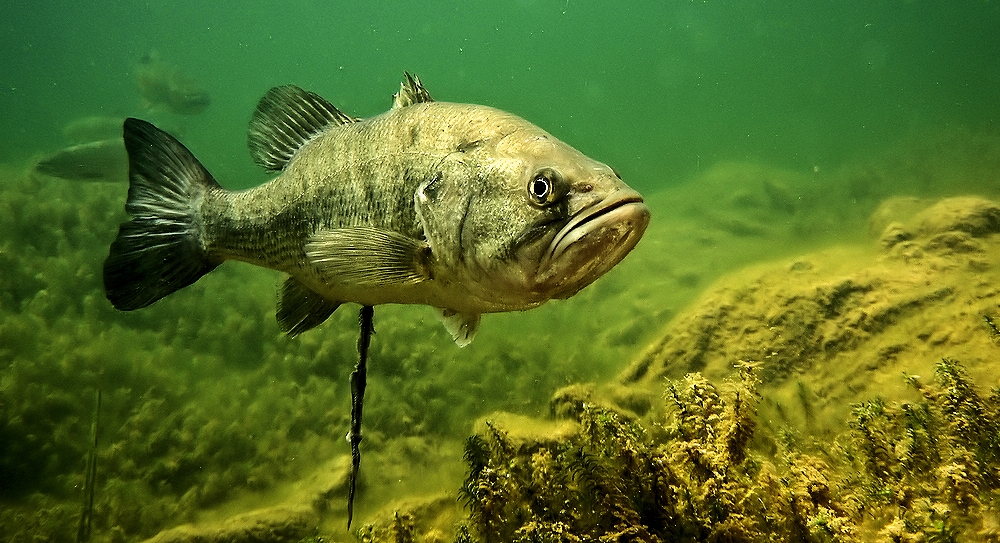
Black Bass

A new study by Yale ichthyologists provides a clearer picture of species diversity among black basses — one of the most cherished and economically important lineages of freshwater gamefish. Their findings can help guide the conservation and management of bass species that are both prized by anglers across the globe and ranked among the world’s most invasive organisms.

For the study, published May 30 in the journal Scientific Reports, researchers used genomic analysis to more accurately delineate the places of 19 black bass species in the tree of life. Importantly, the analysis revealed that two popular species — the largemouth bass and Florida bass — have been misclassified over the past 75 years. The scientific names Micropterus salmoides and Micropterus floridanus have been incorrectly applied to the largemouth bass and Florida bass, respectively.

The researchers concluded that Micropterus salmoides is the accurate scientific name for the Florida bass while the largemouth bass should be reclassified as Micropterus nigricans, the oldest available scientific name for largemouth bass. This is important because both the largemouth bass and Florida bass have been introduced in 57 countries on every continent except Antarctica under the misapplied scientific name Micropterus salmoides, meaning introductions were made to support fisheries without knowing the precise species, explained lead author Daemin Kim, a graduate student in Yale’s Department of Ecology & Evolutionary Biology.

Multi-functional bandage helps wounds to heal

Ceren Kimna, doctoral candidate at the TUM School of Engineering, performing a mechanical stretching test with the newly developed biomolecular film for wound healing.
Image: Astrid Eckert / TUM

Researchers at the Technical University of Munich (TUM) have developed a film that not only protects wounds similar to the way a bandage does, but also helps wounds to heal faster, repels bacteria, dampens inflammation, releases active pharmaceutical ingredients in a targeted manner and ultimately dissolves by itself. This is all made possible by its dedicated design and the use of mucins, molecules which occur naturally in mucous membranes.

Conventional bandages may be very effective for treating smaller skin abrasions, but things get more difficult when it comes to soft-tissue injuries such as on the tongue or on sensitive surfaces like the intestines. What kind of material will adhere there without damaging the tissue or sticking to adjacent points? How can wounds be protected from external influences and bacteria? What kind of substance will allow cells underneath to close the wound, and then ultimately disappear without a trace?

Featured Article

What Is: Psychopathy | Part three of the "Dark Tetrad"

Scientific Frontline: Extended "At a Glance" Summary : Psychopathy The Core Concept : Psychopathy is a profound personality disord...

Top Viewed Articles