. Scientific Frontline

Sunday, June 5, 2022

Red pandas face a fractured future

Red Panda
Credit: Damber Bista

The much-loved red panda is renowned for its tree-climbing ability and adorable nature, but new research shows the endangered mammal is being driven closer to extinction.

University of Queensland PhD candidate Damber Bista, who tracked red pandas in Nepal over a 12-month period from Queensland using GPS telemetry, has found that human impact is causing the mammal to restrict its movements which is further fragmenting their habitat.

Mr Bista said it was a worrying sign.

“Our research findings show that current patterns of habitat fragmentation and forest exploitation, from infrastructure projects such as new roads, are placing the red panda under increased threat,” Mr Bista said.

“Because of this, red pandas are changing their activity to minimize their interactions with disturbances, such as humans, dogs, or livestock, and this is drastically interfering with natural interactions between the animals, resulting in population isolation.”

Friday, June 3, 2022

This parasite will self-destruct

Diagrammatic representation of the target of the antimalarial compound ML901 (colored structure), showing highly specific and potent inhibition of the malaria parasite. ML901 finds a particular chink in an enzyme called tyrosine tRNA synthetase (depicted in pink), part of the machinery that the malaria parasite uses to generate the proteins needed to reproduce itself. The parasite rapidly grinds to a halt and can’t cause disease or be transmitted to other people via mosquitoes (purple).
Image: Leann Tilley and Riley Metcalfe

A new method to combat malaria which sees the disease turn against itself could offer an effective treatment for the hundreds of millions of people infected globally each year, as the efficacy of current antimalarial drugs weakens.

The University of Melbourne-led research published today in Science has identified an anti-malarial compound, ML901, which inhibits the malaria parasite but does not harm mammalian – human or other mammals’ – cells.

Co-lead author Professor Leann Tilley, from the University's Bio21 Institute, said the ML901 compound effectively made the parasite the agent of its own demise, underpinning it potency and selectivity.

“ML901 works by an unusual reaction-hijacking mechanism,” Professor Tilley said.

Lung Cancer Therapy Could Help Patients Live Longer

Karen L. Reckamp, MD, director of Medical Oncology at Cedars-Sinai Cancer, presents new data suggesting an immunotherapy drug combination can extend the lives of those diagnosed with advanced non-small cell lung cancer.
Photo by Cedars-Sinai.

Late-Breaking Research from Cedars-Sinai Cancer Finds an Immunotherapy Drug Combination Improves Survival for Patients with Immunotherapy-Resistant, Non-Small Cell Lung Cancer

Results of a Phase II clinical trial led by Cedars-Sinai Cancer investigators indicate that an immunotherapy drug combination could extend the lives of those diagnosed with advanced non-small cell lung cancer, one of the most common forms of lung cancer. The research was presented today during the American Society of Clinical Oncology (ASCO) annual meeting in Chicago, with simultaneous publication in the peer-reviewed Journal of Clinical Oncology.

Currently, people diagnosed with advanced non-small cell lung cancer have limited treatment options. Therapies for the disease have improved over the past five years—including advances in immunotherapy—although even after initial tumor response, resistance develops in most tumors.

“This clinical trial shows promise in extending the lives of patients who have lung cancer that has become resistant to immunotherapy treatments,” said Karen L. Reckamp, MD, director of Medical Oncology at Cedars-Sinai Cancer, associate director of Clinical Research at Cedars-Sinai and lead author of the ASCO abstract and simultaneous publication. “This is a game changer for the field, and more importantly, for the patients who may benefit from the treatment.”

The study, known as S1800A, was part of Lung-MAP, a lung cancer precision medicine trial supported by the National Cancer Institute, part of the National Institutes of Health.

Great timing, supercomputer upgrade led to successful forecast of volcanic eruption

Former Illinois graduate student Yan Zhan, left, professor Patricia Gregg and research professor Seid Koric led a team that produced the fortuitous forecast of the 2018 Sierra Negra volcanic eruption five months before it occurred. 
Photo by Michelle Hassel

In the fall of 2017, geology professor Patricia Gregg and her team had just set up a new volcanic forecasting modeling program on the Blue Waters and iForge supercomputers. Simultaneously, another team was monitoring activity at the Sierra Negra volcano in the Galapagos Islands, Ecuador. One of the scientists on the Ecuador project, Dennis Geist of Colgate University, contacted Gregg, and what happened next was the fortuitous forecast of the June 2018 Sierra Negra eruption five months before it occurred.

Initially developed on an iMac computer, the new modeling approach had already garnered attention for successfully recreating the unexpected eruption of Alaska’s Okmok volcano in 2008. Gregg’s team, based out of the University of Illinois Urbana-Champaign and the National Center for Supercomputing Applications, wanted to test the model’s new high-performance computing upgrade, and Geist’s Sierra Negra observations showed signs of an imminent eruption.

“Sierra Negra is a well-behaved volcano,” said Gregg, the lead author of a new report of the successful effort. “Meaning that, before eruptions in the past, the volcano has shown all the telltale signs of an eruption that we would expect to see like groundswell, gas release and increased seismic activity. This characteristic made Sierra Negra a great test case for our upgraded model.”

Fish Cannibalism Rare in Wild

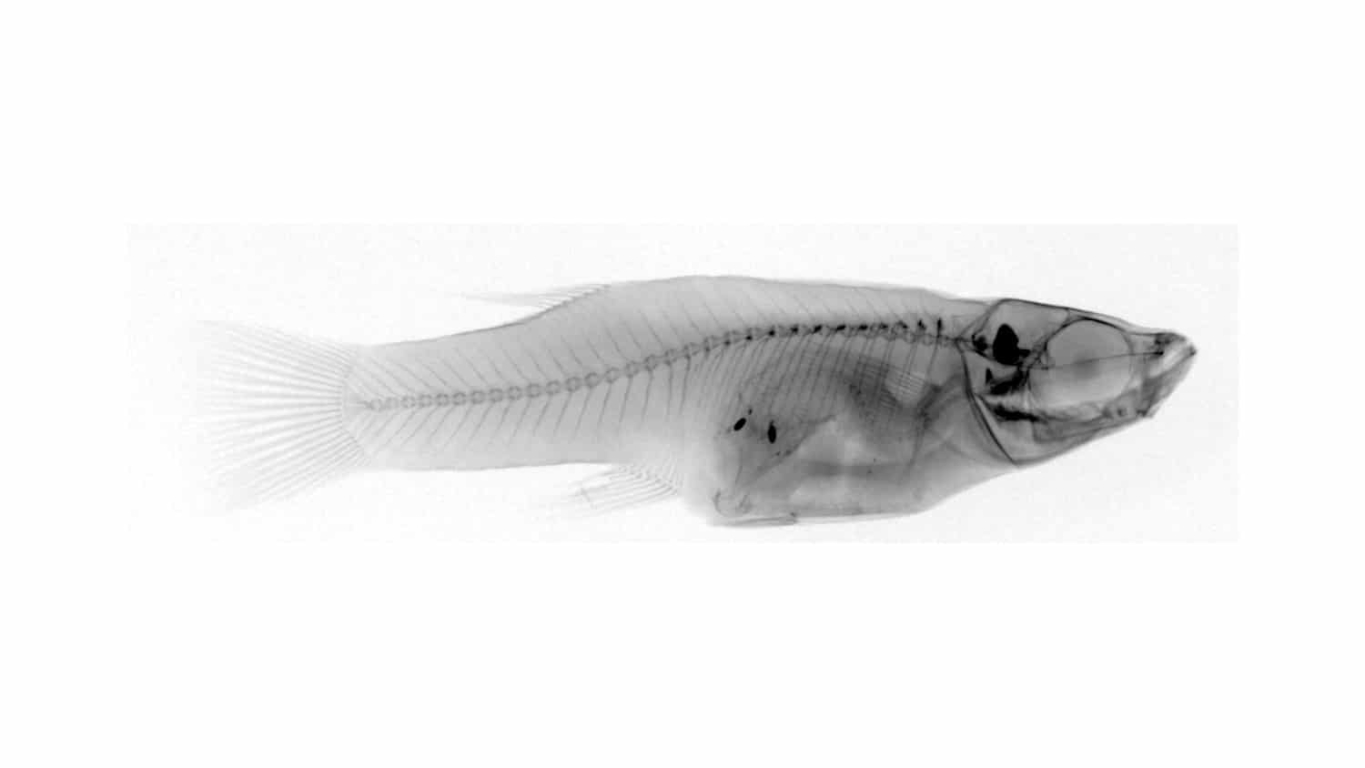
X-ray image of an adult female Bahamas mosquitofish where a fish she had eaten can be seen inside of her, revealing an occurrence of cannibalism.
Credit: Brian Langerhans

Mosquitofish and guppies, though known to be cannibalistic in captivity, are extremely unlikely to be cannibals in wild settings, and the rare instances of cannibalism in these fish are likely due to strong competition for food. The findings, from a new study led by U.S. and U.K. researchers, could have implications not only for fish enthusiasts and scientists who use mosquitofish as models for ecological and evolutionary studies, but could also help explain the causes and frequency of cannibalism in other animals.

Cannibalism, preying on and eating other individuals of your own species, is a peculiar behavior, featuring prominently in human mythology and fiction. But how common is it in nature, and why would organisms' resort to such an extreme course of action just to get a meal?

Brian Langerhans, associate professor of biology at North Carolina State University, and Rüdiger Riesch, senior lecturer in evolutionary biology at Royal Holloway University of London, decided to find out by looking at over a decade’s worth of data gained from almost 12,000 fish across 17 species in the wild.

Primates and non-primates differ in the construction of the nerve cells

The researchers worked exclusively with archived fabrics and preparations, including preparations that have been and are used for the training of students for decades.
Credit: RUB, Kramer

Using high-resolution microscopy, an international research team was able to significantly expand knowledge about the development of nerve cells of various types.

Researcher of the Development Neurobiology Working Group at the Ruhr University Bochum (RUB) around Prof. Dr. In cooperation with partners from Mannheim, Jülich, Linz, Austria, and La Laguna, Spain, Petra Wahle have shown that primates and non-primates differ in the architecture of their cortical neurons. The differences lie in where the nerve cell originates from the extension called Axon, which is responsible for the transmission of electrical potential. The team reports in the journal eLife.

When the axon comes out of the dendrite

So far, it was considered textbook knowledge that, with a few exceptions, this axon arises from the cell body of the nerve cell. However, the axon can also arise from a dendrite. Dendrites are processes that collect synaptic inputs. The phenomenon was described with the name "Axon carrying dendrite", in German "Axon-bearing dendrite".

Textile Filter Testing Shows Promise for Carbon Capture

A new design for a filter could help remove carbon dioxide from flue gas emissions and air.
Credit: Sonja Salmon.

North Carolina State University researchers found they could filter carbon dioxide from air and gas mixtures at promising rates using a proposed new textile-based filter that combines cotton fabric and an enzyme called carbonic anhydrase – one of nature’s tools for speeding chemical reactions.

The findings from initial laboratory testing represent a step forward in the development of a possible new carbon capture technology that could reduce carbon dioxide emissions from biomass, coal or natural gas power plants. And while the filter would need to be scaled up in size significantly, the researchers think their design would make that step easier compared with other proposed solutions.

“With this technology, we want to stop carbon dioxide emissions at the source, and power plants are the main source of carbon dioxide emissions right now,” said the study’s lead author Jialong Shen, postdoctoral research scholar at NC State. “We think the main advantage of our method compared to similarly targeted research is that our method could be easily scaled up using traditional textile manufacturing facilities.”

The centerpiece of the research team’s design for a proposed textile-based chemical filter is the naturally occurring enzyme carbonic anhydrase, which can speed a reaction in which carbon dioxide and water will turn into bicarbonate, a compound in baking soda. The enzyme plays an important role in the human body; it helps transport carbon dioxide so it can be exhaled.

‘Beam-Steering’ Technology Takes Mobile Communications Beyond 5G

The beam-steering antenna technology has been developed to
increase the efficiency of fixed base station antenna at 5G (mmWave)
and 6G, and can also be adapted for vehicle-to-vehicle, vehicle-to-infrastructure,
vehicular radar, and satellite communications.
Credit: University of Birmingham
Birmingham scientists have revealed a new beam-steering antenna that increases the efficiency of data transmission for ‘beyond 5G’ – and opens up a range of frequencies for mobile communications that are inaccessible to currently used technologies.

Experimental results, presented today for the first time at the 3rd International Union of Radio Science Atlantic / Asia-Pacific Radio Science Meeting, show the device can provide continuous ‘wide-angle’ beam steering, allowing it to track a moving mobile phone user in the same way that a satellite dish turns to track a moving object, but with significantly enhanced speeds.

Devised by researchers from the University of Birmingham's School of Engineering, the technology has demonstrated vast improvements in data transmission efficiency at frequencies ranging across the millimeter wave spectrum, specifically those identified for 5G (mmWave) and 6G, where high efficiency is currently only achievable using slow, mechanically steered antenna solutions.

For 5G mmWave applications, prototypes of the beam-steering antenna at 26 GHz have shown unprecedented data transmission efficiency.

The device is fully compatible with existing 5G specifications that are currently used by mobile communications networks. Moreover, the new technology does not require the complex and inefficient feeding networks required for commonly deployed antenna systems, instead using a low complexity system which improves performance and is simple to fabricate.

Heat-lovers are the lucky ones

The Alpine mountain range (Miramella alpina) has so far been unaffected by changes in climate and land use. The type of grasshoppers, which is widespread throughout Europe at higher altitudes, has a stable occurrence in the Bavarian Alps, which has hardly changed in recent decades. // The green mountain grasshopper (Miramella alpina) has so far been unaffected by changes in climate and land use. This species is widespread throughout Europe at higher altitudes. Its population in the Bavarian Alps is stable and has hardly changed in recent decades. 
Credit: E. K. Engelhardt / TUM

Sparse data often make it difficult to track how climate change is affecting populations of insect species. A new study by the Technical University of Munich (TUM) and the German Centre for Integrative Biodiversity Research (iDiv) has now evaluated an extensive species mapping database (Artenschutzkartierung, ASK) organized by the Bavarian State Office for the Environment (LfU) and assessed the population trends of butterflies, dragonflies and grasshoppers in Bavaria since 1980. The main finding: heat-loving species have been increasing.

Climate change has long since been happening in central Europe, and it is no secret that it affects the populations and distribution of animals and plants. Insect trends are a growing cause for concern, as multiple studies have shown their declines. How populations of our insect species have changed over past decades is a question explored by the BioChange Lab at TUM. “It is not only the climate that is changing, but also the type and intensity of land use. This includes agriculture, forestry, urban areas, and transport infrastructure” says Dr. Christian Hof, head of the BioChange research group at TUM.

Real-time, accurate virus detection method could help fight the next pandemic

Scanning electron microscopy image showing carbon nanotubes (purple) effectively trapping Influenza viruses (light purple round objects). These trapped viruses are then analyzed by Raman spectroscopy and machine learning and they can be identified with accuracies >95%.
Credit: Elizabeth Floresgomez and Yin-Ting Yeh.

A method of highly accurate and sensitive virus identification using Raman spectroscopy, a portable virus capture device and machine learning could enable real-time virus detection and identification to help battle future pandemics, according to a team of researchers led by Penn State.

“This virus detection method is label-free and not aimed at any specific virus, thus enabling us to identify potential new strains of viruses,” said Shengxi Huang, assistant professor of electrical engineering and biomedical engineering and co-author of the study that appeared today (June 2) in the Proceedings of the National Academy of Sciences. “It is also rapid, so suitable for fast screening in crowded public spaces. In addition, the rich Raman features together with machine learning analysis enable a deeper understanding of the virus structures.”

Raman spectroscopy detects unique vibrations in molecules by picking up shifts when a laser light beam induces these vibrations. To capture the viruses, a tool known as a microfluidic device would be used to trap viruses between forests of aligned carbon nanotubes.

Microfluidic devices use very small amounts of body fluids on a microchip to do medical and laboratory tests. Such a device could use virus cultures, saliva, nasal washes, or even exhaled breath, including samples gathered on-site during an outbreak. The carbon nanotubes forests would filter out any foreign substance or background molecules from the host or surrounding air that could make it more difficult to get an accurate reading.

Featured Article

What Is: Psychopathy | Part three of the "Dark Tetrad"

Scientific Frontline: Extended "At a Glance" Summary : Psychopathy The Core Concept : Psychopathy is a profound personality disord...

Top Viewed Articles