. Scientific Frontline

Thursday, June 23, 2022

Climate changes lead to water imbalance, conflict in Tibetan Plateau

Many of Asia's rivers flow from the Tibetan Plateau, providing reserves of water to nearly 2 billion people.
Credit: Esther Lee
Creative Commons Attribution 2.0 Generic license.

Climate change is putting an enormous strain on global water resources, and according to researchers, the Tibetan Plateau is suffering from a water imbalance so extreme that it could lead to an increase in international conflicts.

Nicknamed “The Third Pole,” the Tibetan Plateau and neighboring Himalayas is home to the largest global store of frozen water outside of the North and South Polar Regions. This region, also known as the Asian water tower (AWT), functions as a complex water distribution system which delivers life-giving liquid to multiple countries, including parts of China, India, Nepal, Pakistan, Afghanistan, Tajikistan and Kyrgyzstan.

Yet due to the rapid melting of snow and upstream glaciers, the area can’t sustainably support the continued growth of the developing nations that rely on it.

“Populations are growing so rapidly, and so is the water demand,” said Lonnie Thompson, distinguished university professor of earth sciences at The Ohio State University and senior research scientist at the Byrd Polar Research Center. “These problems can lead to increased risks of international and even intranational disputes, and in the past, they have.”

Boeing Signs on for Aireon Space-Based ADS-B Data Services

Photo Credit: Aireon

Aireon, the world’s leading provider of space-based automatic dependent surveillance-broadcast (ADS-B) services, will deliver its flight data stream to Boeing [NYSE: BA]. Boeing will use the stream to expand its advanced data analytics capabilities in its effort to further strengthen commercial air travel safety.

Aireon will provide historical aircraft data and near real-time aircraft event data via its AireonINSIGHTS product for select Boeing airplane programs.

As part of its implementation of an enterprise Safety Management System (SMS), Boeing will integrate the ADS-B data into its safety analytics tools. Recognized worldwide as an industry best practice, SMS is an integrating framework for managing safety risks. Through the use of data science and data analytics, the information will deliver insights to proactively identify hazards and monitor emerging safety trends.

“We are investing in a data stream that can be transformed into safety intelligence,” said Vishwa Uddanwadiker, Boeing vice president of Aerospace Safety Analytics. “We are adding this to our data analytics ecosystem to help predict and prevent safety risks, while identifying other opportunities to strengthen our Safety Management System.”

The global space-based ADS-B data from AireonINSIGHTS can help customers gain insights to key performance indicators on flight safety.

“The power of the Aireon data unlocks a cache of information for Boeing regarding the operations of its aircraft in the global airspace. With this integration, Boeing will have data to provide a full operational view of its fleet, and we are excited to partner with them,” said Don Thoma, Aireon CEO.

As a leading global aerospace company, Boeing develops, manufactures and services commercial airplanes, defense products and space systems for customers in more than 150 countries. As a top U.S. exporter, the company leverages the talents of a global supplier base to advance economic opportunity, sustainability and community impact. Boeing's diverse team is committed to innovating for the future, leading with sustainability, and cultivating a culture based on the company's core values of safety, quality and integrity. 

Aireon has deployed a space-based air traffic surveillance system for ADS-B-equipped aircraft throughout the entire globe. Aireon is harnessing next-generation aviation surveillance technologies that were formerly ground-based and, for the first time ever, is extending their reach globally to significantly improve efficiency, enhance safety, reduce emissions, and provide cost savings benefits to all stakeholders. Space-based ADS-B surveillance covers oceanic, polar, and remote regions, and augments existing ground-based systems that are limited to terrestrial airspace. In partnership with leading ANSPs from around the world, like NAV CANADA, the Irish Aviation Authority, ENAV, NATS UK and NAVIAIR, as well as Iridium Communications, Aireon is providing a global, real-time, space-based air traffic surveillance system, available to all aviation stakeholders.

Source/Credit: Boeing

av062322_01

Recurrent pregnancy loss linked to increased stroke risk later in life

Women with a history of miscarriage and stillbirth have a higher risk of stroke in later life, according to University of Queensland research.

The study compared pooled data from more than 610,000 women in Australia, China, Japan, Netherlands, Sweden, UK and USA, and found the risk increased with multiple pregnancy loses.

Senior author, UQ’s Professor Gita Mishra from the UQ School of Public Health, said many women were unaware that their experiences during pregnancy acted as an early alert for the risk of diseases in later life.

“This is the first study big enough to demonstrate a robust link between stroke and recurrent miscarriage and very rare events like recurrent stillbirths,” Professor Mishra said.

“It’s vital for older women who have suffered multiple miscarriages or stillbirth to share their history with their GPs, no matter how much time has passed.”

The study, led by PhD candidate Ms. Chen Liang, showed that women’s risk of having a stroke in later life climbed with each miscarriage.

Women who had miscarried once had a 7 per cent higher risk of fatal and non-fatal strokes than women who hadn’t experienced miscarriage during their pregnancy.

The risk was 12 per cent higher for a non-fatal stroke and 26 per cent higher for a fatal stroke, for two miscarriages.

After three or more miscarriages, the risk increased to 35 per cent for a non-fatal stroke and 82 per cent for a fatal stroke compared with other women.

While one in 5 pregnancies (19 per cent) end in miscarriage, less than 5 per cent of women will experience multiple miscarriages, and about 1 per cent will experience three or more miscarriages.

“In real terms what we see is– among women who had three or more miscarriages 41 out of every 1000 experienced a non-fatal stroke and 12 in 1000 had a fatal stroke, compared to 29 non-fatal strokes and 7 fatal strokes for every 1000 women who had never miscarried,” Professor Mishra said.

Similarly, the risk of stroke increased for each stillbirth a woman experienced compared to women with no history of stillbirth; after two stillbirths the risk of a non-fatal stroke was 29 per cent higher and the risk of a fatal stroke 26 per cent higher.

“For women who are still grieving and processing – this isn’t the time to worry about these findings,” Professor Mishra said.

“But, if you are heading into perimenopause, or if you’re post-menopausal, and have a history of multiple miscarriages or stillbirths, please talk to your GP about managing your health risks.

“Your doctor might recommend medication, but there are a lot of lifestyle changes you can make to reduce your risk of stroke.”

The Stroke Foundation recommends maintaining a healthy weight, exercising for 30 minutes a day, stopping smoking, and managing blood pressure and cholesterol levels.

This research was made possible through InterLACE, an international collaboration which pooled data from 618,851 women who took part in eight separate studies in Australia, China, Japan, Netherlands, Sweden, the UK, and the USA.

The research is published in BMJ.

Source/Credit: University of Queensland

med062322_01

Wednesday, June 22, 2022

Brain imaging links stimulant-use relapse to distinct nerve pathway

Researchers used advanced brain imaging techniques to study nerve fibers connecting to the nucleus accumbens, which plays an important role in motivation and addiction.
Credit: Loreen Tisdall and Kelly H. MacNiven.

You might assume that people who are most prone to developing a substance use disorder in the first place would also have the hardest time avoiding relapse following treatment. But a new study by scientists with the Wu Tsai Neurosciences Institute’s NeuroChoice Initiative reveals that relapse may be linked to quite different brain circuits than addiction itself.

“There’s a huge revolving door problem with relapse,” said Brian Knutson, a professor of psychology. “These findings suggest ​​that what gets you into taking drugs may not be the same processes that get you out of it, which could be very valuable to help predict who is at highest risk of relapse coming out of treatment.”

Drug addiction presents a major global challenge. More than 35 million people worldwide self-report problematic use of drugs and admissions to drug treatment programs have surged in the United States in recent years. For many drugs, in particular stimulants such as cocaine and amphetamines, relapse remains a common problem. For example, as many as 50 percent of people with stimulant use disorders relapse within 6 months of release from treatment.

“The statistics are disheartening,” said Kelly MacNiven, a social science research scholar in the Knutson lab and co-author of the new study. “Unfortunately not much is known at a biological level about the drivers of relapse — understanding this better is going to be the first step to developing better ways to help people get out of dependence.”

Technique Allows Researchers to Align Gold Nanorods with Magnetic Fields

Electron micrograph of gold nanorods overcoated with iron oxide nanoparticles and aligned in a magnetic field.
Image Credit: Mehedi H. Rizvi

An international team of researchers has demonstrated a technique that allows them to align gold nanorods using magnetic fields, while preserving the underlying optical properties of the gold nanorods.

“Gold nanorods are of interest because they can absorb and scatter specific wavelengths of light, making them attractive for use in applications such as biomedical imaging, sensors, and other technologies,” says Joe Tracy, corresponding author of a paper on the work and a professor of materials science and engineering at North Carolina State University.

It is possible to tune the wavelengths of light absorbed and scattered by engineering the dimensions of the gold nanorods. Magnetically controlling their orientation makes it possible to further control and modulate which wavelengths the nanorods respond to.

“In other words, if you can control the alignment of gold nanorods, you have greater control over their optical properties,” Tracy says. “And using magnetic fields to control that alignment means that you can control the alignment without actually touching the nanorods.”

In their technique, the researchers synthesize separate solutions of gold nanorods and iron oxide nanoparticles. Mixing the solutions drives assembly of the iron oxide nanoparticles onto the surface of the gold nanorods. The resulting “coated” nanorods can then be controlled using a low-strength magnetic field.

Where Once Were Black Boxes, NIST’s New LANTERN Illuminates

How do you figure out how to alter a gene so that it makes a usefully different protein? The job might be imagined as interacting with a complex machine (at left) that sports a vast control panel filled with thousands of unlabeled switches, which all affect the device’s output somehow. A new tool called LANTERN figures out which sets of switches — rungs on the gene’s DNA ladder — have the largest effect on a given attribute of the protein. It also summarizes how the user can tweak that attribute to achieve a desired effect, essentially transmuting the many switches on our machine’s panel into another machine (at right) with just a few simple dials.
Credit: B. Hayes/NIST

Researchers at the National Institute of Standards and Technology (NIST) have developed a new statistical tool that they have used to predict protein function. Not only could it help with the difficult job of altering proteins in practically useful ways, but it also works by methods that are fully interpretable — an advantage over the conventional artificial intelligence (AI) that has aided with protein engineering in the past.

The new tool, called LANTERN, could prove useful in work ranging from producing biofuels to improving crops to developing new disease treatments. Proteins, as building blocks of biology, are a key element in all these tasks. But while it is comparatively easy to make changes to the strand of DNA that serves as the blueprint for a given protein, it remains challenging to determine which specific base pairs — rungs on the DNA ladder — are the keys to producing a desired effect. Finding these keys has been the purview of AI built of deep neural networks (DNNs), which, though effective, are notoriously opaque to human understanding.

Natural Disasters Can Accelerate Changes to Tropical Forests

The Blue and John Crow Mountains National Park in Jamaica
Photo Credit of the Jamaica Conservation and Development Trust/Blue and John Crow Mountains National Park.

It’s no surprise that warming temperatures across the earth are having a slow, yet profound impact on the forests of the world.

In a global process called thermophilization, the makeup of forests and other natural communities are changing as plants and trees slowly shift their ranges to higher, cooler altitudes. Species that favor cold climates are moving away from the hot lowlands and into colder highland areas or disappearing from landscapes entirely. While species that favor warmer conditions are moving up and replacing them, research indicates.

Although Kenneth Feeley, associate professor of biology, has documented this phenomenon throughout South and Central America, he wanted to explore whether natural disasters could impact thermophilization, which is driven by climate change. By collaborating with an international team of renowned ecologists, including Edmund Tanner, professor at the University of Cambridge; John Healey, professor at Bangor University; and Peter Bellingham, a professor at the University of Auckland, Feeley said they were able to chronicle the conditions of a Jamaican forest for 40 years and observed that a hurricane sped up the transformation of these tropical forests.

“We saw a consistent process of thermophilization through time, but we noticed the rate of this process was not consistent, and that the hurricane actually accelerated the process,” said Feeley, the University’s Smathers Chair of Tropical Biology. “The forest is resilient and tends to resist changes imposed by climate change, but when you get a large disturbance event like a hurricane, it can break down those barriers, open up the forest to change, and speed up the process of thermophilization.”

Rensselaer Researchers Make Virus-Fighting Face Masks

Rensselaer Polytechnic Institute researchers have developed an accessible way to make N95 face masks not only effective barriers to germs, but on-contact germ killers. The antiviral, antibacterial masks can potentially be worn longer, causing less plastic waste as the masks do not need to be replaced as frequently.

Helen Zha, assistant professor of chemical and biological engineering and a member of the Center for Biotechnology and Interdisciplinary Studies at Rensselaer (CBIS), collaborated with Edmund Palermo, associate professor of materials science and engineering and a member of the Center for Materials, Devices, and Integrated systems (cMDIS) at Rensselaer, to fight infectious respiratory disease and environmental pollution with the perfect recipe to improve face masks.

“This was a multifaceted materials engineering challenge with a great, diverse team of collaborators,” Palermo said. “We think the work is a first step toward longer-lasting, self-sterilizing personal protective equipment, such as the N95 respirator. It may help reduce transmission of airborne pathogens in general.”

In research recently published in Applied ACS Materials and Interfaces, the team successfully grafted broad-spectrum antimicrobial polymers onto the polypropylene filters used in N95 face masks.

“The active filtration layers in N95 masks are very sensitive to chemical modification,” said Zha. “It can make them perform worse in terms of filtration, so they essentially no longer perform like N95s. They’re made out of polypropylene, which is difficult to chemically modify. Another challenge is that you don't want to disrupt the very fine network of fibers in these masks, which might make them more difficult to breathe through.”

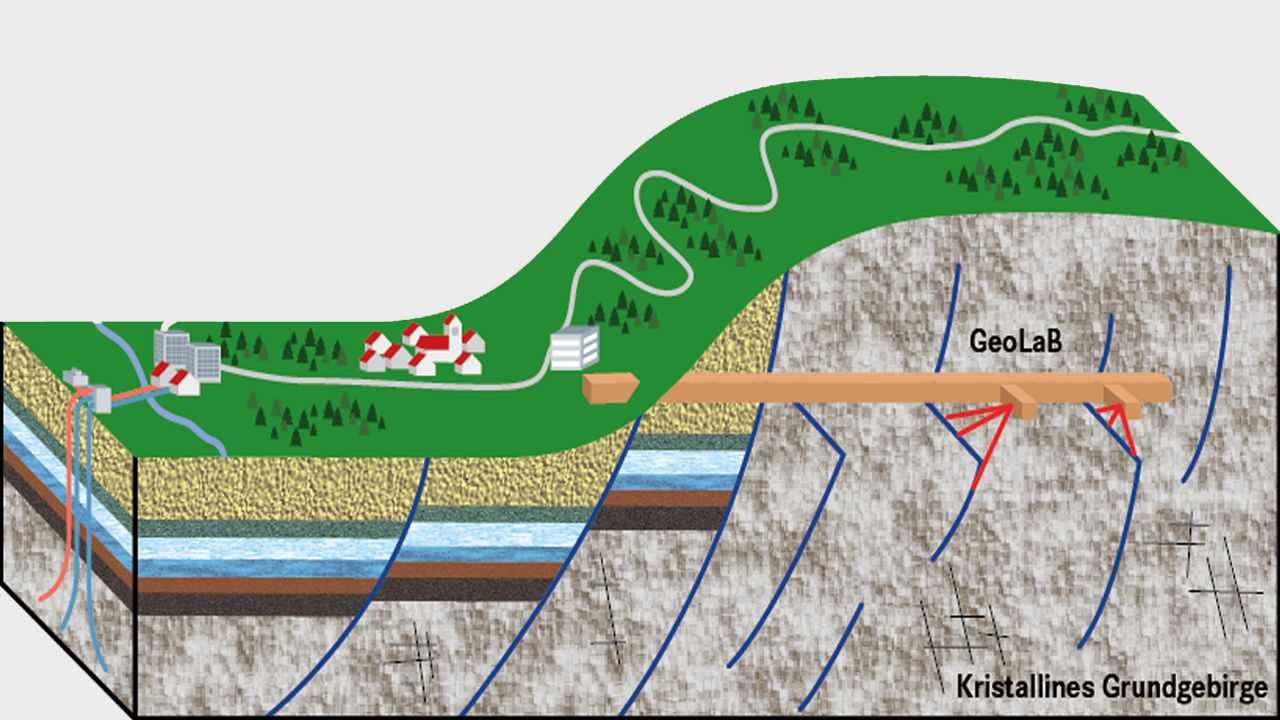
Future with geothermal energy

The GeoLaB makes geosciences tangible: the first underground laboratory is being built in the Black Forest / Odenwald, in which researchers can directly observe deep geothermal processes.
Credit: KIT

Local, emission-free and base load-bearing: geothermal energy is an essential component of the energy transition. With GeoLaB, a new and unique underground research infrastructure, the Karlsruhe Institute of Technology (KIT), the German Research Center for Geosciences GFZ and the Helmholtz Center for Environmental Research UFZ now want to accelerate research and prepare the technology for widespread use. The project is to be realized either in the Black Forest or Odenwald, the Helmholtz Association is funding with 35 million euros.

In order to achieve climate neutrality and at the same time become more independent of energy imports, the use of deep geothermal energy is suitable in most regions of Germany. Heat from the subsurface is available regardless of the time of the year and day, which makes geothermal energy suitable for base loads. It is also renewable because heat flows into the reservoir due to the temperature conditions and the transport processes.

“Geothermal energy has huge potential. In Germany alone, we could replace a third of the gas requirements for our heat - and given the climate catastrophe and the geopolitical world situation, we can no longer do without it,” says Professor Holger Hanselka, President of KIT and Vice President for the Energy Research Area of the Helmholtz Association. “So that we can use the necessary technologies safely and that the environmental impact remains minimal, we will now develop geothermal energy accordingly with the help of GeoLaB."

MIT engineers devise a recipe for improving any autonomous robotic system


Autonomous robots have come a long way since the fastidious Roomba. In recent years, artificially intelligent systems have been deployed in self-driving cars, last-mile food delivery, restaurant service, patient screening, hospital cleaning, meal prep, building security, and warehouse packing.

Each of these robotic systems is a product of an ad hoc design process specific to that particular system. In designing an autonomous robot, engineers must run countless trial-and-error simulations, often informed by intuition. These simulations are tailored to a particular robot’s components and tasks, in order to tune and optimize its performance. In some respects, designing an autonomous robot today is like baking a cake from scratch, with no recipe or prepared mix to ensure a successful outcome.

Now, MIT engineers have developed a general design tool for roboticists to use as a sort of automated recipe for success. The team has devised an optimization code that can be applied to simulations of virtually any autonomous robotic system and can be used to automatically identify how and where to tweak a system to improve a robot’s performance.

The team showed that the tool was able to quickly improve the performance of two very different autonomous systems: one in which a robot navigated a path between two obstacles, and another in which a pair of robots worked together to move a heavy box.

The researchers hope the new general-purpose optimizer can help to speed up the development of a wide range of autonomous systems, from walking robots and self-driving vehicles, to soft and dexterous robots, and teams of collaborative robots.

Featured Article

What Is: Abyssopelagic Zone

A master of abyssopelagic survival, the anglerfish overcomes absolute darkness and sparse food supplies with a specialized, light-producing ...

Top Viewed Articles