. Scientific Frontline

Wednesday, July 27, 2022

Model developed to predict landslides along wildfire burn scars

Drought, wildfires and intensified precipitation can lead to debris flows, a fast-moving, highly destructive landslide.
Credit: Tierney Acott/Institute for Sustainability and Energy at Northwestern

A wildfire followed by an intense rainstorm is often a recipe for disaster. Without vegetation to cushion rainfall, water runoff can turn into a fast-moving, highly destructive landslide, called a “debris flow,” which often has the power to wipe out cars, homes and highways — sometimes resulting in casualties.

Northwestern University researchers have augmented a physics-based numerical model to investigate and predict areas susceptible to debris flows. This augmented model eventually could be used in an early warning system for people living in high-risk areas, enabling them to evacuate before it’s too late. Information from model simulations also could be used to design new infrastructure — such as diversion bars that deflect fast-moving water away from homes and roads — for high hazard zones.

The research was published today (July 27) in the journal Natural Hazards and Earth System Sciences.

“People want to know about their immediate and future risk,” said Northwestern’s Daniel Horton, the study’s senior author. “Although it’s not yet to operational standards, this modelling framework could one day be instrumental in forecasting where debris flows are likely to occur and deciding who needs to be evacuated.”

Horton is an assistant professor of Earth and planetary sciences in Northwestern’s Weinberg College of Arts and Sciences, where he also leads the Climate Change Research Group. Chuxuan Li, a Ph.D. candidate in Horton’s laboratory, is the paper’s first author.

Viruses help combat antibiotic-resistant bacteria

Prof. Gil Westmeyer (l.) and his research team, in collaboration with Kilian Vogele (r.) and the start-up Invitris, have developed a new controlled production method to create bacteriophages for therapeutic use.
Credit: A. Heddergott / TUM

More and more bacteria are becoming resistant to antibiotics. Bacteriophages are one alternative in the fight against bacteria: These viruses attack very particular bacteria in a highly specific way. Now a Munich research team has developed a new way to produce bacteriophages efficiently and without risk.

The World Health Organization (WHO) regards multi-resistant germs as among the largest threats to health. In the European Union alone, 33,000 people die each year as the result of bacterial infections which cannot be treated with antibiotics. Alternative treatments or drugs are therefore urgently needed.

Bacteriophages, the natural enemies of bacteria, are one promising solution. There are millions of different types of these viruses on earth, each of which specializes in certain bacteria. In nature, the viruses use the bacteria to reproduce; they insert their DNA into the bacteria, where the viruses quickly multiply. Ultimately, they kill off the cell and move on to infect new cells. Bacteriophages work as a specific antibiotic by attacking and destroying a particular type of bacterium.

"Bacteriophages offer an enormous potential for the highly effective, personalized therapy of infectious bacterial diseases," observes Gil Westmeyer, Professor of Neurobiological Engineering at the Technical University of Munich (TUM) and Director of the Institute for Synthetic Biomedicine at Helmholtz Munich. "However, in the past, it wasn't possible to produce bacteriophages in a targeted, reproducible, safe and efficient manner – although these are exactly the decisive criteria for the successful production of pharmaceuticals."

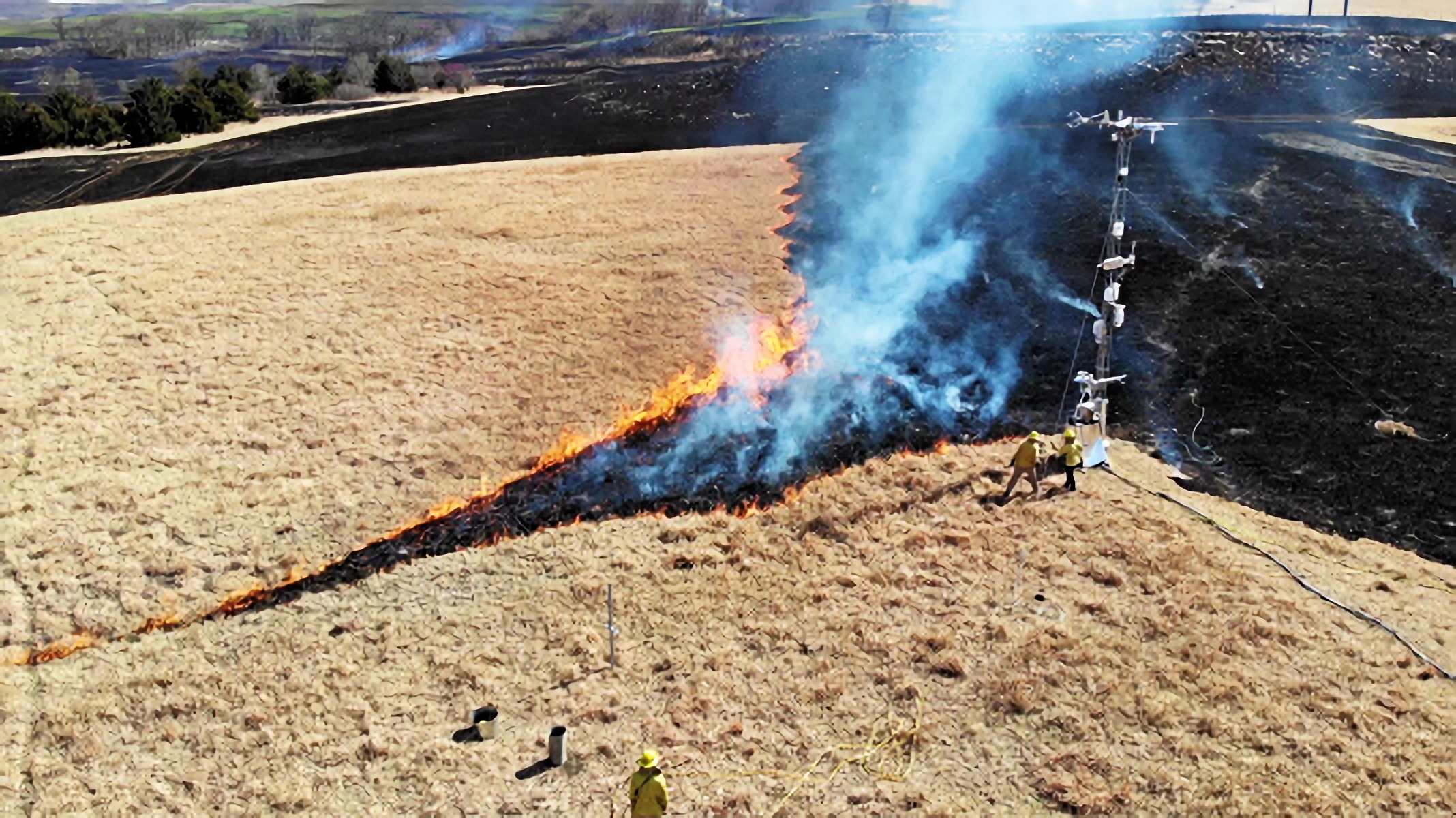
New sensing platform deployed at controlled burn site, could help prevent forest fires

Argonne scientists conduct a controlled burn on the Konza prairie in Kansas using the Sage monitoring system. 
Resized Image using AI by SFLORG
Credit: Rajesh Sankaran/Argonne National Laboratory.

Smokey Bear has lots of great tips about preventing forest fires. But how do you stop one that’s started before it gets out of control? The answer may lie in pairing multichannel sensing with advanced computing technologies provided by a new platform called Sage.

Sage offers a one-of-a-kind combination. This combination involves both multiple types of sensors with computing ​“at the edge”, as well as embedded machine learning algorithms that enable scientists to process the enormous amounts of data generated in the field without having to transfer it all back to the laboratory. Computing ​“at the edge” means that data is processed where it is collected, in the field, while machine learning algorithms are computer programs that train themselves how to recognize patterns.

Sage is funded by the National Science Foundation and developed by the Northwestern-Argonne Institute for Science and Engineering (NAISE), a partnership between Northwestern University and the U.S. Department of Energy’s Argonne National Laboratory.

Hot on the trail of the causes of rapid ice sheet in­stabil­it­ies in cli­mate his­tory

The re­search ves­sel MARIA S. MERIAN leav­ing the har­bor of St. John’s (Canada). As a par­ti­cipant on Ex­ped­i­tion MSM 39 (2014), Lars Max, along with other re­search­ers, ob­tained the sample ma­ter­ial for this study.
Credit: MARUM – Cen­ter for Mar­ine En­vir­on­mental Sci­ences, Uni­versity of Bre­men; D. Kieke

Extreme cooling events during the last glacial, known as Heinrich Events in the North Atlantic, are a good example of how local processes change the global climate. While the impacts of Heinrich Events on the global glacial environment are well-documented in the scientific literature, their causes are still unclear. In a new study, researchers from Bremen, Kiel, Köln and São Paulo (Brazil) have now shown that an accumulation of heat in the deeper Labrador Sea caused instabilities in the Laurentide Ice Sheet, which covered much of North America at the time. The Heinrich Events were triggered as a result. The researchers demonstrated this by reconstructing past temperatures and salinities in the North Atlantic. Their results have now been published in Nature Communications.

Hein­rich Events or, more ac­cur­ately, Hein­rich Lay­ers, are re­cur­rent con­spicu­ous sed­i­ment lay­ers, usu­ally ten to 15 cen­ti­meters thick, with very coarse rock com­pon­ents that in­ter­rupt the oth­er­wise fine-grained oceanic de­pos­its in the North At­lantic. Dis­covered and de­scribed for the first time in the 1980s by geo­lo­gist Hart­mut Hein­rich, U.S. geo­chem­ist Wally Broecker later of­fi­cially named them Hein­rich Lay­ers, which has be­come a stand­ard term in pa­leocean­o­graphy.

The pres­ence of Hein­rich Lay­ers has been es­tab­lished throughout the North At­lantic, from off Ice­land, south­ward to a line run­ning from New York to North Africa. Such coarse rock debris could only have been trans­por­ted such a great dis­tance from its point of ori­gin in the Hud­son Bay by ice­bergs.

Gaming does not appear harmful to mental health, unless the gamer can't stop

Video gaming: Although today’s research suggests gaming may only be a negative influence only for those who feel compelled to game, rather than all users, there is much more to be learned, according to the Oii research.
Credit: Ella Don on Unsplash

Societies may tremble when a hot new video game is released, but the hours spent playing popular video games do not appear to be damaging players’ mental health, according to the largest-ever survey of nearly 40,000 gamers and their gaming habits, which was conducted over six weeks by a team from Oxford’s Internet Institute. That does not mean, however, that the research did not throw up some concerns – and, the team argues, much more information is needed before tech regulators can really rest easy.

The research, published in the journal Royal Society Open Science, found no ‘causal link’ between gaming and poor mental health – whatever sort of games are being played. But Professor Andrew K. Przybylski, OII Senior Research Fellow, says the research did show a distinct difference in the experience of gamers who play ‘because they want to’ and those who play ‘because they feel they have to’.

He maintains, ‘We found it really does not matter how much gamers played [in terms of their sense of well-being]. It wasn’t the quantity of gaming, but the quality that counted…if they felt they had to play, they felt worse. If they played because they loved it, then the data did not suggest it affected their mental health. It seemed to give them a strong positive feeling.’

"It wasn’t the quantity of gaming, but the quality that counted…if they felt they had to play, they felt worse. If they played because they loved it, then the data did not suggest it affected their mental health"
Professor Andrew K. Przybylski

Towards High-Quality Manganese Oxide Catalysts with Large Surface Areas


The octahedral molecular sieve (OMS-1) is a very powerful manganese oxide-based catalyst, and researchers from Tokyo Tech have found a remarkably simple way to synthesize it. By using a low-crystallinity precursor and a straightforward solid-state transformation method, they managed to produce high-quality OMS-1 nanoparticles. Their unprecedented catalytic performance and durability prove the potential of this novel synthesis approach for developing efficient catalysts and functional materials.

Manganese oxides have received much attention from materials scientists due to their widespread applications including electrodes, catalysts, sensors, supercapacitors, and biomedicine. Further, manganese is widely abundant and has many oxidation states, which allows it to form various interesting crystalline structures.

One such structure is the "todorokite-type manganese oxide octahedral molecular sieve (OMS-1)," a crystal whose unit cells (simplest repeating units of the crystal) consist of three-by-three MnO6 octahedral chains. Though promising as a catalyst, the potential of OMS-1 is limited by two reasons. First, its conventional synthesis methods are complex multi-step crystallization processes involving hydrothermal or reflux treatment. Second, these processes tend to create crystals with a higher particle size and a lower surface area, features detrimental to catalytic performance.

Shape-Memory Polymers

Ilya Starodumov as a member of an international team, is developing a technology for creating "smart" polymers.
Credit: Ilya Safarov

Biocompatible polymers based on a "smart" material poly (ε-caprolactone) that keeps its shape may appear in Russia. An international team of scientists from Russia, Israel, and Japan, including physicists from Ural Federal University, work on the technology of its creation. The research is supported by the Russian Foundation for Basic Research.

Polymeric materials based on poly (ε-caprolactone) are suitable for biomedical purposes: for surgery, cell engineering, regenerative medicine. Such material can be used to make devices for minimally invasive surgery (with minimal incisions), self-tightening surgical sutures, etc. A description of this material was published in The Journal of Physical Chemistry B.

"A special feature of polymers with shape memory is the ability to return to the original shape when the temperature changes. It looks like this: a polymer product with a certain "programmed" shape is made. Then this product is deformed in any manner, for example, stretched or curled, like surgical sutures. When heated to a certain temperature, the memory mechanism in the polymer is activated at the molecular level, and the product restores its original shape," says Ilya Starodumov, Head of the Laboratory of Multiphase Physico-Biological Environment Simulation at UrFU.

Wednesday, July 6, 2022

Could we eavesdrop on communications that pass through our solar system?

Communications across interstellar distances could take advantage of a star’s ability to focus and magnify communication signals through an effect called gravitational lensing. A signal from—or passing through—a relay probe would bend due to gravity as it passes by the star. The warped space around the object acts somewhat like a lens of a telescope, focusing and magnifying the light. A new study by researchers at Penn State investigated our solar system for communication signals that might be taking advantage of our own sun.
Credit: Dani Zemba / Penn State

Communications across the vastness of interstellar space could be enhanced by taking advantage of a star’s ability to focus and magnify communication signals. A team of graduate students at Penn State is looking for just these sorts of communication signals that might be taking advantage of our own sun if transmissions were passing through our solar system.

A paper describing the technique — explored as part of a graduate course at Penn State covering the Search for Extraterrestrial Intelligence (SETI) — has been accepted for publication in the Astronomical Journal and is available on the preprint server arXiv.

Massive objects like stars and black holes cause light to bend as it passes by due to the object’s gravitational pull, according to Einstein’s Theory of General Relativity. The warped space around the object acts somewhat like a lens of a telescope, focusing and magnifying the light — an effect called gravitational lensing.

Underwater cave fossil site gains state protections

A reconstruction of the South Australian cave site which has been heritage listed due to its abundance of megafauna fossils.
Image by Peter Schouten.

A team of researchers and cave divers have successfully lobbied for the protection of a unique fossil site in South Australia, which could pave the way for the future preservation of other important paleontological sites around Australia.

The underwater cave site known as the Green Waterhole in the Mount Gambier region contains the only known extensive underwater vertebrate fossil deposits in Australia, has been listed on the South Australia State Heritage Register.

The unique freshwater depositional environment has ensured the preservation of extinct species of megafauna such as marsupial lions, short-faced kangaroos, and carnivorous kangaroos, with several additional species new to science recovered and awaiting description.

How Omicron dodges the immune system

Meriem Bekliz, first author, with a plaque-reduction neutralization assay used to determine the neutralizing capacity of antibodies.
Credit: HUG-UNIGE.

By comparing the neutralization capacity induced by the different variants of SARS-CoV-2, a team from the UNIGE and the HUG reveals the exceptional capacity of Omicron to evade our immunity.

The current wave of COVID-19 highlights a particularly high risk of reinfection by the Omicron variant of SARS-CoV-2. Why is this? A team from the Centre for Emerging Viral Diseases of the University of Geneva (UNIGE) and of the Geneva University Hospital (HUG) analyzed the antibody neutralization capacity of 120 people infected with the original SARS-CoV-2 strain, or with one of its Alpha, Beta, Gamma, Delta, Zeta or Omicron (sub-variant BA.1) variants. And unlike its predecessors, Omicron appears to be able to evade the antibodies generated by all other variants. In vaccinated individuals, while the neutralization capacity is also reduced, it remains far superior to natural immunity alone. This could explain why Omicron is responsible for a net increase in vaccine break-through infections, but not in hospitalizations. These results can be read in the journal Nature Communications.

Featured Article

What Is: Abyssopelagic Zone

A master of abyssopelagic survival, the anglerfish overcomes absolute darkness and sparse food supplies with a specialized, light-producing ...

Top Viewed Articles