
 |
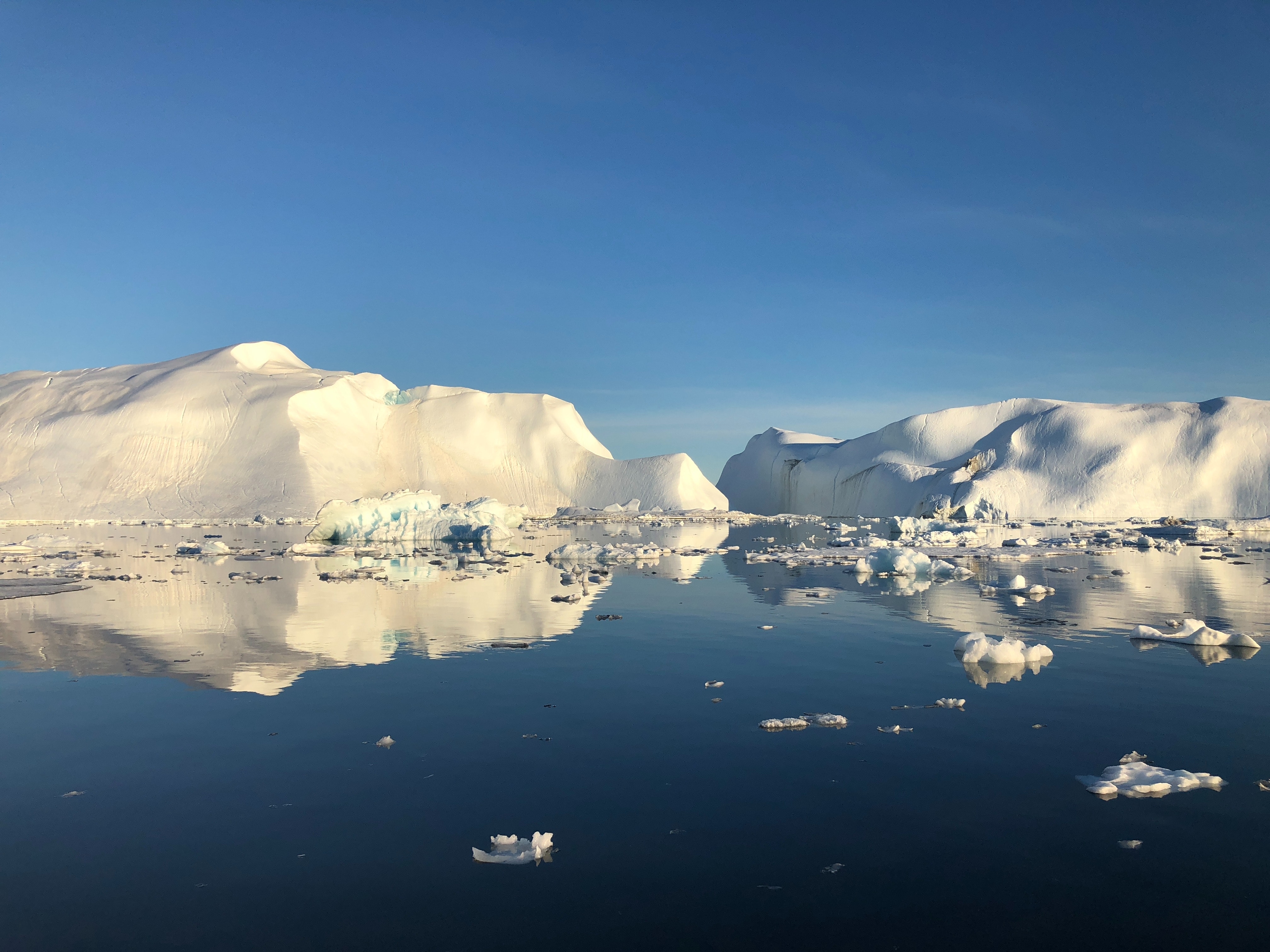
| Lakes collapse and release meltwater during winter causing inland ice to speed up in Greenland Photo Credit: Dominique Müller |
A team of international researchers has shown for the first time how 18 meltwater lakes in Greenland collapse during winter which cause the edges of the ice to flow faster. The new knowledge is essential for understanding how climate change influences the flow of ice masses in the Arctic.
In the middle of winter in 2018, an almost 50-year-old meltwater lake disappeared from the ice sheet in western Greenland. The lake was covered by snow and ice when it collapsed but stored liquid water inside. The water disappeared into newly formed cracks and drifted down through the approximately 2 km thick layer of ice. The water hit the rock bed under the ice and flowed out from under the ice sheet towards the sea. This meltwater acted as lubrication between the rock bed and the thick ice on top. As a result, the large mass of ice could slide faster towards the coast, accelerating an unusually large region of inland ice. The drainage of this lake caused several other lakes in the adjacent area to collapse too. In total, the collapsed lakes have released approximately 180 million tons of meltwater that has ended up in the world's oceans.
This is shown by new international research based on satellite data and led by the French Université Grenoble Alpes with contributions from DTU Space at The Technical University of Denmark (DTU). This new knowledge has just been published in Geophysical Research Letters.
.jpg)


.jpg)

.jpg)
.png)