. Scientific Frontline

Thursday, October 21, 2021

Changing Ocean Currents Are Driving Extreme Winter Weather

Transmission towers and lines were covered in snow in East Texas. The state experienced a power crisis during severe winter storms in February, resulting in about $20 billion in socioeconomic damages, according to NOAA. Credit: Matthew Rader

Throughout Earth's oceans runs a conveyor belt of water. Its churning is powered by differences in the water's temperature and saltiness, and weather patterns around the world are regulated by its activity.

A pair of researchers studied the Atlantic portion of this worldwide conveyor belt called the Atlantic Meridional Overturning Circulation, or AMOC, and found that winter weather in the United States critically depends on this conveyor belt-like system. As the AMOC slows because of climate change, the U.S. will experience more extreme cold winter weather.

The study, published in the journal Communications Earth & Environment was led by Jianjun Yin, an associate professor in the University of Arizona Department of Geosciences and co-authored by Ming Zhao, a physical scientist at the National Oceanic and Atmospheric Administration's Geophysical Fluid Dynamics Laboratory.

AMOC works like this: Warm water travels north in the upper Atlantic Ocean and releases heat into the atmosphere at high latitudes. As the water cools, it becomes denser, which causes it to sink into the deep ocean where it flows back south.
Researchers identify new pathways to target breast cancer


A pathway helping the breast cancer protein BRCA1 repair damaged DNA has been identified by University of Queensland researchers in a study that will inform future targeted therapies.

Professor Robert Parton, Professor Alpha Yap and Dr Kerrie-Ann McMahon from UQ’s Institute for Molecular Bioscience (IMB) identified an association between two proteins that are lost in cancer cells – the well-known BReast CAncer gene 1 (BRCA1) and a new player - cavin3.

“In healthy cells, BRCA1 repairs DNA damage and suppresses tumor formation, but cells with mutations in their BRCA1 genes struggle to keep up with DNA repairs, which is when cancer can take over,” Dr McMahon said.

“We discovered that cavin3 helps BRCA1 function when cells are stressed and that when it’s absent, levels of BRCA1 decrease.

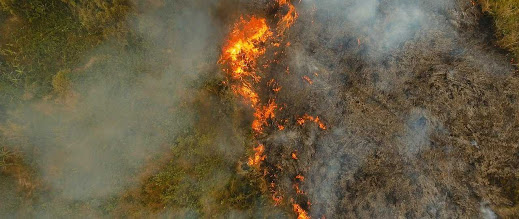
Putting the fire lookout in orbit

Image: iStockphoto.com / Alexpunker

OroraTech, a startup formed at the Technical University of Munich (TUM), is preparing to launch a fleet of small satellites. They will use infrared cameras to detect temperature anomalies at high temporal and spatial resolutions. With the data, the young entrepreneurs want to localize forest fires quickly and track their spread in real time.

Extreme weather events are becoming more frequent everywhere in the world: Even at higher latitudes where heat waves and droughts were rare in the past, the risk of forest fires is on the increase. Dry conditions and winds cause the fires to spread and go out of control faster. Forest and bush fires not only destroy vegetation − they also fuel climate change.

“If we want to fight forest and bush fires, stop illegal slash-and-burn activity and thus reduce CO2 emissions, we need a global early warning system,” says Thomas Grübler, one of the founders of the OroraTech startup. At present it can take several hours or even days before a fire source is identified and reported by ground-based fire watch crews, aircraft or drones, he explains. That may be long enough for a fire to spread over a considerable area. "Satellites facilitate quicker and more targeted tracking of forest fires. With this information, fire crews on the ground can fight fires faster and more precisely,” adds Grübler.

Wednesday, October 20, 2021

Researchers Join Fight to Save the Coral

An underwater view of one of the ark structures
being used by SDSU researchers to protect coral reefs.
(Photo: Jason Baer)
Ph.D. candidate Jason Baer and the Rohwer Lab team are deploying first-of-their-kind floating structures in an attempt to rebuild damaged reefs.

San Diego State University Ph.D. candidate Jason Baer is on a mission to restore coral reefs that have been damaged by climate change, overfishing or tourism by using ark structures, the first of their kind.

Baer and his fellow lab members, led by SDSU microbial ecologist and virologist Forest Rohwer, deploy the large, geodesic structures in the midwater above the ocean floor and seed them with corals and organisms that support their health. The arks, similar to the Noah’s Ark concept, give the threatened communities of coral a second chance to thrive.

Their positioning in midwater, where there’s higher light and flow, offers an improved environment for corals and their allies and distances them from some of the stressors they face on the seafloor, such as sedimentation and suffocation.

Baer, along with Rohwer lab members Anneke van der Geer, Andres Sanchez-Quinto, and Mark Little, spent six weeks in Curaçao, a Caribbean island, working with the CARMABI marine station this past summer. Together they deployed the first arks on coral reefs and began studying the communities that recruited them, with the goal of watching a reef community “build” itself.

Radioactive metals could eventually be used in next-generation cancer therapies

Actinium is a radioactive element that could revolutionize cancer medicine but its chemistry has thus far remained elusive. LLNL and Penn State researchers developed a new approach to study, capture, and purify medical isotopes, including actinium, which leverages a natural protein.
Image Credit: Thomas Reason/LLNL

A protein can be used to recover and purify radioactive metals such as actinium that could be beneficial for next-generation drugs used in cancer therapies and medical imaging, according to new research from Penn State and Lawrence Livermore National Laboratory (LLNL).

Radioactive metals are used in a variety of medical imaging and therapeutic applications. Actinium is a promising candidate for next-generation cancer therapies, and actinium-based therapies have treatment efficacy hundreds of times higher than current drugs. However, the chemistry of this metal is not well understood, and there are several limitations in the supply chain that have kept actinium-based drugs from reaching the market.

“In this study, our team took advantage of a protein my lab previously discovered called lanmodulin and showed that it can be used to improve and simplify the recovery and purification of actinium,” said Joseph Cotruvo Jr., assistant professor of chemistry at Penn State and an author of the paper. The research team presents their results in a paper appearing Oct. 20 in the journal Science Advances.

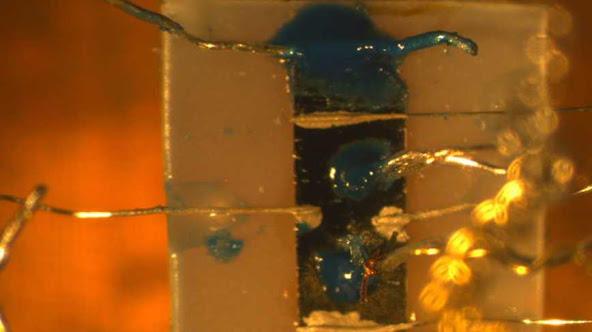
Electron quadruplets

Electron quadruplets were observed in this iron-based superconductor material, Ba1−xKxFe2As2, seen mounted for experimental measurements in Professor Babaev's research.
(Photo: Vadim Grinenko, Federico Caglieris)

For nearly 20 years, Egor Babaev has sought to show a new state of matter—electron quadruplets. Now he has found what he was looking for.

The central principle of superconductivity is that electrons form pairs. But can they also condense into foursomes? Recent findings have suggested they can, and a physicist at KTH published the first experimental evidence of this quadrupling effect and the mechanism by which this state of matter occurs.

KTH Professor Egor Babaev, together with international collaborators, presented evidence of fermion quadrupling in a series of experimental measurements on the iron-based material, Ba1−xKxFe2As2. Published in Nature Physics, the results follow nearly 20 years after Babaev first predicted this kind of phenomenon (Read Egor Babaev's 2004 paper), and eight years after he published a paper predicting that it could occur in the material.

The pairing of electrons enables the quantum state of superconductivity, a zero-resistance state of conductivity which is used in MRI scanners and quantum computing. It occurs within a material as a result of two electrons bonding rather than repelling each other, as they would in a vacuum. The phenomenon was first described in a theory by, Leon Cooper, John Bardeen and John Schrieffer, whose work was awarded the Nobel Prize in 1972.

Humans caused climate change

More than 99.9% of peer-reviewed scientific papers agree that climate change is mainly caused by humans, according to a new survey of 88,125 climate-related studies.

The research updates a similar 2013 paper revealing that 97% of studies published between 1991 and 2012 supported the idea that human activities are altering Earth’s climate. The current survey examines the literature published from 2012 to November 2020 to explore whether the consensus has changed.

“We are virtually certain that the consensus is well over 99% now and that it’s pretty much case closed for any meaningful public conversation about the reality of human-caused climate change,” said Mark Lynas, a visiting fellow at the Alliance for Science and the paper’s first author.

“It's critical to acknowledge the principal role of greenhouse gas emissions so that we can rapidly mobilize new solutions, since we are already witnessing in real time the devastating impacts of climate related disasters on businesses, people and the economy,” said Benjamin Houlton, the Ronald P. Lynch Dean of the College of Agriculture and Life Sciences and a co-author of the study, “Greater than 99% Consensus on Human Caused Climate Change in the Peer-Reviewed Scientific Literature,” which published Oct. 19 in the journal Environmental Research Letters.

Treating opioid use disorder in remote areas

The most sparsely populated regions of the American West often are unable to provide local treatment for opioid use disorder. Long driving distances can be a barrier for people who need treatment, so the issue has ramifications for the health and wellness of many residents across the most rural areas of the country.

A team of researchers from Penn State and JG Research and Evaluation recently examined the effectiveness of a successful model for rural treatment of opioid use disorder in Montana, one of the nation’s most sparsely populated states.

“When states develop treatment models for opioid use disorder, public health officials must account for local variations in culture, stigma, and access to resources."
Danielle Rhubart, assistant professor of biobehavioral health

Opioids are highly addictive, and opioid use disorder is difficult to treat. Fortunately, many people who experience opioid use disorder can reach recovery. Most treatment programs, however, are very intensive and require specialized care, highly regulated medication, and daily or weekly clinical visits. Because of this intensive specialization, people in rural areas who experience opioid use disorder often lack access to local treatment.

To address the lack of services for people with opioid use disorder in rural areas, researchers and clinicians in Vermont developed a model of care for opioid treatment. People with opioid use disorders from remote areas are stabilized at addiction care facilities in more populous areas and then receive ongoing care at rural primary care clinics that have established partnerships with these addiction care facilities. Based on this model’s success in Vermont, it has been deployed in many rural areas across the nation.

Get your kids ages 5-11 vaccinated once approved

Vaccination will help break the cycle of frequent PCR testing, quarantining, isolation

Parents are likely to learn around Halloween whether the U.S. Food and Drug Administration (FDA) has approved Pfizer’s COVID-19 vaccine for 5- to 11-year-old children. While some families are champing at the bit to schedule their kids’ first shot, polling suggests many remain hesitant.

But parents should feel confident getting their young children vaccinated as soon as the FDA gives the green light and it becomes available, said Northwestern University Feinberg School of Medicine pediatric experts Dr. Nina Alfieri and Dr. Jennifer Kusma, both of whom are advanced general pediatric and primary care physicians at the Ann & Robert H. Lurie Children’s Hospital of Chicago.

“Vaccinating this group of children is going to be helpful for them staying in school, getting back to their routines, protecting their grandparents and allowing their parents to keep working and doing their interests and daily activities,” Alfieri said. “Kids thrive on consistency. Protecting children with vaccination is an important step in helping break the cycle of kids needing frequent PCR testing and quarantining with each sick symptom they have. This could allow children to have a more consistent routine in addition to protecting their physical health.”

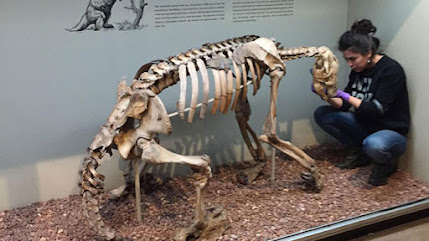
Extinct ground sloth was an omnivore

Julia Tejada sampling a specimen of the North American ground sloth.
(Copyright: Julia Tejada)
A study co-authored by University of Hawaiʻi at Mānoa scientists suggests that Mylodon—a ground sloth that lived in South America until about 10,000 to 12,000 years ago—was not a strict vegetarian like all of its living relatives. Based on a chemical analysis of amino acids preserved in sloth hair, the researchers uncovered evidence that this gigantic extinct sloth was an omnivore, at times eating meat or other animal protein in addition to plant matter.

Led by researchers at the American Museum of Natural History and published in Scientific Reports, the study contradicts previous assumptions about the animal and provides the first direct evidence of omnivory in an ancient sloth species.

Even though the six living sloth species all are relatively small plant-eating tree dwellers restricted to tropical forests of Central and South America, hundreds of fossil sloth species, some as large as an elephant, roamed ancient landscapes from Alaska to the southern tip of South America. Mylodon darwinii, also known as “Darwin’s ground sloth,” is thought to have weighed between 2,200 and 4,400 pounds and was nearly 10 feet long.

Based on dental characteristics, jaw biomechanics, preserved excrement from some very recent fossil species, and the fact that all living sloths exclusively eat plants, Mylodon and its extinct relatives have long been presumed to be herbivores as well. But these factors could not directly reveal whether an animal might have ingested food that requires little or no preparation and is completely digested, as happens in carcass scavenging or some other kinds of meat eating.

New tool can identify harmful blue-green algae

A new way to detect early signs of harmful blue-green algae, which bloom in lakes, rivers and reservoirs around the world, has been developed by researchers at the University of Birmingham together with researchers at the Culture Collection of Algae & Protozoa (CCAP), based at the Scottish Association of Marine Science.

Blue-green algae, or cyanobacteria, present huge environmental problems. Large scale break-outs, or blooms, spread across bodies of water, depleting the oxygen supply and reducing light, killing fish and other aquatic animals. In addition, some algae can produce toxins that are harmful to animals and humans.

Detecting these blooms – at a sufficiently early stage to prevent them reaching dangerous levels – is not straightforward because of the thousands of different species of algae that could be present. As algae are a vital part of many water systems, it is only those species which become harmful that may need these preventative measures.

Researchers in the University of Birmingham’s School of Biosciences have designed a new approach which uses mass spectrometry – a way of identifying specific molecules by their mass – to identify key protein features within the algae that are unique to each species, enabling them to be rapidly identified. Using recently developed, high resolution techniques, the team found they were able to produce highly specific ‘fingerprints’ that each correspond to specific cyanobacterial species. The work is published in Analytical Chemistry.

Tuesday, October 19, 2021

Physicists announce results that boost evidence for new fundamental physics

View of the LHCb detector 
Credit: CERN
In March 2020, the same experiment released evidence of particles breaking one of the core principles of the Standard Model – our best theory of particles and forces – suggesting the possible existence of new fundamental particles and forces.

Now, further measurements by physicists at Cambridge’s Cavendish Laboratory have found similar effects, boosting the case for new physics.

The Standard Model describes all the known particles that make up the universe and the forces that they interact through. It has passed every experimental test to date, and yet physicists know it must be incomplete. It does not include the force of gravity, nor can it account for how matter was produced during the Big Bang, and contains no particle that could explain the mysterious dark matter that astronomy tells us is five times more abundant than the stuff that makes up the visible world around us.

As a result, physicists have long been hunting for signs of physics beyond the Standard Model that might help us to address some of these mysteries.

One of the best ways to search for new particles and forces is to study particles known as beauty quarks. These are exotic cousins of the up and down quarks that make up the nucleus of every atom.

Electric trucks: ultra-fast charging in the megawatt range

Trucks with electric drives could soon be used in long-distance transport.
Image: iStockphoto.com / Chesky_W

It is an ambitious goal: By 2030 the German government aims to reduce carbon dioxide emissions by 65 percent compared to 1990. But how? With partners from industry and research institutes, scientists at the Technical University of Munich (TUM) are working on prototypes for an electric-powered truck and the charging station it will need.

“Freight transport on our roads is responsible for more than one third of our national greenhouse gas emissions,” says Sebastian Wolff of the TUM Chair of Automotive Technology. Consequently, new truck concepts will be needed if Germany wants to drastically cut its CO2 emissions by 2030.

In the NEFTON project, which is funded by the Federal Ministry of the Economy, engineers working in industry and research are developing a prototype for an electric truck and a charging station to power it.

The first battery-powered truck prototypes are currently being tested with customers serving short-haul routes. A long-haul truck needs to cover 500 kilometers or more in a day, however. That means that the battery would have to be charged at least on a daily basis. That would be a big adjustment for drivers, who currently visit a gas station perhaps once in five days.

Untangling the heart’s genome: now in 3D

Research led by Australian Regenerative Medicine Institute and Monash Biomedicine Discovery Institute (BDI) researchers at Monash University has combined cutting-edge genomics and 3D “gaming” modelling to understand how all genes are expressed in different parts of the heart, unveiling complex patterns and novel markers. To help visualize this new research, the team, led by Monash group leaders Associate Professor Mirana Ramialison and Professor Jose Polo in collaboration with Dr Fernando Rossello, has developed a powerful tool called 3D-cardiomics.

This work has been recently published in the Journal of Molecular and Cellular Cardiology.

“One of the outstanding challenges in genomics research is understanding the physical context,” noted Associate Professor Ramialison, who has recently moved her research group to the Murdoch Children Research Institute to continue her work in heart development and genomics. “We can detect when gene expression is up or down-regulated in any number of tissues on a global level, but what is more complicated is understanding the spatial relationships in three dimensions. This is key to uncovering developmental and physiological processes of the heart, during both homeostasis and disease.”

The research team micro dissected and sequenced transcriptome-wide 18 anatomical sections of the adult mouse heart with this aim in mind. The study results unveiled known and novel genes that display complex spatial expression across the heart sub-compartments.

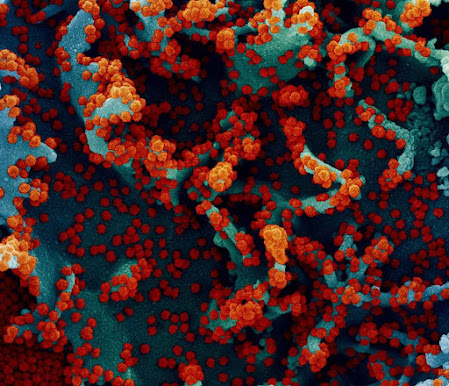
Interferon does not improve outcomes for hospitalized adults with COVID-19

Colorized scanning electron micrograph of a human cell
heavily infected with SARS-CoV-2 virus particles (red). NIAID
 A clinical trial has found that treatment with the immunomodulator interferon beta-1a plus the antiviral remdesivir was not superior to treatment with remdesivir alone in hospitalized adults with COVID-19 pneumonia. In addition, in a subgroup of patients who required high-flow oxygen, investigators found that interferon beta-1a was associated with more adverse events and worse outcomes. These findings were published today in the journal The Lancet Respiratory Medicine.

The study, called the Adaptive COVID-19 Treatment Trial 3 (ACTT-3), took place from August 5, 2020 to December 21, 2020. It was sponsored and funded by the National Institute of Allergy and Infectious Diseases (NIAID), part of the National Institutes of Health.

Interferon beta-1a has the same amino acid sequence as a naturally occurring protein called interferon beta, which is in a class of proteins called type 1 interferons. Infected cells normally produce type 1 interferons to help the immune system fight pathogens, especially viruses. Interferon beta has both antiviral and anti-inflammatory properties.

Laboratory studies have shown that the normal type 1 interferon response is suppressed after infection with SARS-CoV-2, the virus that causes COVID-19. In addition, previous studies of hospitalized patients with COVID-19 demonstrated reduced production of interferon in response to SARS-CoV-2 infection in many patients, and this was associated with more severe disease. Other laboratory studies and clinical data supported the hypothesis that treatment with interferon beta-1a might improve health outcomes in people with COVID-19.

Featured Article

Ketamine high NOT related to treatment success for people with alcohol problems

Photo Credit:  Treedeo.St Studios Scientific Frontline: "At a Glance" Summary Main Discovery : The intensity of the acute psychede...

Top Viewed Articles