. Scientific Frontline

Tuesday, December 28, 2021

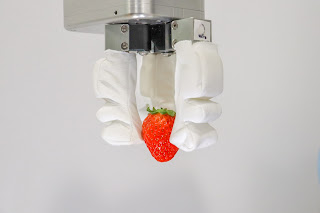
Engineers bring a soft touch to commercial robotics

Credit: National University of Singapore
Inspired by the natural dexterity of the human hand, a team of engineers from the National University of Singapore (NUS) has created a reconfigurable hybrid robotics system that is able to grip a variety of objects: from the small, soft and delicate to the large, heavy and bulky. This technology is expected to impact a range of industries, involving food assembly, vertical farming and fast-moving consumer goods packaging, which will progressively automate more of their operations in the coming years.

Led by Associate Professor Raye Yeow from the NUS Department of Biomedical Engineering and the NUS Advanced Robotics Centre, the hybrid robotic grippers use soft, flexible 3D-printed fingers with a reconfigurable gripper base. The robotic innovation is now in the process of being brought to commercial partners under the team’s start-up RoPlus (RO+), comprising NUS researchers Low Jin Huat, Khin Phone May, Chen Chao-Yu and undergraduate student Han Qian Qian.

“An object’s shape, texture, weight and size affect how we choose to grip them. This is one of the main reasons why many industries still heavily rely on human labour to package and handle delicate items,” Assoc Prof Yeow said. “Our hybrid robotic gripper technology revolutionizes traditional pick-and-place tasks by offering advanced capabilities that allow robots to safely interact with delicate items of various shapes, sizes and stiffness, just like the human hand.”

Monday, December 27, 2021

Window to access legal abortion may close before many women know they are pregnant

Credit: Heidi-Ann Fourkiller / SFLORG
More than one in five women experience irregular menstrual cycles that could keep them from learning they are pregnant until it may be too late to access an abortion under some state laws in effect or under consideration, a new study shows.

Researchers from the University of Wisconsin–Madison and National Institutes of Health analyzed anonymized data on 1.6 million menstrual cycles provided by more than 267,000 adults to a cycle-tracking app. According to results published today in the journal Proceedings of the National Academy of Sciences, 22 percent of the people in the study had irregular menstrual cycles that differed in length from one cycle to the next by seven or more days.

“For almost everyone, the first symptom of a pregnancy is a missed period,” says UW–Madison sociology Professor Jenna Nobles, coauthor of the study. “But many people — a large share of the population — have long or highly irregular cycles and could not reasonably learn about their pregnancy in time to seek a legal abortion under laws that set limits at detectable fetal cardiac activity or six weeks.”

Irregular periods are more likely among those with some relatively common medical conditions like Type 2 diabetes, polycystic ovary syndrome and thyroid and other hormone disorders. Hispanic women had greater risk than non-Hispanic white women of experiencing irregular cycles. The age group most like to have cycles of irregular length is 18- to 24-year-olds — also the ages with the highest abortion rates in the United States.

‘Battle of the sexes’ begins in womb as father and mother’s genes tussle over nutrition

Section of mouse fetus and placenta 
Credit: Ionel Sandovici
As the fetus grows, it needs to communicate its increasing needs for food to the mother. It receives its nourishment via blood vessels in the placenta, a specialized organ that contains cells from both baby and mother.

Between 10% and 15% of babies grow poorly in the womb, often showing reduced growth of blood vessels in the placenta. In humans, these blood vessels expand dramatically between mid and late gestation, reaching a total length of approximately 320 kilometers at term.

In a study published today in Developmental Cell, a team led by scientists at the University of Cambridge used genetically engineered mice to show how the fetus produces a signal to encourage growth of blood vessels within the placenta. This signal also causes modifications to other cells of the placenta to allow for more nutrients from the mother to go through to the fetus.

Dr Ionel Sandovici, the paper’s first author, said: “As it grows in the womb, the fetus needs food from its mum, and healthy blood vessels in the placenta are essential to help it get the correct amount of nutrients it needs.

“We’ve identified one way that the fetus uses to communicate with the placenta to prompt the correct expansion of these blood vessels. When this communication breaks down, the blood vessels don’t develop properly and the baby will struggle to get all the food it needs.”

Scientists build new atlas of ocean’s oxygen-starved waters

Oxygen deficient zone intensity across the eastern Pacific Ocean, where copper colors represent the locations of consistently lowest oxygen concentrations and deep teal indicates regions without sufficiently low dissolved oxygen.
Credit: Jarek Kwiecinski and Andrew Babbin

Life is teeming nearly everywhere in the oceans, except in certain pockets where oxygen naturally plummets and waters become unlivable for most aerobic organisms. These desolate pools are “oxygen-deficient zones,” or ODZs. And though they make up less than 1 percent of the ocean’s total volume, they are a significant source of nitrous oxide, a potent greenhouse gas. Their boundaries can also limit the extent of fisheries and marine ecosystems.

Now MIT scientists have generated the most detailed, three-dimensional “atlas” of the largest ODZs in the world. The new atlas provides high-resolution maps of the two major, oxygen-starved bodies of water in the tropical Pacific. These maps reveal the volume, extent, and varying depths of each ODZ, along with fine-scale features, such as ribbons of oxygenated water that intrude into otherwise depleted zones.

The team used a new method to process over 40 years’ worth of ocean data, comprising nearly 15 million measurements taken by many research cruises and autonomous robots deployed across the tropical Pacific. The researchers compiled then analyzed this vast and fine-grained data to generate maps of oxygen-deficient zones at various depths, similar to the many slices of a three-dimensional scan.

Sunday, December 26, 2021

Helium bath splash

Ions packed in a helium nanodroplet remain protected on impact.
Credit: University Innsbruck

While working with helium nanodroplets, scientists at the Department of Ion Physics and Applied Physics led by Fabio Zappa and Paul Scheier have come across a surprising phenomenon: When the ultracold droplets hit a hard surface, they behave like drops of water. Ions with which they were previously doped thus remain protected on impact and are not neutralized.

At the Department of Ion Physics and Applied Physics, Paul Scheier's research group has been using helium nanodroplets to study ions with methods of mass spectrometry for around 15 years. Using a supersonic nozzle, tiny, superfluid helium nanodroplets can be produced with temperatures of less than one degree Kelvin. They can very effectively be doped with atoms and molecules. In the case of ionized droplets, the particles of interest are attached to the charges, which are then measured in the mass spectrometer. During their experiments, the scientists have now stumbled upon an interesting phenomenon that has fundamentally changed their work. "For us, this was a gamechanger," says Fabio Zappa from the nano-bio-physics team. "Everything at our lab is now done with this newly discovered method." The researchers have now published the results of their studies in Physical Review Letters.

Saturday, December 25, 2021

Schizophrenia and bipolar disorder found in recently evolved region of the ‘dark genome’

They say these new proteins can be used as biological indicators to distinguish between the two conditions, and to identify patients more prone to psychosis or suicide.

Schizophrenia and bipolar disorder are debilitating mental disorders that are hard to diagnose and treat. Despite being amongst the most heritable mental health disorders, very few clues to their cause have been found in the sections of our DNA known as genes.

The scientists think that hotspots in the ‘dark genome’ associated with the disorders may have evolved because they have beneficial functions in human development, but their disruption by environmental factors leads to susceptibility to, or development of, schizophrenia or bipolar disorder.

The results are published in the journal Molecular Psychiatry.

“By scanning through the entire genome we’ve found regions, not classed as genes in the traditional sense, which create proteins that appear to be associated with schizophrenia and bipolar disorder,” said Dr Sudhakaran Prabakaran, who was based in the University of Cambridge’s Department of Genetics when he conducted the research, and is senior author of the report.

He added: “This opens up huge potential for new druggable targets. It’s really exciting because nobody has ever looked beyond the genes for clues to understanding and treating these conditions before.”

The researchers think that these genomic components of schizophrenia and bipolar disorder are specific to humans - the newly discovered regions are not found in the genomes of other vertebrates. It is likely that the regions evolved quickly in humans as our cognitive abilities developed, but they are easily disrupted - resulting in the two conditions.

New materials for quantum technologies

Marc A. Wilde investigates materials with special symmetries, such as manganese-silicon, in the laboratory of the TUM chair for Experimental Physics on the Topology of Correlated Systems.
Image: Astrid Eckert / TUM

While conventional electronics relies on the transport of electrons, components that convey spin information alone may be many times more energy efficient. Physicists at the Technical University of Munich (TUM) and the Max Planck Institute for Solid State Research in Stuttgart have now made an important advance in the development of novel materials for such components. These materials may also be the key to quantum computers that are less susceptible to interference.

Hopes ran high when the first representatives of a new class of materials – topological insulators – were discovered some 15 years ago. Researchers predicted that the unique electronic structure of these materials would give rise to special properties on their surface, such as energy-efficient information transmission, which could facilitate the development of novel electronic components in a wide range of applications.

But to date, these possibilities could not be readily modified and controlled in applications. Despite the greatest of efforts, technological exploitation has been a long time coming. This may be about to change thanks to the discovery made by a team headed by Christian Pfleiderer, professorship for the Topology of Correlated Systems at the Technical University of Munich.

Controlled burning of natural environments could help offset our carbon emissions

The finding points to a new method of manipulating the world’s natural capacity for carbon capture and storage, which can also help to maintain natural ecosystem processes. The results are published in the journal Nature Geoscience.

“Using controlled burns in forests to mitigate future wildfire severity is a relatively well-known process. But we’ve found that in ecosystems including temperate forests, savannahs and grasslands, fire can stabilize or even increase soil carbon,” said Dr Adam Pellegrini in the University of Cambridge’s Department of Plant Sciences, first author of the report.

He added: “Most of the fires in natural ecosystems around the globe are controlled burns, so we should see this as an opportunity. Humans are manipulating a process, so we may as well figure out how to manipulate it to maximize carbon storage in the soil.”

Fire burns plant matter and organic layers within the soil, and in severe wildfires this leads to erosion and leaching of carbon. It can take years or even decades for lost soil carbon to re-accumulate. But the researchers say that fires can also cause other transformations within soils that can offset these immediate carbon losses, and may stabilize ecosystem carbon.

Fire stabilizes carbon within the soil in several ways. It creates charcoal, which is very resistant to decomposition, and forms ‘aggregates’ – physical clumps of soil that can protect carbon-rich organic matter at the center. Fire can also increase the amount of carbon bound tightly to minerals in the soil.

Scientists, students will utilize newly launched James Webb Space Telescope for solar system research

The flight mirrors for the James Webb Space Telescope undergo cryogenic testing at NASA Marshall. Credit: Ball Aerospace

In one of the most exciting developments in astronomy in the 21st century, NASA is launching the James Webb Space Telescope (JWST) today—and Northern Arizona University astronomers, planetary astronomers and their students will use the massive observatory to expand their research and advance our understanding of the solar system.

“Webb is NASA’s newest premier space science observatory—destined to be a household name, like its predecessor, Hubble,” NASA announced. “This is an Apollo moment for NASA science—Webb will fundamentally alter our understanding of the universe. It can observe all of the cosmos, from planets to stars to nebulae to galaxies and beyond—helping scientists uncover secrets of the distant universe as well as exoplanets closer to home. Webb can explore our own solar system’s residents with exquisite new detail and search for faint signals from the first galaxies ever made. From new forming stars to devouring black holes, Webb will reveal all this and more.”

The JWST, which NASA calls “a feat of human ingenuity,” is being launched in a global partnership with the European Space Agency and Canadian Space Agency. The mission has evolved over the past 20 years with contributions from thousands of scientists, engineers and other professionals from more than 14 countries and 29 U.S. states, including professor David Trilling, professor Josh Emery and assistant professor Cristina Thomas of NAU’s Department of Astronomy and Planetary Science.

New grafting technique could combat the disease threatening Cavendish bananas

Credit: Steve Hopson
Grafting is the technique of joining the shoot of one plant with the root of another, so they continue to grow together as one. Until now it was thought impossible to graft grass-like plants in the group known as monocotyledons because they lack a specific tissue type, called the vascular cambium, in their stem.

Researchers at the University of Cambridge have discovered that root and shoot tissues taken from the seeds of monocotyledonous grasses - representing their earliest embryonic stages - fuse efficiently. Their results are published today in the journal Nature.

An estimated 60,000 plants are monocotyledons; many are crops that are cultivated at enormous scale, for example rice, wheat and barley.

The finding has implications for the control of serious soil-borne pathogens including Panama Disease, or ‘Tropical Race 4’, which has been destroying banana plantations for over 30 years. A recent acceleration in the spread of this disease has prompted fears of global banana shortages.

“We’ve achieved something that everyone said was impossible. Grafting embryonic tissue holds real potential across a range of grass-like species. We found that even distantly related species, separated by deep evolutionary time, are graft compatible,” said Professor Julian Hibberd in the University of Cambridge’s Department of Plant Sciences, senior author of the report.

Nasal spray to fight COVID-19 heads to clinical trial

The coronavirus in culture.
Credit: Dr Julian Druce VIDRL, Peter Doherty Institute for Infection and Immunity.

An at-home nasal spray treatment for COVID-19 will be put to the test by Melbourne biomedical researchers, as the University of Melbourne and Monash University receive $4.2 million to establish a six-month clinical trial lead by Northern Hospital in collaboration with Oxford University.

Heparin, a widely used blood-thinning drug to treat or prevent blood clots forms the base of the nasal spray treatment that is simple to administer, stable at room temperature and available globally.

Director of Lung Health Research Centre, University of Melbourne Professor Gary Anderson said the spray will be easy to use, with two puffs in each nostril, three times a day.

“Basic science studies revealed that intranasal heparin may be an effective way to prevent COVID-19 infection and spread. COVID-19 first infects cells in the nose, and to do that the virus must bind to Heparan Sulfate on the surface of nasal cells lining the nose,” Professor Anderson said.

“Heparin - the active ingredient in our spray - has a structure that is very similar to Heparan Sulfate, so it behaves as a ‘decoy’ and can rapidly wrap around the virus’s spike protein like a python, preventing it from infecting you or spreading the virus to others.

Friday, December 24, 2021

Lizards offer new possibilities for artificial lungs

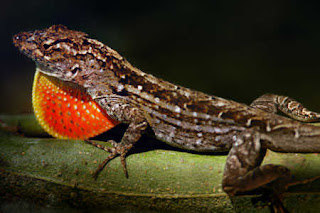
Male Brown anole displaying dewlap
When it comes to studying lungs, humans take up all the air, but it turns out scientists have a lot to learn from lizards.

A new study from Princeton University shows how the brown anole lizard solves one of nature’s most complex problems — breathing — with elegant simplicity. Whereas human lungs develop over months and years into baroque tree-like structures, the anole lung develops in just a few days into crude lobes covered with bulbous protuberances. These gourd-like structures, while far less refined, allow the lizard to exchange oxygen for waste gases just as human lungs do. And because they grow quickly by leveraging simple mechanical processes, anole lungs provide new inspiration for engineers designing advanced biotechnologies.

“Our group is really interested in understanding lung development for engineering purposes,” said Celeste Nelson, the Wilke Family Professor in Bioengineering and the principal investigator of a study published in the journal Science Advances. “If we understand how lungs build themselves, then perhaps we can take advantage of the mechanisms mother nature uses to regenerate or engineer tissues.”

While avian and mammalian lungs develop great complexity through endless branching and complicated biochemical signaling, the brown anole lung forms its relatively modest complexity through a mechanical process the authors likened to a mesh stress ball — the common toy found in desk drawers and DIY videos. This study is the first to look at the development of a reptile lung, according to the researchers.

The anole lung starts a few days into development as a hollow, elongated membrane surrounded by a uniform layer of smooth muscle. During development, the lung cells secrete fluid, and as they do so the inner membrane slowly inflates and thins like a balloon. The pressure pushes against the smooth muscle, causing it to tighten and spread apart into fiber bundles that ultimately form a honeycomb-shaped mesh. Fluid pressure continues pushing the stretchy membrane outward, bulging through the gaps in the sinewy mesh and forming fluid-filled bulbs that cover the lung. Those bulges create lots of surface area where the gas exchange occurs.

Research suggests deer could be a possible source of human infection

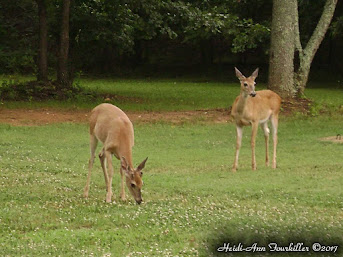
Douglas Watts, Ph.D., right, professor of biological sciences at The University of Texas at El Paso, and Pedro Palermo, manager of the UTEP Border Biomedical Research Center’s Biosafety Level 3 Infectious Disease Research Program laboratory, are authors of a study that proves for the first time that COVID-19 is present in white-tailed deer in Texas, a finding published recently in Vector-Borne and Zoonotic Diseases.
Photo: J.R. Hernandez / UTEP Marketing and Communications

Scientific Frontline: "At a Glance" Summary: Research Suggests Deer Could Be a Possible Source of Human Infection

  • Main Discovery: White-tailed deer in Texas have been found carrying SARS-CoV-2 neutralizing antibodies, providing the first reported evidence of COVID-19 infection among deer in the state and indicating that the virus is widespread in this abundant wildlife species.
  • Methodology: Researchers analyzed blood samples collected from male and female white-tailed deer of varying ages in Travis County, Texas, during the first two months of 2021, amidst the ongoing pandemic.
  • Key Data: Evidence of SARS-CoV-2 neutralizing antibodies was discovered in more than one-third (37%) of the sampled deer, a prevalence rate comparable to the 40% rate previously identified in deer populations across states like Illinois, Michigan, Pennsylvania, and New York.
  • Significance: The presence of COVID-19 in white-tailed deer expands the known geographical range of the virus in UTEP animal populations and suggests that deer could serve as a potential reservoir for the transmission of SARS-CoV-2 to humans, wildlife, and domestic animals.
  • Future Application: Subsequent investigations will aim to further explore the mechanisms of COVID-19 transmission between humans and animals, helping to develop strategies that mitigate the risks associated with deer acting as a source of human infection.
  • Branch of Science: Biology, Epidemiology, Virology

COVID-19 infection detected in deer in 9 Ohio locations

Credit: Heidi-Ann Fourkiller SFLORG
Scientists have detected infection by at least three variants of the virus that causes COVID-19 in free-ranging white-tailed deer in six northeast Ohio locations, the research team has reported.

Previous research led by the U.S. Department of Agriculture had shown evidence of antibodies in wild deer. This study, published in Nature, details the first report of active COVID-19 infection in white-tailed deer supported by the growth of viral isolates in the lab, indicating researchers had recovered viable samples of the SARS-CoV-2 virus and not only its genetic traces.

Based on genomic sequencing of the samples collected between January and March 2021, researchers determined that variants infecting wild deer matched strains of the SARS-CoV-2 virus that had been prevalent in Ohio COVID-19 patients at the time. Sample collection occurred before the Delta variant was widespread, and that variant was not detected in these deer. The team is testing more samples to check for new variants as well as older variants, whose continued presence would suggest the virus can set up shop and survive in this species.

The fact that wild deer can become infected “leads toward the idea that we might actually have established a new maintenance host outside humans,” said Andrew Bowman, associate professor of veterinary preventive medicine at The Ohio State University and senior author of the paper.

“Based on evidence from other studies, we knew they were being exposed in the wild and that in the lab we could infect them and the virus could transmit from deer to deer. Here, we’re saying that in the wild, they are infected,” Bowman said. “And if they can maintain it, we have a new potential source of SARS-CoV-2 coming in to humans. That would mean that beyond tracking what’s in people, we’ll need to know what’s in the deer, too.

Experts help to save rare endangered plant from brink of extinction

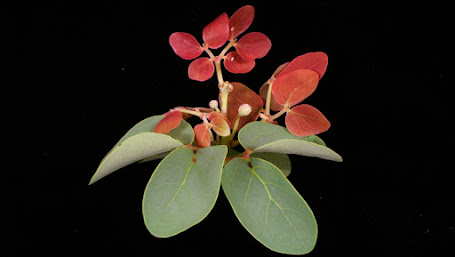
Ka palupalu o Kanaloa (Photo credit: Zachary Wingert)
Ka palupalu o Kanaloa (Kanaloa kahoolawensis) is one of 10 most critically endangered plants and animals in the world to be impacted by climate change, according to a December 2021 report by the Endangered Species Coalition. The species was declared extinct in the wild in 2015. Over the past several years, experts at the University of Hawaiʻi at Mānoa have brought the Ka palupalu o Kanaloa back from the edge of disappearing from existence.

Ka palupalu o Kanaloa is a densely branched shrub with thin oval leaves and produces large clusters of small white flowers. The plant was historically found to grow on the rocky cliffs of Kahoʻolawe, but fossilized pollen from the species has been found on Oʻahu, Maui, and Kauaʻi. Two Ka palupalu o Kanaloa plants were discovered in 1992 growing on a sea stack off the coast of Kahoʻolawe. Fortunately, seeds were collected from the last two plants before they died in 2015.

Conservation efforts through propagation to save Ka palupalu o Kanaloa were led by Doug Okamoto, a greenhouse technician with UH Mānoa’s Lyon Arboretum, and Anna Palomino from UH Mānoa’s Center for Conservation Research and Training, who is also a Department of Land and Natural Resources Department of Forestry and Wildlife (DLNR-DOFAW) and Plant Extinction Prevention Program horticulturist.

Featured Article

What Is: Quorum Sensing

Scientific Frontline: Extended "At a Glance" Summary : Quorum Sensing The Core Concept : Quorum sensing is a sophisticated, popula...

Top Viewed Articles