. Scientific Frontline

Thursday, January 6, 2022

Astronomers capture red supergiant’s death throes

Artistic illustrations of a red supergiant exploding.
Credit: W.M. Keck Observatory/Adam Makarenko.

For the first time ever, astronomers have imaged in real time the dramatic end to a red supergiant’s life — watching the massive star’s rapid self-destruction and final death throes before collapsing into a type II supernova.

Led by researchers at Northwestern University and the University of California, Berkeley (UC Berkeley), the team observed the red supergiant during its last 130 days leading up to its deadly detonation.

The discovery defies previous ideas of how red supergiant stars evolve right before exploding. Earlier observations showed that red supergiants were relatively quiescent before their deaths — with no evidence of violent eruptions or luminous emissions. The new observations, however, detected bright radiation from a red supergiant in the final year before exploding. This suggests at least some of these stars must undergo significant changes in their internal structure, which then result in the tumultuous ejection of gas moments before they collapse.

“This is a breakthrough in our understanding of what massive stars do moments before they die,” said Wynn Jacobson-Galán, the study’s lead author. “Direct detection of pre-supernova activity in a red supergiant star has never been observed before in an ordinary type II supernova. For the first time, we watched a red supergiant star explode.”

Animal vaccines with self-spreading viruses

How a self-spreading vaccine could work in a bat population. Bats directly injected with a self-spreading vaccine passively spread the lab-modified viral vaccine to other bats they encounter over time (T1->T2->T3…) gradually building up population-wide immunity.  In this example bats are used, but any mammal species that lives in groups could theoretically be targeted to rapidly vaccinate whole populations.

Credit: Derek Caetano-Anolles

Vaccines for animals based on viruses that spread on their own are being developed in Europe and the U.S

Since the first lab-modified virus capable of replication was generated in 1974, an evidence-based consensus has emerged that many changes introduced into viral genomes are likely to prove unstable if released into the environment. On this basis, many virologists would question the release of genetically modified viruses that retain the capacity to spread between individual vertebrate hosts. Researchers from Germany, South Africa, the United Kingdom and the United States now point out in a policy piece that despite these concerns, self-spreading vaccines for animals are being researched in Europe and the US. They are intended to limit the spread of animal diseases or disease spillover to humans.

The Largest Suite of Cosmic Simulations for AI Training

The CAMELS project (Cosmology and Astrophysics with MachinE Learning Simulations) combines over 4,000 cosmological simulations, millions of galaxies, and 350 terabytes of data to decipher secrets of the universe.

Totaling 4,233 universe simulations, millions of galaxies and 350 terabytes of data, a new release from the CAMELS project is a treasure trove for cosmologists. CAMELS — which stands for Cosmology and Astrophysics with MachinE Learning Simulations — aims to use those simulations to train artificial intelligence models to decipher the universe’s properties.

Scientists are already using the data, which is free to download, to power new research, says project co-leader Francisco Villaescusa-Navarro, a research scientist with the Simons Foundation’s CMB (Cosmic Microwave Background) Analysis and Simulation group.

Villaescusa-Navarro leads the project with associate research scientists at the Flatiron Institute’s Center for Computational Astrophysics (CCA) Shy Genel and Daniel Anglés-Alcázar, who is also a UConn Associate Professor of Physics.

“Machine learning is revolutionizing many areas of science, but it requires a huge amount of data to exploit,” says Anglés-Alcázar. “The CAMELS public data release, with thousands of simulated universes covering a broad range of plausible physics, will provide the galaxy formation and cosmology communities with a unique opportunity to explore the potential of new machine-learning algorithms to solve a variety of problems.”

New year's mission to start new phase of exoplanet research

Source: University of Birmingham
A mission to one of the coldest and most remote places on earth will enable a new phase in the search for distant planetary systems.

University of Birmingham PhD researcher Georgina Dransfield has travelled to the Franco-Italian Concordia Research Station in Antarctica, to oversee the installation of a new state-of-the-art camera at the ASTEP (Antarctic Search for Transiting ExoPlanets) telescope.

The new instrument will enable scientists to see a much wider range of planets orbiting suns outside the Solar system, broadening our search for planets capable of hosting life.

The ASTEP telescope detects signals from distant planetary systems using the ‘transit’ method, measuring the slight dips in brightness that occur when a planet passes between Earth and its host star.

Purchased with support from the Science and Technology Facilities Council and from the European Research Council, the telescope’s new camera is sensitive to the reddest wavelengths in the spectrum. This means it can spot the smallest stars in our galaxy, which are colder, fainter and therefore redder.

“It is easier to detect smaller planets orbiting these small stars, so we have a good chance of being able to detect planets of a similar size and temperature to the Earth, thanks to this new camera,” explained Georgina.

The camera also has a ‘blue’ channel, so can see in two colors at once. This will enable astronomers to distinguish planetary signals from parasitic signals produced by other astrophysical phenomena, enabling new planets to be confirmed more rapidly and efficiently.

Ocean plastic is creating new communities of life on the high seas

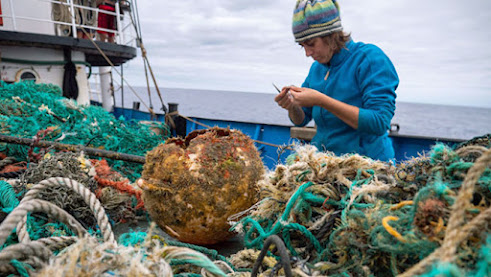
Anika Albrecht of Ocean Voyages Institute collecting plastic.
Photo credit: Ocean Voyages Institute

Coastal plants and animals have found a new way to survive in the open ocean—by colonizing plastic pollution. A commentary published in Nature Communications reported coastal species growing on trash hundreds of miles out to sea in the North Pacific Subtropical Gyre, more commonly known as the “Great Pacific Garbage Patch.”

The authors, including two oceanographers from the University of Hawaiʻi at Mānoa School of Ocean and Earth Science and Technology (SOEST), call these communities neopelagic. “Neo” means new, and “pelagic” refers to the open ocean, as opposed to the coast.

For marine scientists, the very existence of this “new open ocean” community is a paradigm shift. Plastic is providing new habitat in the open ocean. And somehow, coastal rafters are finding food.

Now, scientists have to wrestle with how these coastal rafters could shake up the environment. The open ocean has plenty of its own native species, which also colonize floating debris. The arrival of new coastal neighbors could disrupt ocean ecosystems that have remained undisturbed for millennia. Vast colonies of coastal species floating in the open ocean for years at a time could act as a new reservoir, giving coastal rafters more opportunities to invade new coastlines.

Neuromuscular junction, how’s that function?

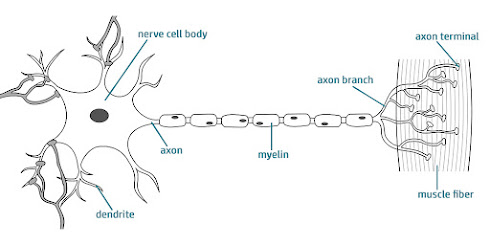
Illustration of a neuromuscular junction. Credit: Wikimedia Commons

The neuromuscular junction—where nerves and muscle fibers meet—is an essential synapse for muscle contraction and movement. Improper function of these junctions can lead to the development of progressive neuromuscular diseases, some of which have no effective treatment (like Lou Gehrig’s disease). Now, NIBIB-funded researchers have found a way to model the human neuromuscular junction by growing these synapses in a lab, which could accelerate novel treatments for neuromuscular diseases.

“Traditionally, studies of the neuromuscular junction rely on small animal models, but the human synapse has key differences, ultimately limiting the utility of animal studies,” said David Rampulla, Ph.D., director of the division of Discovery Science & Technology at NIBIB. “Here, the study authors have developed a method to evaluate the neuromuscular junction using human 3D tissue models, which enables a more accurate representation of human disease.”

The neuromuscular junction is essentially comprised of two different types of cells: skeletal muscle cells and a type of nerve cell called motor neurons. Motor neurons are covered with ion channels, which open in response to electrical signals from the brain. Once these ion channels are open, a series of cascading reactions allows the signal to reach the skeletal muscle cells, which ultimately results in muscle contraction. Therefore, in order to generate a 3D model of the human neuromuscular junction, the researchers had to acquire and grow both these types of cells. They accomplished this by either using a muscle biopsy from a donor, from which muscle cells were isolated and neuron cells were genetically derived, or by using human stem cells which were genetically modified to make both cell types.

Scientists develop a novel strategy for sustainable post-lithium-ion batteries

Scientists astounded by performance of sustainable batteries with far-reaching implications for e-vehicles and devices.

Researchers at Bristol have developed high-performance sodium and potassium ion batteries using sustainably sourced cellulose.

Scientists at the Bristol Composites Institute have developed a novel controllable unidirectional ice-templating strategy which can tailor the electrochemical performances of next-generation post-lithium-ion batteries with sustainability and large-scale availability. The paper is published in the journal Advanced Functional Materials.

There is a rapidly increasing demand for sustainable, ethical and low-cost energy-storage. This is due in part to the drive towards developing battery-powered transport systems – mostly replacing petrol and diesel-based engines with electric vehicles – but also for hand-held devices such as mobile phones. Currently these technologies largely rely on lithium-ion batteries.

Batteries have two electrodes and a separator, with what is called an electrolyte between them which carries the charge. There are several problems associated with using lithium for these batteries, including build-up of the metal inside the devices which can lead to short circuits and overheating.

Alternatives to lithium, such as sodium and potassium batteries have not historically performed as well in terms of their rate performance and the ability to use them lots of times. This inferior performance is due to the larger sizes of sodium and potassium ions, and their ability to move through the porous carbon electrodes in the batteries.

Another issue associated with these batteries is they cannot be easily disposed of at end-of-life, as they use materials that are not sustainable. The cost of the materials is also a factor and there is a need to provide cheaper sources of stored energy.

Wednesday, January 5, 2022

Seeing the plasma edge of fusion experiments in new ways with artificial intelligence

Visualized are two-dimensional pressure fluctuations within a larger three-dimensional magnetically confined fusion plasma simulation. With recent advances in machine-learning techniques, these types of partial observations provide new ways to test reduced turbulence models in both theory and experiment.
Credit: Plasma Science and Fusion Center.

To make fusion energy a viable resource for the world’s energy grid, researchers need to understand the turbulent motion of plasmas: a mix of ions and electrons swirling around in reactor vessels. The plasma particles, following magnetic field lines in toroidal chambers known as tokamaks, must be confined long enough for fusion devices to produce significant gains in net energy, a challenge when the hot edge of the plasma (over 1 million degrees Celsius) is just centimeters away from the much cooler solid walls of the vessel.

Abhilash Mathews, a PhD candidate in the Department of Nuclear Science and Engineering working at MIT’s Plasma Science and Fusion Center (PSFC), believes this plasma edge to be a particularly rich source of unanswered questions. A turbulent boundary, it is central to understanding plasma confinement, fueling, and the potentially damaging heat fluxes that can strike material surfaces — factors that impact fusion reactor designs.

To better understand edge conditions, scientists focus on modeling turbulence at this boundary using numerical simulations that will help predict the plasma's behavior. However, “first principles” simulations of this region are among the most challenging and time-consuming computations in fusion research. Progress could be accelerated if researchers could develop “reduced” computer models that run much faster, but with quantified levels of accuracy.

Urban gardens are a dependable food source for pollinators through the year

A nectar-rich garden in Westbury Park (Bristol).
Credit: Nick Tew
Gardens in cities provide a long and continuous supply of energy-rich nectar from March to October, scientists at the University of Bristol have found.

Despite huge garden-to-garden variation in both the quantity and timing of nectar production, pollinators are guaranteed a reliable food supply if they visit multiple gardens. This contrasts with previous studies on farmland, where pollinators are exposed to boom-and-bust cycles of nectar production with clear seasonal gaps.

This means the actions of many independent gardeners result in the emergent property of a stable and diverse provision of food for city pollinators.

PhD student Nick Tew from the School of Biological Sciences said: “We measured the amount of nectar produced by flowers in 59 residential gardens in Bristol. We found that individual gardens vary in both how much food they provide and when they provide it during the year. However, because flying pollinators like bees can visit many different gardens, they are likely to be able to find food in residential neighborhoods whenever they need it.

“We knew that gardens were important habitats for pollinators, providing 85% of nectar sugar in urban landscapes and a great diversity of flowering plants. However, we did not know how nectar production varied between individual gardens or through the months of the year. It is particularly important to understand garden-to-garden variation to advise how best to collectively manage our gardens for pollinators.”

The variation between gardens was extreme, ranging from 2g to 1.7kg of nectar sugar through the year and this was not determined by the size of the garden but rather by how people chose to manage their gardens.

Superbug MRSA arose in hedgehogs long before clinical use of antibiotics

Scientists have found evidence that a type of the antibiotic resistant superbug MRSA arose in nature long before the use of antibiotics in humans and livestock, which has traditionally been blamed for its emergence.

Staphylococcus aureus first developed resistance to the antibiotic methicillin around 200 years ago, according to a large international collaboration including the University of Cambridge, the Wellcome Sanger Institute, Denmark’s Serum Statens Institut, University of Oxford and the Royal Botanic Gardens, Kew, which has traced the genetic history of the bacteria.

They were investigating the surprising discovery - from hedgehog surveys from Denmark and Sweden - that up to 60% of hedgehogs carry a type of MRSA called mecC-MRSA. The new study also found high levels of MRSA in swabs taken from hedgehogs across their range in Europe and New Zealand.

The researchers believe that antibiotic resistance evolved in Staphylococcus aureus as an adaptation to having to exist side-by-side on the skin of hedgehogs with the fungus Trichophyton erinacei, which produces its own antibiotics.

The resulting methicillin-resistant Staphylococcus aureus is better known as the superbug MRSA. The discovery of this centuries-old antibiotic resistance predates antibiotic overuse in medical and agricultural settings.

'Using sequencing technology we have traced the genes that give mecC-MRSA its antibiotic resistance all the way back to their first appearance, and found they were around in the nineteenth century,' said Dr Ewan Harrison, a researcher at the Wellcome Sanger Institute and University of Cambridge and a senior author of the study.

Researchers Pinpoint Which Bird Species Pose Food Safety Risk to Crops

Concerns over foodborne risk from birds may not be as severe as once thought by produce farmers, according to research from the University of California, Davis, that found low instances of E. coli and Salmonella prevalence.

While the research found that the risk is often low, it varies depending on species. Birds like starlings that flock in large numbers and forage on the ground near cattle are more likely to spread pathogenic bacteria to crops like lettuce, spinach and broccoli, according to the study of food safety risk and bird pathogens. In contrast, insect-eating species were less likely to carry pathogens.

The findings, published in the journal Ecological Applications, suggest that current practice of removing bird habitats around produce growers’ farms over concerns the animals could bring foodborne pathogens into their fields may not solve the problem.

“Farmers are increasingly concerned that birds may be spreading foodborne diseases to their crops,” said Daniel Karp, the senior author on the study and an assistant professor in the UC Davis Department of Wildlife, Fish and Conservation Biology. “Yet not all bird species are equally risky.”

Only one foodborne disease outbreak in produce has been conclusively traced to birds: a Campylobacter outbreak in peas from Alaska. While the bacteria can cause diarrhea and other foodborne illness in humans, it’s less of a concern to growers than E. coli and Salmonella, which have been responsible for multiple outbreaks across the nation.

In this study, researchers compiled more than 11,000 bacteria tests of wild bird feces and found that Campylobacter was detected in 8 percent of samples. But pathogenic E. Coli and Salmonella were only found in very rare cases (less than 0.5%).

First-responder cells after heart attack prompt inflammation overdrive

First-responder cells launching the repair after a heart attack are so frantic about fixing the damage that they promote more inflammation than necessary, new research in mice suggests.

Based on those findings, scientists are pursuing interventions that would bring more balance to the healing process after a heart attack.

In a series of studies, the researchers have identified the cellular events that lead to a call for reinforcements – an extra wave of the first responders – to the site of repair. This process leads to the release of proinflammatory proteins at a point when they aren’t needed, creating conditions that may threaten optimum healing of the heart.

The first-responder cells in question are neutrophils, the most abundant of all white blood cells whose job is to heal wounds and clear away infection. Researchers are exploring potential drugs or genetic techniques that could block the call for neutrophil backups or limit the release of proteins that drive up inflammation.

“We just want to prevent further damage that happens to the heart by toning down the neutrophil response,” said Prabhakara Nagareddy, associate professor of cardiac surgery in The Ohio State University College of Medicine. “The neutrophils are misguided and they overreact. How can we tame them? How can we bring that down?

“We started looking at the role of inflammation in scar formation to see if we could potentially alter that process.”

The most recent study on this work is published in the Jan. 4, 2022, issue of the journal Circulation.

Adding the Right Amount of Sediment to Salt Marshes Keeps Coastlines Afloat

Anna Puchkoff in the field conducting a study on sediment distribution in Connecticut wetlands.
Image Source: University of Connecticut

Adding just the right amount of sediment to the surface of a Connecticut salt marsh protects coastlines by promoting rapid plant growth, scientists from the University of Connecticut report in a new study published recently in Environmental Engineering.

Adding sediment on top of salt marshes helps them stay above sea level as it continues to rise. Anna Puchkoff and Beth Lawrence from UConn’s College of Agriculture, Health and Natural Resources conducted a study on how the addition of sediment could restore salt marshes in Connecticut. For her research, Puchkoff used sediment that was dredged from the Long Island Sound by the nearby Guilford Yacht Club.

“My goal was to also reduce project costs and replicate a real-life restoration scenario where in many cases, you have to work with what you’ve got or what the available resources at hand are,” says Puchkoff, who recently earned a master’s degree from the Department of Natural Resources and the Environment at UConn. “This was a core principle in my research, since using dredged material from marinas is common and disposal is costly.”

New test can identify if a patient has cancer and if it has spread

A University of Oxford study published in Clinical Cancer Research, a journal of the American Association for Cancer Research, outlines a new type of blood test that can be used to detect a range of cancers and whether these cancers have spread (metastasized) in the body.

The study analyzed samples from 300 patients with non-specific but concerning symptoms of cancer, such as fatigue and weight loss, who were recruited through the Oxfordshire Suspected CANcer (SCAN) pathway.

The researchers assessed whether the test could distinguish patients with a range of solid tumors from those without cancer. Their results show that cancer was correctly detected in 19 out of every 20 patients with cancer using this test. In those with cancer, metastatic disease was identified with an overall accuracy of 94%. These results make this the first technology to be able to determine the metastatic status of a cancer from a simple blood test, without prior knowledge of the primary cancer type.

This test shows promise to help clinicians detect cancer and assess cancer stage in the future. Unlike many blood-based tests for cancer, which detect genetic material from tumors, this test uses a technique called NMR metabolomics, which uses high magnetic fields and radio waves to profile levels of natural chemicals (metabolites) in the blood.

Healthy individuals, people with localized cancer, and people with metastatic cancer each have different profiles of blood metabolites, which can be detected and then analyzed by the researchers’ algorithms to distinguish between these states.

Tuesday, January 4, 2022

Mass die-off of Magellanic penguins seen during 2019 heat wave

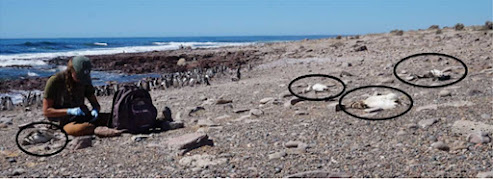
UW doctoral student Katie Holt examining adult Magellanic penguin corpses (circled) at Punta Tombo just after the Jan. 19, 2019 heat wave. Just over one-quarter of adult Magellanic penguin bodies were found between the colony and the ocean, indicating that they likely perished trying to get to the water.
Credit: Anna Sulc/University of Washington

In June 2021, an unprecedented heat wave hit the Pacific Northwest and Canada, killing an estimated 1,400 people. On June 28, Seattle reached 108 F — an all-time high — while the village of Lytton in British Columbia recorded Canada’s highest-ever temperature of 121.3 F on June 29, the day before it was destroyed by a heat-triggered wildfire.

Climate change is expected to bring more such extreme heat events globally, with far-reaching consequences not just for humans, but for wildlife and ecosystems.

In 2019, University of Washington researchers witnessed this in Argentina at one of the world’s largest breeding colonies for Magellanic penguins. On Jan. 19, temperatures at the site in Punta Tombo, on Argentina’s southern coast, spiked to 44 C, or 111.2 F, and that was in the shade. As the team reports in a paper published Jan. 4 in the journal Ornithological Applications, the extreme heat wave killed at least 354 penguins, based on a search for bodies by UW researchers in the days following the record high temperature.

Featured Article

What Is: Quorum Sensing

Scientific Frontline: Extended "At a Glance" Summary : Quorum Sensing The Core Concept : Quorum sensing is a sophisticated, popula...

Top Viewed Articles