. Scientific Frontline

Thursday, January 13, 2022

Your gut senses the difference between real sugar and artificial sweetener

A section of mouse intestines shows in green the relatively scarce neuropod cells in the epithelium that are responsible for communicating conditions inside the gut to the nervous system outside. 
Credit: Borhoquez Lab, Duke

Your taste buds may or may not be able to tell real sugar from a sugar substitute like Splenda, but there are cells in your intestines that can and do distinguish between the two sweet solutions. And they can communicate the difference to your brain in milliseconds.

Not long after the sweet taste receptor was identified in the mouths of mice 20 years ago, scientists attempted to knock those taste buds out. But they were surprised to find that mice could still somehow discern and prefer natural sugar to artificial sweetener, even without a sense of taste.

The answer to this riddle lies much further down in the digestive tract, at the upper end of the gut just after the stomach, according to research led by Diego Bohórquez, an associate professor of medicine and neurobiology in the Duke University School of Medicine.

In a paper appearing Jan. 13 in Nature Neuroscience, “we’ve identified the cells that make us eat sugar, and they are in the gut,” Bohórquez said. Infusing sugar directly into the lower intestine or colon does not have the same effect. The sensing cells are in the upper reaches of the gut, he said.

Better mental health found among transgender people who started hormones as teens

For transgender people, starting gender-affirming hormone treatment in adolescence is linked to better mental health than waiting until adulthood, according to new research led by the Stanford University School of Medicine.

The study, which appeared online Jan. 12 in PLOS ONE, drew on data from the largest-ever survey of U.S. transgender adults, a group of more than 27,000 people who responded in 2015. The new study found that transgender people who began hormone treatment in adolescence had fewer thoughts of suicide, were less likely to experience major mental health disorders and had fewer problems with substance abuse than those who started hormones in adulthood. The study also documented better mental health among those who received hormones at any age than those who desired but never received the treatment.

Gender-affirming hormone treatment with estrogen or testosterone can help bring a transgender person’s physical characteristics in line with their gender identity. In adolescence, hormone therapy can enable a transgender teenager to go through puberty in a way that matches their gender identity.

“This study is particularly relevant now because many state legislatures are introducing bills that would outlaw this kind of care for transgender youth,” said Jack Turban, MD, a postdoctoral scholar in pediatric and adolescent psychiatry at Stanford Medicine. “We are adding to the evidence base that shows why gender-affirming care is beneficial from a mental health perspective.”

Turban is the study’s lead author. The senior author is Alex Keuroghlian, MD, associate professor of psychiatry at Harvard Medical School and director of the National LGBTQIA+ Health Education Center at the Fenway Institute.

New photonic effect could speed drug development

Twisted semiconductor nanostructures convert red light into the twisted blue light in tiny volumes, which may help develop chiral drugs

Twisted nanoscale semiconductors manipulate light in a new way, researchers at the University of Bath and the University of Michigan have shown. The effect could be harnessed to accelerate the discovery and development of life-saving medicines as well as photonic technologies.

Specifically, the photonic effect could help enable rapid development and screening of new antibiotics and other drugs through automation—essentially, robotic chemists. It offers a new analysis tool for high-throughput screening, a method to analyze vast libraries of chemical compounds. A tiny sample of each compound fills a well on a microplate. The wells can be as small as a cubic millimeter, and a plate the size of a chocolate bar can contain a thousand of them.

“To meet the requirements of the emerging robotized chemistry, wells are getting really tiny—too small for current analytical methods,” said Ventsislav Valev, professor of physics at the University of Bath in the U.K. and co-corresponding author of the paper in Nature Photonics. “So, fundamentally new methods are needed to analyze would-be drugs.”

One of the key measurements in drug analysis is chirality, or which way the molecule twists. Biological systems, including the human body, typically prefer one direction over the other, a right-handed or left-handed curl. At best, a drug molecule with the wrong twist does nothing, but at worst, it can cause harm. The effect discovered by the researchers allows chirality to be measured in volumes that are 10,000 times smaller than a cubic millimeter.

Newly-discovered planets will be ‘swallowed’ by their stars

Artist’s rendition of what a planetary system similar to the planets discovered might look like. 
Credit: Karen Teramura/IfA

Astronomers at the University of Hawaiʻi Institute for Astronomy (IfA) are part of a team that recently discovered three planets orbiting dangerously close to stars nearing the ends of their lives.

Out of the thousands of extrasolar planets found so far, these three gas giant planets, first detected by the NASA TESS (Transiting Exoplanet Survey Satellite) Mission, have some of the shortest-period orbits around subgiant or giant stars. One of the planets, TOI-2337b, will be consumed by its host star in less than 1 million years, sooner than any other planet currently known.

These discoveries are crucial to understanding a new frontier in exoplanet studies: how planetary systems evolve over time.
Samuel Grunblatt

“These discoveries are crucial to understanding a new frontier in exoplanet studies: how planetary systems evolve over time,” explained lead author Samuel Grunblatt, a postdoctoral fellow at the American Museum of Natural History and the Flatiron Institute in New York City. Grunblatt, who earned his PhD from the IfA, added that “these observations offer new windows into planets nearing the end of their lives, before their host stars swallow them up.”

Copper-based chemicals may be contributing to ozone depletion

Bourdeaux mix, a fungicide made of copper sulfate and lime,
on grape leaves near Montevibiano in the province of Perugia, Italy.
Wikipedia image licensed under Creative Commons
Copper released into the environment from fungicides, brake pads, antifouling paints on boats and other sources may be contributing significantly to stratospheric ozone depletion, according to a new study from the University of California, Berkeley.

In a paper appearing this week in the journal Nature Communications, UC Berkeley geochemists show that copper in soil and seawater acts as a catalyst to turn organic matter into both methyl bromide and methyl chloride, two potent halocarbon compounds that destroy ozone. Sunlight worsens the situation, producing about 10 times the amount of these methyl halides.

The findings answer, at least in part, a long-standing mystery about the origin of much of the methyl bromide and methyl chloride in the stratosphere. Since the worldwide ban on chlorofluorocarbon (CFC) refrigerants and brominated halons used in fire extinguishers starting in 1989, these methyl halides have become the new dominant sources of ozone-depleting bromine and chlorine in the stratosphere. As the long-lived CFCs and halons slowly disappear from the atmosphere, the role of methyl halides increases.

“If we don’t know where methyl bromide and methyl chloride are coming from, then how can we make sure that those compounds are reduced along with CFCs?” said the paper’s senior author, Robert Rhew, UC Berkeley professor of geography and of environmental science, policy and management. “By 2050, we should be back to relatively normal ozone, but things like the continued emissions of methyl bromide and methyl chloride are road bumps in the road to recovery. Copper usage in the environment is projected to increase rapidly in the next few years, and this should be considered when predicting future halogen load and ozone recovery.”

Dark Energy Spectroscopic Instrument (DESI) Creates Largest 3D Map of the Cosmos

DESI’s three-dimensional “CT scan” of the Universe. The earth is in the lower left, looking out over 5 billion light years in the direction of the constellation Virgo. As the video progresses, the perspective sweeps toward the constellation Bootes. Each colored point represents a galaxy, which in turn is composed of hundreds of billions of stars. Gravity has pulled the galaxies into a “cosmic web” of dense clusters, filaments and voids.
Credit: D. Schlegel/Berkeley Lab using data from DESI

The Dark Energy Spectroscopic Instrument (DESI) has capped off the first seven months of its survey run by smashing through all previous records for three-dimensional galaxy surveys, creating the largest and most detailed map of the universe ever. Yet it’s only about 10% of the way through its five-year mission. Once completed, that phenomenally detailed 3D map will yield a better understanding of dark energy, and thereby give physicists and astronomers a better understanding of the past – and future – of the universe. Meanwhile, the impressive technical performance and literally cosmic achievements of the survey thus far are helping scientists reveal the secrets of the most powerful sources of light in the universe.

DESI is an international science collaboration managed by the Department of Energy’s Lawrence Berkeley National Laboratory (Berkeley Lab) with primary funding for construction and operations from DOE’s Office of Science.

Study Challenges Evolutionary Theory That DNA Mutations Are Random

Studying the genome of thale cress, a small flowering weed, led to a new understanding about DNA mutations.
Credit: Pádraic Flood

A simple roadside weed may hold the key to understanding and predicting DNA mutation, according to new research from University of California, Davis, and the Max Planck Institute for Developmental Biology in Germany.

The findings, published in the journal Nature, radically change our understanding of evolution and could one day help researchers breed better crops or even help humans fight cancer.

Mutations occur when DNA is damaged and left unrepaired, creating a new variation. The scientists wanted to know if mutation was purely random or something deeper. What they found was unexpected.

“We always thought of mutation as basically random across the genome,” said Grey Monroe, an assistant professor in the UC Davis Department of Plant Sciences who is lead author on the paper. “It turns out that mutation is very non-random and it’s non-random in a way that benefits the plant. It’s a totally new way of thinking about mutation.”

Researchers spent three years sequencing the DNA of hundreds of Arabidopsis thaliana, or thale cress, a small, flowering weed considered the “lab rat among plants” because of its relatively small genome comprising around 120 million base pairs. Humans, by comparison, have roughly 3 billion base pairs.

“It’s a model organism for genetics,” Monroe said.

Researchers Discover Destructive Southern Pine Beetle in Northern Forests

Close up image of one of the southern pine beetles found in Maine and New Hampshire by researchers at the University of New Hampshire.
Photo Credit: Caroline Kanaskie / UNH Collections

Researchers at the University of New Hampshire have discovered the southern pine beetle, one of the most damaging tree-dwelling insects in the Southeast, in forests in Maine and New Hampshire. The southern pine beetle has never been seen this far north and has forestry experts concerned, specifically about the pitch pine barren trees found throughout New England.

“Warmer winter temperatures make it easier for beetles to survive further north,” said Jeff Garnas, associate professor of forest ecosystem health, whose research team made the discovery. “While not exactly surprising, this finding is a stark reminder of how species, including those of significant ecological and economic importance, are already responding to the changing climate.”

Microplastic pollution lingers in rivers for years before entering oceans

Study sampling site on the Severn River, downstream from Birmingham, England.

Microplastics can deposit and linger within riverbeds for as long as seven years before washing into the ocean, a new study has found.

Because rivers are in near-constant motion, researchers previously assumed lightweight microplastics quickly flowed through rivers, rarely interacting with riverbed sediments.

Now, researchers led by Northwestern University and the University of Birmingham in England, have found hyporheic exchange — a process in which surface water mixes with water in the riverbed — can trap lightweight microplastics that otherwise might be expected to float.

The study was published in the journal Science Advances. It marks the first assessment of microplastic accumulation and residence times within freshwater systems, from sources of plastic pollution throughout the entire water stream. The new model describes dynamical processes that influence particles, including hyporheic exchange, and focuses on hard-to-measure but abundant microplastics at 100 micrometers in size and smaller.

“Most of what we know about plastics pollution is from the oceans because it’s very visible there,” said Northwestern’s Aaron Packman, one of the study’s senior authors. “Now, we know that small plastic particles, fragments and fibers can be found nearly everywhere. However, we still don’t know what happens to the particles discharged from cities and wastewater. Most of the work thus far has been to document where plastic particles can be found and how much is reaching the ocean.

Study shows COVID-19 vaccines offer lasting protection

Photo by Brandon Bieltz/UNC-Chapel Hill
Vaccination offers long-lasting protection from the worst outcomes of COVID-19, according to a new study by the University of North Carolina at Chapel Hill.

The emergence of the delta and omicron variants has raised questions about whether breakthrough infections are caused by waning immunity or by the more transmissible variants.

Results of the study published in the New England Journal of Medicine suggest that declining immunity is responsible for breakthrough infections, but vaccines maintained protection from hospitalization and severe disease nine months after getting the first shot.

“The primary takeaway message from our study is that unvaccinated people should get vaccinated right away,” said lead study author Danyu Lin, Dennis Gillings Distinguished Professor of Biostatistics at the UNC Gillings School of Global Public Health. “The results of our study also underscore the importance of booster shots, especially for older adults.”

The study, which is a collaboration between the UNC-Chapel Hill and the North Carolina Department of Health and Human Services, examined data on COVID-19 vaccination history and health outcomes for 10.6 million North Carolina residents between December 2020 and September 2021.

The study results were used by the Centers for Disease Control and Prevention to support the use of booster shots.

‘Slushy’ magma ocean led to formation of the Moon’s crust

Magma ocean and first rocky crust on the Moon 
Credit: NASA/Goddard Space Flight Center
The scientists, from the University of Cambridge and the Ecole normale supérieure de Lyon, have proposed a new model of crystallization, where crystals remained suspended in liquid magma over hundreds of millions of years as the lunar ‘slush’ froze and solidified. The results are reported in the journal Geophysical Research Letters.

Over fifty years ago, Apollo 11 astronauts collected samples from the lunar Highlands. These large, pale regions of the Moon – visible to the naked eye – are made up of relatively light rocks called anorthosites. Anorthosites formed early in the history of the Moon, between 4.3 and 4.5 billion years ago.

Similar anorthosites, formed through the crystallization of magma, can be found in fossilized magma chambers on Earth. Producing the large volumes of anorthosite found on the Moon, however, would have required a huge global magma ocean.

"Cooling of the early magma ocean drove such vigorous convection that crystals remained suspended as a slurry, like the crystals in a slushy machine." 
Jerome Neufeld

Scientists believe that the Moon formed when two protoplanets, or embryonic worlds, collided. The larger of these two protoplanets became the Earth, and the smaller became the Moon. One of the outcomes of this collision was that the Moon was very hot – so hot that its entire mantle was molten magma, or a magma ocean.

Tuesday, January 11, 2022

Taking on decarbonization in the ag sector

Biofuels, such as those derived from the switchgrass being harvested in this field in Vonore, Tennessee, are just one of the technology-based solutions that ORNL summit participants identified recently as key to decarbonizing the agriculture sector.
Credit: Erin G. Webb, ORNL/U.S. Dept. of Energy.

Energy and sustainability experts from Oak Ridge National Laboratory, industry, universities and the federal government recently identified key focus areas to meet the challenge of successfully decarbonizing the agriculture sector, as well as scientific resources that the U.S. Department of Energy’s national laboratories can bring to the table.

The challenge is significant. Agriculture is responsible for emitting 10% of the nation’s greenhouse gases, some 629 million metric tons of carbon dioxide-equivalent emissions per year, according to the U.S. Environmental Protection Agency. Key sources for those emissions are agricultural soil and livestock waste management, crop cultivation and fuel combustion largely related to farm equipment.

The ORNL Virtual Summit on Decarbonizing the Agriculture Sector featured three topic areas in breakout sessions in which the challenges and potential technology- and practice-based solutions were discussed. These solutions included soil health, nitrogen production and fixation, and agricultural equipment and operations.

Sustainable Manufacturing

Illustration by Jeffrey C. Chase
Reducing the world’s reliance on petroleum and natural gas is a worthy goal, one that could help us achieve a smaller carbon footprint. It will, however, mean rethinking how we create many of the products in our everyday lives.

Chemical manufacturing, the practice of taking raw materials and turning them into products using chemical processes, is an $800 billion industry that supports over 6 million jobs in the United States each year. It contributes to the production of everything from food, buildings and clothing to items found in industries such as health care, electronics and transportation.

Traditional chemical manufacturing relies on non-renewable fossil energy sources for power and raw materials. A more sustainable option gaining steam is the use of electrolyzers, devices that instead use electricity to convert raw materials like carbon dioxide (CO2) into useful molecules for chemicals and products.

One hurdle that keeps promising CO2 electrolyzer technologies in academic laboratories rather than being scaled for industrial use — where they could make a dent in our carbon dioxide emission problem — is that the critical materials needed for the job, including membranes and catalysts, aren’t yet durable or efficient enough to operate over long periods of time.

University of Delaware engineers Feng Jiao, Yushan Yan and Koffi Pierre Yao and colleagues at Louisiana State University (LSU) are collaborating to overcome these challenges.

The work is funded through a $4 million grant from the National Science Foundation’s Established Program to Stimulate Competitive Research (NSF EPSCoR) program. A total $1.9 million of the funding was awarded directly to UD.

Common household cleaner can boost effort to harvest fusion energy on Earth

PPPL physicist Federico Nespoli at the Large Helical Device in Japan.
Photo courtesy of the Japanese National Institute of Fusion Science. Collage by Kiran Sudarsanan.

Scientists have found that adding a common household cleaning agent – the mineral boron contained in such cleaners as Borax – can vastly improve the ability of some fusion energy devices to contain the heat required to produce fusion reactions on Earth the way the sun and stars do.

Physicists at the U.S. Department of Energy’s (DOE) Princeton Plasma Physics Laboratory (PPPL) working with Japanese researchers, made the observation on the Large Helical Device (LHD) in Japan, a twisty magnetic facility that the Japanese call a “heliotron.” The results demonstrated for the first time a novel regime for confining heat in facilities known as stellarators, similar to the heliotron. The findings could advance the twisty design as a blueprint for future fusion power plants.

Higher confinement

Researchers produced the higher confinement regime by injecting tiny grains of boron powder into the LHD plasma that fuels fusion reactions. The injection through a PPPL-installed dropper sharply reduced turbulent swirls and eddies and raised the confined heat that produces the reactions.

“We could see this effect very clearly,” said PPPL physicist Federico Nespoli, lead author of a paper that detailed the process in the journal Nature Physics. “The more power we put into the plasma the bigger the increase in heat and confinement, which would be ideal in real reactor conditions.”

Researchers discover a new approach to breaking bacterial antibiotic resistance and rescue frontline drug treatments

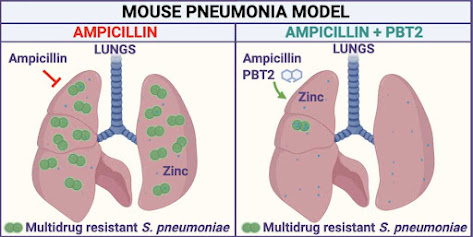
Researchers may have uncovered a key to making existing frontline antibiotics work again, against the deadly bacteria that cause pneumonia.

The international team from the Peter Doherty Institute for Infection and Immunity (Doherty Institute – a joint venture between the University of Melbourne and the Royal Melbourne Hospital), the University of Queensland, Griffith University, the University of Adelaide, and St Jude Children’s Research Hospital (USA), found how to repurpose a molecule called PBT2 - originally developed as a potential treatment for disorders such as Alzheimer's, Parkinson’s and Huntington’s diseases – to break bacterial resistance to commonly used frontline antibiotics.

Led by University of Melbourne Professor Christopher McDevitt, a laboratory head at the Doherty Institute, this discovery may see the comeback of readily available and cheap antibiotics, such as penicillin and ampicillin, as effective weapons in the fight against the rapidly rising threat of antibiotic resistance.

In a paper published today in Cell Reports, Professor McDevitt and his collaborators described how they discovered a way to break bacterial drug resistance and then developed a therapeutic approach to rescue the use of the antibiotic ampicillin to treat drug-resistant bacterial pneumonia caused by Streptococcus pneumoniae in a mouse model of infection.

Last year the World Health Organization (WHO) described antibiotic resistance as one of the greatest threats to global health, food security, and development. Rising numbers of bacterial infections – such as pneumonia, tuberculosis, gonorrhoea, and salmonellosis – are becoming harder to treat as the antibiotics used against them are becoming less effective.

Featured Article

What Is: Psychopathy | Part three of the "Dark Tetrad"

Scientific Frontline: Extended "At a Glance" Summary : Psychopathy The Core Concept : Psychopathy is a profound personality disord...

Top Viewed Articles