. Scientific Frontline

Sunday, January 23, 2022

Researchers will use the world’s most accurate radiation detector in quantum computers

Physicists at Aalto University and VTT have developed a new detector for measuring energy quanta at unprecedented resolution.
Photo: Aalto University.

A radiation detector developed by Aalto University and VTT Technical Research Centre of Finland can also be used in ultralow-temperature freezers and terahertz cameras.

In September 2020, researchers at Aalto University and VTT revealed that they had developed a high-speed nano-scale radiation detector—a bolometer—fast enough to read the qubits in a quantum computer.

Now, Professor Mikko Möttönen’s team and their partners have acquired funding to refine the bolometer technology for use not only in quantum computers but also in ultralow-temperature (ULT) freezers and terahertz cameras. The funding is from the Future Makers Funding Program by Technology Industries Finland Centennial Foundation and by Jane and Aatos Erkko Foundation. This would be the first time ever that this bolometer is utilized for practical applications.

Möttönen explains that building a nano-scale bolometer was already a significant feat. ‘We wanted to develop the world’s best radiation detector. It took seven years for us to get it to function, and for three years we have been improving it,’ he says.

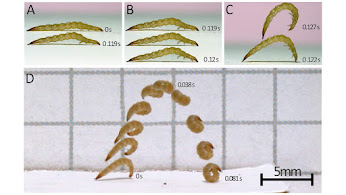
Scientists Find Previously Unknown Jumping Behavior in Insects

Images courtesy of Matt Bertone and Adrian Smith.
A team of researchers has discovered a jumping behavior that is entirely new to insect larvae, and there is evidence that it is occurring in a range of species – we just haven’t noticed it before.

The previously unrecorded behavior occurs in the larvae of a species of lined flat bark beetle (Laemophloeus biguttatus). Specifically, the larvae are able to spring into the air, with each larva curling itself into a loop as it leaps forward. What makes these leaps unique is how the larvae are able to pull it off.

“Jumping at all is exceedingly rare in the larvae of beetle species, and the mechanism they use to execute their leaps is – as far as we can tell – previously unrecorded in any insect larvae,” says Matt Bertone, corresponding author of a paper on the discovery and director of North Carolina State University’s Plant Disease and Insect Clinic.

While there are other insect species that are capable of making prodigious leaps, they rely on something called a “latch-mediated spring actuation mechanism.” This means that they essentially have two parts of their body latch onto each other while the insect exerts force, building up a significant amount of energy. The insect then unlatches the two parts, releasing all of that energy at once, allowing it to spring off the ground.

Saturday, January 22, 2022

Native Fish Population Predicted to Rise After Major Expansion of Texas Port

Red drum fish
Image Source: University of Texas at Austin
Researchers have predicted that expanding the Aransas Pass — the marine pass between Mustang Island and Saint Joseph Island, offshore from the town of Aransas Pass, Texas — would increase the native red drum fish population.

From late summer through autumn, native red drum fish spawn off the Texas coast, where the current carries their larvae through the Aransas Pass into the safety of the bay. The fast-growing red drum can be found in shallow coastal waters (1-4 feet deep) along the edges of bays from Massachusetts to Mexico, where it is a popular sportfish important to many coastal economies, including the Texas Gulf Coast.

The Port of Corpus Christi intends to deepen the Aransas Pass to supply some of the biggest crude-carrying ships in the world. In response, UT Austin’s Oden Institute for Computational Engineering and Sciences collaborated with the university’s Marine Science Institute to predict what effect deepening the pass could have on the copper scaled fish for which Redfish Bay was named.

Opponents to deepening the Aransas Pass fear an end to the prolific fishing and bird life that draws tourists to the area. The Marine Science Institute, which funded the research, chose red drum fish as the study’s focus because they have been researched by biologists extensively, and their spawning patterns and locations are well known. The new research, published in the Journal of Marine Science and Engineering, predicts that deepening the Aransas Pass would boost the number of red drum fish larvae that reach their nursery grounds by 0.5% based on the selected model parameters.

The Oden Institute’s Computational Hydraulics Group modeled the transport of red drum fish larvae through the Aransas Pass by plugging tides and meteorological conditions into a coastal circulation model, where red drum larvae ebb and flow as Lagrangian particles due to the circulation.

Device wraps around hot surfaces, turns wasted heat to electricity

A new flexible thermoelectric device can wrap around pipes and other hot surfaces and convert wasted heat into electricity. 
Credit: Pennsylvania State University

The energy systems that power our lives also produce wasted heat — like heat that radiates off hot water pipes in buildings and exhaust pipes on vehicles. A new flexible thermoelectric generator can wrap around pipes and other hot surfaces and convert wasted heat into electricity more efficiently than previously possible, according to scientists at Penn State and the National Renewable Energy Laboratory.

“A large amount of heat from the energy we consume is essentially being thrown away, often dispersed right into the atmosphere,” said Shashank Priya, associate vice president for research and professor of materials science and engineering at Penn State. “We haven’t had cost-effective ways with conformal shapes to trap and convert that heat to useable energy. This research opens that door.”

Penn State researchers have been working to improve the performance of thermoelectric generators — devices that can convert differences in temperature to electricity. When the devices are placed near a heat source, electrons moving from the hot side to the cold side produce an electric current, the scientists said.

In prior work, the team created rigid devices that were more efficient than commercial units in high-temperature applications. Now the team has developed a new manufacturing process to produce flexible devices that offer higher power output and efficiency, the scientists said.

Brain Activity Helps Explain Response to Alcohol

People who need to drink relatively high amounts of alcohol before feeling its effects, a genetically influenced risk factor for future heavy drinking and alcohol problems, may have differences in brain connectivity that impair their ability to interpret facial expressions and recognize their own intoxication, a new study suggests. The paper, in Alcoholism: Clinical & Experimental Research, is believed to be the first to demonstrate differences in brain connectivity between people with low and high responses to alcohol. Varying levels of responses to alcohol — for example, how many drinks a person consumes before feeling intoxicated — are known to be related to neurobiological processing. Low responders, who drink more alcohol before feeling affected by it, are at greater risk of alcohol use disorder (AUD) than high responders, who feel the effects of fewer drinks. 

Scientists using functional magnetic resonance imaging (fMRI) are exploring the possibility that low responders are less able to recognize certain modest sensory inputs because of atypical brain connectivity. Previous studies found that low responders are likely to require greater effort than high responders to identify facial emotions, a task that is key to social and emotional functioning. For the new study, researchers at the University of California San Diego showed pictures of happy, angry, and fearful faces to study participants undergoing brain scans. They examined connectivity between the amygdala, a structure involved in processing emotions and reward, and other brain regions, and whether differences between low and high responders were associated with problematic drinking later.

The study involved 108 college students aged 18–25. The students had taken an alcohol challenge and been identified as having either a low or high response to alcohol; none had developed an AUD before testing. They were organized into 54 pairs of low and high responders matched by sex, demographics, and substance use. Each participant underwent two fMRI sessions during which they observed pictures of faces, one after consuming alcohol, the other after a placebo beverage. The investigators measured the students’ accuracy at identifying facial expressions, compared amygdala activity, and used statistical analysis to look for associations between alcohol responses and problematic drinking five years later.

Friday, January 21, 2022

Surveys reveal new insights on masks, at-home test kits and misinformation

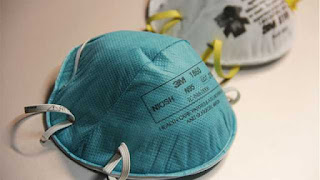
As the Biden administration moves to contain the latest ravaging wave of COVID-19 by providing Americans with 1 billion COVID-19 self-test kits and 400 million N95 masks for free, new survey data reveal how many are wearing masks, including which types, and how at-home COVID tests are likely leading to undercounts of those contracting the virus.

These data could shed light on how Americans might — or might not — use these forthcoming masks and tests in the fight to stop COVID-19. They also underscore how doctors and nurses see the misinformation spread via social media as the No. 1 source undermining decisions to get vaccines.

The national polls were conducted by the COVID States Project, a consortium of university researchers from Northwestern, Northeastern, Harvard and Rutgers universities.

James Druckman is the Payson S. Wild Professor of Political Science and associate director and fellow of Northwestern’s Institute for Policy Research, and one of the project researchers.

Druckman breaks down the top finding from each report.

Most see N95 masks as more protective, but only one in five wears one

Data collected between Dec. 22, 2021, and Jan. 10, 2022, from a total of more than 17,000 Americans on mask use finds that two-thirds (66%) have correctly understood that N95 masks provide more protection than cloth masks, yet only one in five reports wearing one.

Tug of sun, moon could be driving plate motions on ‘imbalanced’ Earth

A study led by geophysicist Anne M. Hofmeister in Arts & Sciences at Washington University in St. Louis proposes that imbalanced forces and torques in the Earth-moon-sun system drive circulation of the whole mantle.

The new analysis provides an alternative to the hypothesis that the movement of tectonic plates is related to convection currents in the Earth’s mantle. Convection involves buoyant rise of heated fluids, which Hofmeister and her colleagues argue does not apply to solid rocks. They argue that force, not heat, moves large objects. The new research is published in a special paper of the Geological Society of America, as part of a forthcoming collection assembled in honor of geologist Warren B. Hamilton.

Earth’s internal workings are popularly modeled as dissipating heat generated by internal radioactivity and from leftover energy created during collisions when our planet formed. But even mantle convection proponents recognize that that amount of internal heat-energy is insufficient to drive large-scale tectonics. And there are other problems with using convection to explain observed plate motions.

Instead, Earth’s plates might be shifting because the sun exerts such a strong gravitational pull on the moon that it has caused the moon’s orbit around Earth to become elongated.

Mange Outbreak Decimated a Wild Vicuña Population in Argentina

A family of vicuñas prepares to rest for the night in Argentina's San Guillermo National Park before the 2014 mange outbreak that wiped out the local population.
Credit: Hebe del Valle Ferreyra

Mange has decimated the population of wild vicuñas and guanacos in an Argentinian national park that was created to conserve them, according to a study from the Administration of National Parks in Argentina and the University of California, Davis.

The findings, published today in the journal PLOS ONE, suggest domestic llamas introduced to the site may have been the source of the outbreak. Cascading consequences for local predator and scavenger species are expected.

A lone vicuña stands amid the grasslands in Argentina’s
San Guillermo National Park following a mange epidemic.
Credit: Hebe del Valle Ferreyra
Vicuñas and guanacos are species of wild camelids native to Argentina, Chile, Bolivia, Ecuador and Peru, where the vicuña is the national animal.

The study investigated the impacts and origins of the outbreak, which began in 2014 in San Guillermo National Park.

Between 2013 and the onset of the study in 2017, populations of guanaco and vicuña were down 95% and 98%, respectively. Nearly three-quarters more were lost between 2017-18 alone. By 2019, researchers could no longer find either animal during the study surveys.

“This part of Argentina used to be the Serengeti of the wild camelids,” said corresponding author Marcela Uhart, who directs the Karen C. Drayer Wildlife Health Center’s Latin America Program, within the UC Davis School of Veterinary Medicine and its One Health Institute. “Now you go and it’s empty, and whoever is there is mangy. This disease is not novel. We know mange. It’s a common mite. But significant outbreaks are happening in several wildlife species around the world.”

Consistent asteroid showers rock previous thinking on Mars craters

New Curtin University research has confirmed the frequency of asteroid collisions that formed impact craters on Mars has been consistent over the past 600 million years.

The study, published in Earth and Planetary Science Letters, analyzed the formation of more than 500 large Martian craters using a crater detection algorithm previously developed at Curtin, which automatically counts the visible impact craters from a high-resolution image.

Despite previous studies suggesting spikes in the frequency of asteroid collisions, lead researcher Dr Anthony Lagain, from Curtin’s School of Earth and Planetary Sciences, said his research had found they did not vary much at all for many millions of years.

Dr Lagain said counting impact craters on a planetary surface was the only way to accurately date geological events, such as canyons, rivers and volcanoes, and to predict when, and how big, future collisions would be.

“On Earth, the erosion of plate tectonics erases the history of our planet. Studying planetary bodies of our Solar System that still conserve their early geological history, such as Mars, helps us to understand the evolution of our planet,” Dr Lagain said.

“The crater detection algorithm provides us with a thorough understanding of the formation of impact craters including their size and quantity, and the timing and frequency of the asteroid collisions that made them.”

Fat’s unexpected role in muscle stem cell fate

Satellite cells differentiate into muscle cells or self-renew depending on the level of lipid droplets in the cell. Shihuan Kuang, a Purdue University professor of animal sciences, showed for the first time that fat inside adult muscle stem cells regulates their fate.
Purdue University image/courtesy of Shihuan Kuang

Scientists have shown for the first time that fat inside adult muscle stem cells regulates their fate.

“No one had seen such dynamics of lipid droplets in these muscle stem cells, so this discovery is very exciting,” said Shihuan Kuang, a professor of animal sciences at Purdue University, who led the team of scientists. “To then find that they play such a strong role in the fate of the stem cells is remarkable. It has potential implications for muscular diseases, aging and animal sciences.”

Cells contain various kinds of fat, or lipids, that are essential for energy production, cell membrane composition and chemical signaling. Special structures, called lipid droplets, safely store this cellular fat.

Rather than existing as a static pool of resources, researchers discovered the number of these droplets changes significantly in an individual cell and varies from cell to cell. The number of the droplets also regulates what the stem cells become.

The discovery, coupled with newly identified roles of lipids in other stem cell types – including cancer stem cells - suggest fat may be involved in much more than previously thought, Kuang said. The findings are detailed in a paper in the journal Cell Reports.

Scientists make first detection of exotic “X” particles in quark-gluon plasma


In the first millionths of a second after the Big Bang, the universe was a roiling, trillion-degree plasma of quarks and gluons — elementary particles that briefly glommed together in countless combinations before cooling and settling into more stable configurations to make the neutrons and protons of ordinary matter.

In the chaos before cooling, a fraction of these quarks and gluons collided randomly to form short-lived “X” particles, so named for their mysterious, unknown structures. Today, X particles are extremely rare, though physicists have theorized that they may be created in particle accelerators through quark coalescence, where high-energy collisions can generate similar flashes of quark-gluon plasma.

Now physicists at MIT’s Laboratory for Nuclear Science and elsewhere have found evidence of X particles in the quark-gluon plasma produced in the Large Hadron Collider (LHC) at CERN, the European Organization for Nuclear Research, based near Geneva, Switzerland.

The team used machine-learning techniques to sift through more than 13 billion heavy ion collisions, each of which produced tens of thousands of charged particles. Amid this ultradense, high-energy particle soup, the researchers were able to tease out about 100 X particles, of a type known as X (3872), named for the particle’s estimated mass.

Omicron causes less severe illness in animal models than previous variants

A new study confirms that, compared to earlier versions of the SARS-CoV-2 virus, the omicron variant causes less severe disease in mice and hamsters, which are reliable models for understanding COVID-19.

Yoshihiro Kawaoka
The findings, previously available as a preprint and published following peer review today (Jan. 21) in the journal Nature, align with preliminary data from studies of people infected with the variant and offer insight into the nature of the disease with omicron. The variant emerged in late November 2021 and was first identified by scientists in Botswana and South Africa.

Led by Yoshihiro Kawaoka at the University of Wisconsin–Madison, along with Michael Diamond and Adrianus (Jacco) Boon at the Washington University School of Medicine in St. Louis, the collaborative effort was the work of the SARS-CoV-2 Assessment of Viral Evolution (SAVE) program of the National Institute of Allergy and Infectious Diseases.

“SAVE meets four times per week,” Kawaoka explains, and includes teams analyzing sequences from viruses isolated across the world and screening for new variants; teams studying the biology of new variants in animal models; and teams working to isolate viruses for study, examining viral replication and testing how well previous infection or vaccination provides protection against emerging variants. Researchers who typically compete for publications and funding have come together in light of the COVID-19 crisis.

Peter Halfmann
Peter Halfmann, a research associate professor at UW–Madison, was among the first in the world to isolate the omicron variant from human samples for study. The samples came from infected patients in Wisconsin, New York, Georgia and Tokyo, and each contained slight sequence differences.

Once the viruses were isolated from the samples, scientists throughout the SAVE network began to test them in mice and hamsters. Animal studies are an important step in understanding new variants and how well they respond to existing countermeasures, such as vaccines and therapies.

The spike protein of omicron contains more than 30 mutations — a striking number relative to earlier variants. Because current vaccines and antibody treatments are based on these earlier versions, researchers were concerned that vaccines and therapies would be rendered less effective.

Computer models and studies that looked at the binding capacity of the virus to ACE2 receptors, which grant the virus entry into cells, also suggested that omicron would better attach to cells.


The Value of Wind Energy

Video by Graham Bourque | Pacific Northwest National Laboratory

Two teams of researchers from Pacific Northwest National Laboratory (PNNL) have shown that wind energy offers logistical, economic, and environmental value to consumers and utilities from the coast of Oregon to remote villages in Alaska.

In the first study of the grid impacts of offshore wind energy in Oregon, a PNNL team paired offshore wind resource potential from the Oregon coastline with other variable renewable energy sources, including land-based wind and solar. The study helped the team understand how offshore wind could serve electricity demand within Oregon’s transmission network and across the Pacific Northwest.

In the second study, a PNNL team analyzed the value of distributed wind—wind turbines installed near where their energy is consumed, such as for homes, businesses, and communities—for the small, remote community of St. Mary’s, Alaska. The study’s results could help inform utilities of the economic feasibility for installing wind in similar isolated microgrid systems in other remote villages. Additionally, the study revealed potential economic and environmental benefits for the village’s electricity consumers.

Both studies, which were published in the journal Energies, illustrate PNNL’s growing expertise in assessing the value that renewable energy brings for bolstering the grid.

Research team sets new efficiency record for solar cell technology

Asst Prof Hou Yi (right), Dr Chen Wei (left) and their team have developed perovskite/organic tandem solar cells (held by Dr Chen) that achieved a power conversion efficiency of 23.6%.
Source: National University of Singapore.

A team of researchers from the National University of Singapore (NUS) has set a new record in the power conversion efficiency of solar cells made using perovskite and organic materials. This technological breakthrough paves the way for flexible, light-weight, low cost and ultra-thin photovoltaic cells which are ideal for powering vehicles, boats, blinds and other applications.

“Technologies for clean and renewable energy are extremely important for carbon reduction. Solar cells that directly convert solar energy into electricity are among the most promising clean energy technologies. High power conversion efficiency of solar cells is critical for generating more electrical power using a limited area and this, in turn, reduces the total cost of generating solar energy,” explained lead researcher Presidential Young Professor Hou Yi, who is from the NUS Department of Chemical and Biomolecular Engineering and also leading a “Perovskite-based Multi-junction Solar Cells group” at the Solar Energy Research Institute of Singapore at NUS.

“The main motivation of this study is to improve the power conversion efficiency of perovskite/organic tandem solar cells. In our latest work, we have demonstrated a power conversion efficiency of 23.6% - this is the best performance for this type of solar cells to date,” added Dr Chen Wei, Research Fellow at the NUS Department of Chemical and Biomolecular Engineering and the first author of this work.

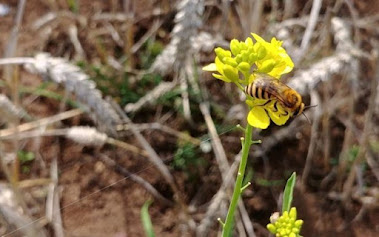
Air pollution significantly reduces pollination by confusing butterflies and bees

Credit: James Ryalls
Common air pollutants from both urban and rural environments may be reducing the pollinating abilities of insects by preventing them from sniffing out the crops and wildflowers that depend on them, new research has shown.

Scientists from the University of Reading, the University of Birmingham and the UK Centre for Ecology & Hydrology found that there were up to 70% fewer pollinators, up to 90% fewer flower visits and an overall pollination reduction of up to 31% in test plants when common ground-level air pollutants, including diesel exhaust pollutants and ozone, were present.

The study, published in the journal Environmental Pollution, is the first to observe a negative impact of common air pollutants on pollination in the natural environment. The theory is that the pollutants react with and change the scents of flowers, making them harder to find.

Dr Robbie Girling, Associate Professor in Agroecology at the University of Reading, who led the project, said: “We knew from our previous lab studies that diesel exhaust can have negative effects on insect pollinators, but the impacts we found in the field were much more dramatic than we had expected.”

Dr James Ryalls, a Leverhulme Trust Research Fellow at the University of Reading, who conducted the study, said: “The findings are worrying because these pollutants are commonly found in the air many of us breathe every day. We know that these pollutants are bad for our health, and the significant reductions we saw in pollinator numbers and activity shows that there are also clear implications for the natural ecosystems we depend on.”

Dr Christian Pfrang, Reader in Atmospheric Science at the University of Birmingham and a co-author on the study, said: “This truly cross-disciplinary work demonstrated very clearly how atmospheric pollutants negatively impact on pollination with direct consequences for food production as well as the resilience of our natural environment.”

Featured Article

What Is: Quorum Sensing

Scientific Frontline: Extended "At a Glance" Summary : Quorum Sensing The Core Concept : Quorum sensing is a sophisticated, popula...

Top Viewed Articles