. Scientific Frontline

Tuesday, February 8, 2022

Study in mice shows potential for gene-editing to tackle mitochondrial disorders

Mitochondria - 3D illustration 
Credit: wir0man/Getty Images
Our cells contain mitochondria, which provide the energy for our cells to function. Each of these mitochondria contains a tiny amount of mitochondrial DNA. Mitochondrial DNA makes up only 0.1% of the overall human genome and is passed down exclusively from mother to child.

Faults in our mitochondrial DNA can affect how well the mitochondria operate, leading to mitochondrial diseases, serious and often fatal conditions that affect around 1 in 5,000 people. The diseases are incurable and largely untreatable.

There are typically around 1,000 copies of mitochondrial DNA in each cell, and the percentage of these that are damaged, or mutated, will determine whether a person will suffer from mitochondrial disease or not. Usually, more than 60% of the mitochondria in a cell need to be faulty for the disease to emerge, and the more defective mitochondria a person has, the more severe their disease will be. If the percentage of defective DNA could be reduced, the disease could potentially be treated.

A cell that contains a mixture of healthy and faulty mitochondrial DNA is described as ‘heteroplasmic’. If a cell contains no healthy mitochondrial DNA, it is ‘homoplasmic’.

In 2018, a team from the MRC Mitochondrial Biology Unit at the University of Cambridge applied an experimental gene therapy treatment in mice and were able to successfully target and eliminate the damaged mitochondrial DNA in heteroplasmic cells, allowing mitochondria with healthy DNA to take their place.

Sunday, February 6, 2022

Study finds large new source of greenhouse gas emissions

An international team has discovered hundreds of large bursts of methane from oil and gas production activities across the globe. The bursts account for 10% of global oil and gas methane emissions and are missing from most greenhouse gas emissions inventories.

Carbon Mapper, a nonprofit organization that partners with the University of Arizona to mitigate methane and carbon emissions and accelerate climate conservation, contributed to the study, which is published in the journal Science.

The team performed a systematic analysis of thousands of images produced daily by the European Space Agency satellite mission Sentinel-5P to estimate the amount of methane released into the atmosphere by oil and gas production activities.

Over a two-year period, they detected 1,200 "ultra-emitters" attributed to oil and gas facilities and long major transmission pipelines that sporadically release greater than 25 tons of methane per hour over most of the largest oil and gas basins worldwide.

Together, these facilities represent more than 50% of the total onshore natural gas production. Most of these ultra-emitters were short-lived, and many are likely due to planned maintenance activities.

The study revealed that in total, these unreported ultra-emitters contribute to approximately 10% of all methane emissions from the oil and gas sector across the six major oil and gas producing countries – an incredibly large contribution for such a limited number of events.

New highly virulent and damaging HIV variant discovered in the Netherlands

A new HIV variant with higher virulence and more damaging health impacts has been discovered in a study led by the University of Oxford.

As the ongoing coronavirus pandemic has demonstrated, new mutations in viral genetic sequences can have significant impacts on the virus’s transmissibility and the damage it causes. For many years, there have been concerns that this could arise in the HIV-1 virus, which already affects 38 million people worldwide, and has caused 33 million deaths to date (www.unaids.org). This has now been confirmed with the discovery of a new, highly virulent HIV strain in the Netherlands, in an international collaborative study with key contributions from the Dutch HIV Monitoring Foundation and led by researchers from the University of Oxford’s Big Data Institute. The results are published today in Science.

Individuals infected with the new “VB variant” (for virulent subtype B) showed significant differences before antiretroviral treatment compared with individuals infected with other HIV variants:

Widely-used hormone drug associated with increased risk of benign brain tumor at high doses

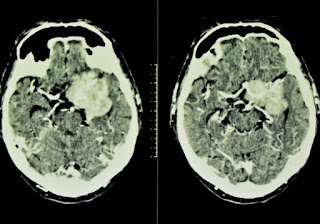
A generic image of a CT scan showing a
meningioma, brain tumor.
High doses of a widely-used drug used in the hormonal treatment of conditions such as excessive hair growth, early puberty, prostate cancer is linked to an increased risk of meningioma — the most common type of benign brain tumor, finds a University of Bristol-led study of over 8-million patients. The study is published in Scientific Reports.

Typically slow-growing, meningiomas are benign tumors, which are often revealed incidentally by imaging but can cause significant disability due to compressing or squeezing the adjacent brain, nerves and vessels and pressure effects within a fixed cranial vault.

Recent studies have reported an association between the growth of meningiomas and hormonal treatments, particularly prolonged and high dose use of the drug, cyproterone acetate (CPA).

High doses of cyproterone acetate (> 50 mg/day) is usually prescribed to male patients with inoperable prostate cancer, a condition which leads to excessive hair growth known as hirsutism, or male-to-female transsexual hormonal therapy. Lower doses (2-10 mg/day) of the drug are typically used in combination with estradiol to treat androgen-associated alopecia or female seborrhea.

Given the drug’s widespread use, researchers at the Universities of Bristol, Cambridge and the National University of Singapore, conducted a systematic review and meta-analysis study using four studies comprising a sample of 8,132,348 patients, to assess the evidence of the association between cyproterone acetate and incidence of meningiomas.

Researchers capture first snapshot of dissolved chemicals from coral reefs

Reefscapes of the Moorea backreef.
Photo credit: Shayle Matsuda/ UH SOEST

Coral reefs are hotspots of biodiversity and are amazingly productive with a vast number of organisms interacting simultaneously. Hundreds of molecules that are made by important members of the coral reef community were recently discovered by a team of scientists. Together, the compounds—modified amino acids, vitamins and steroids—comprise the “smell” or “taste” of corals and algae in a tropical reef, and will help scientists understand both the food web dynamics and the chemical ecology of these ecosystems.

The study, led by researchers at Scripps Institution of Oceanography at UC San Diego, University of Hawaiʻi at Mānoa and the NIOZ Royal Netherlands Institute for Sea Research was published in the Proceedings of the National Academy of Sciences. It provides the first snapshot of the diversity of dissolved chemicals floating among coral reefs and a window into the interactions among organisms that scientists are just beginning to understand.

Although coral and seaweed (limu) are fixed to the seafloor, these organisms interact via chemicals dissolved in the water. Despite knowing the importance of these molecules built during photosynthesis and released into the seawater environment, their quantity, energy content and structural diversity have always been a mystery to biologists.

Gone forever – two-thirds of Australia has lost its unique birdlife

Vulnerable Goshawk.
Credit: James Watson

Researchers have revealed that threatened birds have disappeared from almost 70 per cent of Australia since European colonization.

The study – led by The University of Queensland, Charles Darwin University, WWF Australia and Australian Wildlife Conservancy – mapped the pre-European (1750) habitats of Australia’s most threatened birds, comparing those with current habitats.

Dr Michelle Ward, from UQ’s School of Earth and Environmental Sciences and WWF Australia, said Australians should be extremely alarmed by the findings.

Tuesday, February 1, 2022

Mission to find lunar ice

Artistic concept of CoRaLS mission.
Photo credit: A. Romero-Wolf, JPL

A University of Hawaiʻi at Mānoa project to detect ice deposits below the surface of the Moon received a major boost from NASA. Five scientists in the Department of Physics and Astronomy and Hawaiʻi Institute of Geophysics and Planetology (HIGP) have been awarded a three-year, $2,945,704 grant to develop technology for the NASA Cosmic Ray Lunar Sounder (CoRaLS) mission, which was initiated by UH Mānoa and NASA’s Jet Propulsion Lab.

CoRaLS hopes to be the first mission to detect subsurface ice below the first meter, therefore having a unique opportunity to further lunar science and identify crucial resources for future manned and unmanned missions to the Moon.

History of ice deposits

Extensive ice deposits have been found in the permanently shadowed regions (PSRs) of Mercury, but so far only traces of ice have been found on the surface of lunar PSRs, and active radar measurements sensitive to the top meter or so of the regolith (5–10 meter layer of debris on the Moon’s surface) show no clear signal yet from extensive ice deposits.

Global elimination of meat production could save the planet

Photo by Kat Smith from Pexels

A new study of the climate impacts of raising animals for food concludes that phasing out all animal agriculture has the potential to substantially alter the trajectory of global warming.

The work is a collaboration between Michael Eisen, professor of molecular and cell biology at the University of California, Berkeley, and Patrick Brown, professor emeritus of biochemistry at Stanford University and the CEO of Impossible Foods Inc., a company that sells plant-based meat substitutes.

Eisen, who consults for Impossible Foods, and Brown used a simple climate model to look at the combined impact of eliminating emissions linked to animal agriculture and of restoring native vegetation on the 30% of Earth’s land surface currently used to house and feed livestock.

They found that the resulting drop in methane and nitrous oxide levels, and the conversion of 800 gigatons (800 billion tons) of carbon dioxide to forest, grassland and soil biomass, would have the same beneficial impact on global warming as cutting annual global CO2 emissions by 68%.

“Our work shows that ending animal agriculture has the unique potential to significantly reduce atmospheric levels of all three major greenhouse gases, which, because we have dithered in responding to the climate crisis, is now necessary to avert climate catastrophe,” said Eisen, who is also a Howard Hughes Medical Institute (HHMI) investigator at UC Berkeley.

Novel Nanoparticle SARS-CoV-2 Vaccine Combines Immune Focusing and Self-assembling Nanoparticles to Elicit More Potent Protection

Dr. Dan Kulp, associate professor in Wistar's Vaccine & Immunotherapy Center
Credit: The Wistar Institute

The first generation of COVID-19 vaccines have been highly effective, but also have limitations: their efficacy can wane without a booster shot, and they may be less effective against some variants. Now scientists at The Wistar Institute have developed a more targeted vaccine that, in animal studies, shows stronger, broader, and more durable protection in a single, low dose.

The vaccine combines three technologies – immune focusing, self-assembling nanoparticles, and DNA delivery – into a single platform for the first time. In addition to its other advantages, the vaccine could be stored at room temperature, making it potentially easier to transport to remote or developing locations than existing mRNA vaccines, which require specialized cold storage.

“This is among the first next-generation vaccines that will have more advanced features and broader protection,” said Daniel Kulp, Ph.D., associate professor in the Vaccine & Immunotherapy Center at The Wistar Institute and corresponding author of the study.

The paper, “Nucleic acid delivery of immune-focused SARS-CoV-2 nanoparticles drive rapid and potent immunogenicity capable of single-dose protection,” was published in the journal Cell Reports.

How Omicron escapes from antibodies

Image: CDC; Christine Daniloff, MIT
A new study from MIT suggests that the dozens of mutations in the spike protein of the Omicron variant help it to evade all four of the classes of antibodies that can target the SARS-CoV-2 virus that causes Covid-19.

This includes antibodies generated by vaccinated or previously infected people, as well as most of the monoclonal antibody treatments that have been developed, says Ram Sasisekharan, the Alfred H. Caspary Professor of Biological Engineering and Health Sciences and Technology (HST) at MIT.

Using a computational approach that allowed them to determine how mutated amino acids of the viral spike protein influence nearby amino acids, the researchers were able to get a multidimensional view of how the virus evades antibodies. According to Sasisekharan, the traditional approach of only examining changes in the virus’ genetic sequence reduces the complexity of the spike protein’s three-dimensional surface and doesn’t describe the multidimensional complexity of the protein surfaces that antibodies are attempting to bind to.

“It is important to get a more comprehensive picture of the many mutations seen in Omicron, especially in the context of the spike protein, given that the spike protein is vital for the virus’s function, and all the major vaccines are based on that protein,” he says. “There is a need for tools or approaches that can rapidly determine the impact of mutations in new virus variants of concern, especially for SARS-CoV-2.”

Sasisekharan is the senior author of the study, which appears this week in Cell Reports Medicine. The lead author of the paper is MIT HST graduate student Nathaniel Miller. Technical associate Thomas Clark and research scientist Rahul Raman are also authors of the paper.

Even though Omicron is able to evade most antibodies to some degree, vaccines still offer protection, Sasisekharan says.

World-record lightning “megaflashes” detected using space-based technology

Satellite image of the record lightning flash over Uruguay and Argentina on June 18, 2020, which lasted 17.102 seconds.

A researcher at Los Alamos National Laboratory has detected two world-record lightning “megaflashes.” The longest-distance flash was detected in the southern United States on April 29, 2020 and spanned more than 477 miles from Mississippi to Texas. The longest-duration lightning strike was detected over Uruguay on June 18, 2020 and lasted 17.1 seconds.

“We are now at a place where we have excellent lightning measurements, which allows us to discover surprising new aspects of its behavior,” said lead author Michael Peterson, of the Space and Remote Sensing group at Los Alamos. “Now that we have a robust record of these massive flashes, we can better understand how they occur and the impact that they have.”

These megaflashes are incredibly rare events. In order to record one from the ground, or from an aircraft or satellite in a low orbit, the sensor has to be exactly in the right place at the right time, which is very unlikely.

Scientists discover link between high blood pressure and diabetes

The long-standing enigma of why so many patients suffering with high blood pressure (known as hypertension) also have diabetes (high blood sugar) has finally been cracked by an international team led by the universities of Bristol, UK, and Auckland, New Zealand.

The important new discovery has shown that a small protein cell glucagon-like peptide-1 (GLP-1) couples the body’s control of blood sugar and blood pressure.

Professor Julian Paton, a senior author, and Director of Manaaki Mãnawa - The Centre for Heart Research at the University of Auckland, said: "We've known for a long time that hypertension and diabetes are inextricably linked and have finally discovered the reason, which will now inform new treatment strategies."

The research, published online ahead of print in Circulation Research today, involved contributions from collaborating scientists in Brazil, Germany, Lithuania, and Serbia, as well as the UK and New Zealand.

LP-1 is released from the wall of the gut after eating and acts to stimulate insulin from the pancreas to control blood sugar levels. This was known but what has now been unearthed is that GLP-1 also stimulates a small sensory organ called the carotid body located in the neck.

The University of Bristol group used an unbiased, high-throughput genomics technique called RNA sequencing to read all the messages of the expressed genes in the carotid body in rats with and without high blood pressure. This led to the finding that the receptor that senses GLP-1 is located in the carotid body, but less so in hypertensive rats.

Hepatitis E virus defies alcoholic hand disinfectants

The hepatitis E virus (HEV) can cause serious inflammation of the liver and is the most common cause of acute virus-mediated hepatitis worldwide. The infection can be prevented by suitable hygiene measures. Scientists from TWINCORE, Center for Experimental and Clinical Infection Research, the Hannover Medical School (MHH) and the Ruhr University Bochum (RUB) have examined the effectiveness of various common hand disinfectants against HEV together with partners from industry. They could show that most formulations do not completely inactivate the virus. They publish these results in the Journal of Hepatology.

Pork infection

In Germany and Europe, HEV has its natural reservoir in pigs. The infection can pass from the animals to humans, one speaks here of a zoonosis. This is often done by meat products that are not fully heated or raw, such as Mett. In tropical regions of the world, contaminated water leads to infections with sometimes larger outbreaks. "Some of these infections may have been prevented by the right hygiene measures," says Dr. Patrick Behrendt, doctor in the clinic for gastroenterology, hepatology and endocrinology at MHH and head of the junior research group "Translational Virology" at TWINCORE. This includes correct hygienic hand disinfection, especially in everyday clinical practice in dealing with hepatitis E patients and infected animals.

Together with the team of Prof. Dr. Eike Steinmann, head of the Department of Molecular and Medical Virology at RUB, examined Behrendt whether common hand disinfectants can render the virus harmless. "We tested the effects of the alcohols ethanol and propanol, both individually and in the mixing ratios recommended by the WHO, as well as commercial hand disinfectants," says Steinmann. “However, only one product that contained another component was effective."

Monday, January 31, 2022

New study finds some flowers unchanged for 100 million years

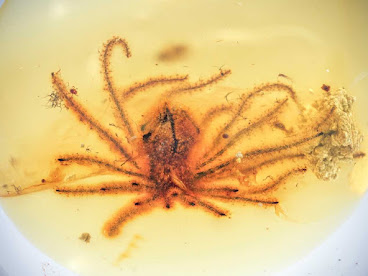
Flower preserved in amber
Credit: The Open University
An international research team has discovered 100-million-year-old fossil flowers preserved in amber, showing that some flowers found living today in South Africa have remained unchanged since the time of the dinosaurs.

The flowers, discovered by experts from The Open University, Qingdao University, and others, are nearly identical to those of modern Phylica species, which are part of the Cape Fynbos flora that is exposed to frequent wildfires.

The fossils were found alongside long-extinct burned plants, pointing to wildfires being an important aspect of early flower evolution.

The sudden appearance of flowering plants as fossils in middle Cretaceous time was described by Charles Darwin as an “abominable mystery” and usually, flower fossils are rare, not well preserved and come from an extinct group of species.

However, this study, published in Nature Plants, found an exception – the research team found flowers, trapped in fossil ambers, that are almost identical to plants living today near Cape Town, South Africa.

Robert A. Spicer, Emeritus Professor at The Open University, described the historical context of the flowers and what the findings can tell us about the plant evolution:

“These exquisitely preserved flowers, fruits, leaves and pollen from 100 million years ago provide a snapshot of an important time in the evolution of flowering plants, showing that early flowers were not primitive as many people suppose, but were already superbly adapted to survive the frequent wildfires that ravaged the warm ‘greenhouse’ world of the Cretaceous.

Number of Earth’s tree species estimated to be 14% higher than currently known, with some 9,200 species yet to be discovered

Coniferous mixed forest, Val Saisera, Italian Julian Alps, Italy.
Image credit: Dario Di Gallo, Regional Forest Service of Friuli Venezia Giulia, Italy

A new study involving more than 100 scientists from across the globe and the largest forest database yet assembled estimates that there are about 73,000 tree species on Earth, including about 9,200 species yet to be discovered.

The global estimate is about 14% higher than the current number of known tree species. Most of the undiscovered species are likely to be rare, with very low populations and limited spatial distribution, the study shows.

That makes the undiscovered species especially vulnerable to human-caused disruptions such as deforestation and climate change, according to the study authors, who say the new findings will help prioritize forest conservation efforts.

“These results highlight the vulnerability of global forest biodiversity to anthropogenic changes, particularly land use and climate, because the survival of rare taxa is disproportionately threatened by these pressures,” said University of Michigan forest ecologist Peter Reich, one of two senior authors of a paper scheduled for publication Jan. 31 in Proceedings of the National Academy of Sciences.

Featured Article

What Is: Quorum Sensing

Scientific Frontline: Extended "At a Glance" Summary : Quorum Sensing The Core Concept : Quorum sensing is a sophisticated, popula...

Top Viewed Articles