As the brain ages, a region in the hippocampus becomes imbalanced, causing forgetfulness. Scientists say understanding this region of the brain and its function may be the key to preventing cognitive decline.
Working with rats, neuroscientists at Johns Hopkins University have pinpointed a mechanism in the brain responsible for a common type of age-related memory loss. The work, published in Current Biology, sheds light on the workings of aging brains and may deepen our understanding of Alzheimer's disease and similar disorders in humans.
"We're trying to understand normal memory and why a part of the brain called the hippocampus is so critical for normal memory," said senior author James Knierim, a professor at the university's Zanvyl Krieger Mind/Brain Institute. "But also with many memory disorders, something is going wrong with this area."
Neuroscientists know that neurons in the hippocampus, located deep in the brain's temporal lobe, are responsible for a complementary pair of memory functions called pattern separation and pattern completion. These functions occur in a gradient across a tiny region of the hippocampus called CA3.
In normal brains, pattern separation and pattern completion work hand-in-hand to sort and make sense of perceptions and experiences, from the most basic to the highly complex. If you visit a restaurant with your family and a month later you visit the same restaurant with friends, you should be able to recognize that it was the same restaurant, even though some details have changed—this is pattern completion. But you also need to remember which conversation happened when, so you do not confuse the two experiences—this is pattern separation.
Artist's rendering of an infrared laser quenching charge density waves. Credit: Greg Stewart/SLAC National Accelerator Laboratory
Room-temperature superconductors could transform everything from electrical grids to particle accelerators to computers – but before they can be realized, researchers need to better understand how existing high-temperature superconductors work.
Now, researchers from the Department of Energy's SLAC National Accelerator Laboratory, the University of British Columbia, Yale University and others have taken a step in that direction by studying the fast dynamics of a material called yttrium barium copper oxide, or YBCO.
The team reports May 20 in Science that YBCO's superconductivity is intertwined in unexpected ways with another phenomenon known as charge density waves (CDWs), or ripples in the density of electrons in the material. As the researchers expected, CDWs get stronger when they turned off YBCO's superconductivity. However, they were surprised to find the CDWs also suddenly became more spatially organized, suggesting superconductivity somehow fundamentally shapes the form of the CDWs at the nanoscale.
A water-alcohol-propylene glycol droplet expands and then contracts, an effect that could be used to help remove particles from sensitive surfaces such as microchips. Credit: Cornell University College of Engineering
While brooms and sponges are the means of choice to fight contamination in everyday life, cleaning sensitive surfaces such as electronic components require different tools, including evaporation-based methods that often leave behind small particles on the surface.
Through their work on the dynamics of liquid mixtures, scientists at Cornell’s Meinig School of Biomedical Engineering and the Max Planck Institute for Dynamics and Self-Organization have developed a new approach to the problem. The method uses liquid droplets that first spread out on surfaces and then contract again on their own – a boomerang effect that leaves virtually no traces when the droplets contract, unlike conventional drying, opening up new possibilities for cleaning and removing particles from sensitive surfaces such as microchips.
Nearly 700 species of marine animal have been recorded as having encountered man-made debris such as plastic and glass, according to the most comprehensive impact study in more than a decade.
Researchers at Plymouth University found evidence of 44,000 animals and organisms becoming entangled in, or swallowing debris, from reports recorded from across the globe.
Plastic accounted for nearly 92 per cent of cases, and 17 per cent of all species involved were found to be threatened or near threatened on the IUCN Red List, including the Hawaiian monk seal, the loggerhead turtle and sooty shearwater.
In a paper, 'The impact of debris on marine life', published in Marine Pollution Bulletin, authors Sarah Gall and Professor Richard Thompson present evidence collated from a wide variety of sources on instances of entanglement, ingestion, physical damage to ecosystems, and rafting, where species are transported by debris.
The authors: Davide A. Cucci, Aurélien Brun and Jan Skaloud. Credit: Alain Herzog/EPFL
Engineers at EPFL and the University of Geneva believe they hold the key to automated drone mapping. By combining artificial intelligence with a new algorithm, their method promises to considerably reduce the time and resources needed to accurately scan complex landscapes. It is described in a paper published in ISPRS Journal of Photogrammetry and Remote Sensing.
Three-dimensional (3D) mapping is a very useful tool for monitoring construction sites, tracking the effects of climate change on ecosystems and verifying the safety of roads and bridges. However, the technology currently used to automate the mapping process is limited, making it a long and costly endeavor.
“Switzerland is currently mapping its entire landscape using airborne laser scanners – the first time since 2000. But the process will take four to five years since the scanners have to fly at an altitude below one kilometer if they are to collect data with sufficient detail and accuracy,” says Jan Skaloud, a senior scientist at the Geodetic Engineering Laboratory (Topo) within EPFL's School of Architecture, Civil and Environmental Engineering (ENAC).
Researchers demonstrated that medical AI systems can easily learn to recognize racial identity in medical images, and that this capability is extremely difficult to isolate or mitigate. Credit: Massachusetts Institute of Technology
The miseducation of algorithms is a critical problem; when artificial intelligence mirrors unconscious thoughts, racism, and biases of the humans who generated these algorithms, it can lead to serious harm. Computer programs, for example, have wrongly flagged Black defendants as twice as likely to reoffend as someone who’s white. When an AI used cost as a proxy for health needs, it falsely named Black patients as healthier than equally sick white ones, as less money was spent on them. Even AI used to write a play relied on using harmful stereotypes for casting.
Removing sensitive features from the data seems like a viable tweak. But what happens when it’s not enough?
Huanyu “Larry” Cheng, assistant professor of engineering science and mechanics at Penn State, newly developed flexible, porous and highly sensitive nitrogen dioxide sensors that can be applied to skin and clothing. Credit: Penn State/Kate Myers
Newly developed flexible, porous and highly sensitive nitrogen dioxide sensors that can be applied to skin and clothing have potential applications in health care, environmental health monitoring and military use, according to researchers.
Led by Huanyu “Larry” Cheng, assistant professor of engineering science and mechanics at Penn State, the researchers published their sensor designs, which build on previous models, and results in ACS Applied Materials and Interfaces.
The sensors monitor nitrogen dioxide, either from breath if attached under the nose, or from perspiration, if attached elsewhere on the body. Unlike taking blood samples, the direct skin attachment allows for continuous, long-term monitoring of the gas.
Cheng explained that while similar sensors exist, a key differentiator of the new design is breathability.
“The commonly used substrate materials for gas sensors are flexible, but not porous,” he said. “The accumulation of water moisture from the skin surface can potentially lead to irritation or damage to the skin surface. We need to make sure the device can be porous so that moisture can go through the sensor without accumulation on the surface.”
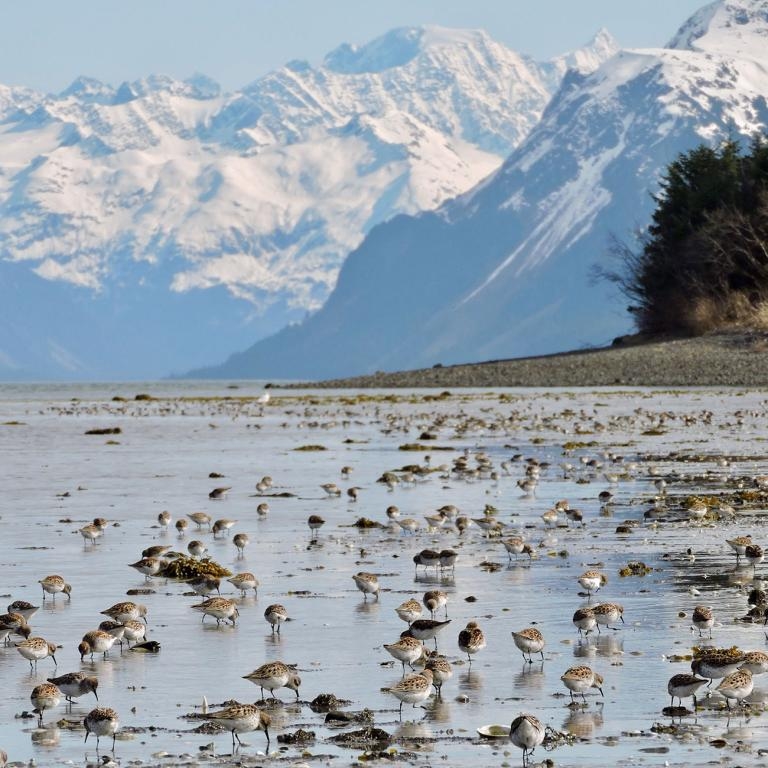
A feeding frenzy of western sandpipers during the mass migration via Cordova, Alaska, a key study site in the paper. Credit: Wendy Puryear
When it comes to avian influenza, more commonly known as bird flu, all birds are not created equal.
“The scientific community has become accustomed to speaking about influenza viruses in birds as a group, but birds are an incredibly diverse taxa of animals with different natural history, physiology, and anatomy,” says Jonathan Runstadler, professor and chair of the Department of Infectious Disease & Global Health at Cummings School of Veterinary Medicine.
Runstadler is one of the authors of a new study, published today in the journal PLOS Pathogens, which takes a data-driven look at influenza viruses circulating among different groups of birds and characterizes which types of birds are involved in spreading the virus. The timing of this paper is impeccable, as a highly pathogenic strain of bird flu has been spreading across North America.
This lineage of bird flu originated around 1996 and was first found in a domestic goose in China. The virus mutated and persisted, and the first big wild bird outbreak happened around 2005 in a major wetland in central Asia. Subsequent changes in the virus led to a 2014 introduction to the U.S. via the Pacific Northwest, severely affecting the U.S. poultry industry and forcing the culling of about 40 million turkeys and chickens as a control measure.
Once dubbed “forever chemicals,” per-and polyfluoroalkyl substances, or PFAS, might be in the market for a new nickname.
That’s because adding iodide to a water treatment reactor that uses ultraviolet (UV) light and sulfite destroys up to 90% of carbon-fluorine atoms in PFAS forever chemicals in just a few hours, reports a new study led by environmental engineering researchers at UC Riverside. The addition of iodide accelerates the speed of the reaction up to four times, saving energy and chemicals.
“Iodide is really doing some substantial work,” said corresponding author Jinyong Liu, an assistant professor of chemical and environmental engineering. “Not only does it speed up the reaction but it also allows the treatment of a ten times higher concentrations of PFAS, even some very recalcitrant structures.”
Liu’s lab has been working on ways to destroy PFAS through photochemical reactions since 2017. The new method has already attracted interest from industry and Liu’s group is partnering with companies to conduct pilot tests.
Synthetic chemicals known as PFAS contain multiple very strong carbon-fluorine bonds. Widespread use of these nonbiodegradable compounds in countless products since the 1940s has contaminated water supplies across America, with various negative health effects on humans and animals. Because the carbon-fluorine bond is very hard to break, PFAS pass through most water treatment systems unchanged.
UW Ph.D. student Chase Mahan inspects an artifact from excavation at the Powars II archaeological site in 2020. Mahan is one of the co-authors of a new paper that confirms the site at Sunrise in Platte County is the oldest documented red ocher mine -- and likely the oldest known mine of any sort -- in all of North and South America. Credit: Spencer Pelton
Archaeological excavations led by Wyoming’s state archaeologist and involving University of Wyoming researchers have confirmed that an ancient mine in eastern Wyoming was used by humans to produce red ocher starting nearly 13,000 years ago.
That makes the Powars II site at Sunrise in Platte County the oldest documented red ocher mine -- and likely the oldest known mine of any sort -- in all of North and South America. The excavations, completed shortly before the 2020 death of famed UW archaeologist George Frison, confirmed theories he advanced stemming from research he began at the site in 1986.
The findings appear in “In situ evidence for Paleoindian hematite quarrying at the Powars II site (48PL330), Wyoming,” a paper published in the Proceedings of the National Academy of Sciences (PNAS), one of the world’s most prestigious multidisciplinary scientific journals covering the biological, physical and social sciences.
Co-authors Israel Temprano and Grace Mapstone Credit: Gabriella Bocchetti
The supercapacitor device, which is similar to a rechargeable battery, is the size of a two-pence coin, and is made in part from sustainable materials including coconut shells and seawater.
Designed by researchers from the University of Cambridge, the supercapacitor could help power carbon capture and storage technologies at much lower cost. Around 35 billion tons of CO2 are released into the atmosphere per year and solutions are urgently needed to eliminate these emissions and address the climate crisis. The most advanced carbon capture technologies currently require large amounts of energy and are expensive.
The supercapacitor consists of two electrodes of positive and negative charge. In work led by Trevor Binford while completing his Master’s degree at Cambridge, the team tried alternating from a negative to a positive voltage to extend the charging time from previous experiments. This improved the supercapacitor’s ability to capture carbon.
“We found that that by slowly alternating the current between the plates we can capture double the amount of CO2 than before,” said Dr Alexander Forse from Cambridge’s Yusuf Hamied Department of Chemistry, who led the research.
The image shows the vasculature of the brain, and the colors illuminate how capillaries experience varying levels of oxygenation as the brain undergoes hypoxia. Credit: Duke University
Duke researchers use a combination of hardware innovations and machine learning algorithms to create the fastest photoacoustic imaging tool available
Biomedical engineers at Duke University have developed a method to scan and image the blood flow and oxygen levels inside a mouse brain in real-time with enough resolution to view the activity of both individual vessels and the entire brain at once.
This new imaging approach breaks long-standing speed and resolution barriers in brain imaging technologies and could uncover new insights into neurovascular diseases like stroke, dementia and even acute brain injury.
Imaging the brain is a balancing act. Tools need to be fast enough to capture rapid events, like a neuron firing or blood flowing through a capillary, and they need to show activity at different scales, whether it’s across the entire brain or at the level of a single artery.
The brain painting method developed at USF is being tested for ADHD treatment. Credit: University of South Florida
Imagine focusing on one thing so well that you can control its movement. Now, imagine mentally selecting colors and shapes to create an abstract image – a brain painting. USF computer scientist Marvin Andujar is harnessing the power of concentration and art to develop a new brain-computer interface (BCI) prototype and help study participants use their brain like never before. The goal is to introduce a novel treatment option for individuals with Attention-Deficit/Hyperactivity Disorder (ADHD) by tapping directly into their brain activity.
“This type of brain-computer interaction is more of a brain exercise to improve your attention,” Andujar said. “We’re trying to see how we can narrow that focus over time.”
Similar to Andujar’s previous work with brain-controlled drones, participants’ complete attention is required. To fly forward, a user must focus on a specific movement, such as walking. Individuals from the ADHD community approached Andujar after learning how the brain-controlled drone project harnessed attention span and asked for a device they could use at home.
The new drone with a fish-inspired suction disc hitchhikes on moving objects to save power and can quickly transition between air and water. Illustration: Beihang University / Science Robotics
A new robot is capable of switching from an underwater drone to an aerial vehicle in less than one second. The robot also features a suction disc inspired by the remora fish, which enables it to hitchhike on wet or dry moving objects to significantly reduce its power consumption. It is designed for biological and environmental monitoring in marine ecosystems such as surveying ocean pollution in the open sea as the scientist of Beihang University, Imperial College London and Empa point out in a new study published in Science Robotics.
The ultrafast transition from underwater drone to aerial vehicle in less than one second is based on a new propeller design – making this transition between the different mediums faster than most prior aerial-aquatic robots. Designed by a team of scientists from China, the United Kingdom and Switzerland, the versatile robot and its bio-inspired adhesive disc could be adapted for open-environment aerial and aquatic surveillance research.
Travelling with whales
The robot features a suction pad inspired by remora fish. Image: Beihang University / Science Robotics
It’s well known that untethered drones can help research expeditions and wildlife surveys in expansive or remote environments such as the open sea, but some constraints remain. For example, untethered drones are not the best choice to use during lengthier missions because they have no external power sources to fall back on if their battery fails. To address this limitation, scientists 3D-printed an aerial-aquatic untethered robot that reduces its power consumption through hitchhiking. The robot features a suction pad inspired by remora fish – a family of species known for their adhesive discs, which help them catch a ride on marine creatures including whales and sharks. The remote-controlled robot’s disc can stick to wet and dry surfaces with different textures, even on moving objects.
In tests, the robot hitched a ride on a swimming host vehicle to obtain seabed images of hermit crabs, scallops, and seaweed. „Our study shows how we can take inspiration from the adhesion mechanism of the Remora and combine it with aerial robotics systems to achieve novel mobility methods for robotics“, says Mirko Kovac, who heads both Empa's Materials and Technology Center of Robotics and the Aerial Robotics Lab at Imperial College.
During the process, the hitchhiking robot consumed almost 20-times less energy than it would have using self-propulsion. Through their outdoor experiments, the team could show that the robot can hitchhike, record video during air-water transitions, and perform cross-medium retrieval operations in both freshwater and saltwater environments.
Ultrafast transition between water and air – the new bioinspired robot.
Video: Empa / Source: Beihang University / Science Robotics
Scientists believe that the moon's snakelike Schroeter's Valley was created by lava flowing over the surface. Credit: NASA Johnson
Billions of years ago, a series of volcanic eruptions broke loose on the moon, blanketing hundreds of thousands of square miles of the orb’s surface in hot lava. Over the eons, that lava created the dark blotches, or maria, that give the face of the moon its familiar appearance today.
New research from CU Boulder suggests that volcanoes may have left another lasting impact on the lunar surface: sheets of ice that dot the moon’s poles and, in some places, could measure dozens or even hundreds of feet thick.
“We envision it as a frost on the moon that built up over time,” said Andrew Wilcoski, lead author of the new study and a graduate student in the Department of Astrophysical and Planetary Sciences (APS) and the Laboratory for Atmospheric and Space Physics (LASP) at CU Boulder.
The researchers drew on computer simulations, or models, to try to recreate conditions on the moon long before complex life arose on Earth. They discovered that ancient moon volcanoes spewed huge amounts of water vapor, which then settled onto the surface—forming stores of ice that may still be hiding in lunar craters. If any humans had been alive at the time, they may even have seen a sliver of that frost near the border between day and night on the moon's surface.
It’s a potential bounty for future moon explorers who will need water to drink and process into rocket fuel, said study co-author Paul Hayne.
“It’s possible that 5 or 10 meters below the surface, you have big sheets of ice,” said Hayne, assistant professor in APS and LASP.



.jpg)


.jpg)