. Scientific Frontline

Tuesday, May 31, 2022

Drought, megafires, and flood – citizen scientists reveal impact on river water quality

Upper Macleay River
Source: Southern Cross University

In a few short years Australia’s east coast has experienced drought, blazing bushfires and unprecedented floods, driving discussion about the impacts of climate change. What is less discussed, and also less well understood, are the implications of such extremes for the quality of water in our rivers.

Researchers from Southern Cross University led a unique study published in Water Research with collaboration from dedicated team of citizen scientists to help monitor how these climate extremes impact river water quality.

Professor Scott Johnston, a Landscape Hydrogeochemist from the University’s Faculty of Science and Engineering has overseen this water quality monitoring project in the Macleay River since 2016. The Macleay is a large coastal catchment in Northern New South Wales that stretches across the Great Dividing Range from the tablelands near Armidale to the coast at Kempsey and South West Rocks.

“We collaborated with a trained group of local citizen scientist volunteers who were able to regularly collect river water samples, capturing what took place at a level of detail that is really quite unique,” he said. ‘’Without their hard work on the ground, this study would not have happened and it is a great example of a university and community working closely together to help understand a locally relevant issue.’

Alzheimer’s disease causes cells to overheat and ‘fry like eggs’

Mammalian cell stained with fluorescence polymeric thermometers and falsely-colored based on temperature gradients. 
Credit: Chyi Wei Chung

The researchers, from the University of Cambridge, used sensors small and sensitive enough to detect temperature changes inside individual cells, and found that as amyloid-beta misfolds and clumps together, it causes cells to overheat.

In an experiment using human cell lines, the researchers found the heat released by amyloid-beta aggregation could potentially cause other, healthy amyloid-beta to aggregate, causing more and more aggregates to form.

In the same series of experiments, the researchers also showed that amyloid-beta aggregation can be stopped, and the cell temperature lowered, with the addition of a drug compound. The experiments also suggest that the compound has potential as a therapeutic for Alzheimer’s disease, although extensive tests and clinical trials would first be required.

The researchers say their assay could be used as a diagnostic tool for Alzheimer’s disease, or to screen potential drug candidates. The results are reported in the Journal of the American Chemical Society.

The Sun is spinning round again

The model developed by the scientists includes the history of the rotation of the sun but also the magnetic instabilities that it generates.
Credit: Sylvia Ekström / UNIGE

All was amiss with the Sun! In the early 2000s, a new set of data brought down the chemical abundances at the surface of the Sun, contradicting the values predicted by the standard models used by astrophysicists. Often challenged, these new abundances made it through several new analyses. As they seemed to prove correct, it was thus up to the solar models to adapt, especially since they serve as a reference for the study of stars in general. A team of astronomers from the University of Geneva, Switzerland (UNIGE) in collaboration with the Université de Liège, has developed a new theoretical model that solves part of the problem: considering the Sun’s rotation, that varied through time, and the magnetic fields it generates, they have been able to explain the chemical structure of the Sun. The results of this study are published in Nature Astronomy.

“The Sun is the star that we can best characterize, so it constitutes a fundamental test for our understanding of stellar physics. We have abundance measurements of its chemical elements, but also measurements of its internal structure, like in the case of Earth thanks to seismology”, explains Patrick Eggenberger, a researcher at the Department of astronomy of the UNIGE and first author of the study.

These observations should fall in line with the results predicted by the theoretical models which aim at explaining the Sun’s evolution. How does the Sun burn its hydrogen in the core? How is energy produced there and then transported towards the surface? How do chemical elements drift within the Sun, influenced both by rotation and magnetic fields?

Monday, May 30, 2022

Research finds small modular reactors will exacerbate challenges of highly radioactive nuclear waste

Engineers prepare to test an advanced prototype of a small modular reactor developed by the U.S. Dept. of Energy’s Idaho National Laboratory.
Image credit: Idaho National Laboratory

Small modular reactors, long touted as the future of nuclear energy, will actually generate more radioactive waste than conventional nuclear power plants, according to research from Stanford and the University of British Columbia.

Nuclear reactors generate reliable supplies of electricity with limited greenhouse gas emissions. But a nuclear power plant that generates 1,000 megawatts of electric power also produces radioactive waste that must be isolated from the environment for hundreds of thousands of years. Furthermore, the cost of building a large nuclear power plant can be tens of billions of dollars.

Engineers prepare to test an advanced prototype of a small modular reactor developed by the U.S. Dept. of Energy’s Idaho National Laboratory. (Image credit: Courtesy Idaho National Laboratory)

To address these challenges, the nuclear industry is developing small modular reactors that generate less than 300 megawatts of electric power and can be assembled in factories. Industry analysts say these advanced modular designs will be cheaper and produce fewer radioactive byproducts than conventional large-scale reactors.

But a May 30 study in Proceedings of the National Academy of Sciences has reached the opposite conclusion.

Frontier supercomputer debuts as world’s fastest, breaking exascale barrier


The Frontier supercomputer at the Department of Energy’s Oak Ridge National Laboratory earned the top ranking today as the world’s fastest on the 59th TOP500 list, with 1.1 exaflops of performance. The system is the first to achieve an unprecedented level of computing performance known as exascale, a threshold of a quintillion calculations per second.

Frontier features a theoretical peak performance of 2 exaflops, or two quintillion calculations per second, making it ten times more powerful than ORNL’s Summit system. The system leverages ORNL’s extensive expertise in accelerated computing and will enable scientists to develop critically needed technologies for the country’s energy, economic and national security, helping researchers address problems of national importance that were impossible to solve just five years ago.

“Frontier is ushering in a new era of exascale computing to solve the world’s biggest scientific challenges,” ORNL Director Thomas Zacharia said. “This milestone offers just a preview of Frontier’s unmatched capability as a tool for scientific discovery. It is the result of more than a decade of collaboration among the national laboratories, academia and private industry, including DOE’s Exascale Computing Project, which is deploying the applications, software technologies, hardware and integration necessary to ensure impact at the exascale.”

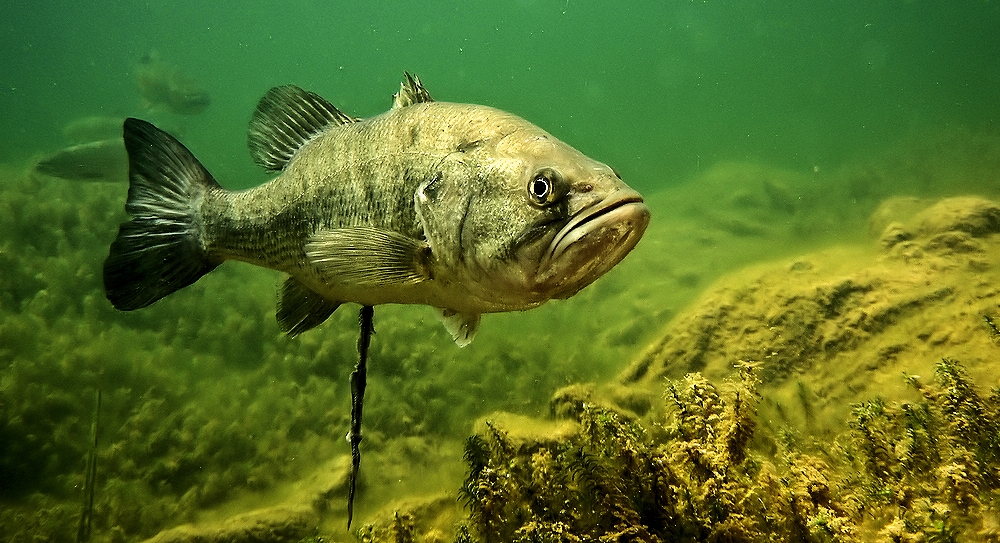
Revelations of genetic diversity of bass species can enhance conservation


Black Bass

A new study by Yale ichthyologists provides a clearer picture of species diversity among black basses — one of the most cherished and economically important lineages of freshwater gamefish. Their findings can help guide the conservation and management of bass species that are both prized by anglers across the globe and ranked among the world’s most invasive organisms.

For the study, published May 30 in the journal Scientific Reports, researchers used genomic analysis to more accurately delineate the places of 19 black bass species in the tree of life. Importantly, the analysis revealed that two popular species — the largemouth bass and Florida bass — have been misclassified over the past 75 years. The scientific names Micropterus salmoides and Micropterus floridanus have been incorrectly applied to the largemouth bass and Florida bass, respectively.

The researchers concluded that Micropterus salmoides is the accurate scientific name for the Florida bass while the largemouth bass should be reclassified as Micropterus nigricans, the oldest available scientific name for largemouth bass. This is important because both the largemouth bass and Florida bass have been introduced in 57 countries on every continent except Antarctica under the misapplied scientific name Micropterus salmoides, meaning introductions were made to support fisheries without knowing the precise species, explained lead author Daemin Kim, a graduate student in Yale’s Department of Ecology & Evolutionary Biology.

Multi-functional bandage helps wounds to heal

Ceren Kimna, doctoral candidate at the TUM School of Engineering, performing a mechanical stretching test with the newly developed biomolecular film for wound healing.
Image: Astrid Eckert / TUM

Researchers at the Technical University of Munich (TUM) have developed a film that not only protects wounds similar to the way a bandage does, but also helps wounds to heal faster, repels bacteria, dampens inflammation, releases active pharmaceutical ingredients in a targeted manner and ultimately dissolves by itself. This is all made possible by its dedicated design and the use of mucins, molecules which occur naturally in mucous membranes.

Conventional bandages may be very effective for treating smaller skin abrasions, but things get more difficult when it comes to soft-tissue injuries such as on the tongue or on sensitive surfaces like the intestines. What kind of material will adhere there without damaging the tissue or sticking to adjacent points? How can wounds be protected from external influences and bacteria? What kind of substance will allow cells underneath to close the wound, and then ultimately disappear without a trace?

Scientists Synthesize Material for Fuel Cells

Natalia Tarasova notes that the new material is harmless to the environment.
Credit: Ilya Safarov

Scientists at Ural Federal University and the Institute of High Temperature Electrochemistry, Ural Branch of the Russian Academy of Sciences have synthesized a proton conductor, a solid electrolyte in which positively charged hydrogen (proton) particles are current carriers. It has a high level of electrical conductivity and could become the basis for a solid oxide fuel cell (SOFC). Such cells are an environmentally friendly alternative to hydrocarbon energy sources. The results of the study are published in the International Journal of Hydrogen Energy, an international journal dedicated to hydrogen energy.

Solid oxide fuel cells are instruments that convert fuel energy into electrical energy through a chemical reaction. SOFC is used in hydrogen power, they can replace fossil fuel sources and reduce their impact on climate change and air pollution. Such cells can be used in car engines or the space industry to reduce hydrocarbon emissions into the environment. Fuel cells based on the new material developed by scientists are potentially cost-effective to produce and can exhibit higher electrical conductivity than other solid-state conductors for SOFC.

"The transition to clean hydrogen energy is one of the possible ways to solve the problem of fossil fuel pollution. Proton-ceramic fuel cells are a promising alternative to hydrocarbon engines, because they combine high efficiency, flexibility in various operating conditions, and excellent performance. In our work we obtained a new energy-efficient material in which the proton concentration is doubled and the electrical conductivity becomes two times higher. It is important to note that the material shows such results at a temperature that is twice as low as the currently most studied solid-state oxygen-ion conductors. Lowering the temperature increases the economic efficiency of the final electrochemical device," explains the study's co-author Natalia Tarasova, Associate Professor at the Department of Physical Chemistry at UrFU.

Scientists discover new clues to liver cancer progression

A team of researchers from the College of Design and Engineering, the N.1 Institute for Health and the Cancer Science Institute of Singapore at the National University of Singapore has recently engineered in vitro tumor models to better understand the crosstalk between liver cancer cells and their microenvironment. Using lab-grown mini liver tumors co-cultured with endothelial cells – these are cells that form the lining of blood vessels – to conduct their study, the research team investigated the role of endothelial cells in liver cancer progression.

“The conventional understanding is that endothelial cells are structural cells that form blood vessels. Our latest findings suggest that these cells also give ‘instructions’ to liver cancer cells to increase the production of a protein called CXCL1, which is associated with poor survival outcome in liver cancer patients,” explained Assistant Professor Eliza Fong, who led the research study.

CXCL1 is a type of chemokine, which signals proteins secreted by cells to regulate the infiltration of different immune cells into tumors. Hence, these molecules affect tumor immunity and may influence therapeutic outcomes in patients.

“Our results pave the way for new therapeutic targets to control tumor development, and further our team’s understanding of the mechanisms behind the progression of liver cancer,” Dr. Toh Tan Boon added, who is also a key member of the research team.

Olfactory neurons adapt to the surrounding environment

Cross-section of the nasal cavity of a mouse (wide view). Within the dense population of olfactory neurons (in blue), the olfactory neurons expressing a specific type of receptor (Olfr151) are marked in bright green.
Credit: Madlaina Boillat

Olfactory receptors, present on the surface of sensory neurons in the nasal cavity, recognize odorant molecules and relay this information to the brain. How do these neurons manage to detect a large variability of signals and adapt to different levels of stimulation? A joint team from the Faculty of Science and the Faculty of Medicine of the University of Geneva (UNIGE) investigated the gene expression profile of these neurons in the presence or absence of odorant stimulation. The scientists discovered an unsuspected variability in these profiles depending on the expressed olfactory receptor and previous exposure to odors. These results, to be read in the journal Nature Communications, highlight a wide range of identities of olfactory neurons, and their adaptation to the surrounding environment.

In mammals, the perception of odors is ensured by millions of olfactory neurons, located in the mucosa of the nasal cavity. These neurons have on their surface receptors able to bind specifically to an odorant molecule. Each olfactory neuron expresses only one gene coding for an olfactory receptor, chosen from a repertoire of about 450 in humans and 1,200 in mice.

Unselfish behavior has evolutionary reasons

Florida scrub jays,
Image: Wikimedia commons / Richard Crossley

Altruistic behavior is often seen as an exclusively human characteristic. However, behavioral research has uncovered numerous examples of altruistic behavior in the animal kingdom. In a new study, researchers at the University of Bern show that animals that help others “selflessly” to raise their young generate an evolutionary advantage.

Altruism is defined as doing something that benefits someone else, at a cost to oneself. In the animal kingdom, the most astonishing examples of this selflessness occur in the rearing of the next generation. Animal societies that exhibit cooperative breeding include cichlids in Lake Tanganyika, some mammals, many bird species, and numerous insects. In these societies, typically a single, dominant breeding pair produces young, and the other members of the group help raise them. These members of the group are therefore acting altruistically by the care of young that are not their own.

This type of care makes sense from an evolutionary perspective when the young are siblings of the carers – the brood care helpers are successfully handing down the genes that stimulate the care via their siblings, with whom they share these genes. However, from an evolutionary perspective it does not seem to make sense to look after young with whom you are not related. So why do unrelated group members often help to raise “foreign” young? A new study in the Science Advances academic journal by Irene Garcia Ruiz and Michael Taborsky from the Institute for Ecology and Evolution at the University of Bern, in collaboration with Andres Quinones from the University of Los Andes in Bogota, Colombia, and the University of Neuchâtel, reveals how this altruistic care of young can evolve by natural selection.

Sunday, May 29, 2022

Black Hole Orrery


This visualization shows 22 X-ray binaries in our Milky Way galaxy and its nearest neighbor, the Large Magellanic Cloud, that host confirmed stellar-mass black holes. The systems are shown at the same physical scale, and their orbital motion is sped up by nearly 22,000 times. The view of each binary replicates how we see it from Earth. The star colors range from blue-white to reddish, representing temperatures from 5 times hotter to 45% cooler than our Sun.

While the black holes appear on a scale reflecting their masses, all are depicted using spheres larger than actual size. Cygnus X-1, with the largest companion star shown, is the first black hole ever confirmed and weighs about 21 times more than the Sun. But its surface – called its event horizon – spans only about 77 miles (124 kilometers). The enlarged spheres also cover up visible distortions produced by the black holes’ gravitational effects.

Friday, May 27, 2022

‘Transformative’ effects of mass gatherings like Burning Man are lasting

Photo by Curtis Simmons, Flickr: simmons_tx

Throughout history, mass gatherings such as collective rituals, ceremonies, and pilgrimages have created intense social bonds and feelings of unity in human societies. But Yale psychologists wondered if modern day secular gatherings that emphasize creativity and community serve an even broader purpose.

The research team studied people’s subjective experiences and social behavior at secular mass gatherings, such as the annual Burning Man festival in the Nevada desert. They found that people who reported transformative experiences at the gatherings felt more connected with all of humanity and were more willing to help distant strangers, the researchers report May 27 in the journal Nature Communications.

“We’ve long known that festivals, pilgrimages, and ceremonies make people feel more bonded with their own group,” said Daniel Yudkin, a postdoctoral researcher and first author of the paper. “Here we show that experiences at secular mass gatherings also have the potential to expand the boundaries of moral concern beyond one’s own group.”

The research team, led by M.J. Crockett, an associate professor of psychology at Yale, conducted field studies of more than 1,200 people attending multi-day mass gatherings in the United States and United Kingdom: Burning Man, Burning Nest, Lightning in a Bottle, Dirty Bird, and Latitude, all events that feature art, music, and self-expression.

Unlocking the Secrets of the Brain

Roberto Vargas
Researchers at Carnegie Mellon University have explored the regions of the brain where concrete and abstract concepts materialize. A new study now explores if people who grow up in different cultures and speak different languages form these concepts in the same regions of the brain.

"We wanted to look across languages to see if our cultural backgrounds influence how we understand, how we perceive abstract ideas like justice," said Roberto Vargas, a doctoral candidate in psychology at the Dietrich College of Humanities and Social Sciences and lead author on the study.

Vargas is continuing fundamental research in neural and semantic organization initiated by Marcel Just, the D.O. Hebb University Professor of Psychology. Just began this process more than 30 years ago by scanning the brains of participants using a functional magnetic resonance imaging (fMRI) machine. His research team began by identifying the regions of the brain that light up for concrete objects, like an apple, and later moved to abstract concepts from physics like force and gravity.

The latest study took the evaluation of abstract concepts one step further by exploring the regions of the brain that fire for abstract objects based on language. In this case, the researchers studied people whose first language is Mandarin or English.

"The lab's research is progress to study universalities of not only single concept representations, but also representations of larger bodies of knowledge such as scientific and technical knowledge," Just said. "Cultures and languages can give us a particular perspective of the world, but our mental filing cabinets are all very similar."

Quest for elusive monolayers just got a lot simpler

Researchers can process 100 images covering 1 centimeter x 1 centimeter-sized samples like this one in around nine minutes using a new system that greatly simplifies the often-tedious search for monolayers in the lab.
Credit: University of Rochester photo / J. Adam Fenster

One of the most tedious, daunting tasks for undergraduate assistants in university research labs involves looking for hours on end through a microscope at samples of material, trying to find monolayers.

These two-dimensional materials—less than 1/100,000th the width of a human hair—are highly sought for use in electronics, photonics, and optoelectronic devices because of their unique properties.

“Research labs hire armies of undergraduates to do nothing but look for monolayers,” says Jaime Cardenas, an assistant professor of optics at the University of Rochester. “It’s very tedious, and if you get tired, you might miss some of the monolayers or you might start making misidentifications.”

Even after all that work, the labs then must doublecheck the materials with expensive Raman spectroscopy or atomic force microscopy.

Jesús Sánchez Juárez, a PhD student in the Cardenas Lab, has made life a whole lot easier for those undergraduates, their research labs, and companies that encounter similar difficulties in detecting monolayers.

Featured Article

What Is: Abyssopelagic Zone

A master of abyssopelagic survival, the anglerfish overcomes absolute darkness and sparse food supplies with a specialized, light-producing ...

Top Viewed Articles