
 |
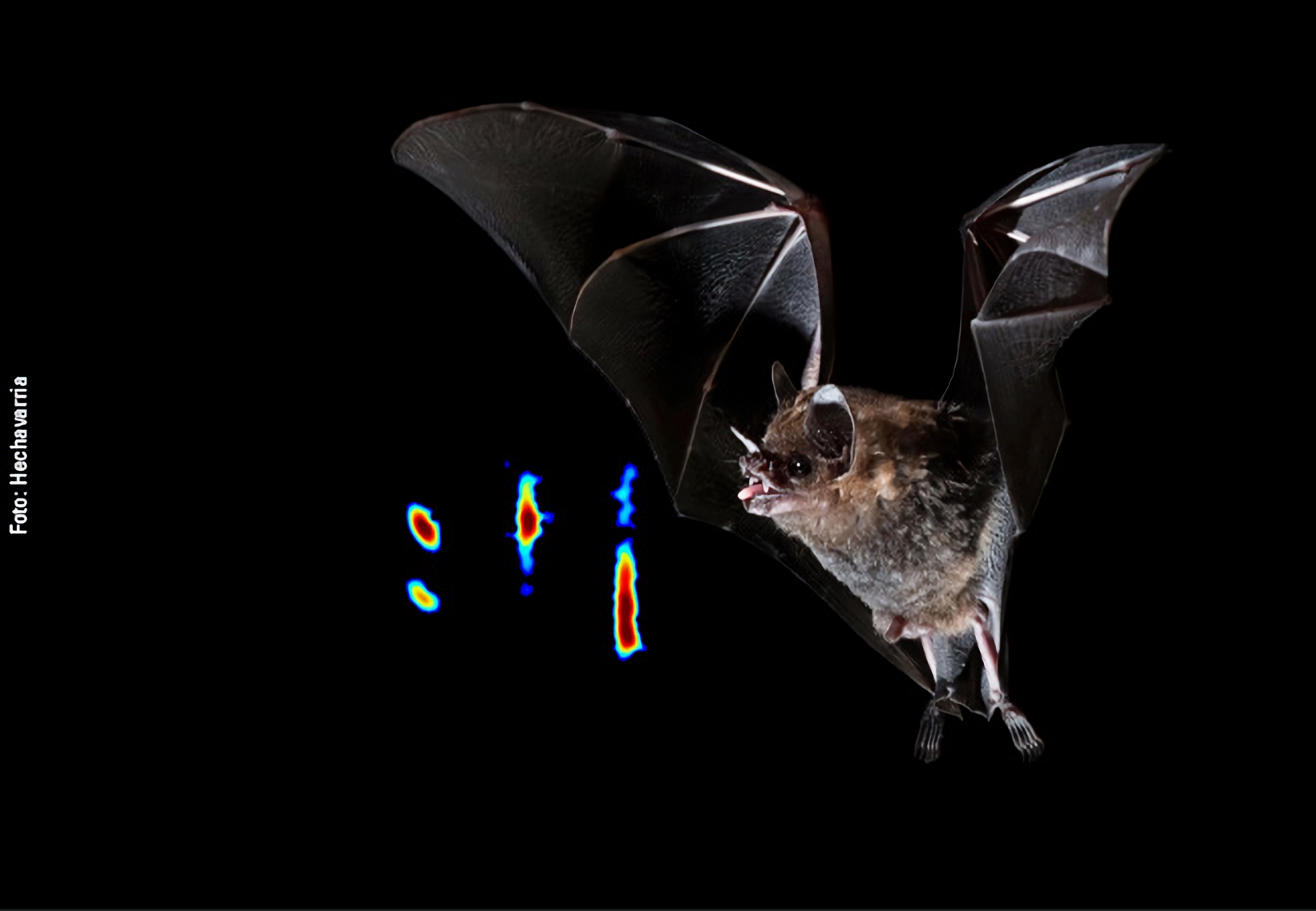
| Bats "see" with the ears. Scientists at Goethe University have found out how the auditory cortex is prepared for the incoming acoustic signals. Credit: Hechavarria |
When bats emit sounds for echolocation, a feedback loop modulates the sensitivity of the auditory cortex for incoming acoustic signals. Neuroscientists from the Goethe University Frankfurt found out. In a study published in the journal "Nature Communications", they show that the flow of information in the neuronal circuit involved reversed as the sound was generated. This feedback prepares the auditory cortex for the expected “echoes” of the sounds sent out. The researchers see their results as a sign that the importance of feedback loops in the brain is currently still underestimated.
Bats are famous for their ultrasound navigation: they orientate themselves through their extremely sensitive hearing by emitting ultrasound sounds and getting a picture of their environment based on the sound thrown back. For example, the eyelid nose bat (Carollia perspicillata) the fruits she prefers as food through this echolocation system. At the same time, the bats also use their voice to communicate with their peers, for which they choose a somewhat lower frequency range.
Neuroscientist Julio C. Hechavarria from the Institute for Cell Biology and Neuroscience at Goethe University, together with his team, examines which brain activities in the case of the eyewear nose go hand in hand with the vocalizations. In their latest study, the Frankfurters examined how the front lobes - a region in the front brain that is associated with the planning of actions in humans - and the auditory cortex, in which acoustic signals are processed, work together in the echolocation. For this purpose, the researchers used tiny electrodes on the bats, which recorded the activity of the nerve cells in the frontal lobe and in the auditory cortex.





.png)


.jpg)