
 |
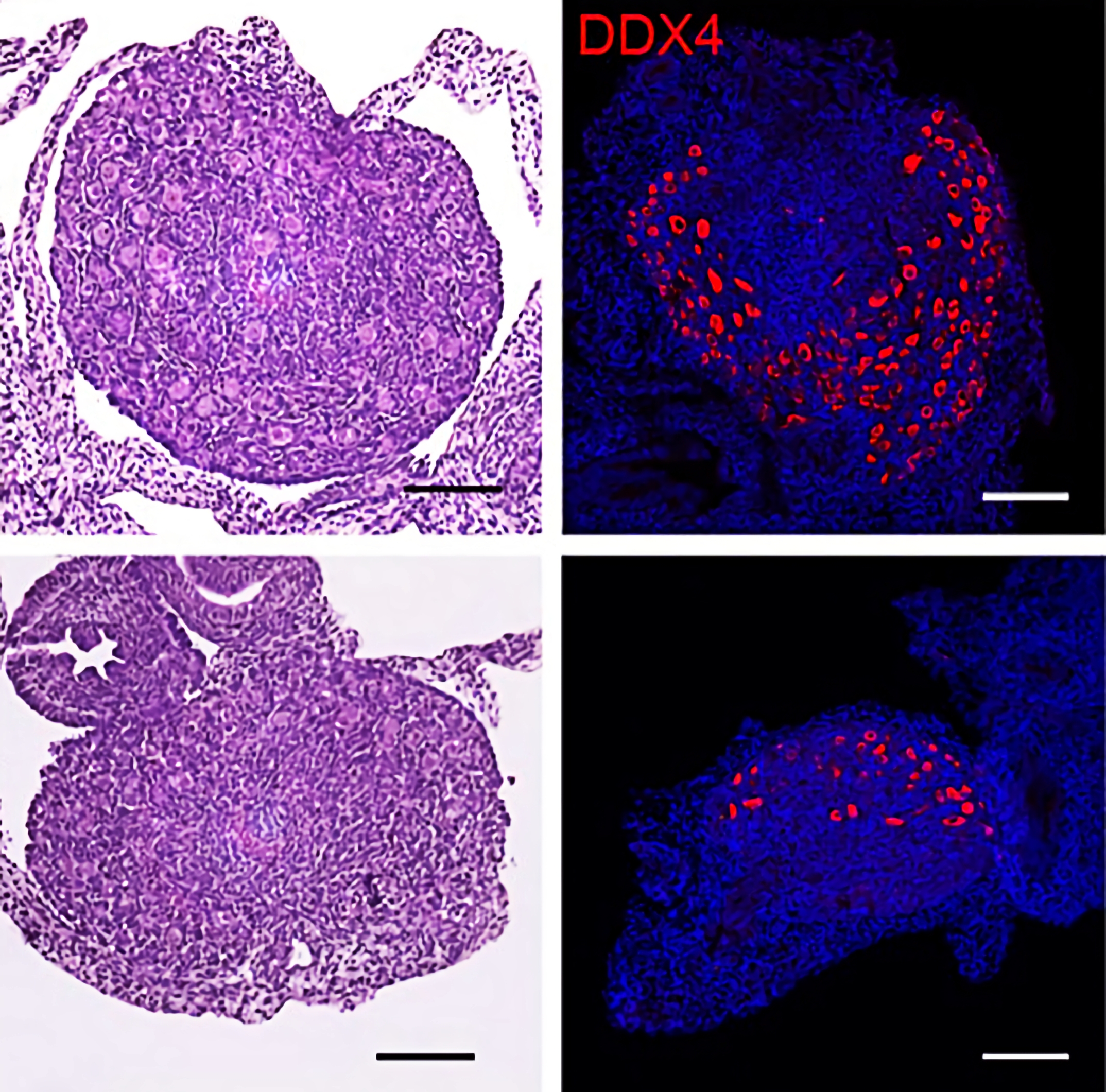
| Female mammals have a limited number of follicles that can form eggs, called the ovarian reserve. New work at UC Davis shows that the PRC1 gene complex is responsible for establishing the ovarian reserve and plays a role in fertility. Credit: Mengwen Hu, UC Davis |
Scientific Frontline: Extended "At a Glance" Summary: The Ovarian Reserve
The Core Concept: The ovarian reserve is the finite, non-renewable pool of primordial follicles present in mammalian females from birth, with each follicle containing an oocyte capable of eventually developing into an egg.
Key Distinction/Mechanism: The establishment and maintenance of the reserve rely on a group of proteins known as Polycomb Repressive Complex 1 (PRC1). PRC1 functions as an epigenetic mechanism that suppresses the cellular development process (meiosis), forcing the oocytes into a paused, quiescent state where they can survive for decades without dividing or proliferating.
Major Frameworks/Components:
- Epigenetic Regulation: The process of altering how genes function and express themselves without changing the underlying DNA sequence, crucial for maintaining cellular arrest.
- Polycomb Repressive Complex 1 (PRC1): The specific protein complex responsible for halting oocyte development; its depletion results in rapid follicle loss and sterility.
- Meiosis Suppression: The targeted inhibition of cell division prior to the establishment of the reserve, ensuring proper gene expression programs are maintained.
- Primordial Follicles: The fundamental, arrested cellular units that house the oocytes and collectively make up the reserve.


.jpg)