. Scientific Frontline

Monday, August 22, 2022

Surprising details leap out in sharp new James Webb Space Telescope images of Jupiter

Image 1 This July 27 image of Jupiter taken by the Near-Infrared Camera on the new James Webb Space Telescope is artificially colored to emphasize stunning details of the planet: auroral emission from ionized hydrogen at both the north and south poles (red); high-altitude hazes (green) that swirl around the poles; and light reflected from the deeper main cloud (blue). The Great Red Spot, the equatorial region and compact cloud regions appear white or reddish-white; regions with little cloud cover appear as dark ribbons north of the equatorial region.
Resized Image using AI by SFLORG
Additional Below
Image credit: NASA, European Space Agency, Jupiter Early Release Science team. Image processing: Judy Schmidt

The latest images of Jupiter from the James Webb Space Telescope (JWST) are stunners.

Captured on July 27, the infrared images — artificially colored to make specific features stand out — show fine filigree along the edges of the colored bands and around the Great Red Spot and also provide an unprecedented view of the auroras over the north and south poles.

One wide-field image presents a unique lineup of the planet, its faint rings and two of Jupiter’s smaller satellites — Amalthea and Adrastea — against a background of galaxies.

“We’ve never seen Jupiter like this. It’s all quite incredible,” said planetary astronomer Imke de Pater, professor emerita of the University of California, Berkeley, who led the scientific observations of the planet with Thierry Fouchet, a professor at the Paris Observatory. “We hadn’t really expected it to be this good, to be honest. It’s really remarkable that we can see details on Jupiter together with its rings, tiny satellites and even galaxies in one image.”

De Pater, Fouchet and their team released the images today (Aug. 22) as part of the telescope’s Early Release Science program.

Efficient Carbon Dioxide Reduction under Visible Light with a Novel, Inexpensive Catalyst


A novel coordination polymer-based photocatalyst for CO2 reduction exhibits unprecedented performance, giving scientists at Tokyo Tech hope in the fight against global warming. Made from abundant elements and requiring no complex post-synthesis treatment or modifications, this promising photocatalyst could pave the way for a new class of photocatalysts for efficiently converting CO2 into useful chemicals.

The carbon dioxide (CO2) released into the atmosphere during fossil fuel burning is a leading cause of global warming. One way to address this growing threat is to develop CO2 reduction technologies, which convert CO2 into useful chemicals, such as CO and formic acid (HCOOH). In particular, photocatalytic CO2 reduction systems use visible or ultraviolet light to drive CO2 reduction, much like how plants use sunlight to conduct photosynthesis. Over the past few years, scientists have reported many sophisticated photocatalysts based on metal-organic frameworks and coordination polymers (CPs). Unfortunately, most of them either require complex post-synthesis treatment and modifications or are made from precious metals.

In a recent study published in ACS Catalysis, a research team Japan found a way to overcome these challenges. Led by Specially Appointed Assistant Professor Yoshinobu Kamakura and Professor Kazuhiko Maeda from Tokyo Institute of Technology (Tokyo Tech), the team developed a new kind of photocatalyst for CO2 reduction based on a CP containing lead–sulfur (Pb–S) bonds. Known as KGF-9, the novel CP consists of an infinite (–Pb–S–) n structure with properties unlike any other known photocatalyst.

Friday, August 19, 2022

Which animals can best withstand climate change?

Masai Mara National Reserve, Kenya
Credit: David Heiling on Unsplash

Extreme weather such as prolonged drought and heavy rainfall is becoming more and more common as the global average temperature rises – and it will only get worse in the coming decades. How will the planet’s ecosystems respond?

That is the big question and the background for our study, said biologist John Jackson.

Together with his biologist colleagues Christie Le Coeur from the University of Oslo and Owen Jones from SDU, he authored a new study, published in eLife.

A clear pattern

In the study, the authors analyzed data on population fluctuations from 157 mammal species from around the world and compared them with weather and climate data from the time the animal data were collected. For each species there are 10 or more years of data.

Their analysis has given them an insight into how populations of animal species have coped at times of extreme weather: Did they become more, or less, numerous? Did they have more or fewer offspring?

We can see a clear pattern: Animals that live a long time and have few offspring are less vulnerable when extreme weather hits than animals that live for a short time and have many offspring. Examples are llamas, long-lived bats and elephants versus mice, possums and rare marsupials such as the woylie, said Owen Jones.

Random Acts of Kindness Make a Bigger Splash Than Expected


Even though they often enhance happiness, acts of kindness such as giving a friend a ride or bringing food for a sick family member can be somewhat rare because people underestimate how good these actions make recipients feel, according to new research from The University of Texas at Austin.

The study by UT Austin McCombs School of Business Assistant Professor of Marketing Amit Kumar, along with Nicholas Epley of the University of Chicago, found that although givers tend to focus on the object they’re providing or action they’re performing, receivers instead concentrate on the feelings of warmth the act of kindness has conjured up. This means that givers’ “miscalibrated expectations” can function as a barrier to performing more prosocial behaviors such as helping, sharing or donating.

The research is online in advance in the Journal of Experimental Psychology: General.

To quantify these attitudes and behaviors, the researchers conducted a series of experiments.

In one, the researchers recruited 84 participants in Chicago’s Maggie Daley Park. Participants could choose whether to give away to a stranger a cup of hot chocolate from the park’s food kiosk or keep it for themselves. Seventy-five agreed to give it away.

Researchers delivered the hot chocolate to the stranger and told them the study participant had chosen to give them their drink. Recipients reported their mood, and performers indicated how they thought recipients felt after getting the drink.

‘Forever chemicals’ destroyed by simple new method

Water samples for PFAS analysis.
Credit: Michigan Department of Environment, Great Lakes and Energy

PFAS, a group of manufactured chemicals commonly used since the 1940s, are called “forever chemicals” for a reason. Bacteria can’t eat them; fire can’t incinerate them; and water can’t dilute them. And, if these toxic chemicals are buried, they leach into surrounding soil, becoming a persistent problem for generations to come.

Now, Northwestern University chemists have done the seemingly impossible. Using low temperatures and inexpensive, common reagents, the research team developed a process that causes two major classes of PFAS compounds to fall apart — leaving behind only benign end products.

The simple technique potentially could be a powerful solution for finally disposing of these harmful chemicals, which are linked to many dangerous health effects in humans, livestock and the environment.

The research is published in the journal Science.

“PFAS has become a major societal problem,” said Northwestern’s William Dichtel, who led the study. “Even just a tiny, tiny amount of PFAS causes negative health effects, and it does not break down. We can’t just wait out this problem. We wanted to use chemistry to address this problem and create a solution that the world can use. It’s exciting because of how simple — yet unrecognized — our solution is.”

Hope for new curative treatment for children with neuroblastoma

Credit: National Cancer Institute

Children who relapse into the aggressive neuroblastoma cancer form have little chance of survival. Researchers at Karolinska Institutet, among others, have been able to show that DHODH inhibitors, which have been well tolerated by humans, can cure neuroblastoma in mice if given together with cell toxins. The study has been published in the journal JCI Insight and paves the way for clinical trials of combination therapy.

Neuroblastoma is a tumor of nerve tissue that is diagnosed early, usually before the age of two. The disease affects about 15 to 20 children annually in Sweden and is the deadliest form of cancer in young children. The new study shows that the protein DHODH (dihydroorotate dehydrogenase), which is involved in metabolism and DNA synthesis, also has a key role in aggressive neuroblastoma and increases tumor growth.

Exploring quantum electron highways with laser light

 The translucent crystal at the center of this illustration is a topological insulator, a quantum material where electrons (white dots) flow freely on its surface but not through its interior. By hitting a TI with powerful pulses of circularly polarized laser light (red spiral), SLAC and Stanford scientists generated harmonics that revealed what happens when the surface switches out of its quantum phase and becomes an ordinary insulator.
Credit: Greg Stewart/SLAC National Accelerator Laboratory

Topological insulators, or TIs, have two faces: Electrons flow freely along their surface edges, like cars on a superhighway, but can’t flow through the interior of the material at all. It takes a special set of conditions to create this unique quantum state – part electrical conductor, part insulator – which researchers hope to someday exploit for things like spintronics, quantum computing and quantum sensing. For now, they’re just trying to understand what makes TIs tick.

In the latest advance along those lines, researchers at the Department of Energy’s SLAC National Accelerator Laboratory and Stanford University systematically probed the “phase transition” in which a TI loses its quantum properties and becomes just another ordinary insulator.

They did this by using spiraling beams of laser light to generate harmonics – much like the vibrations of a plucked guitar string – from the material they were examining. Those harmonics make it easy to distinguish what’s happening in the superhighway layer from what’s happening in the interior and see how one state gradually gives way to the other, they reported in Nature Photonics.

“The harmonics generated by the material amplify the effects we want to measure, making this a very sensitive way to see what’s going on in a TI,” said Christian Heide, a postdoctoral researcher with the Stanford PULSE Institute at SLAC who led the experiments.

Breaking in a New Planet

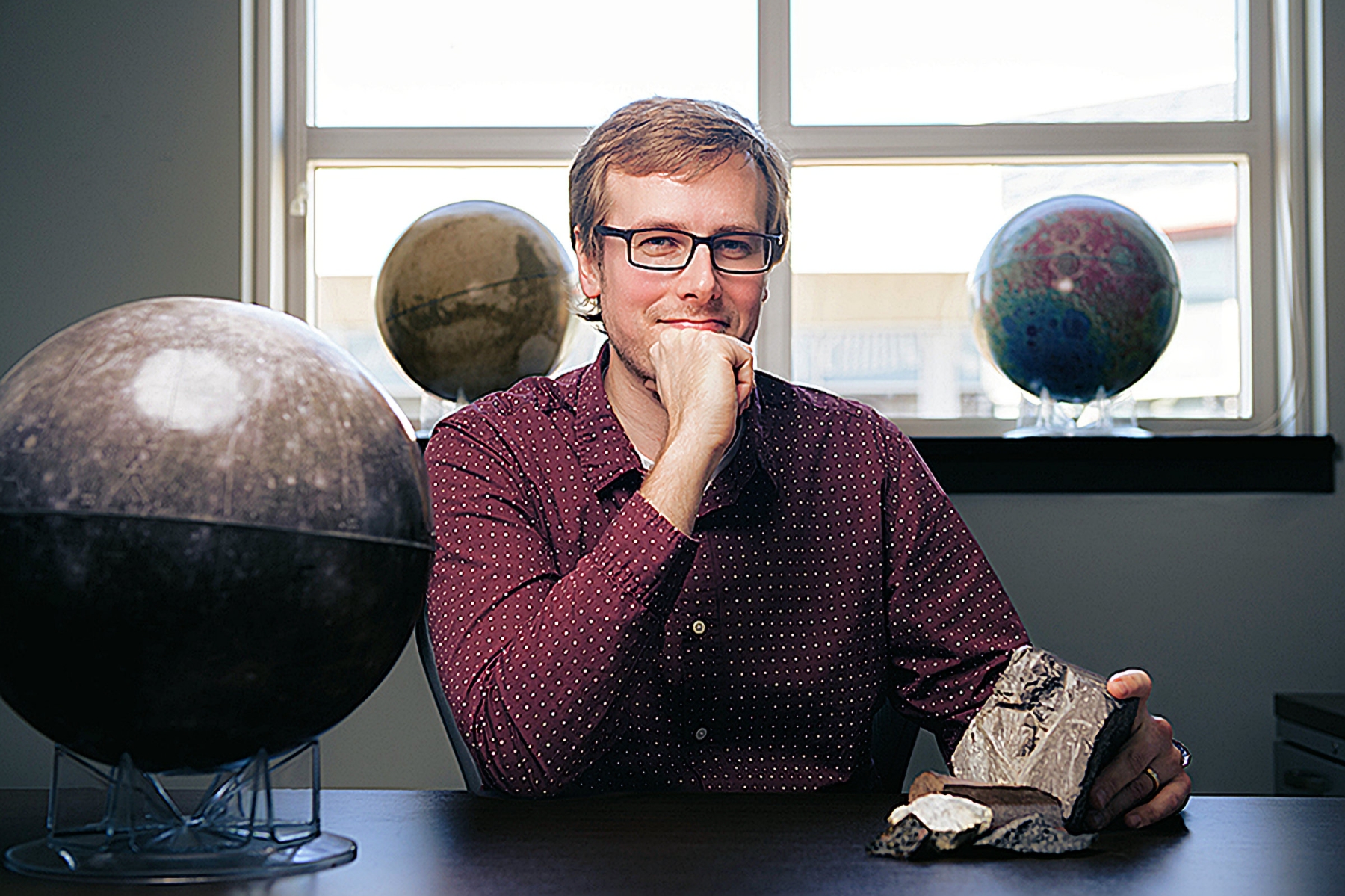
Brandon Johnson, an expert in impact crater dynamics, surrounded by some of his favorite research subjects: Mercury, Mars and the moon.
Credit: Purdue University | Rebecca McElhoe

The harder you hit something – a ball, a walnut, a geode – the more likely it is to break open. Or, if not break open, at least lose a little bit of its structural integrity, the way baseball players pummel new gloves to make them softer and more flexible. Cracks, massive or tiny, form and bear a silent, permanent witness to the impact.

Studying how those impacts affect planetary bodies, asteroids, moons and other rocks in space helps planetary scientists including Brandon Johnson, associate professor, and Sean Wiggins, postdoctoral researcher, in the College of Science’s Department of Earth, Atmospheric, and Planetary Sciences at Purdue University, understand extraplanetary geology, especially where to look for precious matter including water, ice and even, potentially, microbial life. A YouTube video is available online.

Every solid body in the solar system is constantly pummeled by impacts, both large and small. Even on Earth, every single spot has been affected by at least three big impacts. Using the moon as a test subject, Johnson, Wiggins and their team set out to quantify the relationship between impacts and a planet’s porosity.

Medieval monks were ‘riddled with worms’, study finds

Augustinian friars being excavated by the Cambridge Archaeological Unit. 
Credit: Cambridge Archaeological Unit

A new analysis of remains from medieval Cambridge shows that local Augustinian friars were almost twice as likely as the city’s general population to be infected by intestinal parasites.

This is despite most Augustinian monasteries of the period having latrine blocks and hand-washing facilities, unlike the houses of ordinary working people.

Researchers from the University of Cambridge’s Department of Archaeology say the difference in parasitic infection may be down to monks manuring crops in friary gardens with their own feces, or purchasing fertilizer containing human or pig excrement.

The study, published today in the International Journal of Paleopathology, is the first to compare parasite prevalence in people from the same medieval community who were living different lifestyles, and so might have differed in their infection risk.

The population of medieval Cambridge consisted of residents of monasteries, friaries and nunneries of various major Christian orders, along with merchants, traders, craftsmen, laborers, farmers, and staff and students at the early university.

Cambridge archaeologists investigated samples of soil taken from around the pelvises of adult remains from the former cemetery of All Saints by the Castle parish church, as well as from the grounds where the city’s Augustinian Friary once stood.

University Scientists Found Out How to Efficiently Extract Silver

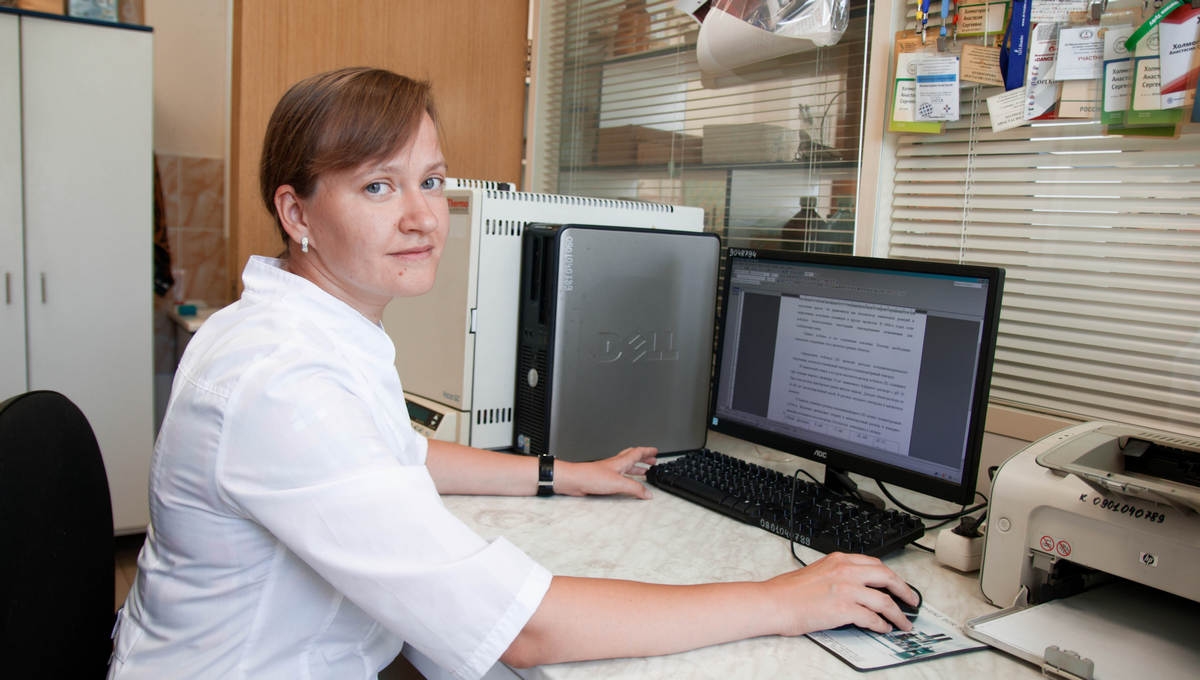
Yulia Petrova is engaged in the selection of sorbents in the Laboratory of Chemical Design for New Multifunctional Oxide Materials.
Photo credit: Daniil Kovalenko

Chemists at Ural Federal University have identified the best sorbent based on aminopolymers modified with sulfoethyl groups for the extraction of silver ions from multicomponent solutions. The results of the research lead to the production of sorbents for the extraction of metals which concentration in solutions is insignificant. The obtained sorbents are potentially applicable, for example, in the purification of natural drinking water, fish ponds, and in the processing of industrial waste. The research was supported financially by the Russian Science Foundation (grant № 21-73-00052) and is described in a scientific article published in the Russian Journal of Inorganic Chemistry.

"Sorption of metal ions is facilitated by the very nature of the aminopolymer matrix of the sorbents. Adding sulfoethyl groups to it, as our studies show, leads to a significant increase in the selective properties of sorbents, that is the ability to absorb only certain ions from a wide set of different ions. The higher the degree of modification of sorbents by sulfoethyl groups, i.e. the more sulfoethyl groups in their composition, the better their selective properties. This particular work is dedicated to studying the extraction rate of silver ions from multicomponent solutions in the presence of copper, nickel, cobalt, zinc, and several other metals," says Yulia Petrova, Head of the research group and Associate Professor at the Department of Analytical and Environmental Chemistry at UrFU.

First image of antigen-bound T-cell receptor at atomic resolution

The cryo-EM structure of the fully assembled T-cell receptor (TCR) complex with a tumor-associated peptide/MHC ligand provides important insights into the biology of TCR signaling. These insights into the nature of TCR assembly and the unusual cell membrane architecture reveal the basis of antigen recognition and receptor signaling. 
Credit: Robert Tampé | Goethe University Frankfurt

T cells are our immune system's customized tools for fighting infectious diseases and tumor cells. On their surface, these special white blood cells carry a receptor that recognizes antigens. With the help of cryo-electron microscopy, biochemists and structural biologists from Goethe University Frankfurt, in collaboration the University of Oxford and the Max Planck Institute of Biophysics, were able to visualize the whole T-cell receptor complex with bound antigen at atomic resolution for the first time. Thereby they helped to understand a fundamental process which may pave the way for novel therapeutic approaches targeting severe diseases.

The immune system of vertebrates is a powerful weapon against external pathogens and cancerous cells. T cells play a crucial role in this context. They carry a special receptor called the T-cell receptor on their surface that recognizes antigens – small protein fragments of bacteria, viruses and infected or cancerous body cells – which are presented by specialized immune complexes. The T-cell receptor is thus largely responsible for distinguishing between “self" and “foreign". After binding of a suitable antigen to the receptor, a signaling pathway is triggered inside the T cell that “arms" the cell for the respective task. However, how this signaling pathway is activated has remained a mystery until now – despite the fact that the T-cell receptor is one of the most extensively studied receptor protein complexes.

Thursday, August 18, 2022

Increased risk of some neurological and psychiatric disorders remains two years after COVID-19 infection

New diagnoses of disorders including psychosis, dementia, seizures and ‘brain fog’ remain commoner two years after COVID-19 than after other respiratory infections, whereas the increased risks of depression and anxiety after COVID-19 are short-lived and there is no overall excess of cases.

Published in The Lancet Psychiatry, the new study from the University of Oxford and the National Institute for Health and Care Research (NIHR) Oxford Health Biomedical Research Centre investigated neurological and psychiatric diagnoses in over 1.25 million people following diagnosed COVID-19 infection, using data from the US-based TriNetX electronic health record network.

The study reports on 14 neurological and psychiatric diagnoses over a 2-year period and compares their frequency with a matched group of people recovering from other respiratory infections. It also reports data on children and older adults separately, and compares data across three waves of the pandemic. To our knowledge, these are the first robust data addressing these important questions.

Confirming previous studies, many of the disorders are more common after COVID-19. Notably, the increased risk of anxiety and depression subsides within two months of COVID-19 and, over the whole 2-year period, are no more likely to occur than after other respiratory infections. In contrast, diagnoses of many neurological disorders (such as dementia and seizures), as well as psychotic disorders and ‘brain fog’, continue to be made more often after COVID-19 throughout the 2 years.

Results in children (under 18) showed similarities and differences to adults. The likelihood of most diagnoses after COVID-19 was lower than in adults, and they were not at greater risk of anxiety or depression than children who had other respiratory infections. However, like adults, children recovering from COVID-19 were more likely to be diagnosed with some conditions, including seizures and psychotic disorders.

A new neuromorphic chip for AI on the edge, at a small fraction of the energy and size of today’s compute platforms

 The NeuRRAM chip is an innovative neuromorphic chip
Credit: David Baillot/University of California San Diego

An international team of researchers has designed and built a chip that runs computations directly in memory and can run a wide variety of AI applications–all at a fraction of the energy consumed by computing platforms for general-purpose AI computing.

The NeuRRAM neuromorphic chip brings AI a step closer to running on a broad range of edge devices, disconnected from the cloud, where they can perform sophisticated cognitive tasks anywhere and anytime without relying on a network connection to a centralized server. Applications abound in every corner of the world and every facet of our lives, and range from smart watches, to VR headsets, smart earbuds, smart sensors in factories and rovers for space exploration.

The NeuRRAM chip is not only twice as energy efficient as the state-of-the-art “compute-in-memory” chips, an innovative class of hybrid chips that runs computations in memory, it also delivers results that are just as accurate as conventional digital chips. Conventional AI platforms are a lot bulkier and typically are constrained to using large data servers operating in the cloud.

In addition, the NeuRRAM chip is highly versatile and supports many different neural network models and architectures. As a result, the chip can be used for many different applications, including image recognition and reconstruction as well as voice recognition.

Lungless Salamanders Develop Lungs as Embryos Despite Lung Loss in Adults for Millions of Years

 Hemidactylium scutatum larvae, lungless salamander native to eastern North America
Credit: Zachary R Lewis

Lungs are essential to many vertebrates including humans. However, four living amphibian clades have independently eliminated pulmonary respiration and lack lungs, breathing primarily through their wet skin. Little is known of the developmental basis of lung loss in these clades.

In a new study in Science Advances researchers in the Department of Organismic and Evolutionary Biology and the Museum of Comparative Zoology at Harvard University examined the Plethodontidae, a dominant family of salamanders, all of which are lungless as adults, and find they actually do develop lungs as embryos shedding light on the evolution of lung loss over millions of years.

The lungless salamander family Plethodontidae is the most species-rich family of salamanders accounting for more than two-thirds of existing salamander diversity. All adult plethondontids are lungless, breathing entirely through nonpulmonary tissues, mainly the skin and the mucus membranes in the mouth and throat. Lung loss has occurred independently at least four times among distantly related amphibians and there are other instances of lung reduction or loss in both amphibians and some vertebrates. The developmental reason for this loss, however, remains a mystery.

“Clearly lungless salamanders do fine without lungs given that they make up about two-thirds of all salamander species,” said lead author Zachary R. Lewis, former doctoral candidate (PhD ’16), “perhaps losing lungs enabled, rather than hindered, this remarkable evolutionary success.”

UBC researchers discover ‘weak spot’ across major COVID-19 variants

Cryo-electron microscopy reveals how the VH Ab6 antibody fragment (red) attaches to the vulnerable site on the SARS-CoV-2 spike protein (grey) to block the virus from binding with the human ACE2 cell receptor (blue).
Credit: Dr. Sriram Subramaniam, UBC

Researchers at the University of British Columbia have discovered a key vulnerability across all major variants of the SARS-CoV-2 virus, including the recently emerged BA.1 and BA.2 Omicron subvariants.

The weakness can be targeted by neutralizing antibodies, potentially paving the way for treatments that would be universally effective across variants.

The findings, published today in Nature Communications, use cryo-electron microscopy (cryo-EM) to reveal the atomic-level structure of the vulnerable spot on the virus’ spike protein, known as an epitope. The paper further describes an antibody fragment called VH Ab6 that is able to attach to this site and neutralize each major variant.

“This is a highly adaptable virus that has evolved to evade most existing antibody treatments, as well as much of the immunity conferred by vaccines and natural infection,” says Dr. Sriram Subramaniam (he/him), a professor at UBC’s faculty of medicine and the study’s senior author. “This study reveals a weak spot that is largely unchanged across variants and can be neutralized by an antibody fragment. It sets the stage for the design of pan-variant treatments that could potentially help a lot of vulnerable people.”

Featured Article

What Is: Psychopathy | Part three of the "Dark Tetrad"

Scientific Frontline: Extended "At a Glance" Summary : Psychopathy The Core Concept : Psychopathy is a profound personality disord...

Top Viewed Articles