. Scientific Frontline

Tuesday, November 22, 2022

Flocks of assembler robots show potential for making larger structures

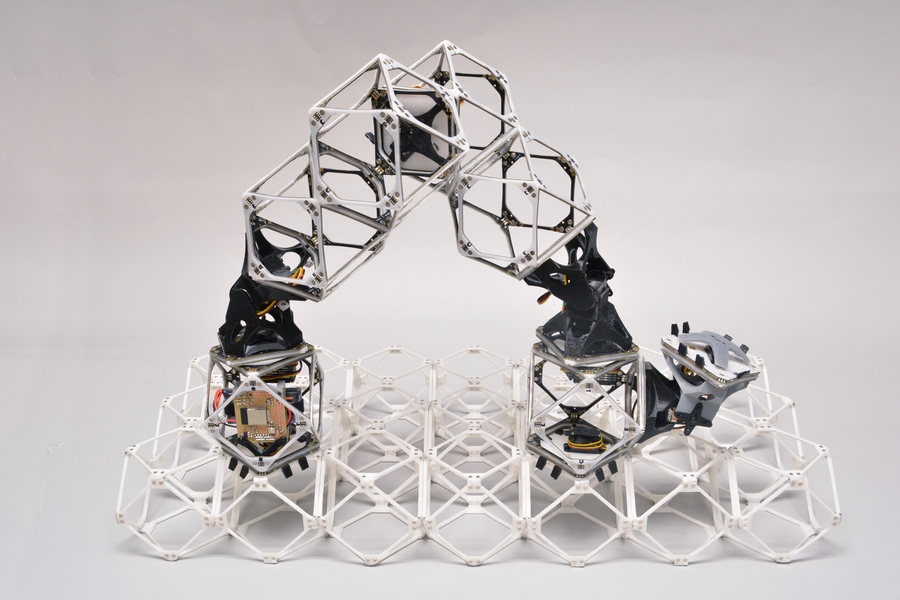
Researchers at MIT have made significant steps toward creating robots that could practically and economically assemble nearly anything, including things much larger than themselves, from vehicles to buildings to larger robots. The new system involves large, usable structures built from an array of tiny identical subunits called voxels (the volumetric equivalent of a 2-D pixel).
Photo Credit: Massachusetts Institute of Technology | Courtesy of the researchers

Researchers at MIT have made significant steps toward creating robots that could practically and economically assemble nearly anything, including things much larger than themselves, from vehicles to buildings to larger robots.

The new work, from MIT’s Center for Bits and Atoms (CBA), builds on years of research, including recent studies demonstrating that objects such as a deformable airplane wing and a functional racing car could be assembled from tiny identical lightweight pieces — and that robotic devices could be built to carry out some of this assembly work. Now, the team has shown that both the assembler bots and the components of the structure being built can all be made of the same subunits, and the robots can move independently in large numbers to accomplish large-scale assemblies quickly.

The new work is reported in the journal Nature Communications Engineering, in a paper by CBA doctoral student Amira Abdel-Rahman, Professor and CBA Director Neil Gershenfeld, and three others.

A fully autonomous self-replicating robot assembly system capable of both assembling larger structures, including larger robots, and planning the best construction sequence is still years away, Gershenfeld says. But the new work makes important strides toward that goal, including working out the complex tasks of when to build more robots and how big to make them, as well as how to organize swarms of bots of different sizes to build a structure efficiently without crashing into each other.

A Solution for Reclaiming Valuable Resources Flushed Down the Drain

A problem at sewage treatment plants - the buildup of 'brown grease' - could yield a bounty of biofuel, thanks to the work of UConn researchers
Photo Credit: kubinger

For the everyday products we use, a pattern has become numbingly familiar: Something is made, we use it, we throw it away. Yet, for a sustainable future – one where we don’t simply extract and toss resources – we need to make this linear process circular, says UConn Department of Chemical and Biomolecular Engineering Emeritus Professor Richard Parnas.

Parnas and his team research biodiesel and how to make it out of waste resources. Parnas also co-founded REA Resource Recovery Systems, which supported UConn Chemical Engineering graduate student Cong Liu Ph.D. ‘22 to develop technology to improve a critical process of removing sulfur from biodiesel made from waste materials. In this case, the materials originate from sewage, and the technology is being implemented in a project at Danbury’s John Oliver Memorial Sewer Plant scheduled to go into operation in January 2023 that will convert fats, oils, and grease into biodiesel whose lifecycle emissions are more than 74% lower than petroleum-based diesel.

Earth might be experiencing 7th mass extinction, not 6th

Diorama depicting Ediacaran-era sea creatures.
Photo Credit: Smithsonian Institution

Earth is currently in the midst of a mass extinction, losing thousands of species each year. New research suggests environmental changes caused the first such event in history, which occurred millions of years earlier than scientists previously realized.

Most dinosaurs famously disappeared 66 million years ago at the end of the Cretaceous period. Prior to that, a majority of Earth’s creatures were snuffed out between the Permian and Triassic periods, roughly 252 million years ago.

Thanks to the efforts of researchers at UC Riverside and Virginia Tech, it’s now known that a similar extinction occurred 550 million years ago, during the Ediacaran period. This discovery is documented in a Proceedings of the National Academy of Sciences paper.

Although unclear whether this represents a true “mass extinction,” the percentage of organisms lost is similar to these other events, including the current, ongoing one.

Researchers believe environmental changes are to blame for the loss of approximately 80% of all Ediacaran creatures, which were the first complex, multicellular life forms on the planet.

Covid-19: the Spike protein is no longer the only target

Possible mechanism of action of a drug targeting Nsp1 of SARS-CoV-2. In infected cells, Nsp1 blocks the ribosome mRNA canal by acting as a "cap" that prevents the expression of the host's mRNA. Linking a ligand to the proposed cryptic pocket highlighted in purple could prevent blockage mediated by Nsp1 and, ultimately, restore the ability of the ribosome to initiate the translation of the mRNA.
Photo Credit: UNIGE Alberto Borsatto

A research team led by the UNIGE reveals a hidden cavity on a key SARS-CoV-2 protein to which drugs could bind.

With the continuous emergence of new variants and the risk of new strains of the virus, the development of innovative therapies against SARS-CoV-2 remains a major public health challenge. Currently, the proteins that are on the surface of the virus and/or are involved in its replication are the preferred therapeutic targets, like the Spike protein targeted by vaccines. One of them, the non-structural protein Nsp1, had been studied little until now. A team from the University of Geneva (UNIGE), in collaboration with University College London (UCL) and the University of Barcelona, has now revealed the existence of a hidden ''pocket’ on its surface. A potential drug target, this cavity opens the way to the development of new treatments against Covid-19 and other coronaviruses. These results can be found in the journal eLife.

Immune cells in ALS patients can predict the course of the disease

Solmaz Yazdani, PhD student at KI.
Photo Credit: Filip Mestanov

ALS is a disease in which nerve cells in the brain, brain stem and spinal cord die. 

By measuring immune cells in the spinal cord fluid when diagnosing ALS, it is possible to predict how the course of the disease will go, according to a study from the Karolinska Institutet published in Nature Communications.

The study shows that a high proportion of so-called effector T cells are associated with a low survival rate. At the same time, the study shows that a high proportion of activated regulatory T cells are protective against the disease. The findings provide new evidence of T-cell involvement in the course of the disease and show that certain types of effector T cells accumulate in the spinal cord fluid in ALS patients.

Genes and Languages

Schematic illustration of possible scenarios of matches and mismatches in the transmission of genes and languages. Genetic (demographic) history is represented by a broad branching tree. Linguistic history is represented by colored lines, differentiating five language families (a-e).
Illustration Credit Barbieri et al., PNAS

More than 7,000 languages are spoken in the world. This linguistic diversity is passed on from one generation to the next, similarly to biological traits. But have language and genes evolved in parallel over the past few thousand years, as Charles Darwin originally thought? An interdisciplinary team at the University of Zurich together with the Max Planck Institute for Evolutionary Anthropology in Leipzig (Germany) has now examined this question at a global level. The researchers put together a global database linking linguistic and genetic data entitled GeLaTo (Genes and Languages Together), which contains genetic information from some 4,000 individuals speaking 295 languages and representing 397 genetic populations.

One in five gene-language links point to language shifts

In their study, the researchers examined the extent to which the linguistic and genetic histories of populations coincided. People who speak related languages tend to also be genetically related, but this isn’t always the case. “We focused on cases where the biological and linguistic patterns differed and investigated how often and where these mismatches occur,” says Chiara Barbieri, UZH geneticist who led the study and initiated it together with colleagues when she was a postdoc at the Max-Planck-Institute.

Another Global Cooling Is Not Expected in the Soon


The last century and a half is the warmest in several thousand years.
Photo Credit: Ilya Safarov

Because of the large amount of carbon dioxide in the atmosphere, there will not be another ice age, which, according to scientists' calculations, should come in the not-so-distant future. Interglacial periods typically last 12,000 to 15,000 years, succeeded by glacial periods. The interglacial period, to which the present one belongs, lasts almost 12 thousand years, and should have ended soon and given way to an ice age. However, as climate modelers have shown, not only will temperatures not decrease in the coming decades, but they will increase. Rashit Khantemirov, a Head Specialist of the Laboratory of Natural Science Methods in Humanities at Ural Federal University, talked about it on the broadcast of Komsomolskaya Pravda radio.

"One of our most recent results of our work is an ultra-long tree-ring chronology. Based on data from the annual rings of semi-fossil trees in Yamal, we studied information on summer temperatures for 7,638 years. We found out that the current warming is the strongest. Since the middle of the 19th century temperature has been rising very rapidly and reached its highest level in the last decades. That is, there has been a warming of 1.5 degrees in global temperature over the last 150 years. This is not very critical for us now, but the consequences will be tangible: not we, but our children and grandchildren will suffer," Rashid Khantemirov explains.

Monday, November 21, 2022

Genetic ‘Hitchhikers’ Can Be Directed Using CRISPR

NC State researchers expand the CRISPR toolbox with possible agricultural implications.
Photo Credit: Atlas Green

In a new study, North Carolina State University researchers characterize a range of molecular tools to rewrite – not just edit – large chunks of an organism’s DNA, based on CRISPR-Cas systems associated with selfish genetic “hitchhikers” called transposons.

The researchers investigate diverse Type I-F CRISPR-Cas systems and engineer them to add genetic cargo – up to 10,000 additional genetic code letters – to the transposon’s cargo to make desired changes to a bacterium – in this case, E. coli.

The findings expand the CRISPR toolbox and could have significant implications in the manipulation of bacteria and other organisms at a time of need for flexible genome editing in therapeutics, biotechnology and more sustainable and efficient agriculture.

Bacteria use CRISPR-Cas as adaptive immune systems to withstand attacks from enemies like viruses. These systems have been adapted by scientists to remove or cut and replace specific genetic code sequences in a variety of organisms. The new finding shows that exponentially larger amounts of genetic code can be moved or added, potentially increasing CRISPR’s functionality.

Monitoring “frothy” magma gases could help evade disaster

Aerial photograph of Kusatsu-Shirane area (October 2021). Thanks to its geothermally active location, the town of Kusatsu, Gunma Prefecture (in the background of this image), is one of Japan’s most popular onsen (hot springs) destinations. The acidic and vibrant turquoise Yugama crater lake, however, is definitely not suitable for swimming.
Photo Credit: Tomoya Obase

Scientific Frontline: "At a Glance" Summary

  • Main Discovery: The ratio of Argon-40 to Helium-3 isotopes in volcanic gases serves as a precise indicator of underground magma frothiness and specific eruption risks.
  • Methodology: Researchers conducted a seven-year longitudinal study (2014–2021) collecting samples from six fumaroles at the Kusatsu-Shirane volcano, analyzing isotopic compositions via noble gas mass spectrometry and computer modeling.
  • Key Data: The study identified the specific Argon-40/Helium-3 ratio as the critical metric for measuring magma foaming, a variable derived from the seven-year dataset.
  • Significance: Monitoring magma frothiness distinguishes between eruption types; gas transfer to hydrothermal systems signals phreatic eruption risks, while increased buoyancy indicates potential magmatic eruptions.
  • Future Application: The research aims to produce portable, real-time mass spectrometers to establish continuous 24/7 early warning systems at active volcanoes.
  • Branch of Science: Volcanology and Geochemistry
  • Additional Detail: This geochemical analysis detects pre-eruptive precursors in the absence of seismic activity, providing a diagnostic capability that traditional geophysical monitoring often misses.

Intestinal microorganisms influence white blood cell levels in blood

Under normal conditions (steady state) neutrophils regulate the gut microbiota. When the number of neutrophils drops (neutropenia), the composition of the gut microbiota changes, stimulating T cells to produce IL-17A. IL-17-A in turn stimulates the production of neutrophils in the bone marrow (reactive granulopoiesis).
Illustration Credit: Daigo Hashimoto

White blood cells, or granulocytes, are cells that are part of the innate immune system. The most common type of granulocyte is the neutrophil, a phagocyte that destroys microbes in the body. Low neutrophil counts in the blood is called neutropenia; this condition is commonly seen in cases of leukemia or following chemotherapy. It is known that neutropenia induces granulopoiesis, the process formation of granulocytes. However, the exact mechanisms by which neutropenia drives granulopoiesis are not fully understood.

A team of researchers led by Associate Professor Daigo Hashimoto and Professor Takanori Teshima at Hokkaido University’s Faculty of Medicine have discovered that the gut microbiome plays a critical role in driving granulopoiesis in mice models. Their findings were published in the journal Proceedings of the National Academy of Sciences.

1,700-year-old spider monkey remains discovered in Teotihuacán, Mexico

Complete skeletal remains of a 1,700 year-old female spider monkey found in Teotihuacán, Mexico.
 Photo Credit: courtesy of Nawa Sugiyama

The complete skeletal remains of a spider monkey — seen as an exotic curiosity in pre-Hispanic Mexico — grants researchers new evidence regarding social-political ties between two ancient powerhouses: Teotihuacán and Maya Indigenous rulers.

The discovery was made by Nawa Sugiyama, a UC Riverside anthropological archaeologist, and a team of archaeologists and anthropologists who since 2015 have been excavating at Plaza of Columns Complex, in Teotihuacán, Mexico. The remains of other animals were also discovered, as well as thousands of Maya-style mural fragments and over 14,000 ceramic sherds from a grand feast. These pieces are more than 1,700 years old.

The spider monkey is the earliest evidence of primate captivity, translocation, and gift diplomacy between Teotihuacán and the Maya. Details of the discovery will be published in the journal PNAS. "This finding allows researchers to piece evidence of high diplomacy interactions and debunks previous beliefs that Maya presence in Teotihuacán was restricted to migrant communities," said Sugiyama, who led the research.

Short gamma-ray bursts traced farther into distant universe

Credit: W. M. Keck Observatory/Adam Makarenko

A Northwestern University-led team of astronomers has developed the most extensive inventory to date of the galaxies where short gamma-ray bursts (SGRBs) originate.

Using several highly sensitive instruments and sophisticated galaxy modeling, the researchers pinpointed the galactic homes of 84 SGRBs and probed the characteristics of 69 of the identified host galaxies. Among their findings, they discovered that about 85% of the studied SGRBs come from young, actively star-forming galaxies.

The astronomers also found that more SGRBs occurred at earlier times, when the universe was much younger — and with greater distances from their host galaxies’ centers — than previously known. Surprisingly, several SGRBs were spotted far outside their host galaxies — as if they were “kicked out,” a finding that raises questions as to how they were able to travel so far away.

“This is the largest catalog of SGRB host galaxies to ever exist, so we expect it to be the gold standard for many years to come,” said Anya Nugent, a Northwestern graduate student who led the study focused on modeling host galaxies. “Building this catalog and finally having enough host galaxies to see patterns and draw significant conclusions is exactly what the field needed to push our understanding of these fantastic events and what happens to stars after they die.”

A possible game changer for next generation microelectronics

Magnetic fields created by skyrmions in two-dimensional sheet of material composed of iron, germanium and tellurium.
Image Credit: Argonne National Laboratory.

Magnets generate invisible fields that attract certain materials. A common example is fridge magnets. Far more important to our everyday lives, magnets also can store data in computers. Exploiting the direction of the magnetic field (say, up or down), microscopic bar magnets each can store one bit of memory as a zero or a one — the language of computers.

Scientists at the U.S. Department of Energy’s (DOE) Argonne National Laboratory wants to replace the bar magnets with tiny magnetic vortices. As tiny as billionths of a meter, these vortices are called skyrmions, which form in certain magnetic materials. They could one day usher in a new generation of microelectronics for memory storage in high performance computers.

“We estimate the skyrmion energy efficiency could be 100 to 1000 times better than current memory in the high-performance computers used in research.” — Arthur McCray, Northwestern University graduate student working in Argonne’s Materials Science Division

“The bar magnets in computer memory are like shoelaces tied with a single knot; it takes almost no energy to undo them,” said Arthur McCray, a Northwestern University graduate student working in Argonne’s Materials Science Division (MSD). And any bar magnets malfunctioning due to some disruption will affect the others.

New quantum tool developed in groundbreaking experimental achievement

SFLORG Stock Photo

For the first time in experimental history, researchers at the Institute for Quantum Computing (IQC) have created a device that generates twisted neutrons with well-defined orbital angular momentum. Previously considered an impossibility, this groundbreaking scientific accomplishment provides a brand-new avenue for researchers to study the development of next-generation quantum materials with applications ranging from quantum computing to identifying and solving new problems in fundamental physics.

“Neutrons are a powerful probe for the characterization of emerging quantum materials because they have several unique features,” said Dr. Dusan Sarenac, research associate with IQC and technical lead, Transformative Quantum Technologies at the University of Waterloo. “They have nanometer-sized wavelengths, electrical neutrality, and a relatively large mass. These features mean neutrons can pass through materials that X-rays and light cannot.”

While methods for the experimental production and analysis of orbital angular momentum in photons and electrons are well-studied, a device design using neutrons has never been demonstrated until now. Because of their distinct characteristics, the researchers had to construct new devices and create novel methods for working with neutrons.

Disease-Resistant Corals Can Help ‘Rescue’ Vulnerable Ones

UC Davis Assistant Professor Anya Brown dives in a coral reef in Little Cayman as part of a research study.
Photo Credit: Julie Meyer/University of Florida

Under the right living arrangement, disease-resistant corals can help “rescue” corals that are more vulnerable to disease, found a study from the University of California, Davis, that monitored a disease outbreak at a coral nursery in Little Cayman, Cayman Islands.

The study, published in the journal Scientific Reports, found that when people grow corals of the same genotype — or genetic makeup — together, those corals are more vulnerable to disease than corals that grow among a mixture of genotypes. The study further found that some vulnerable corals can be “rescued” by resistant genotypes.

“We saw that some corals were more resistant to disease just by being around other corals that were particularly resistant,” said lead author Anya Brown, an assistant professor at the UC Davis Bodega Marine Laboratory in the Department of Evolution and Ecology. “Proximity to these resistant genotypes helped buffer the susceptible corals from the effects of the disease.”

The findings provide further evidence that genetic diversity can help reduce disease transmission among corals, while also showing that it’s important to consider how corals are arranged in nurseries and reef restoration projects to prevent the spread of disease.

Featured Article

What Is: Psychopathy | Part three of the "Dark Tetrad"

Scientific Frontline: Extended "At a Glance" Summary : Psychopathy The Core Concept : Psychopathy is a profound personality disord...

Top Viewed Articles