. Scientific Frontline: Search results for parasites
Showing posts sorted by relevance for query parasites. Sort by date Show all posts

Friday, September 29, 2023

A lethal parasite’s secret weapon: infecting non-immune cells

Photomicrograph of spleen tissue showing the presence of numerous Leishmania donovani parasites in the amastigote form they take after infecting a host.
Image Credit: Centers for Disease Control and Prevention

The organisms that cause visceral leishmaniasis, a potentially deadly version of the parasitic disease that most often affects the skin to cause disfiguring disease, appear to have a secret weapon, new research suggests: They can infect non-immune cells and persist in those uncommon environments. 

Researchers found the Leishmania donovani parasites in blood-related stem cells in the bone marrow of chronically infected mice – precursor cells that can regenerate all types of cells in the blood-forming system. The finding may help explain why some people who develop visceral leishmaniasis, which is fatal if left untreated, often also have blood disorders such as anemia. 

Identifying these cells and other unexpected locations in which these parasites live improve scientists’ understanding of the disease and may lead to new treatment options, said senior study author Abhay Satoskar, professor of pathology in The Ohio State University College of Medicine. 

Monday, March 20, 2023

Parasites alter likelihood of fish being caught by anglers

Itsuro Koizumi (second from left) and Ryota Hasegawa (first from right), authors of the paper, with Taro Matsuda of Setsunan University (center), and Masashiro Naka (first from left) and Chiharu Furusawa (second from right) of the Koizumi lab
Photo Credit: Itsuro Koizumi

Parasitic infections in salmonid fish can increase or decrease their vulnerability to angling, depending on their body condition.

Angling, a type of fishing, is a popular pastime across the world, and is known to be 40,000 years old. Angling usually takes place in natural bodies of water, which may have populations of wild fish, or be stocked with cultured fish. Fish caught by angling may either be consumed, or may be immediately released.

Parasites are very common in nature, found everywhere that their hosts are found. Parasites are known to alter the susceptibility of fish to predators. Angling can be considered predation of fish; however, there has been almost no in-depth research on how parasites affect the susceptibility of fish to angling.

Associate Professor Itsuro Koizumi at the Faculty of Environmental Earth Science, Hokkaido University, and graduate student Ryota Hasegawa have investigated how a mouth and gill parasite of the whitespotted char, a salmonid fish, affects its vulnerability to angling. Their findings were published in the journal The Science of Nature.

Sunday, May 3, 2026

Parasitology: In-Depth Description


Parasitology is the scientific study of parasites, their hosts, and the intricate biochemical, physiological, and ecological relationships between them. This discipline examines organisms that live on or within another living organism (the host) to obtain shelter and nutrients, often at the host's expense. The primary goals of parasitology are to understand the complex life cycles, morphological adaptations, evolutionary biology, and ecological dynamics of parasitic organisms, as well as to develop effective strategies for the prevention, diagnosis, and treatment of parasitic diseases.

  • Classification: Interdisciplinary Field (bridging biology, medicine, ecology, and epidemiology) 
  • Main Branch of Science: Biology

The Branches of Parasitology

  • Medical Parasitology: Focuses on parasites that infect humans, the pathogenesis of the diseases they cause, clinical manifestations, and the host's immune response. This branch is primarily concerned with protozoa (e.g., Plasmodium), helminths (e.g., tapeworms, roundworms), and parasitic arthropods.
  • Veterinary Parasitology: Examines parasites that affect domestic and wild animals. This field is crucial for mitigating the economic impact of parasitic infections on livestock and understanding the transmission dynamics of zoonotic diseases (parasites transmissible from animals to humans).
  • Ecological Parasitology: Studies the interactions between parasites and their host populations within broader ecosystems. It explores how parasites influence food webs, impact host population dynamics, and drive evolutionary pressures, recognizing parasites as integral components of biodiversity.
  • Structural Parasitology: Investigates the physical, biochemical, and molecular structures of parasitic proteins and enzymes. The goal is to understand parasite function at an atomic level to identify vulnerabilities and potential targets for novel drug development.
  • Quantitative Parasitology: Employs mathematical modeling and biostatistics to quantify parasite distribution, transmission rates, and population dynamics across different host species and environments.

Core Concepts and Methods

  • Host-Parasite Coevolution: A foundational concept recognizing the continuous, reciprocal evolutionary adaptations between parasites and their hosts. Hosts evolve better defenses, while parasites evolve mechanisms to evade them, often described in biology as an evolutionary "arms race."
  • Complex Life Cycles: Many parasites exhibit convoluted life cycles that involve multiple developmental stages and distinct hosts (definitive hosts where sexual reproduction occurs, and intermediate hosts required for developmental stages). Mapping these life cycles is a primary method for identifying points of intervention.
  • Vector Biology: Numerous parasites rely on vectors—typically blood-feeding arthropods like mosquitoes, ticks, or tsetse flies—to transfer them between hosts. Understanding vector ecology, behavior, and genetics is an essential method for parasitic disease control.
  • Morphological Microscopy: Traditional parasitology relies heavily on the visual identification of adult parasites, larvae, cysts, or ova in biological samples (such as blood, feces, or tissue biopsies) using light and electron microscopy.
  • Molecular and Immunological Diagnostics: Modern research and diagnosis heavily utilize advanced techniques like Polymerase Chain Reaction (PCR), genomic sequencing, and Enzyme-Linked Immunosorbent Assays (ELISA). These methods are used to detect parasite DNA/RNA, identify specific cryptic species, map genetic diversity, and monitor the emergence of drug resistance.

Relevance of Parasitology

Parasitology is profoundly critical to global public health, agricultural stability, and ecological conservation. Parasitic infections, such as malaria, leishmaniasis, and schistosomiasis, inflict a devastating toll on human populations, particularly in tropical and subtropical regions. They cause significant morbidity and mortality, perpetuating cycles of poverty by impairing physical and cognitive development in affected communities. By decoding the biological mechanisms of these organisms, parasitologists can develop targeted therapeutics, vaccines, and vector-control interventions.

In the agricultural sector, veterinary parasitology ensures the health and welfare of livestock, preventing severe economic losses and securing the global food supply chain. Ecologically, parasites are now recognized as highly sensitive indicators of ecosystem health; a robust parasite population often indicates a complex and stable food web. Ultimately, studying parasitology equips humanity with the tools to mitigate infectious diseases while providing deep insights into the interconnected nature of all living systems.

Source/Credit: Scientific Frontline

Category page: Biology

Category Index Page: Category Descriptions

Reference Number: cat050326_02

Privacy Policy | Terms of Service | Contact Us

Monday, September 14, 2026

PCR Testing Improves Echinococcus Tapeworm Diagnosis

Echinococcus can pass from wild or pet dogs to humans, where it can cause infections, typically in the lungs or liver, that are complicated to diagnose or treat, according to the researchers.
Photo Credit: Amanda Frank

Scientific Frontline: Extended "At a Glance" Summary
: Diagnostics for Zoonotic Echinococcus Tapeworms

The Core Concept: A recent study compared traditional diagnostic methods with a new PCR-based test to identify gastrointestinal parasites, specifically focusing on the zoonotic tapeworm Echinococcus, in wild canids, hunting dogs, and pet dogs.

Key Distinction/Mechanism: Traditional diagnosis relies on visually identifying parasite eggs via a fecal float, which is difficult for Echinococcus because its eggs are visually identical to those of common tapeworms and the adult worms are extremely small (2–7 millimeters). The KeyScreen GI Parasite PCR test overcomes this by identifying parasites through highly sensitive DNA analysis.

Origin/History: The research, published in the journal One Health, highlights that Echinococcus has only recently been identified in Pennsylvania, emphasizing the need for improved surveillance.

Major Frameworks/Components:

  • Zoonotic Transmission: Pathogens passing from animal hosts to humans.
  • PCR Diagnostics: Using polymerase chain reaction technology (specifically the KeyScreen GI Parasite PCR) to detect parasite DNA.
  • One Health Approach: A collaborative framework recognizing the interconnectedness of human, animal, and environmental health.

Wednesday, July 27, 2022

Parasites may take a heavier toll on mammal populations than previously thought

Tapeworm infection is caused by ingesting food or water contaminated with tapeworm eggs or larvae.
 Credit: University of Alberta

A new study looking at research on parasitic worms suggests the pesky but pervasive creatures have a far greater impact on the health of mammal populations than previously known.

“Parasites don't have to kill the animal to control a population,” says Kyle Shanebeck, a PhD student in the Faculty of Science’s Department of Biological Sciences who led the research review.

Shanebeck’s analysis shows that helminths — large parasites such as tapeworms, flatworms and flukes — have negative effects on the energetic condition, or total body health, of their mammal hosts that can impair systemic functioning, repair, growth, environmental adaptability and reproduction.

“They can affect the animal’s ability to absorb nutrients, which can affect digestive health and behavior, making them more aggressive and even changing where they forage,” notes Shanebeck, whose research is supervised by assistant professor Stephanie Green. “Helminth parasites also suppress immune action or weaken it, as the body spends energy to mount an immune response to fight them which can make a secondary infection worse.”

As Shanebeck explains, assessing population health in wildlife typically focuses on pathogenic diseases — the often-fatal illnesses that can spread between species, and potentially from animals to humans. Parasites, on the other hand, don’t kill their hosts so they tend to be ignored in conservation and management models.

Monday, September 28, 2026

What Is: Parasitism


Scientific Frontline: Extended "At a Glance" Summary: Parasitism

The Core Concept: Parasitism is a highly specialized, dynamic evolutionary pathway wherein an organism extracts resources from a living host, driving continuous, reciprocal adaptation and generating immense global biodiversity.

Key Distinction/Mechanism: Unlike free-living organisms that adapt primarily to static abiotic environments, parasites engage in a relentless coevolutionary arms race with a reactive host immune and neurological system, utilizing complex biochemical stealth, extreme morphological reduction, and behavioral manipulation to ensure survival and reproduction.

Origin/History: While parasitism is an ancient biological strategy, the modern understanding of its evolutionary genesis and persistence is anchored by the Red Queen Hypothesis, which illustrates how time-lagged, negative frequency-dependent selection maintains genetic diversity.

Major Frameworks/Components:

  • The Red Queen Hypothesis: A cornerstone evolutionary model demonstrating that continuous host-parasite coevolution creates a volatile fitness landscape, preventing any single genotype from achieving permanent dominance and providing the evolutionary justification for sexual reproduction.
  • Ectoparasitic Biochemistry: The deployment of complex, bioactive saliva matrices by surface parasites (e.g., Ixodes scapularis) containing specific proteins, such as Ixolaris and Salp15, to subvert host coagulation cascades, inhibit platelet aggregation, and suppress T cell activation.
  • Endoparasitic Adaptation: The utilization of extreme reductive evolution, such as the loss of digestive systems in Cestoda, and sophisticated antigenic variation to evade adaptive immunity, as observed in the homologous recombination of Trypanosoma brucei.
  • Host Manipulation: The targeted chemical and neurological alteration of host neurobiology to facilitate the parasite's life cycle, utilizing mechanisms like dopamine dysregulation (Toxoplasma gondii), summiting behavior (Dicrocoelium dendriticum), and apoptosis-inducing molecular mimicry (Spinochordodes tellinii).
  • Brood Parasitism and the Mafia Hypothesis: The outsourcing of parental investment to a host species through morphological mimicry and vocal deception, often enforced by retaliatory destruction of the host's biological offspring to guarantee compliance (Molothrus ater).
  • Macroecological Regulation: The systemic function of parasites as keystone species that prevent biological monopolies through mechanisms like parasitic castration and somatic gigantism, thereby stabilizing complex food webs and regulating energy flow.

Wednesday, August 19, 2026

Toxoplasma Parasite Adaptation in Host Cells Explained

Toxoplasma parasites are marked in green, and the nucleus (both host and parasite, more prominently the host) is in blue.
Image Credit: Lourido Lab/Whitehead Institute

Scientific Frontline: Extended "At a Glance" Summary
: Toxoplasma Parasite Adaptation

The Core Concept: Researchers have identified a specific protein, TgPRO, that allows the Toxoplasma gondii parasite to alter its metabolism to survive the nutrient-poor, crowded conditions inside a host cell cyst.

Key Distinction/Mechanism: TgPRO is an RNA-binding protein that stabilizes specific molecular messages related to energy production and iron use, enabling the parasite to manage oxidative stress and survive high-density environments..

Major Frameworks/Components:

  • CRISPR Screening: Used to determine which genes were essential for the parasite to survive in high-density populations versus low-density populations.
  • RNA Binding: TgPRO attaches to and stabilizes RNAs involved in nutrient use, mitochondrial activity, and iron-sulfur cluster assembly.
  • Oxidative Stress Management: TgPRO allows the parasite to control the buildup of damaging reactive oxygen molecules.
  • Convergent Evolution: TgPRO operates differently from similar regulatory proteins in mammals, yeast, and bacteria, yet achieves the same goal of adapting to stress.

Tuesday, April 5, 2022

Parasites thrive if hosts survive

The Australian native social parasitic bee Inquilina and its host Exoneura
Credit: Flinders University

Scientific Frontline: Extended "At a Glance" Summary: Host-Parasite Coevolution in Social Insects

The Core Concept: An evolutionary dynamic in which social parasite species and their hosts engage in long-term reciprocal adaptations, balancing the risk of host extinction against the parasite's absolute reliance on the host for survival.

Key Distinction/Mechanism: Unlike typical predator-prey dynamics or pathogen-host systems where pathogens often possess vastly larger population sizes, social insect parasites such as the bee genus Inquilina maintain populations an order of magnitude smaller than their hosts (Exoneura) yet achieve comparable rates of molecular evolution.

Major Frameworks/Components: Social parasitism life cycles, effective population size, mitochondrial molecular data analysis, and evolutionary rate parity despite demographic asymmetries.

Monday, August 17, 2026

New Genetic Variants Drive Malaria Drug Resistance

Photo Credit: Rapha Wilde

Scientific Frontline: Extended "At a Glance" Summary
: Malaria Drug Resistance and Genetic Mutations

The Core Concept: Researchers have identified a new set of rapidly spreading genetic variants in malaria parasites that significantly reduce their susceptibility to the most common front-line antimalarial treatments.

Key Distinction/Mechanism: Unlike previously identified mutations that offered partial resistance to a single drug (artemisinin), this newly discovered linked variant set (involving the PX1 gene) is associated with decreased susceptibility to multiple drugs simultaneously, including both components of the standard combination therapy (artemether and lumefantrine) as well as mefloquine.

Major Frameworks/Components:

  • Whole-Genome Sequencing: Used to discover exact genetic determinants of drug resistance shifts across the entire parasite genome, moving beyond tracking known markers.
  • PX1 Gene Mutation: A linked variant set comprising three specific mutations and two deletions in the gene encoding the phosphoinositide-binding protein (PX1) is identified as the likely driver of this multi-drug resistance.
  • Artemisinin-Based Combination Therapy (ACT): The standard treatment (specifically artemether-lumefantrine, or AL) whose efficacy is being undermined by these mutations.
  • Genomic Surveillance: The integration of these newly identified molecular markers into surveillance systems to track the spread of resistance and inform public health strategies.

Tuesday, January 27, 2026

Scientists find hidden diversity inside common brain parasite

Toxoplasma gondii primarily infects the epithelial cells of a cat's small intestine
Image Credit: Scientific Frontline

Scientific Frontline: "At a Glance" Summary

  • Main Discovery: Toxoplasma gondii brain cysts, previously believed to contain a single uniform type of dormant parasite, actually harbor at least five distinct subtypes with specialized roles in survival, spread, and reactivation.
  • Methodology: Researchers utilized advanced single-cell RNA sequencing to analyze individual parasites isolated directly from cysts within the brains of mice, a model chosen to closely mirror natural chronic infection.
  • Key Data: The study identified at least five functionally distinct subtypes of bradyzoites within cysts that can reach up to 80 microns in diameter; this parasite currently infects approximately one-third of the global human population.
  • Significance: This finding reshapes the understanding of the parasite's life cycle from a simple linear model to a complex network, explaining why current treatments fail to eliminate cysts and how the parasite persists for life.
  • Future Application: These results identify specific parasite subtypes primed for reactivation, offering precise targets for novel therapeutic drugs capable of eradicating chronic infection rather than just managing acute symptoms.
  • Branch of Science: Biomedical Sciences / Parasitology

Monday, December 15, 2025

Climate Shapes Ant Parasite Evolution

The "slave-making ant" Temnothorax americanus (left) and its host Temnothorax longispinosus
Photo Credit: ©: Romain Libbrecht

Scientific Frontline: Extended "At a Glance" Summary: Climate Effects on Ant Social Parasitism

The Core Concept: Environmental conditions, specifically temperature and humidity gradients, heavily drive the evolutionary arms race and behavioral variations between social parasite ants and their hosts.

Key Distinction/Mechanism: Unlike local parasite prevalence, climatic factors dictate behavioral shifts such as aggression levels, raiding activity, and chemical communication profiles (cuticular hydrocarbons) used for nestmate recognition and desiccation resistance.

Origin/History: Recent studies led by researchers at Johannes Gutenberg University Mainz (JGU) and the Senckenberg Biodiversity and Climate Research Centre examined natural populations along a 1,000-kilometer north-south gradient in the United States.

Major Frameworks/Components: Whole-genome sequencing, transcriptomics, behavioral assays, chemical profile analyses, and the identification of a geographic mosaic of coevolution where hosts adapt via signaling and chemical sensing genes while parasites target raid-coordination regulatory genes.

Tuesday, January 20, 2026

Hot spring bathing doesn't just keep snow monkeys warm

Video Credit: Abdullah Langgeng

Scientific Frontline: "At a Glance" Summary

  • Main Discovery: Hot spring bathing behaviors in Japanese macaques actively reshape the host "holobiont," specifically modifying lice distribution and gut microbiota composition beyond simple thermoregulation or stress relief.
  • Methodology: Researchers conducted a comparative study over two winters at Jigokudani Snow Monkey Park, utilizing behavioral observations, ectoparasite monitoring, and gut microbiome sequencing to analyze differences between female macaques that bathed regularly and those that did not.
  • Key Data: Bathers exhibited distinct lice distribution patterns (suggesting disruption of activity or egg placement) and a lower abundance of specific bacterial genera, yet showed no increase in intestinal parasite infection rates or intensity despite sharing communal water sources.
  • Significance: The study provides empirical evidence that voluntary animal behaviors act as direct drivers of host-parasite and host-microbe interactions, challenging the assumption that shared water sources in the wild necessarily amplify disease transmission risks.
  • Future Application: Insights from this research will aid in modeling the co-evolution of behavior and health in social animals and offer comparative frameworks for understanding how cultural practices, such as communal bathing, influence microbial exposure in primates.
  • Branch of Science: Primatology, Ethology, and Microbial Ecology
  • Additional Detail: The findings underscore the concept of the holobiont—an integrated system of the host and its symbiotic organisms—as a dynamic entity modulated by behavioral choices rather than solely by environmental constraints.

Friday, August 19, 2022

Medieval monks were ‘riddled with worms’, study finds

Augustinian friars being excavated by the Cambridge Archaeological Unit. 
Credit: Cambridge Archaeological Unit

A new analysis of remains from medieval Cambridge shows that local Augustinian friars were almost twice as likely as the city’s general population to be infected by intestinal parasites.

This is despite most Augustinian monasteries of the period having latrine blocks and hand-washing facilities, unlike the houses of ordinary working people.

Researchers from the University of Cambridge’s Department of Archaeology say the difference in parasitic infection may be down to monks manuring crops in friary gardens with their own feces, or purchasing fertilizer containing human or pig excrement.

The study, published today in the International Journal of Paleopathology, is the first to compare parasite prevalence in people from the same medieval community who were living different lifestyles, and so might have differed in their infection risk.

The population of medieval Cambridge consisted of residents of monasteries, friaries and nunneries of various major Christian orders, along with merchants, traders, craftsmen, laborers, farmers, and staff and students at the early university.

Cambridge archaeologists investigated samples of soil taken from around the pelvises of adult remains from the former cemetery of All Saints by the Castle parish church, as well as from the grounds where the city’s Augustinian Friary once stood.

Wednesday, September 23, 2026

New Sea Spiders Discovered in Salish Sea

Callipallene pilosuspedes, a species of sea spider newly discovered in the Salish Sea by UBC researchers.
Photo Credit: Cormac Toler-Scott.

Scientific Frontline: Extended "At a Glance" Summary
: Callipallene pilosuspedes and Tanystylum kiixin

The Core Concept: Callipallene pilosuspedes and Tanystylum kiixin are two newly discovered species of sea spiders (marine arthropods) found in the Salish Sea, marking the first such documentation in the region in nearly a century.

Key Distinction/Mechanism: C. pilosuspedes features red eyes, hairy legs, a short proboscis, and dexterous ovigers (specialized limbs) used for grooming. In contrast, T. kiixin has smaller ovigers, rendering it unable to groom effectively and often leading it to host its own microscopic parasites. Both use a proboscis to consume fluids from hosts like jellyfish and hydroids, and males carry and rear the fertilized eggs on their own bodies.

Major Frameworks/Components:

  • Morphological analysis of unique characteristics (e.g., ovigers, proboscis structure).
  • Genetic sequencing to confirm species distinction and expand the database of marine arthropod DNA.
  • Ecological assessment of parasitic relationships within marine environments.

Monday, March 21, 2022

How the Chagas pathogen changes the intestinal microbiota of predatory bugs

The predatory bug Rhodnius prolixus is one of the main vectors of Chagas disease in the north of South America and in Central America.
Photo: Dr Erwin Huebner, University of Manitoba, Winnipeg, Canada/ Wikimedia Commons
In Central and South America, predatory blood-sucking bugs transmit the causative agent of the widely prevalent Chagas disease. As the disease can induce severe symptoms and to date there is no vaccine against the Trypanosoma parasites, the main approach at present is to control the bug using insecticides. A German-Brazilian research team has now studied how trypanosomes change the bug's intestinal microbiota. The long-term goal: to change the bacterial community in the predatory bug's intestine in such a way that it can defend itself against the trypanosomes.

According to estimates by the World Health Organization (WHO), between six and seven million people worldwide, predominantly in Central and South America, are infected with the Trypanosoma cruzi species of trypanosome. This single-celled (protozoan) parasite causes Chagas disease (American trypanosomiasis), which in the acute phase is inconspicuous: only in every third case does the infected person develop any symptoms at all, which can then be unspecific, such as fever, hives and swollen lymph nodes. However, the parasites remain in the body, and many years later chronic Chagas disease can become life-threatening, with pathological enlargement of the heart and progressive paralysis of the gastrointestinal tract.

Thursday, November 10, 2022

Co-Infection Dynamics of Parasites & Respiratory Pathogens

Bordatella bronchiseptica shedding on BG-blood agar petri dishes. Examples of (a) supershedding event and (b) average shedding event.
Credit: Isabella Cattadori, Penn State

Scientific Frontline: Extended "At a Glance" Summary: Co-Infection Dynamics of Gut Parasites and Respiratory Pathogens

The Core Concept: Co-infection with gastrointestinal helminths and respiratory bacterial pathogens significantly increases pathogen shedding magnitude, frequency, and individual host variation, thereby enhancing the likelihood of onward disease transmission.

Key Distinction/Mechanism: Unlike single-pathogen infections, concurrent helminth colonization alters host immune responses—specifically modulating neutrophils and antibodies—which drives bacterial proliferation in the respiratory tract and generates high-shedding phenotypes known as super-shedders.

Major Frameworks/Components: Experimental co-infection trials utilizing rabbit models; gastrointestinal helminths (such as Trichostrongylus retortaformis); the respiratory bacterium Bordetella bronchiseptica; immunological blood quantification; and dynamical mathematical modeling simulating host immune interactions and bacterial growth dynamics.

Thursday, July 28, 2022

Ural Scientists Found Earliest Evidence of Hyenas Toxocariasis

Image of a hyena coprolite taken with a microscope. In the center is a toxocara egg.
Credit: Dmitry Gimranov

Ural paleontologists, together with Permian parasitologists, found helminth eggs in coprolites (fossil excrement) of the giant short-faced hyena Pachycrocuta. This is the earliest finding indicating that this species of hyena was infected with parasites and had toxocariasis. A description of the finding and analysis of the specimens is published in Doklady Biological Sciences.

"During excavations in the Tavrida cave we found the remains of large mammals, including at least two dozen individuals of Pachycrocuta hyena, dated to the early Pleistocene (1.5-1.8 million years). We believe that hyenas used the cave Tavrida as a den for quite a long time, because here, in the southern corridor of the cave, there were a huge number of coprolites of hyenas, both single and in large assemblies. The massive teeth and especially strong enamel structure allowed hyenas to gnaw the bones of even large hoofed animals. Therefore, the Pachycrocuta could utilize the carcasses of large herbivores," says Dmitry Gimranov, Senior Researcher at the Institute of Plant and Animal Ecology of Ural Branch of Russian Academy of Sciences and Laboratory of Natural Science Methods in Humanities at Ural Federal University.

Scientists analyzed three samples of coprolites, in one of which they found parasite eggs. Based on the size and morphology, paleontologists determined that these were helminth eggs. Scientists believe that toxocariasis was a widespread disease among extinct hyenas. This is also confirmed by the data of other researchers. Eggs of helminths of 1.2 million years old were found in coprolites of the same hyena species from the Haro site in Pakistan and 0.3-0.5 million years old at the Menez-Dregan site in France. There are also finds in Italy (Costa San Gicomo site) dated at 1.5 million years. The find in Tavrida will not only help to complete the list of parasites of ancient animals and compare it with helminths of modern hyenas, but also to clarify other features of ancient animals.

"Ancient animal coprolites are unique fossils reflecting biological features that cannot be demonstrated by studying bone remains. Coprolites can be a valuable source of paleoclimate data because they may contain pollen and spore remains of ancient plants. Coprolites may also contain remains of ancient parasites, which provides a unique opportunity to obtain additional information about the ecology of extinct species," adds Daniyar Khantemirov, Laboratory of Natural Science Methods in Humanities researcher.

Note that the research team included employees of the Ural Federal University, the Institute of plant and animal ecology Ural Branch of the Russian Academy of Sciences and the Perm State Agro-Technological University named after Academician D.N. Pryanishnikov.

Reference:
Toxocariasis is an infection caused by animal ascarid larvae. Other helminth eggs of toxocarias mature in the soil and infect dogs, cats and other animals. The source of the disease, toxocara was discovered by the German scientist Werner in 1782. Only in 1950 lesion with these helminths was isolated as a separate disease. Eggs from toxocars can be found in the ground and contaminated water.

Source/Credit: Ural Federal University

pal072822_01

Tuesday, November 1, 2022

Learning to Better Understand the Language of Algae

A view through the microscope onto the diverse microalgal community of a freshwater lake, including diatoms, green algae and dinoflagellates/chryosphytes.
Photo: Maria Stockenreiter /LMU München

Communication is everything - and that applies for algae, too. However, their chemical language and its significance in aquatic ecosystems remain largely unknown. A research duo from the Helmholtz Centre for Environmental research (UFZ) and the Plymouth Marine Laboratory (PML) have published a corresponding review in Biological Reviews. This summarizes the current state of knowledge and identifies new approaches for future research in the language of algae and their ecological relationships.

Can algae talk? "Well, although they don't have any mouth or ears, algae still communicate with their own kind and with other organisms in their surroundings. They do this with volatile organic substances they release into the water," says Dr. Patrick Fink, a water ecologist at the UFZ's Magdeburg site. These chemical signals are known as BVOCs (biogenic volatile organic compounds) and are the equivalent of odors in the air with which flowering plants communicate and attract their pollinators. When under attack by parasites, some plant species release odors that attract the parasites' natural enemies to them. "Algae also employ such interactions and protective mechanisms," says Fink. "After all, they are among the oldest organisms on Earth, and chemical communication is the most original form of exchanging information in evolutionary history. However, our knowledge in this area still remains very fragmentary."

Thursday, December 16, 2021

Darwin’s finches evolve

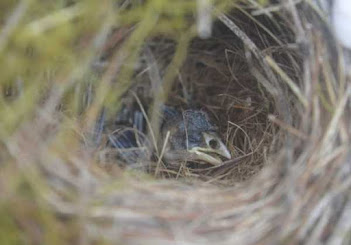
 Darwin's Finch chick in nest on the Galapagos Islands.
Credit: A Katsis, Flinders University
Spending time with offspring is beneficial to development, but it’s proving lifesaving to Galápagos Islands Darwin’s finches studied by Flinders University experts.

A new study, published in Proceedings of the Royal Society B, has found evidence Darwin’s finch females that spend longer inside the nest can ward off deadly larvae of the introduced avian vampire fly, which otherwise enter and consume the growing chicks.

The maternal buffer is a life-saver, according to the research, especially during the first days after hatching, when chicks are blind, helpless and cannot preen. Although older offspring still have to contend with the larvae, they are better able to preen themselves, and may dislodge and occasionally eat some of them.

“The pair male is also essential for success of the chicks. If he feeds the offspring a lot, the mother can remain inside the nest for longer,” says Flinders University Professor Sonia Kleindorfer, who is also affiliated with the University of Vienna.

“Timing is everything. The female must forgo foraging herself, and her persistence is strongly influenced by good food provisioning of her offspring by the male.”

The unintentionally introduced avian vampire fly, an invasive species on the Galápagos Islands, enters Darwin’s finch nests when attending parents are absent.

The 17 Darwin’s finch species on the Galápagos Islands are a textbook example of a rapid adaptive radiation: each species has a unique beak shape suited to extract resources from a different ecological niche. However, since being first observed in Darwin’s finch nests in 1997, the avian vampire fly has been parasitizing nestlings and changing the beak and behavior of its Darwin’s finch hosts.

Monday, March 21, 2022

Monarch butterflies are increasingly plagued by parasites, study shows

A cluster of monarch butterflies overwintering on a tree in Mexico
Photo Credit: Jaap de Roode 

Scientific Frontline: Extended "At a Glance" Summary: Rising Parasite Infection Rates in Monarch Butterflies

The Core Concept: An evaluation of the escalating infection rates of the protozoan parasite Ophryocystis elektrosirrha (O.E.) in wild North American monarch butterflies (Danaus plexippus), which increased from less than 1 percent in 1968 to as much as 10 percent today.

Key Distinction/Mechanism: The protozoan pathogen invades the gut of monarch caterpillars, resulting in severe mortality upon pupation or impaired flight performance and reduced lifespan in survivors, driven by increased host density and exotic milkweed proliferation.

Major Frameworks/Components:

  • Protozoan pathogen Ophryocystis elektrosirrha (O.E.) life cycle and gut invasion mechanics in monarch caterpillars.
  • Host density-dependent disease transmission accelerated by natural habitat loss, commercial captive rearing, and non-native milkweed planting.
  • Cardenolide self-medication behavioral responses where infected female monarchs preferentially utilize toxic milkweed species to moderate infection severity.

Featured Article

Global Fertilizer Dataset Optimizes Yields & Cuts Pollution

Photo Credit:  James Baltz Scientific Frontline: Extended "At a Glance" Summary : Global Fertilizer Application Dataset The Core C...

Top Viewed Articles