. Scientific Frontline: Search results for Psychedelic
Showing posts sorted by date for query Psychedelic. Sort by relevance Show all posts

Thursday, January 1, 2026

What Is: Psychedelic Renaissance

The current "Psychedelic Renaissance" is not a new discovery but a recovery of lost knowledge.
Image Credit: Scientific Frontline

The Fourth Wave of Psychiatry

The field of psychiatry is currently undergoing its most significant paradigm shift since the introduction of the first psychopharmaceuticals in the mid-20th century. For decades, the standard of care for mental health disorders has been dominated by the monoamine hypothesis—the idea that regulating neurotransmitters like serotonin, dopamine, and norepinephrine through daily maintenance medication can rectify chemical imbalances. However, a growing body of evidence, accumulated largely over the last two decades and culminating in the pivotal events of 2024 and 2025, suggests that this model is incomplete. We are witnessing the rise of a "fourth wave" of psychiatry, characterized by the use of psychedelics: compounds that do not merely suppress symptoms but appear to catalyze profound, rapid, and durable healing through mechanisms of neuroplasticity and network reorganization.

This report serves as an exhaustive analysis of the current state of psychedelic medicine as of late 2025. It moves beyond the simplistic "shroom boom" narratives to dissect the complex neurobiology, the rigorous clinical trials, and the volatile regulatory landscape that defines this sector. The subject matter encompasses "classic" psychedelics like psilocybin and lysergic acid diethylamide (LSD), which primarily target the serotonin 2A receptor, as well as "atypical" psychedelics or entactogens like 3,4-methylenedioxymethamphetamine (MDMA).

Thursday, October 5, 2023

Psychedelics improve mental health, cognition in special ops veterans

The Colorado River toad (Incilius alvarius), also known as the Sonoran Desert toad, is a toad species found in northwestern Mexico and the southwestern United States. It is well known for its ability to exude toxins from glands within its skin that have psychoactive properties.
Photo Credit: Alan Schmierer
(CC0 1.0 DEED)

One treatment each of two psychedelic drugs lowered depression and anxiety and improved cognitive functioning in a sample of U.S. special operations forces veterans who sought care at a clinic in Mexico, according to a new analysis of the participants’ charts. 

The treatment included a combination of ibogaine hydrochloride, derived from the West African shrub iboga, and 5-MeO-DMT, a psychedelic substance secreted by the Colorado River toad. Both are designated as Schedule I drugs under the U.S. Controlled Substances Act.

In addition to relieving symptoms of post-traumatic stress disorder (PTSD), the combined treatment also alleviated cognitive impairment linked to traumatic brain injury – which stood out to researchers from The Ohio State University who led the chart-review analysis. Many special operations forces veterans seeking treatment for complex psychiatric symptoms do not respond to more traditional therapies. 

“What sets this group apart from some other veterans and civilians is that often, they are exposed to repeated traumatic events as a routine part of their jobs. This build-up of exposure to these difficulties seems to produce a cluster of challenges that include traumatic brain injury, which we know in and of itself predisposes people to mental health problems,” said lead author Alan Davis, associate professor and director of the Center for Psychedelic Drug Research and Education (CPDRE) in Ohio State’s College of Social Work. 

“So, the fact that we saw that there were improvements in cognitive functioning linked to brain injury were probably the most striking results, because that’s something we didn’t predict and it’s very new and novel in terms of how psychedelics might help in so many different domains.” 

Wednesday, October 4, 2023

Small doses of mushrooms can have a beneficial effect on mental disorders

"Liberty Cap" Psilocybin mushroom
Photo Credit: Ameruverse Digital Marketing Media

A new research result from the University of Southern Denmark opens the door to the possibility of using psilocybin, the active compound in mushrooms with psychedelic properties, as a therapeutic tool through microdosing.

Psilocybin has long been recognized as a classic psychedelic substance and has recently been investigated for its potential to assist in the treatment of various psychiatric disorders, primarily depression and addiction, through therapy supplemented with a high dose of psilocybin.

In such therapeutic treatment, the patient takes psilocybin after thorough therapeutic preparation and undergoes a psychedelic experience in a supportive environment with a trained therapist. Subsequently, the experience is integrated over several therapy sessions.

Experiments are being conducted with patients at hospitals, including Bispebjerg Hospital and Rigshospitalet.

Tuesday, May 2, 2023

How hallucinogenic substance in psilocybin mushrooms works on the molecular level

Once it was hot research. Then it was banned. Now, research on psychedelic substances is both hot and legal. There is a revival in psilocybin research in labs and clinics all over the world, including at SDU.
Photo Credit: Artur Kornakov

Psilocybin is a hallucinogenic compound found in about 200 mushroom species, including the liberty cap (Psilocybe semilanceata). For millennia, our ancestors have known and used this substance, and in recent years, it has received renewed interest from scientific researchers and therapists.

The substance has the potential to revolutionize the way we treat conditions such as severe depression and substance addiction, according to many. This is also the opinion of SDU researchers Himanshu Khandelia and Ali Asghar Hakami Zanjani from the Department of Physics, Chemistry and Pharmacy.

The two researchers have recently published the scientific paper The Molecular Basis of the Antidepressant Action of the Magic Mushroom extract, Psilocin. The article is the third in a series on the same topic from the two researchers (Interaction of psychedelic tryptamine derivatives with a lipid bilayer and Magic mushroom extracts in lipid membranes). The newest study's co-authors are Teresa Quynh Tram Nguyen and Luise Jacobsen. 

Monday, October 24, 2022

Microscopy reveals how psychedelics light up brain’s neuropathways

 Alex Kwan, Ph.D. ‘09, associate professor in the Meinig School of Biomedical Engineering, is using optical microscopy and other tools to map the brain’s neural response to psychedelic drugs, an approach that could lead to the development of fast-acting antidepressants
Photo credit: Ryan Young/Cornell University.

What a long, strange trip it’s been for psychedelic drugs. From their use in ancient indigenous ceremonies, to their often-caricatured association with the 1960s counterculture, to their recent reemergence as a potential therapeutic, hallucinogens have been embraced by very different communities for very different reasons. But scientists have never fully understood how these drugs actually work on the brain.

Alex Kwan, Ph.D. ‘09, associate professor in the Meinig School of Biomedical Engineering in the College of Engineering, is using optical microscopy and other tools to map the brain’s neural response to these psychoactive chemicals, an approach that could eventually lead to the development of fast-acting antidepressants and treatments for substance-use disorders and cluster headaches.

“We know more about the pharmacology, how psychedelics work at the structural level, interacting with the brain receptors. But there has been a big void in terms of understanding what they do to the brain itself, at the neural circuit level,” Kwan said. “There’s a chain of events that happen that ultimately lead to acute and longer-lasting behavioral changes that might be useful for treatment. But in between a lot of that is a black box.”

Despite the renewed interest in the benefits of psychedelics from popular figures such as environmentalist and author Michael Pollan, much of the research into these drugs was conducted in the 1950s and 60s with fairly rudimentary methods, Kwan said.

Friday, May 27, 2022

‘Transformative’ effects of mass gatherings like Burning Man are lasting

Photo by Curtis Simmons, Flickr: simmons_tx

Throughout history, mass gatherings such as collective rituals, ceremonies, and pilgrimages have created intense social bonds and feelings of unity in human societies. But Yale psychologists wondered if modern day secular gatherings that emphasize creativity and community serve an even broader purpose.

The research team studied people’s subjective experiences and social behavior at secular mass gatherings, such as the annual Burning Man festival in the Nevada desert. They found that people who reported transformative experiences at the gatherings felt more connected with all of humanity and were more willing to help distant strangers, the researchers report May 27 in the journal Nature Communications.

“We’ve long known that festivals, pilgrimages, and ceremonies make people feel more bonded with their own group,” said Daniel Yudkin, a postdoctoral researcher and first author of the paper. “Here we show that experiences at secular mass gatherings also have the potential to expand the boundaries of moral concern beyond one’s own group.”

The research team, led by M.J. Crockett, an associate professor of psychology at Yale, conducted field studies of more than 1,200 people attending multi-day mass gatherings in the United States and United Kingdom: Burning Man, Burning Nest, Lightning in a Bottle, Dirty Bird, and Latitude, all events that feature art, music, and self-expression.

Tuesday, December 21, 2021

Study shows common flower species holds promise for beneficial psychedelic drugs

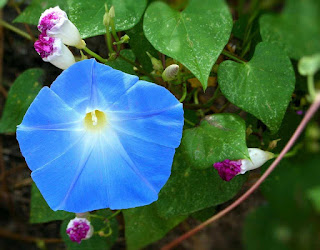
Thanks to a symbiotic fungus, many species of morning glories contain elements of powerful psychedelic drugs, according to a new Tulane University study published in the journal Communications Biology.

The seeds of the common tropical vine, whose namesake trumpet-like blooms only open in the morning, contain compounds that could be useful for treating mental and physical diseases as well as promoting well-being, said plant and fungal biologist Keith Clay, chairman of the Tulane Department of Ecology and Evolutionary Biology.

Researchers from Tulane, Indiana University and the West Virginia University obtained samples of morning glory seeds from worldwide herbarium collections and screened them for ergot alkaloids, a compound associated with the hallucinogenic drug LSD, but which have also been used for treating migraine headaches and Parkinson’s disease.

Many morning glory species contain high concentrations of bioactive ergot alkaloids that are produced by specialized fungal symbionts passed down from mother plant to offspring through their seeds. Researchers found that one-quarter of over 200 species tested contained ergot alkaloids and were therefore symbiotic.

Featured Article

What Is: Biological Plasticity

Image Credit: Scientific Frontline The Paradigm of the Reactive Genome  The history of biological thought has long been dominated by a tensi...

Top Viewed Articles