. Scientific Frontline

Monday, November 1, 2021

Better models of atmospheric ‘detergent’ can help predict climate change

detergent of the atmosphere
In the Earth’s atmosphere, hydroxyl radical (OH) plays a dominant role in removing pollutants—but the OH molecule is difficult to measure. New research from Rochester scientist Lee Murray and his colleagues explains why the computer models used to predict future levels of OH have traditionally produced widely varying forecasts.

New research from Rochester scientist Lee Murray will aid in building more accurate computer models of the hydroxyl radical (OH), an important ‘detergent of the atmosphere.’

Earth’s atmosphere has a unique ability to cleanse itself by way of invisible molecules in the air that act as minuscule cleanup crews. The most important molecule in that crew is the hydroxyl radical (OH), nicknamed the “detergent of the atmosphere” because of its dominant role in removing pollutants. When the OH molecule chemically interacts with a variety of harmful gases, including the potent greenhouse gas methane, it is able to decompose the pollutants into forms that can be removed from Earth’s atmosphere.

It is difficult to measure OH, however, and it is not directly emitted. Instead, researchers predict the presence of OH based on its chemical production from other, “precursor” gases. To make these predictions, researchers use computer simulations.

Antibody Treatment Prevents Inflammation in Lungs, Nervous System in Macaques With SARS-CoV-2

Monoclonal antibodies protected aged, diabetic rhesus macaque monkeys from disease due to SARS-CoV-2 and reduced signs of inflammation, including in cerebrospinal fluid, according to a new study from researchers at the University of California, Davis. The work is published in the journal Cell Reports.

The data show that neutralizing antibodies prevent the adverse inflammatory consequences of SARS-CoV-2 infection, the authors said. The results help explain how antibodies, whether induced by vaccines or after infection, or given as a treatment, can affect the course of disease. They also suggest that antibodies could be given as a preventative treatment to people at high risk, such as elderly residents during an outbreak in a nursing home.

“COVID-19 is more severe in elderly people and those with pre-existing conditions,” said Smita Iyer, associate professor of pathology, microbiology and immunology at the UC Davis School of Veterinary Medicine and Center for Immunology and Infectious Disease, and a core investigator at the California National Primate Research Center.

“The elderly and diabetics tend to be immunosuppressed, but if you can get antibody levels high enough, you can prevent severe infection,” she said. Immune responses induced by vaccines are very effective at preventing severe disease and death. But an overwhelming inflammatory immune response could also be responsible for much of the damage of severe infections.

Immune responses induced by vaccines are very effective at preventing severe disease and death. But an overwhelming inflammatory immune response could also be responsible for much of the damage of severe infections.

Climate change impacts on crops expected within 10 years

Photo by Balázs Benjamin from Pexels
Using advanced climate and agricultural models, scientists found that the change in yields is due to projected increases in temperature, shifts in rainfall patterns, and elevated surface carbon dioxide concentrations from human-caused greenhouse gas emissions. These changes would make it more difficult to grow maize in the tropics, but could expand wheat’s growing range.

“We did not expect to see such a fundamental shift, as compared to crop yield projections from the previous generation of climate and crop models conducted in 2014,” said lead author Jonas Jägermeyr, a crop modeler and climate scientist at NASA’s Goddard Institute for Space Studies (GISS) and The Earth Institute at Columbia University in New York City. The projected maize response was surprisingly large and negative, he said. “A 20% decrease from current production levels could have severe implications worldwide.”

To arrive at their projections, the research team used two sets of models. First, they used climate model simulations from the international Climate Model Intercomparison Project-Phase 6 (CMIP6), followed by an ensemble of biophysical crop growth models to estimate yield implications of the changing climate. Each of the five CMIP6 climate models used for this study runs its own unique response of Earth’s atmosphere to greenhouse gas emission scenarios through to 2100. These responses differ somewhat due to variations in their representations of the Earth's climate system.

The research team then used the climate model simulations as inputs for 12 state-of-the-art global crop models that are part of the Agricultural Model Intercomparison and Improvement Project (AgMIP), an international partnership coordinated by Columbia University. IIASA involvement in the study was twofold: first, on the climate data acquisition and processing side, researchers from the Advancing Systems Analysis and Biodiversity and Natural Resources programs, carried out the data transformation from the original format to the format suitable for feeding the institute’s Environmental Policy Integrated Model (EPIC), which contributed crop growth modeling data to the study. Second, and most importantly, the IIASA teams also carried out biophysical simulations informing (among other variables) the yield projections corresponding to the CMIP6 data.

Scientists identify genes behind tusklessness in African elephants

Shane Campbell-Staton, assistant professor of ecology and evolutionary biology. with an elephant at Gorongosa National Park in Mozambique. The elephant has been anesthetized for the collection of tissue samples for genomic and dietary analyses, and to be fitted with a GPS collar. 
Photo by Rob Pringle

In regions of Africa wracked by heavy poaching, people have observed an increased incidence of African elephants without their iconic white tusks, which are prized in the multibillion-dollar wildlife black market. But there has been no direct genetic evidence indicating how this was happening, or why this trait was occurring exclusively in female elephants.

Shane Campbell-Staton, assistant professor of ecology and evolutionary biology. with an elephant at Gorongosa National Park in Mozambique. The elephant has been anesthetized for the collection of tissue samples for genomic and dietary analyses, and to be fitted with a GPS collar.

A team led by Princeton University researchers has now implicated two genes associated with tooth development in mammals to be at the center of the tuskless elephant phenomenon, according to a study published in the journal Science. One of these genes is connected to the X chromosome and is lethal to males, while humans who have the same gene mutation exhibit similar teeth defects.

“Elephants are such an iconic species that is so important for the savanna ecosystem and now we have a better understanding of how human activity is impacting them,” said co-first author Shane Campbell-Staton, assistant professor of ecology and evolutionary biology at Princeton and associated faculty in Princeton’s High Meadows Environmental Institute (HMEI).

Is there a "Global Climate Emergency"?

This was the question posed by a global team of researchers, who sought to investigate the pros and cons of declaring climate emergencies.

In the wake of recent climate disasters, such as the wildfires that have ravaged Australia, Hurricane Ida in America, and severe flooding across Europe, more and more governments have declared climate emergencies. Over 2,000 local governments and 20 national parliaments worldwide have decided upon the measure, and it is expected that more will follow.

However, Dr Linda Westman, from the Sheffield Urban Institute at the University of Sheffield, alongside researchers from the universities of Utrecht, Sussex, Oslo, and the Australian National University, as well as the Manipal Academy of Higher Education, found that in declaring climate emergencies, governments could actually be alienating people from taking action on climate change, as they become desensitized to the issue and may begin to feel fearful and guilty, instead of empowered to change things.

Furthermore, there are fears that emergency frames could be used by governments to curtail people’s freedoms and clamp down on political debates, but so far this has not been seen.

Potential direct ancestor of modern humans identified

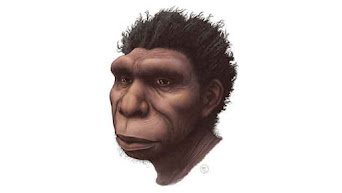
Artist rendering of Homo bodoensis
(Credit: Ettore Mazza)
A direct ancestor to modern humans has been identified, providing clarity to an important chapter in human evolution. The announcement by an international team of researchers, including a University of Hawaiʻi at Mānoa professor, was published in Evolutionary Anthropology.

Homo bodoensis lived in Africa during the Middle Pleistocene (774,000-129,000 years ago). The new name is based on a reassessment of existing fossils from Africa and Eurasia from this time period, according to co- and corresponding author Professor and Department Chair Christopher Bae from UH Mānoa’s Department of Anthropology in the College of Social Sciences.

The Middle Pleistocene is an important time period because it saw the rise of our species (Homo sapiens) in Africa and the Neanderthals (Homo neanderthalensis) in Europe. However, the time period is poorly understood, often being called the “muddle in the middle.”

“The new species, Homo bodoensis, should help to simplify the picture of human evolution during the Middle Pleistocene because it is more clearly defined, where the African fossils can easily fit,” Bae said.

Researchers shed light on blind spot of shark attacks

Credit: Dr. Laura Ryan
Scientists have found more evidence to support the mistaken identity theory’ in juvenile white sharks during surface attacks on humans.

Research, which has been published in the Journal of the Royal Society Interface, suggests that sharks mistake humans for seal prey.

Shark attack on humans have long fascinated the general public but have remained a source of confusion for scientists. This is due to the fact that they often bite, but do not subsequently eat, their human targets.

To help unlock this mystery, a team from Macquarie University, in collaboration with the University of Bristol created a virtual white shark visual system. Videos of human and seal movements filmed from below the water’s surface were then processed in with this system to see visual motion and shape cues through the perspective of a white shark.

“Until now, the potential similarity between humans and seals has been assessed based on human vision. However, white sharks have much lower visual acuity than us, meaning they cannot see fine details, and lack color vision” explained Dr Laura Ryan, the lead author on the paper. “In these experiments, we were able to view the world through the eyes of a white shark.”

Dr Martin How of Bristol’s School of Biological Sciences said: “We used a computer simulation to compare the way that seals, swimmers and surfers move on the water's surface, when viewed from the perspective of white sharks below.

Astronomers suggest radiation, not supernovae, drives superwinds in some galaxies

This image zooms in on the Mrk 71 region in the galaxy NGC 2366. The red, blue and green colors reflect the emission of oxygen and helium ions. The observations were made from the Hubble Space Telescope. Image credit: Sally Oey

The finding could provide insight into how the universe became transparent

When astronomers observe superwinds traveling at extremely high speeds from super star clusters, or “starbursts,” they previously assumed the winds were driven by supernovae, the explosions of stars.

This was the case for a starburst called Mrk 71 in a nearby galaxy. Astronomers had observed incredibly fast superwinds—traveling at about 1% of the speed of light—emanating from the cluster, and classic reasoning suggested the blasts from many supernovae drive the gas to such a high rate of speed.

But University of Michigan astronomers think supernovae aren’t the reason: the cluster is too young to have supernovae. They suspect a different mechanism is behind the superwind.

By studying the wind and starburst properties, the astronomers established that ultraviolet radiation from the compact starburst itself drove the superwind. Their findings, published in the journal Astrophysical Journal Letters, may help explain one chapter of the universe’s beginnings.

Sunday, October 31, 2021

Sun Emits X-class Flare


The Sun emitted a significant solar flare peaking at 11:35 a.m. EDT on Oct. 28, 2021. NASA’s Solar Dynamics Observatory, which watches the Sun constantly, captured an image of the event.

Solar flares are powerful bursts of radiation. Harmful radiation from a flare cannot pass through Earth’s atmosphere to physically affect humans on the ground, however — when intense enough — they can disturb the atmosphere in the layer where GPS and communications signals travel.

To see how such space weather may affect Earth, please visit NOAA's Space Weather Prediction Center http://spaceweather.gov/, the U.S. government’s official source for space weather forecasts, watches, warnings, and alerts. NASA works as the research arm of the nation’s space weather effort. NASA observes the Sun and our space environment constantly with a fleet of spacecraft that study everything from the Sun’s activity to the solar atmosphere, and to the particles and magnetic fields in the space surrounding Earth.

This flare is classified as an X1.0-class flare.

X-class denotes the most intense flares, while the number provides more information about its strength. An X2 is twice as intense as an X1, an X3 is three times as intense, etc. Flares that are classified X10 or stronger are considered unusually intense.

Earlier in the week, from late-afternoon on October 25th through mid-morning on the 26th, a different active region on the Sun gave a show of small flares and eruptions of plasma.

Source/Credit: Video: NASA/GSFC/SDO

Final Editing: Scientific Frontline

sw103021_01

Friday, October 29, 2021

Scientists identify the cause of Alzheimer’s progression in the brain

SumaLateral Whole Brain
Image  Credit: National Institute of Mental Health, National Institutes of Health

The international team, led by the University of Cambridge, found that instead of starting from a single point in the brain and initiating a chain reaction which leads to the death of brain cells, Alzheimer’s disease reaches different regions of the brain early. How quickly the disease kills cells in these regions, through the production of toxic protein clusters, limits how quickly the disease progresses overall.

The researchers used post-mortem brain samples from Alzheimer’s patients, as well as PET scans from living patients, who ranged from those with mild cognitive impairment to those with late-stage Alzheimer’s disease, to track the aggregation of tau, one of two key proteins implicated in the condition.

In Alzheimer’s disease, tau and another protein called amyloid-beta build up into tangles and plaques – known collectively as aggregates – causing brain cells to die and the brain to shrink. This results in memory loss, personality changes and difficulty carrying out daily functions.

By combining five different datasets and applying them to the same mathematical model, the researchers observed that the mechanism controlling the rate of progression in Alzheimer’s disease is the replication of aggregates in individual regions of the brain, and not the spread of aggregates from one region to another.

Featured Article

What Is: Dementia

Illustration Credit: Scientific Frontline The End of the Passive Era The year 2025 marks a definitive inflection point in the history of neu...

Top Viewed Articles