 |
| White-crowned Manakin Image Credit: Phillip Edwards, Macaulay Library, Cornell Lab of ornithology. |

SFL Educational News Service
Wednesday, November 17, 2021
There May Be More Bird Species in The Tropics Than We Know
Food waste at East Coast Lagoon Food Village to be turned into energy and fertilizer under pilot project
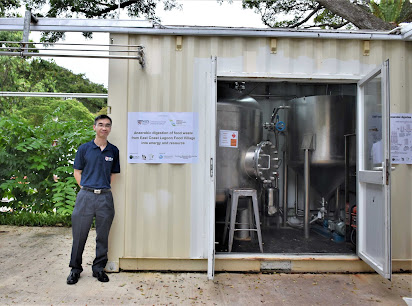 |
| Associate Professor Tong Yen Wah, who leads the NUS team, is pictured next to the anaerobic digester at the East Coast Lagoon Food Village. |
Food waste is one of the priority waste streams identified under Singapore’s Zero Waste Masterplan. In 2020, food waste accounted for about 11 per cent of the total waste generated in Singapore, but only 19 per cent of the food waste was recycled. The rest of it was disposed of at waste-to-energy (WTE) plants. Therefore, reducing food wastage, redistributing unsold or excess food, and recycling/treating food waste are important food waste management strategies. Food waste needs to be managed holistically, as it can contaminate other recyclables when they are disposed of together, making the recyclables unsuitable or difficult to recycle. It can also give rise to odor nuisance and vermin proliferation issues, if not managed properly or in a timely manner.
As part of efforts to treat food waste and demonstrate the feasibility of on-site food waste treatment, the National Environment Agency (NEA) is supporting NUS in conducting a pilot trial of their containerized Anaerobic Digestion system at East Coast Lagoon Food Village, under the Closing the Waste Loop (CTWL) R&D Initiative. The NUS team, led by Associate Professor Tong Yen Wah from the NUS Department of Chemical and Biomolecular Engineering, oversees the operation and maintenance of the Anaerobic Digestion system. The team is concurrently studying the human psychology and behavioral factors in encouraging hawkers and cleaners to segregate food waste from other waste.
Fraternizing vampire bats share 'social microbiomes'
 |
| Microbes that make their homes on the skin or in the digestive tracts of animals can be beneficial or pathogenic to the individual and to the community. A new study finds that the gut microbiomes of vampire bats become more similar the more often the bats engage in social behaviors with one another. Image Credit: Uwe Schmidt |
Reported in the journal Biology Letters, the study revealed that the gut microbiomes of bats became more similar the more often they engaged in social behaviors with one another. Such behaviors included huddling together for warmth, grooming themselves and their neighbors, and – in rare cases – sharing food via regurgitation.
This is the first study of social microbiomes to control for other factors – such as diet and environment – that could contribute to microbiome similarities, the researchers said. The study kept all the bats together in one enclosure and the bats consumed the same, laboratory-prepared food: cattle and pig blood.
Tuesday, November 16, 2021
Research Reveals How to Design a Better Next-Generation Lithium-Ion Battery
A solid-state lithium-ion battery is composed of an anode, a cathode, and a solid electrolyte separating the two. Rapidly cycling (repeatedly charging and discharging) a lithium-ion battery limits the battery's performance over time by significantly increasing the battery's internal impedance (its time-dependent resistance), which hinders the flow of current. NIST researchers, in collaboration with Sandia National Laboratories, have combined two complementary techniques – contact potential difference measurements and neutron depth profiling – to precisely determine which parts of the battery contribute most to its impedance.
Credit: S. Kelley/NIST
However, like all batteries, solid-state lithium-ion batteries have a drawback: Due to electro-chemical interactions, impedance--the AC analog of DC electrical resistance--can build up within the batteries, limiting the flow of electric current. Researchers at the National Institute of Standards and Technology (NIST) and their colleagues have now pinpointed the location where most of this buildup occurs. In so doing, the team has suggested a simple redesign that could dramatically limit the buildup of impedance, enabling the batteries to fulfill their role as the next-generation power source.
A better-fitting molecular ‘belt’ for making new drugs
 |
| David Nagib Photo Credit: Courtesy of Ohio State University |
Scientific Frontline: "At a Glance" Summary
- Main Discovery: Researchers developed a novel chemical method to synthesize piperidine rings by selectively replacing carbon-hydrogen bonds, solving a longstanding challenge in closing these molecular "belts."
- Specific Detail/Mechanism: The technique utilizes a copper catalyst and light to oxidize two carbon-hydrogen bonds, removing hydrogen and converting a bond into a nitrogen ring via a process analogous to photosynthesis.
- Key Statistic or Data: Piperidines, the specific six-sided rings addressed in this study, constitute the most common ring structure present in all pharmaceutical drugs.
- Context or Comparison: Prior to this discovery, synthesizing these rings was a cumbersome and expensive process due to the difficulty of modifying ubiquitous C-H bonds without precise chemical "markings."
- Significance/Future Application: This methodology enables the rapid generation of diverse drug candidate libraries for early-stage testing, with future research aimed at using cheaper starting materials for mass production.
Human Proteoform Project to map proteins in human body
Project will accelerate the development of precision diagnostics and therapeutics
Now that the Human Genome Project has officially wrapped, an international team of researchers will map the entire collection of proteins in the human body.
Plans and goals for the Human Proteoform Project were outlined in a paper published last in the journal Science Advances. The large undertaking will characterize known proteoforms (specific protein molecules) as well as aim to systematically discover and analyze new ones in human tissues, cells and fluids.
“We are all built of proteins, and most drugs target proteins,” said Northwestern University’s Neil Kelleher, a world-renowned proteomics pioneer and corresponding author of the paper. “But understanding proteins is an open frontier. Like other seminal moments in science and technology, this project will serve as a major achievement that can help us more fully understand proteins’ role in all types of disease, aging and new therapeutics.”
Sandia cooks material-storage containers to assess fire safety
A test where a stainless-steel container designed for the storage and transportation of hazardous materials is heated to 2000 degrees Fahrenheit for four hours at Sandia National Laboratories. The container did not catastrophically fail, instead small pinholes formed relieving the intense pressure. On the upper left-hand corner is an X-ray video from outside the container. The top middle image is a video from a pinhole camera inside the test chamber. The upper right-hand corner shows the outside of the test chamber. The bottom graph shows the pressure inside the container (white line) and the temperature of the container (in degrees Celsius) from nine different places (colored lines) during the test.
Video Credit: Sandia National Laboratories
The engineers, technologists and project managers were surprised to find that the containers did not split open when heated to 2000 degrees Fahrenheit. That is almost as hot as a cement kiln.
“These containers were welded shut and heated to 2000 degrees, so we assumed that they were going to split open, but they developed small pinholes instead,” said Walt Gill, the test director and Sandia mechanical engineer. “We think the material inside reacted with the container itself and produced the pinholes in the container. These tiny holes let out all of the superheated gas without the containers pressurizing and pulling themselves apart.”
The series of 10 tests were designed to mimic a hypothetical raging-hot fire burning at a DOE facility and engulfing a container that had been knocked on its side and left outside of its insulated packaging, which protects it from heat. Since these containers are not designed to withstand such a fire, the goal of the test was to determine how much, if any, material stored within the container would be released into the air during such an accident, said Gill and Austin Baird, the test engineer.
Map of Mouse Iris Offers New Look at the Eye
 |
| Branching nerve fibers (red) stretch across the mouse iris. Scientists have now built the first cell-by-cell map of this eye tissue. Credit: J. Wang |
A cell-by-cell map of the mouse iris lays the foundation to study eye disorders and engineer cell therapies to replace damaged eye tissue.
If vision science were a movie, the iris would be a supporting actor. It doesn’t get as much limelight as the retina, the eye’s light-sensing tissue. And it’s not as high-profile as the lens, which can cloud with cataracts as people age.
Though the iris – the colorful tissue that rings the pupil – comes in a rainbow of showy shades, for most scientists, “it was not the main attraction in the eye,” says Jeremy Nathans, a Howard Hughes Medical Institute Investigator at Johns Hopkins University School of Medicine. In fact, he has spent most of his career studying the molecular biology of the retina.
“The basic biology of the iris had kind of languished,” Nathans says. Not anymore. He and his colleagues Jie Wang and Amir Rattner have now developed a high-resolution map of the mouse iris that distinguishes individual cells by the activity of their genes. The trio was motivated by the beauty of the iris, the diversity of iris structure in different animals, and its importance for vision, Nathans says.
 |
| Strands of dilator muscles (red) weave through the mouse iris. Sphincter cells (green) cluster in the pupil (right), which expands and constricts to control the amount of light entering the eye. Credit: J. Wang |
Common blood pressure drug does not slow down the progression of more advanced Alzheimer’s
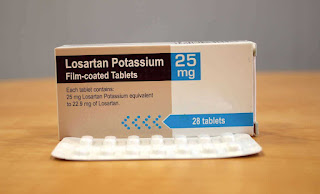
The double blinded placebo-controlled randomized trial (where participants and doctors don’t know what treatment people are on) investigated whether losartan, compared with a placebo, could reduce brain volume loss, as a measure of disease progression, in people clinically diagnosed with established AD.
The research, published in The Lancet Neurology and NIHR Efficacy and Mechanism Evaluation, is the first to evaluate the potential benefit of losartan, an angiotensin receptor blocker, which is a drug commonly used to treat high blood pressure and heart failure, in clinically diagnosed AD using brain imaging as a primary outcome.
Two-hundred and sixty-one people aged 55 years or older diagnosed with AD, who had not been prescribed similar hypertension drugs, and who had capacity to consent, were recruited from 23 UK National Health Service hospital trusts between 22 July 2014 and 17 May 2018.
The 211 eligible participants were then randomly allocated with 105 assigned to receive the study drug, 100 mg of losartan, and 106 to the placebo (an identical looking pill with no active medicine) once a day for 12 months. From the 197 (93%) participants who completed the study, primary outcome data were available for 171 (81%) participants.
Study sheds light on how bacteria control their detoxification

In an effort to understand how bacteria control and regulate this adaptation, University of Michigan researchers are examining how RNA polymerase—the enzyme that transcribes genetic information from DNA onto RNA—slows during transcription in a process called transcriptional pausing.
They found that a protein called N-utilizing substance A, or NusA, in concert with another control element called a riboswitch, fine-tunes the transcription speed in order to regulate gene expression. Gene expression is the process by which genetic information is converted into the building blocks of the bacterium.
The researchers say their work, published in the Proceedings of the National Academy of Sciences, expands our general understanding of the transcription process in bacteria, and could provide a target for developing new antibiotics.
“NusA is specific to bacteria. It’s not found in human cells or in yeast, so that it can be a target for the design of new antibiotics or drugs that will affect pathogenic bacteria but not our own cells,” said Adrien Chauvier, lead author of the study and postdoctoral researcher in the Nils Walter laboratory in the U-M Department of Chemistry and the Center for RNA Biomedicine.
When bacteria undergo gene expression, RNA polymerase synthesizes RNA. As RNA is produced, it undergoes a process called co-transcriptional RNA folding, adopting a dynamic structure that researchers think influences the timing of gene expression. To examine this process, Chauvier, together with undergraduate researcher Pujan Ajmera, looked at an element called a riboswitch, a segment of the transcribed messenger RNA that regulates gene expression through modulation of the RNA conformation. This structural change is triggered when a specific metabolite or ion called a “ligand” binds to the riboswitch.
Subscribe to:
Comments (Atom)
Featured Article
What Is: Sadism | Part Four of the "Dark Tetrad"
Scientific Frontline: Extended "At a Glance" Summary : Sadism (Part Four of the "Dark Tetrad") The Core Concept : Sadism...

Top Viewed Articles
-
 Groups of spheres from Akrotiri Photo Credit: Konstantinos Trimmis Scientific Frontline: "At a Glance" Summary Main Discovery : Ar...
 -
 Jope Hip and Joint Dog Chews are a relatively new addition to canine joint health supplements. If you're a dog owner concerned about you...
 -
 Image Credit: Scientific Frontline Summary and Core Philosophies In the expansive landscape of Linux distributions, Zorin OS and Linux Mint ...
 -
David Nagib Photo Credit: Courtesy of Ohio State University Scientific Frontline: "At a Glance" Summary Main Discovery : Researche...
-
Researchers have conducted a 16-year long experiment to challenge Einstein’s theory of general relativity. The international team looked to ...
-
.jpg) Two cathode inductive voltage-adder cells on the electrical test stand are aligned at Sandia National Laboratories. After thousands of tests...
Two cathode inductive voltage-adder cells on the electrical test stand are aligned at Sandia National Laboratories. After thousands of tests...

