
 |
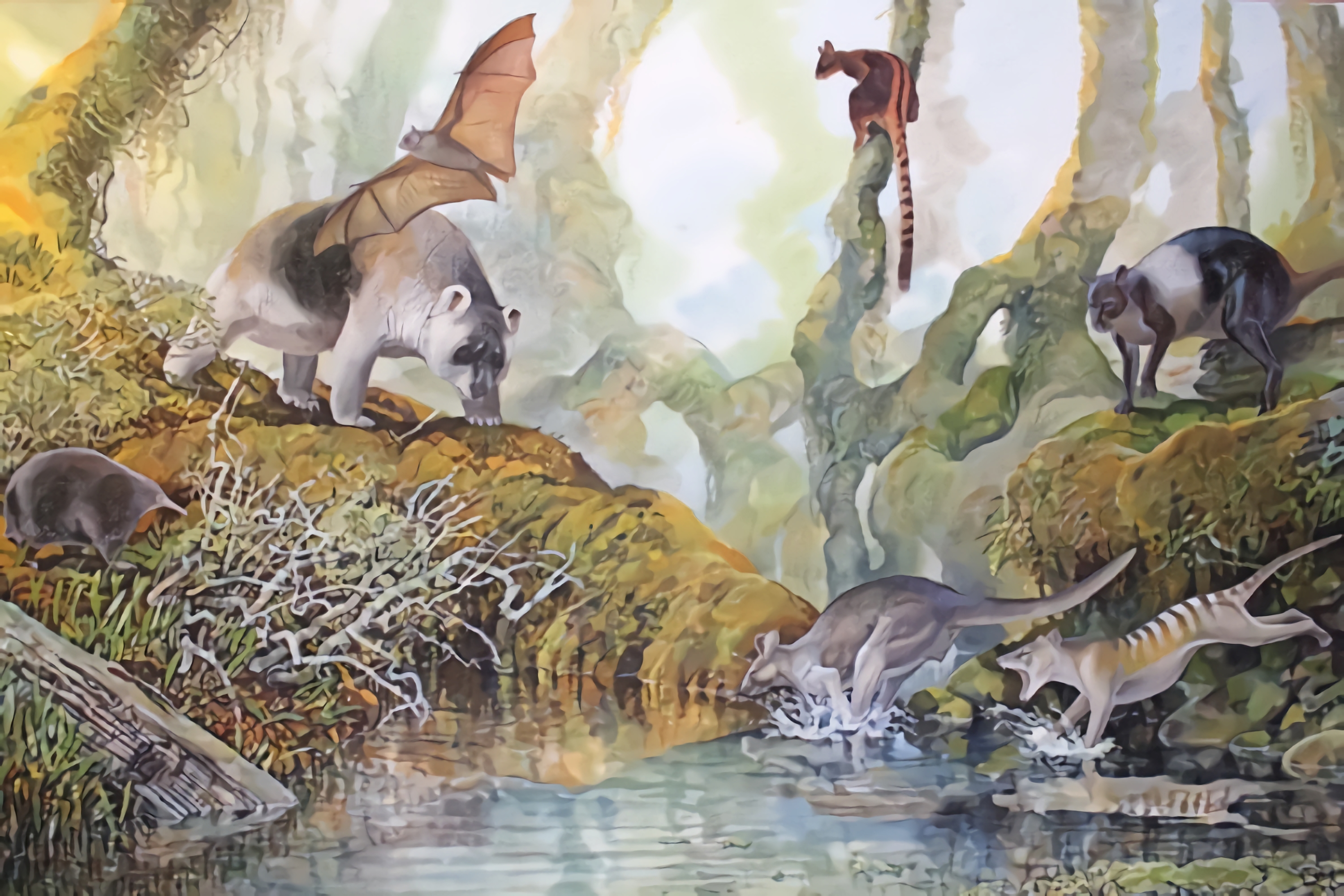
| Artist's impression of Nombe Rockshelter Megafauna, showing the Nombe kangaroo on the Right. Image resized using AI by SFLORG Credit: Artwork Courtesy Peter Schouten |
Australian paleontologists from Flinders University have described a new genus of giant fossil kangaroo from the mountains of central Papua New Guinea.
The new description of the fossil kangaroo has found that, rather than being closely related to Australian kangaroos, it most likely belongs to a unique genus of more primitive kangaroo found only in PNG.
The kangaroo, first described in 1983 by Professor Tim Flannery, is known from fossils around 20,000-50,000 years old. They come from the Nombe Rockshelter, an archaeological and paleontological site in Chimbu Province, Papua New Guinea.
Nombe is already known for multiple extinct species of kangaroo and giant four-legged marsupials called diprotodontids.
Flinders University researchers have renamed the animal Nombe nombe, after the location of its discovery – and plan to return to PNG for further excavations and research next year.
The squat, muscular Nombe lived in a diverse montane rainforest with thick undergrowth and a closed canopy. Here, it evolved to eat the tough leaves from trees and shrubs, with a thick jaw bone and strong chewing muscles.


.jpg)