. Scientific Frontline

Tuesday, August 16, 2022

Male spiders maximize sperm transfer to counter female cannibalism

A male Nephila pilipes spider copulating with a female mate.
Resized Image using AI by SFLORG
Photo credit: Li Daiqin

When sexual conflict results in reproductive strategies that only benefit one of the sexes, it may result in evolutionary arms races. Male spiders have evolved behavioral mating strategies to improve their chances of mating despite the risk of being cannibalized by their mates.

Researchers from the National University of Singapore (NUS) have discovered that male spiders make choices on maximizing their mating success when they are at risk of being cannibalized by their female mates. Led by Associate Professor Li Daiqin from the NUS Department of Biological Sciences, the researchers found that a male chooses one of its paired sexual organs with more sperm for the first copulation with a cannibalistic female. Also, a male transfer significantly more sperm if a female is cannibalistic or when the female is of a much larger physical size.

The study was published in Communications Biology.

Increasing sperm transfer in the face of sexual cannibalism

The theory of the male mating syndrome posits that male spiders are under sexual conflict pressure in sexually cannibalistic situations, as they may only have a single chance to mate. In this study, the researchers explored whether male spiders use additional cannibalism countering strategies by focusing on two male mating tactics. One of which is the “better charged palp” hypothesis which predicts that male spiders selectively make use of one of its paired sexual organs, known as pedipalps or palps, containing more sperm for their first copulation. The other, referred to as the “fast sperm transfer” hypothesis, predicts accelerated insemination when the risk of female cannibalism is high.

Extreme events stress the oceans

Sea snails - the picture shows a pteropod - play an important role in the marine food web. They are especially sensitive to ocean warming and acidification.
Source: Universität Bern Credit: Charlotte Havermans

When marine heatwaves and ocean acidity extreme events co-occur, it can have severe impacts on marine ecosystems. Researchers at the Oeschger Center for Climate Change Research at the University of Bern have determined for the first time the frequency and drivers of these compound events and have projected them into the future.

It's not just the land that is groaning under the heat – the ocean is also suffering from heatwaves. In the Mediterranean Sea along the Italian and Spanish coasts, for example, water temperatures are currently up to 5 °C higher than the long-term average at this time of year. Scientists have investigated marine heatwaves for a few years now – for example at the University of Bern. However, relatively little is known about how marine heatwaves co-occur with other extreme events in the ocean. Such events are known as compound events and considered to be a major risk of climate change. While the processes that lead to extreme events on land, such as floods, forest fires, heatwaves, or droughts and how they interact with each other have been intensively studied in the past, the finding that ocean weather and climate extreme events can also occur in combination is relatively new.

A group of researchers at the Oeschger Center for Climate Change Research, led by Thomas Frölicher, has now investigated whether marine heatwaves co-occur in combination with extreme events in other potential marine ecosystem stressors. In addition to heat, potential stressors also include high acidity levels in the ocean. "For the first time, we have quantified the frequency of compound events in which marine heatwaves happen together with extreme acidity", says Friedrich Burger, postdoctoral researcher and first author of the study just published in the journal Nature Communications. Extreme events of high ocean acidity are occurrences where the proton concentration in seawater is higher than normal.

Detecting diabetes among people at risk

When diabetes starts to develop but no symptoms are yet detectable, part of the beta cells of the pancreas (in green) disappear (right image) compared to a healthy individual (left image). This previously undetectable decrease could be identified by measuring the level of 1,5-anhydroglucitol in the blood.
Credit: UNIGE - Laboratory of Prof. Pierre Maechler

A team from the UNIGE in collaboration with the HUG has discovered a molecule that can identify the development of diabetes before the first symptoms appear.

Diabetes is a severe and growing metabolic disorder. It already affects hundreds of thousands of people in Switzerland. A sedentary lifestyle and an excessively rich diet damage the beta cells of the pancreas, promoting the onset of this disease. If detected early enough, its progression could be reversed, but diagnostic tools that allow for early detection are lacking. A team from the University of Geneva (UNIGE) in collaboration with several other scientists, including teams from the HUG, has discovered that a low level of the sugar 1,5-anhydroglucitol in the blood is a sign of a loss in functional beta cells. This molecule, easily identified by a blood test, could be used to identify the development of diabetes in people at risk, before the situation becomes irreversible. These results can be found in the Journal of Clinical Endocrinology & Metabolism.

In Switzerland, almost 500,000 people suffer from diabetes. This serious metabolic disorder is constantly increasing due to the combined effect of a lack of physical activity and an unbalanced diet. If detected early enough at the pre-diabetes stage, progression to an established diabetes can be counteracted by adopting an appropriate lifestyle. Unfortunately, one third of patients already have cardiovascular, renal or neuronal complications at the time of diagnosis, which impacts their life expectancy.

Monday, August 15, 2022

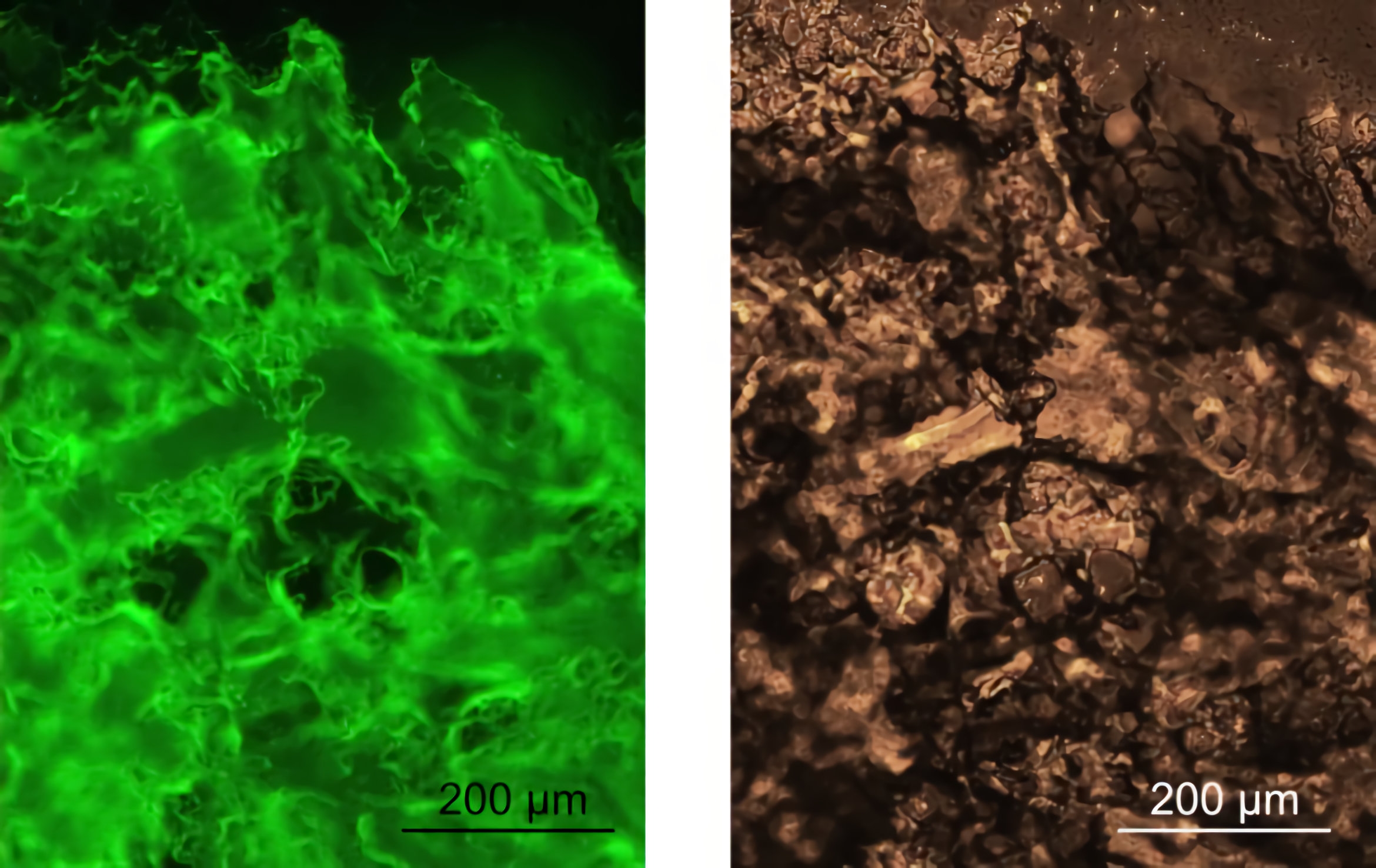
Scientists develop gel made from spider silk proteins for biomedical applications

The hydrogels stained with a fluorescent dye that binds to amyloid structures and the corresponding brightfield image.
Microscope photo credit: Tina Arndt.

Researchers at KI and SLU have discovered that spider silk proteins can be fused to biologically active proteins and be converted into a gel at body temperature. One of the goals is to develop an injectable protein solution that forms a gel inside the body, which could be used in tissue engineering and for drug release, but also make gels that can streamline chemical processes where enzymes are used. The study is published in Nature Communications.

“We have developed a completely new method for creating a three-dimensional gel from spider silk that can be designed to deliver different functional proteins,” says Anna Rising, research group leader at the Department of Biosciences and Nutrition, Karolinska Institutet (KI) and professor at the Department of Anatomy, Physiology and Biochemistry, Swedish University of Agricultural Sciences (SLU). “The proteins in the gel are very close together and the method is so mild that it can be used even for sensitive proteins.”

Supernova remnant is source of extreme cosmic particles


Astronomers have long sought the launch sites for some of the highest energy protons in our galaxy. Now, a study using 12 years of data from NASA’s Fermi Gamma-ray Space Telescope confirms that a remnant of a supernova, or star explosion, is just such a place, solving a decade-long cosmic mystery.

Previously, Fermi has shown that the shock waves of exploded stars boost particles to speeds comparable to that of light. Called cosmic rays, these particles mostly take the form of protons, but can include atomic nuclei and electrons. Because they all carry an electric charge, their paths become scrambled as they whisk through our galaxy’s magnetic field, which masks their origins. But when these particles collide with interstellar gas near the supernova remnant, they produce a telltale glow in gamma rays—the highest-energy light there is.

“Theorists think the highest-energy cosmic ray protons in the Milky Way reach a million billion electron volts, or PeV (for peta-electron-volt) energies,” says Ke Fang, an assistant professor of physics at the University of Wisconsin–Madison’s Wisconsin IceCube Particle Astrophysics Center. “The precise nature of their sources, which we call PeVatrons, has been difficult to pin down.”

MIT team reports giant response of semiconductors to light

MIT graduate student Jiahao Dong with the nanoindentation machine used in recent MIT work on the response of semiconductors to light.
Credits: Elizabeth Thomson/Materials Research Laboratory

In an example of the adage “everything old is new again,” MIT engineers report a new discovery in semiconductors, well-known materials that have been the focus of intense study for over 100 years thanks to their many applications in electronic devices.

The team found that these important materials not only become much stiffer in response to light, but the effect is reversible when the light is turned off. The engineers also explain what is happening at the atomic scale, and show how the effect can be tuned by making the materials in a certain way — introducing specific defects — and using different colors and intensities of light.

“We’re excited about these results because we’ve uncovered a new scientific direction in an otherwise very well-trod field. In addition, we found that the phenomenon may be present in many other compounds,” says Rafael Jaramillo, the Thomas Lord Associate Professor of Materials Science and Engineering at MIT and leader of the team.

Says Ju Li, another MIT professor involved in the work, "to see defects having such big effects on elastic response is very surprising, which opens the door to a variety of applications. Computation could help us screen many more such materials." Li is the Battelle Energy Alliance Professor in Nuclear Science and Engineering (NSE) with a joint appointment in the Department of Materials Science and Engineering (DMSE). Both Jaramillo and Li are also affiliated with the Materials Research Laboratory.

Thirdhand Smoke Exposures Surpass Health Risk Guideline Levels

Cigarettes and other tobacco products produce chemicals that linger in indoor environments, putting all other occupants in harm’s way. Credit: Gerd Altmann from Pixabay

Some smells seem to seep into everything they touch. Tobacco smoke is one of the worst offenders.

Thirdhand smoke refers to residual nicotine and other hazardous chemicals that contaminate the indoor environment after smoking. Think of the lingering smell you’ve probably encountered when handling the clothes of a person who smokes a pack a day, or when checking into a tidy but cigarette-friendly hotel room.

Scientists at the U.S. Department of Energy’s Lawrence Berkeley National Laboratory (Berkeley Lab) first identified thirdhand smoke as a potential health hazard a decade ago. Their newest study develops more quantitative insights into its long-term health risks. They found that concentrations of toxic chemicals lingering in indoor environments where cigarettes have been smoked can exceed risk guidelines from the State of California, meaning that non-smokers can be exposed to health risks by living in contaminated spaces.

The study was published in the journal Environmental Science & Technology. Alongside Berkeley Lab scientists, co-authors on this work include collaborators from UC San Francisco, UC Riverside, and San Diego State University. These teams are members of the California Consortium on Thirdhand Smoke, funded by the Tobacco-Related Disease Research Program, which is managed by the University of California.

Berkeley Lab’s researchers previously discovered that aerosolized nicotine, released during smoking and vaping, adsorbs to indoor surfaces, where it can interact with a compound present in indoor air called nitrous acid (HONO) to form strongly carcinogenic compounds called tobacco-specific nitrosamines (TSNAs). Accumulated nicotine on household surfaces can continuously generate TSNAs, long after smoke clears the room.

Researchers identify a hormone from fat cells that restrains tumor growth in mice

Normal liver tissue (top) and a liver cancer nodule (bottom) containing many dividing cells (labeled in green). Red indicates blood vessels.
Photo credit: Jiandie Lin, Ph.D., University of Michigan Life Sciences Institute

A hormone secreted by fat cells can restrain the growth of liver tumors in mice, according to a new study from the University of Michigan Life Sciences Institute.

The findings offer proof-of-concept for developing therapies against hepatocellular carcinoma, the most common form of liver cancer.

Jiandie Lin and his team use mice as a model to study how molecular and cellular changes are affected by nonalcoholic fatty liver disease, and how these changes consequently lead to the progression of this disease. While it begins as a relatively benign accumulation of fat in the liver, the disorder can develop into nonalcoholic steatohepatitis, or NASH, which increases the risk for liver cancer.

The liver contains scores of different cell types, including various immune cells. Using single-cell RNA sequencing, a technology for probing gene expression of individual cells within complex tissues, Lin and his team previously constructed a liver cell atlas and a blueprint of intercellular signaling in healthy and NASH mouse livers.

For this latest study, scheduled to be published Aug. 15 in Cell Metabolism, the scientists wanted to identify specific molecular changes in the NASH state that disrupt balance and interactions of these cell types, as potential therapeutic targets to reverse the progression from NASH to cancer.

Weird and wonderful world of fungi shaped by evolutionary bursts

Fungi
Scientific Frontline Fungi Gallery
Credit: Heidi-Ann Fourkiller

Scientists at the University of Bristol have discovered that the vast anatomical variety of fungi stems from evolutionary increases in multicellular complexity.

Most people recognize that fungi come in an assortment of shapes and sizes. However, these differences, often referred to as the disparity of a group, had never been analyzed collectively.

Researcher Thomas Smith, who conducted the study while at Bristol’s School of Earth Sciences, explained: “Prior to our analyses, we didn’t know how this variety was distributed across the different types of fungi. Which groups are the most varied when considering all parts of the fungal body plan? Which are the least? How has this variety accumulated and diminished through time? What has shaped these patterns in disparity? These are the questions we sought to answer.”

What they found was that fungal disparity has evolved episodically through time, and that the evolution of multicellularity in different fungi appears to open the door for greater morphological variety. They saw increases in disparity associated with both the emergence of the first multicellular fungi, and then the evolution of complex fruiting bodies such as mushrooms and saddles in dikaryotic species. These fungi are defined by the inclusion of a dikaryon, a cell with two separate nuclei, in their life cycles.

Underwater Snow Gives Clues About Europa’s Icy Shell

An illustration of NASA’s Europa Clipper spacecraft flying by Jupiter’s moon Europa. The spacecraft, which is planned to launch in 2024, will carry an ice-penetrating radar instrument developed by scientists at the University of Texas Institute for Geophysics.
Credit: NASA/JPL-Caltech.

Below Europa’s thick icy crust is a massive, global ocean where the snow floats upwards onto inverted ice peaks and submerged ravines. The bizarre underwater snow is known to occur below ice shelves on Earth, but a new study shows that the same is likely true for Jupiter’s moon, where it may play a role in building its ice shell.

The underwater snow is much purer than other kinds of ice, which means Europa’s ice shell could be much less salty than previously thought. That’s important for mission scientists preparing NASA’s Europa Clipper spacecraft, which will use radar to peek beneath the ice shell to see if Europa’s ocean could be hospitable to life. The new information will be critical because salt trapped in the ice can affect what and how deep the radar will see into the ice shell, so being able to predict what the ice is made of will help scientists make sense of the data.

The study, published in the August edition of the journal Astrobiology, was led by The University of Texas at Austin, which is also leading the development of Europa Clipper’s ice penetrating radar instrument. Knowing what kind of ice Europa’s shell is made of will also help decipher the salinity and habitability of its ocean.

“When we’re exploring Europa, we’re interested in the salinity and composition of the ocean, because that’s one of the things that will govern its potential habitability or even the type of life that might live there,” said the study’s lead author Natalie Wolfenbarger, a graduate student researcher at the University of Texas Institute for Geophysics (UTIG) in the UT Jackson School of Geosciences.

Featured Article

What Is: Abyssopelagic Zone

A master of abyssopelagic survival, the anglerfish overcomes absolute darkness and sparse food supplies with a specialized, light-producing ...

Top Viewed Articles