
 |
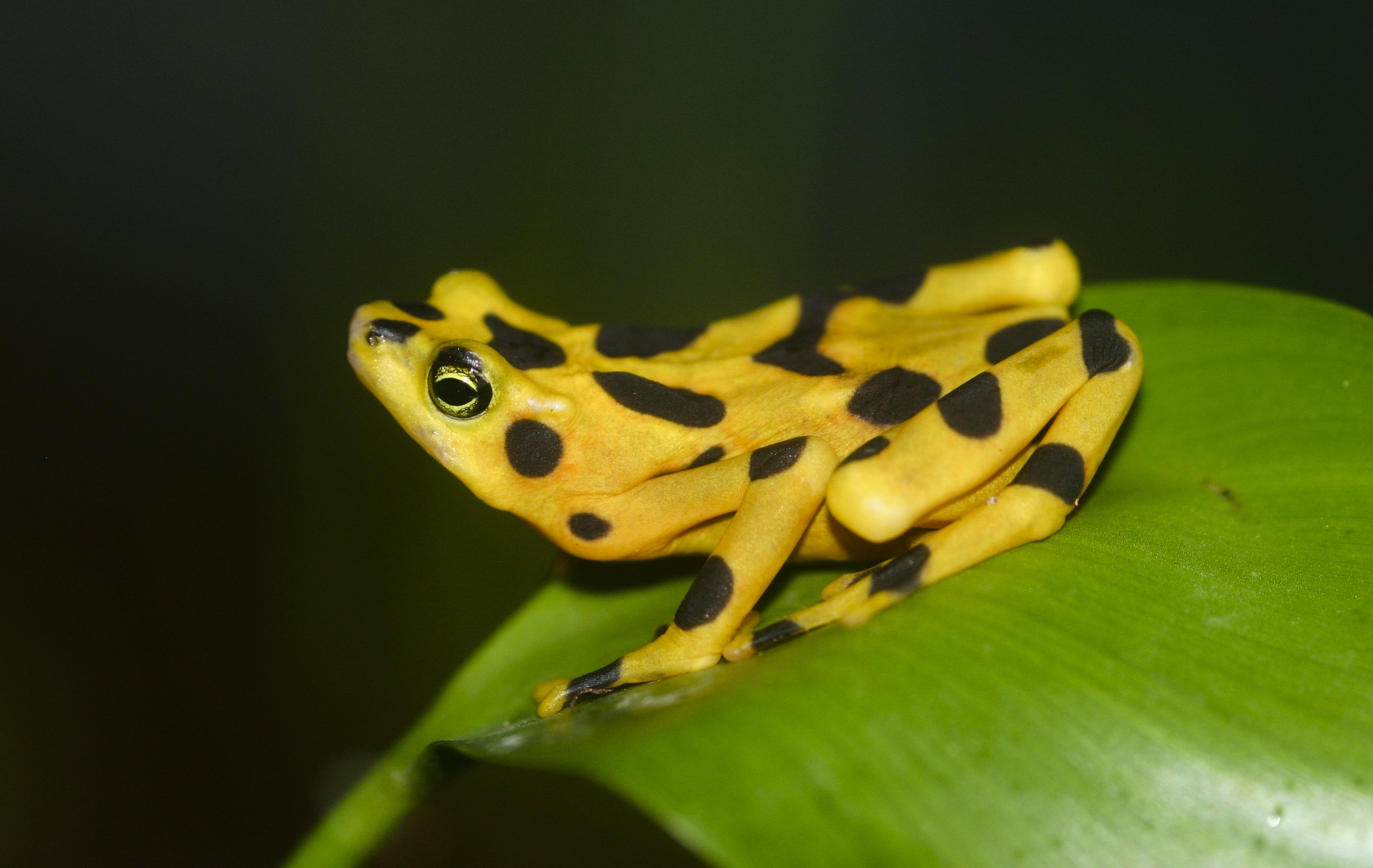
| The Panamanian golden frog is endemic to Panama and is among the species whose populations collapsed following the deadly fungal pathogen "Bd." Credit: Brian Gratwicke, Wikimedia Common |
Dozens of species of frogs, salamanders and other amphibians quietly disappeared from parts of Latin America in the 1980s and 2000s, with little notice from humans, outside of a small group of ecologists. Yet the amphibian decline had direct health consequences for people, according to a study from the University of California, Davis.
The study, published in the journal Environmental Research Letters, links an amphibian die-off in Costa Rica and Panama with a spike in malaria cases in the region. At the spike’s peak, up to 1 person per 1,000 annually contracted malaria that normally would not have had the amphibian die-off not occurred, the study found.
“Stable ecosystems underpin all sorts of aspects of human well-being, including regulating processes important for disease prevention and health,” said lead author Michael Springborn, a professor in the UC Davis Department of Environmental Science and Policy. “If we allow massive ecosystem disruptions to happen, it can substantially impact human health in ways that are difficult to predict ahead of time and hard to control once they’re underway.”







.jpg)