. Scientific Frontline

Wednesday, October 26, 2022

Considering COVID a hoax is ‘gateway’ to belief in conspiracy theories

Data showed one strong trend suggesting that financial distress during the lockdown could have been a factor in adopting conspiracy theory beliefs about the pandemic – even among those who started off with low levels of conspiracist ideation.
Photo Credit: Lara Jameson

Belief that the COVID-19 pandemic was a hoax – that its severity was exaggerated or that the virus was deliberately released for sinister reasons – functions as a “gateway” to believing in conspiracy theories generally, new research has found.

In the two-survey study, people who reported greater belief in conspiracy theories about the pandemic – for which there is no evidence – were more likely to later report they believed that the 2020 presidential election had been stolen from Donald Trump through widespread voter fraud, which is also not true. Participants’ overall inclination to believe in conspiracy theories also increased more among those who reported believing COVID-19 was a hoax.

Based on the results, the Ohio State University researchers have proposed the “gateway conspiracy” hypothesis, which argues that conspiracy theory beliefs prompted by a single event lead to increases in conspiratorial thinking over time.

Preliminary evidence suggests a sense of distrust may function as one trigger.

“It’s speculative, but it appears that once people adopt one conspiracy belief, it promotes distrust in institutions more generally – it could be government, science, the media, whatever,” said senior author Russell Fazio, professor of psychology at Ohio State. “Once you start viewing events through that distrustful lens, it’s very easy to adopt additional conspiracy theories.”

International Collaboration Is Key to Addressing Global Climate Change

Estimated annual savings from deployed annual solar PV modules using global versus national market scenarios in China, Germany and the United States (2008-2020). 
Credit: Helveston, He and Davidson 2022

Study Quantifies for First Time Past and Future Country Cost Savings to Solar Industry from Globalized Supply Chains

The world will need to deploy renewable energy at an unprecedented speed and scale in the future to reduce carbon emissions that are driving climate change. The option of solar energy promises to play a crucial role in achieving a sustainable, low-carbon energy future, especially if the price of production continues to decline as it has over the last 40 years.

A new study published in Nature by a team of scientists including Gang He, assistant professor in the Department of Technology and Society in the College of Engineering and Applied Sciences at Stony Brook University, supports this concept. Findings from the paper reveal that the globalized supply chain of solar photovoltaics saved countries $67 billion in solar module production costs. The study also found that if strong nationalistic policies that limit the free flow of goods, talent and capital are implemented going forward, solar panel costs will be much higher by 2030.

Borrowing a shape from a to-go cup lid, a drone wing could learn how to sense danger faster

Researchers have discovered a new possible use for the dome shape that you would find on a to-go cup lid.
Credit: Pexels/Caleb Oquendo

The oddly satisfying small domes that you press on your soda’s to-go cup lid may one day save a winged drone from a nosedive.

Patterns of these invertible domes on a drone’s wings would give it a way to remember in microseconds what dangerous conditions feel like and react quickly. The study, conducted by researchers at Purdue University and the University of Tennessee, Knoxville, is among the first demonstrations of a metamaterial that uses its shape to learn how to adapt to its surroundings on its own. The paper is published in the journal Advanced Intelligent Systems.

Unlike humans and other living beings, autonomous vehicles lack ways to filter out information they don’t need, which slows their response time to changes in their environment.

“There’s this problem called ‘data drowning.’ Drones cannot use their full flight capability because there is just too much data to process from their sensors, which prevents them from flying safely in certain situations,” said Andres Arrieta, a Purdue associate professor of mechanical engineering with a courtesy appointment in aeronautical and astronautical engineering.

Dome-covered surfaces that can sense their surroundings would be a step toward enabling a drone’s wings to feel only the most necessary sensory information. Because it only takes a certain minimum amount of force to invert a dome, forces below this threshold are automatically filtered out. A specific combination of domes popped up and down at certain parts of the wing, for example, could indicate to the drone’s control system that the wing is experiencing a dangerous pressure pattern. Other dome patterns could signify dangerous temperatures or that an object is approaching, Arrieta said.

People with paranormal beliefs spooked by science and the COVID-19 vaccine

The largest supermoon appearance of 2022, identified as the Buck Moon, rises above the mountain line in Morgantown, July 13. New WVU sociological research shows people who believe in witchcraft, telekinesis and other forms of paranormal phenomenon are more likely to mistrust science and vaccines.
Photo Credit:David Malecki | West Virginia University

The number 13, telekinesis and witchcraft play a part in a person’s mistrust of science and vaccines, including the COVID-19 shot, according to research from West Virginia University sociologists.

Previous research has shown that people with conservative religious beliefs are more likely to lack confidence in the COVID-19 vaccine, but most studies have observed only mainstream or institutionalized religious forms. WVU researchers Katie Corcoran, Chris Scheitle and Bernard DiGregorio were curious whether paranormal beliefs — beliefs in astrology and spirits, for instance — would be associated with a similar lack of confidence.

“We were interested in looking at how religion, science and what we call ‘the enchanted worldview’ relate to each other,” said Corcoran, associate professor of sociology in the Eberly College of Arts and Sciences, explaining that the enchanted worldview incorporates traditional religious beliefs, like beliefs in angels, God, demons and spirits.

“It also incorporates the belief that crystals can heal, belief in astrology and belief that the world is enchanted, that there’s more than the empirical world, beyond just religion. So, this particular project looks at what we call paranormal beliefs, which cut across several different areas.”

Autistic women have increased risk of mental illness

Photo credit: Alexander Grey

Young men and women with autism are more affected by psychiatric conditions and are at increased risk of being threatened as a result of their mental illness, compared to people without autism. Practically vulnerable are autistic women. This is shown by researchers from the Karolinska Institutet in a study published in JAMA Psychiatry.

People with autism have an increased risk of suffering from mental illness. Current data indicates that women with autism are more vulnerable than autistic but are, but few studies have been able to establish that there are gender differences.

Researchers from Karolinska Institutet have now done a register-based cohort study with just over 1.3 million people in Sweden, which was followed from 16 to 24 years between 2001 and 2013. More than 20,000 of these were diagnosed with autism.

The researchers could see that by the age of 25, 77 out of 100 women with autism, compared to 62 out of 100 but with autism, had received at least one psychiatric diagnosis.

We saw an increased risk of eleven different psychiatric conditions, including depression, anxiety syndrome, self-harm behavior and insomnia, says Miriam Martini, PhD student in psychiatric epidemiology at Department of Medical Epidemiology and Biostatics at Karolinska Institutet and first author of the study.

A key regulator of cell growth deciphered

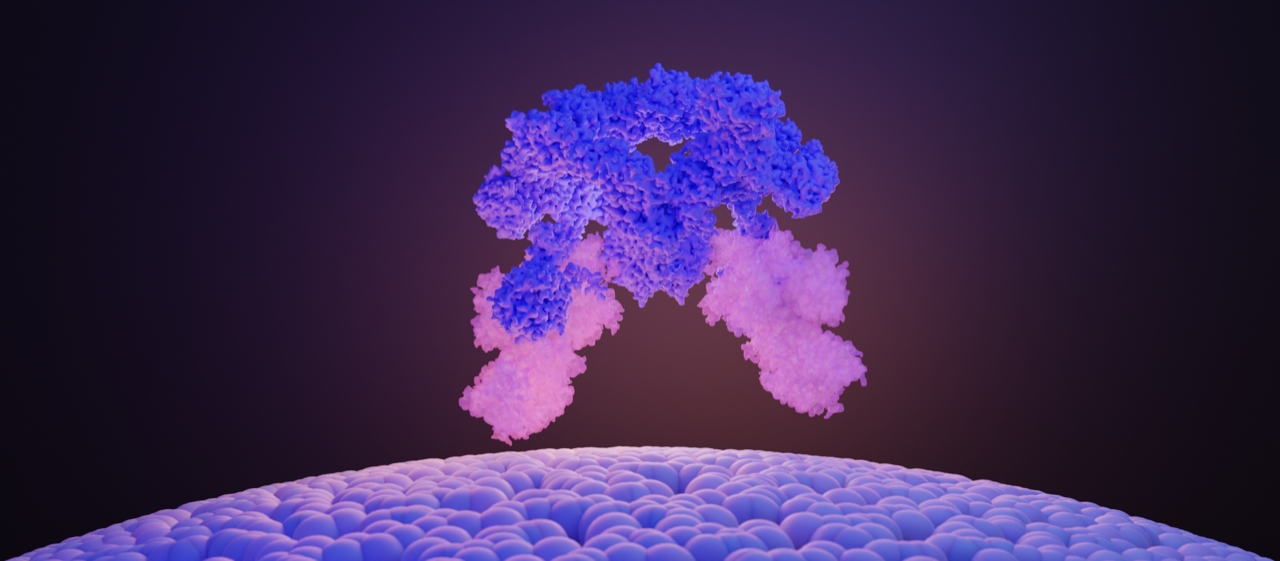
The SEA complex is composed of a cage-like core (SEACAT, blue) that regulates the activity of the wings (SEACIT, white and bright).
Credit: Ciencia Graficada

The mTOR protein plays a central role in cell growth, proliferation and survival. Its activity varies according to the availability of nutrients and some growth factors, including hormones. This protein is implicated in several diseases, including cancer, where its activity frequently increases. To better understand its regulation, a team from the University of Geneva (UNIGE), in collaboration with researchers from the Martin Luther University (MLU) of HalleWittenberg in Germany, and the recently inaugurated Dubochet Center for Imaging (UNIGE-UNIL-EPFL), has identified the structure of the SEA complex - an interdependent set of proteins - responsible for controlling mTOR. The discovery of this structure allows a better understanding of how cells perceive nutrient levels to regulate their growth. This work can be read in the journal Nature.

From yeast to humans, the mTOR protein (mammalian target of rapamycin) is the central controller of cell growth. This protein responds to various signals in the cell’s environment, such as nutrients and hormones, and regulates many fundamental cellular functions, such as protein and lipid synthesis, energy production by mitochondria and the organization of the cell’s structure. Disruptions in mTOR activity are the cause of several diseases, including diabetes, obesity, epilepsy and various types of cancer

Awareness of one’s own body is based on uncertainty and guesses


Researchers at Karolinska Institutet have found that the perception of one's own body is very based on the brain making guesses based on probability theory. It shows a study recently published in the journal eLife.

How we perceive our own body is largely based on probability assessments based on past experiences, in combination with sensory information such as vision and feeling, for example.

You could say that the experience of your own body is a statistical estimate of reality based on sensory information, sensorory uncertainty, and past experiences that can be summed up in the mathematical model explain Henrik Ehrsson, professor at the Department of Neuroscience, Karolinska Institutet.

Nestling birds recognize their local song ‘dialect’

The researchers discovered that the juvenile flycatchers clear response to their own song dialect helped them avoid learning songs from other species in the environment.
Photo credit: Tom Wallis

A recent study, published in Current Biology, led by researchers at Stockholm University and Uppsala University, has shown that juvenile songbirds react to hearing the songs they will eventually produce as adults, even when they are as young as 12 days old. Experiments conducted on nestling pied flycatchers across Europe demonstrate that they preferentially respond to songs from their own species and, remarkably, their own population.

Like human children learning language, juvenile songbirds learn their songs by listening to those produced by their parents and other adults. In both human language and songbird song, the learning process gives rise to small changes from one generation to the next, which leads to characteristic differences among populations, called dialects.

Metabolite product from pomegranate: Researchers identify way to boost tumor-fighting immune cells

A metabolite from pomegranates boosts tumor-fighting T cells, according to a study by Georg-Speyer-Haus, Goethe University Frankfurt and the LOEWE Centre Frankfurt Cancer Institute (FCI).
Photo credit: Markus Bernards

As part of an interdisciplinary project of the LOEWE Centre Frankfurt Cancer Institute (FCI), researchers from the Georg-Speyer-Haus in Frankfurt am Main, Germany, and Goethe University Frankfurt have succeeded in identifying a new approach for the therapy of colorectal cancer. In preclinical models and studies on human immune cells, they found that urolithin A, a metabolite product from pomegranate, sustainably improves the function of immune cells in their fight against cancer. After treatment with urolithin A, tumor-fighting immune cells become T memory stem cells which, due to their ability to divide, constantly supply the immune system with rejuvenated, non-exhausted T cells.

Colorectal cancer remains a disease with high mortality rates in advanced stages. In recent years, numerous research findings have improved early diagnosis and therapy, although unfortunately not all patients respond adequately to novel therapeutic approaches. Current research suggests that one characteristic of tumor diseases is immune dysfunction: immune cells that are supposed to fight the tumor are systematically suppressed by the tissue surrounding the tumor, the tumor microenvironment. As a result, T cells, which are our body's natural immune response against cancer, are restricted in their function, allowing the tumor to grow and spread uncontrollably.

Tree rings offer insight into devastating radiation storms


A University of Queensland study has shed new light on a mysterious, unpredictable and potentially devastating kind of astrophysical event.

A team led by Dr Benjamin Pope from UQ’s School of Mathematics and Physics applied cutting edge statistics to data from millennia-old trees, to find out more about radiation ‘storms.

“These huge bursts of cosmic radiation, known as Miyake Events, have occurred approximately once every thousand years but what causes them is unclear,” Dr Pope said. “The leading theory is that they are huge solar flares.

“We need to know more, because if one of these happened today, it would destroy technology including satellites, internet cables, long-distance power lines and transformers.

“The effect on global infrastructure would be unimaginable.”

Enter the humble tree ring.

First author UQ undergraduate math student Qingyuan Zhang developed software to analyze every available piece of data on tree rings.

Featured Article

What Is: Biological Plasticity

Image Credit: Scientific Frontline The Paradigm of the Reactive Genome  The history of biological thought has long been dominated by a tensi...

Top Viewed Articles