. Scientific Frontline

Friday, November 4, 2022

A new weapon against antibiotic-resistant bacteria

This inoculated MacConkey agar culture plate cultivated colonial growth of Gram-negative, small rod-shaped and facultatively anaerobic Klebsiella pneumoniae bacteria. K. pneumoniae bacteria are commonly found in the human gastrointestinal tract, and are often the cause of hospital acquired, or nosocomial infections involving the urinary and pulmonary systems.
Credit: CDC

The unreasonable use of antibiotics has pushed bacteria to develop resistance mechanisms to this type of treatment. This phenomenon, known as antibiotic resistance, is now considered by the WHO as one of the greatest threats to health. The lack of treatment against multi-resistant bacteria could bring us back to a time when millions of people died of pneumonia or salmonella. The bacterium Klebsiella pneumoniae, which is very common in hospitals and particularly virulent, is one of the pathogens against which our weapons are becoming blunt. A team from the University of Geneva (UNIGE) has discovered that edoxudine, an anti-herpes molecule discovered in the 60s, weakens the protective surface of Klebsiella bacteria and makes them easier to eliminate for immune cells. These results can be read in the journal PLOS One.

Klebsiella pneumoniae causes many respiratory, intestinal and urinary tract infections. Due to its resistance to most common antibiotics and its high virulence, some of its strains can be fatal for 40% to 50% of infected people. There is an urgent need to develop new therapeutic molecules to counter it. “Since the 1930s, medicine has relied on antibiotics to get rid of pathogenic bacteria,” explains Pierre Cosson, professor in the Department of Cell Physiology and Metabolism at the UNIGE Faculty of Medicine, who led this research. “But other approaches are possible, among which trying to weaken the bacteria’s defense system so that they can no longer escape the immune system. This avenue seems all the more promising as the virulence of Klebsiella pneumoniae stems largely from its ability to evade attacks from immune cells.”

Thursday, November 3, 2022

Polarized X-Rays Reveal Shape, Orientation of Extremely Hot Matter Around Black Hole

An artist’s impression of the Cygnus X-1 system, with the black hole appearing in the center and its companion star on the left. New measurements from Cygnus X-1, reported Nov. 3 in the journal Science, represent the first observations of a mass-accreting black hole from the Imaging X-Ray Polarimetry Explorer (IXPE) mission, an international collaboration between NASA and the Italian Space Agency.
Illustration Credit: John Paice

Researchers’ recent observations of a stellar-mass black hole called Cygnus X-1 reveal new details about the configuration of extremely hot matter in the region immediately surrounding the black hole.

Matter is heated to millions of degrees as it is pulled toward a black hole. This hot matter glows in X-rays. Researchers are using measurements of the polarization of these X-rays to test and refine models that describe how black holes swallow matter, becoming some of the most luminous sources of light — including X-rays — in the universe.

The new measurements from Cygnus X-1, reported Nov. 3 in the journal Science, represent the first observations of a mass-accreting black hole from the Imaging X-Ray Polarimetry Explorer (IXPE) mission, an international collaboration between NASA and the Italian Space Agency (ASI). Cygnus X-1 is one of the brightest X-ray sources in our galaxy, consisting of a 21 solar mass black hole in orbit with a 41 solar mass companion star.

Carnivore Gut Microbes Offer Insight into Health of Wild Ecosystems

wild American marten
Photo Credit: Cunigunde 

A new study finds the microbial ecosystem in the guts of wild marten (Martes americana) that live in relatively pristine natural habitat is distinct from the gut microbiome of wild marten that live in areas that are more heavily impacted by human activity. The finding highlights an emerging tool that will allow researchers and wildlife managers to assess the health of wild ecosystems.

“Specifically, we found that wild marten in relatively undisturbed environments have more carnivorous diets than martens in human-affected areas,” says Erin McKenney, co-lead author of a paper on the work and an assistant professor of applied ecology at North Carolina State University. Marten are small mammals, related to weasels, ferrets and mink.

“In conjunction with our other work on carnivore microbiomes, this finding tells us the microbial ecosystems in carnivore guts can vary significantly, reflecting a carnivore’s environment,” McKenney says. “Among other things, this means we can tell how much humans are impacting an area by assessing the gut microbiomes of carnivores that live in that area – which can be done by testing wild animal feces. In practical terms, this work reveals a valuable tool for assessing the health of wild ecosystems.”

“Our goal here was to determine how, if at all, human disturbance of a landscape affects the gut microbiome of American marten that live in that landscape,” says Diana Lafferty, co-lead author of the paper and an assistant professor of biology at Northern Michigan University. “And the answers here were pretty clear.”

How magnetism could help explain Earth’s formation

Artist's impression of massive impact with proto-Earth.
Image Credit NASA/JPL.

A peculiar property of the Earth’s magnetic field could help us to work out how our planet was created 4.5 billion years ago, according to a new scientific assessment.

There are several theories about how the Earth and the Moon were formed, most involving a giant impact. They vary from a model where the impacting object strikes the newly formed Earth a glancing blow and then escapes, through to one where the collision is so energetic that both the impactor and the Earth are vaporized.

Our theoretical understanding of the Earth’s magnetic field today can actually tell us something about the very formation of the Earth-Moon system.

Now scientists at the University of Leeds and the University of Chicago have analyzed the dynamics of electrically conducting fluids and concluded that the Earth must have been magnetized either before the impact or as a result of it.

They claim this could help to narrow down the theories of the Earth-Moon formation and inform future research into what really happened.

Ocean microbes get their diet through a surprising mix of sources, study finds

Long thought to rely solely on photosynthesis, the microbe Prochlorococcus may get as much as one-third of its carbon through a second strategy: consuming the dissolved remains of other dead microbes. Illustration Credit: Jose-Luis Olivares, MIT

One of the smallest and mightiest organisms on the planet is a plant-like bacterium known to marine biologists as Prochlorococcus. The green-tinted microbe measures less than a micron across, and its populations suffuse through the upper layers of the ocean, where a single teaspoon of seawater can hold millions of the tiny organisms.

Prochlorococcus grows through photosynthesis, using sunlight to convert the atmosphere’s carbon dioxide into organic carbon molecules. The microbe is responsible for 5 percent of the world’s photosynthesizing activity, and scientists have assumed that photosynthesis is the microbe’s go-to strategy for acquiring the carbon it needs to grow.

But a new MIT study in Nature Microbiology today has found that Prochlorococcus relies on another carbon-feeding strategy, more than previously thought.

Organisms that use a mix of strategies to provide carbon are known as mixotrophs. Most marine plankton are mixotrophs. And while Prochlorococcus is known to occasionally dabble in mixotrophy, scientists have assumed the microbe primarily lives a phototrophic lifestyle.

The new MIT study shows that in fact, Prochlorococcus may be more of a mixotroph than it lets on. The microbe may get as much as one-third of its carbon through a second strategy: consuming the dissolved remains of other dead microbes.

The importance of light for grassland plant diversity

Light experiment at the Global Change Experimental Facility (GCEF) of the UFZ research station in Bad Lauchstädt.
Photo Credit: Anu Eskelinen / University of Oulu

Plants need light to grow. However, due to excess nutrients and/or the absence of herbivores less light can reach lower vegetation layers in grasslands. Consequently, few fast-growing species dominate and plant diversity declines. So far, this relationship has been established indirectly through experiments, but never directly by means of experimentally adding light in the field. Now, an international team of researchers including scientists from the Helmholtz Centre for Environmental Research (UFZ), the Martin Luther University Halle-Wittenberg (MLU) and the German Centre for Integrative Biodiversity Research (iDiv) Halle-Jena-Leipzig, was able to experimentally prove the dominant role of light competition for the first time. The results have been published in Nature.

The team of researchers led by Prof. Dr. Anu Eskelinen from the University of Oulu (Finland) used the Global Change Experimental Facility (GCEF) at the UFZ research station in Bad Lauchstädt for their experiments. Scientists from UFZ, iDiv and various universities use the GCEF platform to study the influence of different climate models and land use intensities on plant community structure - specifically food webs and interactions between species.

Bacterial armor plating has implications for antibiotics

Magnified view of the E. coli outer membrane showing hexagonal clustering of proteins (red/green), alongside body armor for comparison. The black background represents lipids that are shared between neighboring proteins.
Image Credit: Dheeraj Prakaash and Syma Khalid Department of Biochemistry, University of Oxford

A new study published in the journal Science Advances sheds light on how Gram-negative bacteria like E. coli construct their outer membrane to resemble body armor, which has far-reaching implications for the development of antibiotics.

Professor Colin Kleanthous in the Department of Biochemistry at the University of Oxford led the interdisciplinary study, with contributions from colleagues in Oxford and University College London. They undertook a microscopic examination of the outer membrane of E. coli to understand the molecular basis for the protection it affords against many classes of antibiotics. E. coli causes infections such as pneumonia, UTIs and sepsis that are notoriously difficult to treat due to multidrug resistance.

The outer membrane is composed of two types of lipids that stack on top of each other, an unusual arrangement which, it was thought, is solely responsible for making the membrane resistant to antibiotics. As well as lipids, the outer membrane contains numerous proteins which the bacterium relies on to acquire nutrients and excrete waste products. Textbooks classically show these proteins dotted randomly in the membrane, contributing little to its stability or structure.

The discovery of Professor Kleanthous and colleagues came from them asking a simple question: do protein interactions play any role in the structural integrity of the outer membrane?

Association between poor sleep quality and an increased risk of developing Alzheimer's

Photo Credit: Claudio_Scott
New research has shown an association between sleep quality – less than seven hours - and Alzheimer's disease-related pathology in people without cognitive impairment. The study by an international team led by the Pasqual Maragall Foundation research centre, the Barcelonaβeta Brain Research Centre (BBRC), together with researchers from the University of Bristol and North Bristol NHS Trust, is published in the scientific journal Brain Communications today [3 November].

The results of the analysis, part of the European Prevention of Alzheimer's Dementia Longitudinal Cohort Study (EPAD LCS), indicate that poor sleep quality is related to an increase in pathology of Alzheimer's disease. This finding is relevant to help define future therapies, so that they can be targeted at the appropriate phase of the disease.

A cross-sectional analysis of sleep quality

Sleep abnormalities are common in Alzheimer's disease, and sleep quality can be affected early in the preclinical stage of the disease, even when no other symptoms are experienced. Understanding how and when sleep deprivation contributes to Alzheimer's disease progression is important for the design and implementation of future therapies.

Laura Stankeviciute, a predoctoral researcher at the BBRC and one of the main authors of the study, said: "The epidemiological and experimental data available to date already suggested that sleep abnormalities contribute to the risk of Alzheimer's disease.

"However, previous studies had limitations due to the lack of biomarkers of Alzheimer's disease, because they had a non-cross-sectional design, or because of the small size of the sample of participants.” This is the first study to include all of these factors.

Plant Hormones to Help Prevent Striga Invasion

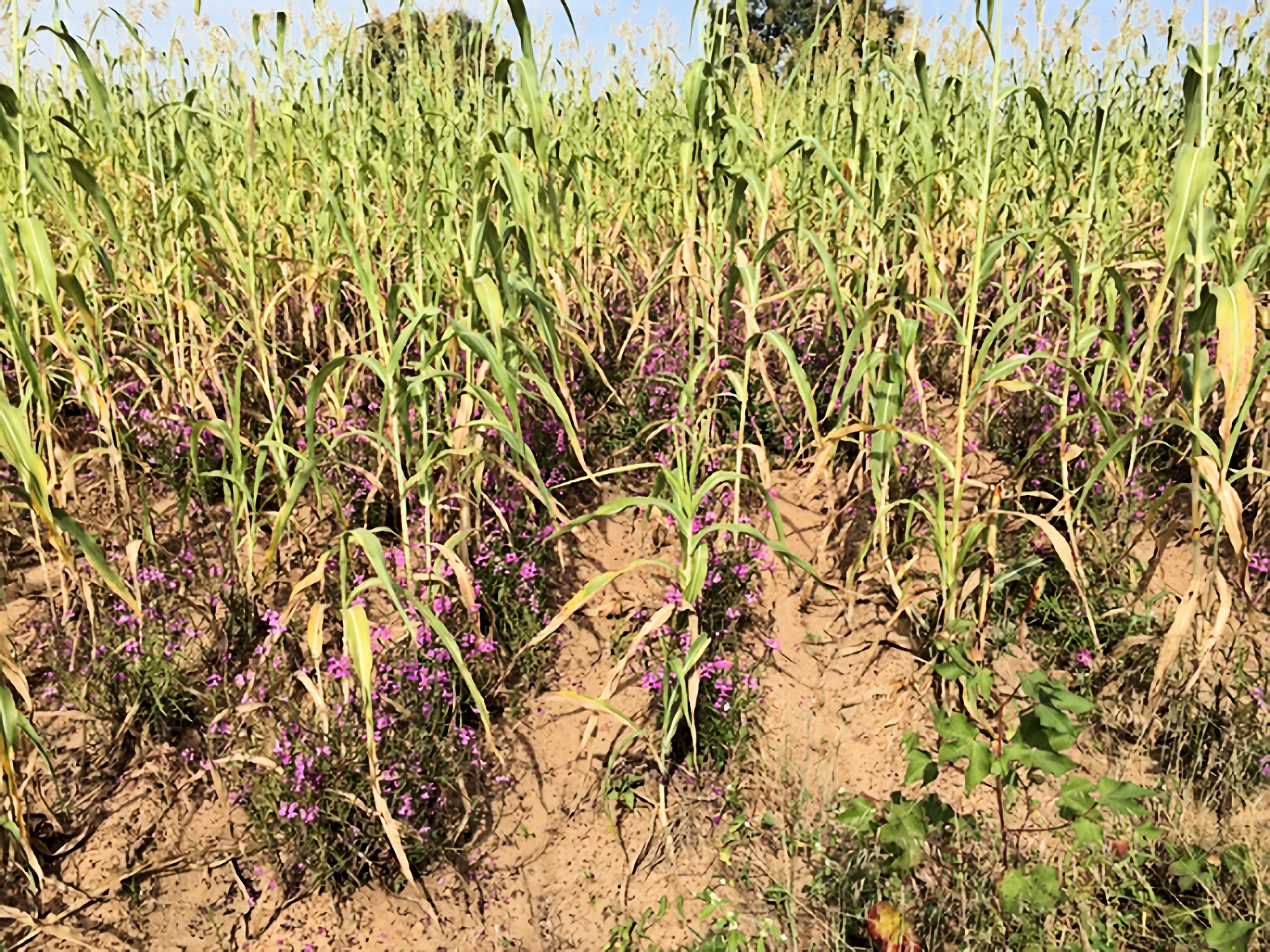
 A field of the crop sorghum infected with Striga.
Photo Credit: 2022 KAUST; Muhammad Jamil; Jian You Wang.

As part of a multipronged approach to prevent infestations by the parasitic plant Striga hermonthica, researchers are unravelling the role of plant hormones, known as strigolactones (SLs).

Cereal crops release SLs that regulate plant architecture and play a role in other processes related to plant development and stress response. The SLs released by plant roots attract mycorrhizal fungi, which provide plant nutrients. But strigolactones also induce germination and invasion by the parasitic plant Striga, with severe impacts on agricultural production, particularly on cereal yields in Africa.

In an important discovery, the team has recently shown that canonical SLs do not affect plant architecture in rice.

The researchers employed CRISPR/Cas9 technology to generate rice lines without canonical SLs and compared them to wild-type plants. The shoot and root phenotypes did not differ significantly between the mutants and the wild type, indicating that canonical SLs are not major regulators of rice architecture.

“Knowing which SLs regulate plant architecture and other functions, such as establishing symbiosis with beneficial mycorrhizal fungi or enabling invasion by root parasitic plants, will allow us to optimize and engineer one trait without affecting others,” explains Jian You Wang, a postdoc in Al-Babili’s lab.

The research showed that canonical SLs do contribute to symbiosis with mycorrhizal fungi and play a major role in stimulating seed germination in root parasitic weeds.

The unintended consequences of using a ventilator

Higher strains caused by artificial ventilators (left) and less stretch when the same lung is made to breathe naturally.
Photo Credit: Mona Eskandari/UCR

Breakthrough research addresses a long-standing question in pulmonary medicine about whether modern ventilators overstretch lung tissue. They do.

These cutting-edge findings by UC Riverside researchers were recently published in the American Journal of Respiratory and Critical Care Medicine. They demonstrate major differences between how we naturally breathe versus how ventilators make us breathe. These results are critical, particularly in context of the COVID-19 pandemic and the rush to build ventilators.

“Using novel techniques, we observed that ventilators can overextend certain regions of the lungs,” said Mona Eskandari, UCR assistant professor of mechanical engineering and the BREATHE Center in the School of Medicine, who led the research. These results provide an explanation for the decline in lung health experienced by patients the longer they spend on the machines, especially in the case of disease.

Eskandari’s bMECH lab pioneered a technique to study lungs as they are made to breathe. On a custom-built ventilator designed in their lab, the researchers imitated both natural and artificial breathing. Then, they observed isolated lungs involved in both types of breathing using multiple cameras collecting fast, high-resolution images, a method called digital image correlation.

Featured Article

What Is: Biological Plasticity

Image Credit: Scientific Frontline The Paradigm of the Reactive Genome  The history of biological thought has long been dominated by a tensi...

Top Viewed Articles