. Scientific Frontline

Friday, November 18, 2022

New carbon nanotube-based foam promises superior protection against concussions

Postdoctoral research associate Komal Chawla studies the architected vertically aligned carbon nanotube foam in the lab.
Photo Credit: Joel Hallberg

Developed by University of Wisconsin–Madison engineers, a lightweight, ultra-shock-absorbing foam could vastly improve helmets designed to protect people from strong blows.

The new material exhibits 18 times higher specific energy absorption than the foam currently used in U.S. military combat helmet liners, as well as having much greater strength and stiffness, which could allow it to provide improved impact protection.

Physical forces from an impact can inflict trauma in the brain, causing a concussion. But helmet materials that are better at absorbing and dissipating this kinetic energy before it reaches the brain could help mitigate, or even prevent, concussions and other traumatic brain injuries.

The researchers’ industry partner, helmet manufacturer Team Wendy, is experimenting with the new material in a helmet liner prototype to investigate its performance in real-world scenarios.

“This new material holds tremendous potential for energy absorption and thus impact mitigation, which in turn should significantly lower the likelihood of brain injury,” says Ramathasan Thevamaran, a UW–Madison professor of engineering physics who led the research.

The team detailed its advance in a paper recently published online in the journal Extreme Mechanics Letters.

Are Covid-19 “comas” signs of a protective hibernation state?

Caption:When the painted turtle hibernates it essentially sedates its brain to survive in its low-oxygen environment. Authors of a new paper in PNAS hypothesize that the same dynamic may be occurring in severe Covid-19 patients who underwent sedation and ventilation.
Photo Credit: Wayne

Many Covid-19 patients who have been treated for weeks or months with mechanical ventilation have been slow to regain consciousness even after being taken off sedation. A new article in the Proceedings of the National Academy of Sciences offers the hypothesis that this peculiar response could be the effect of a hibernation-like state invoked by the brain to protect cells from injury when oxygen is scarce.

A very similar kind of state, characterized by the same signature change of brain rhythms, is not only observed in cardiac arrest patients treated by chilling their body temperature, a method called “hypothermia,” but also by the painted turtle, which has evolved a form of self-sedation to contend with long periods of oxygen deprivation, or “anoxia,” when it overwinters underwater.

“We propose that hypoxia combined with certain therapeutic maneuvers may initiate an as-yet-unrecognized protective down-regulated state (PDS) in humans that results in prolonged recovery of consciousness in severe Covid-19 patients following cessation of mechanical ventilation and in post-cardiac arrest patients treated with hypothermia,” wrote authors Nicholas D. Schiff and Emery N. Brown. “In severe Covid-19 patients we postulate that the specific combination of intermittent hypoxia, severe metabolic stress and GABA-mediated sedation may provide a trigger for the PDS.”

Brain-Powered Wheelchair Shows Real-World Promise

Source/Credit: The University of Texas at Austin

In one of the first studies of its kind, several people with motor disabilities were able to operate a wheelchair that translates their thoughts into movement.

The study by researchers at The University of Texas at Austin and published today in the journal iScience is an important step forward for brain-machine interfaces — computer systems that turn mind activity into action. The concept of a thought-powered wheelchair has been studied for years, but most projects have used non-disabled subjects or stimuli that leads the device to more or less control the person rather than the other way around.

In this case, three individuals with tetraplegia, the inability to move their arms and legs due to spinal injuries, operated the wheelchair in a cluttered, natural environment to varying degrees of success. The interface recorded their brain activity, and a machine-learning algorithm translated it into commands that drove the wheelchair.

The researchers said this is a sign of future commercial viability for mind-powered wheelchairs that can assist people with limited motor function.

Researchers may have found a new biomarker for covid-19

Patients with acute COVID-19 infection have increased levels of the cytokine IL-26 in their blood.
Photo Credit: Louis Reed

Researchers at Karolinska Institutet have shown that patients with acute COVID-19 infection have increased levels of the cytokine IL-26 in their blood. Moreover, high IL-26 levels correlate with an exaggerated inflammatory response that signifies severe cases of the disease. The findings, which are presented in Frontiers in Immunology, indicate that IL-26 is a potential biomarker for severe COVID-19.

Vaccines for SARS-CoV-2 have proved effective at reducing the number of cases of severe COVID-19. However, the emergence of new viral variants, limited distribution of the vaccine and declining immunity are problems that drive scientists to find more efficacious treatments for the disease.

“We need to understand more about underlying immunological mechanisms in order to find better treatments. There is also a need for improved diagnostics in COVID 19-patients,” says Eduardo Cardenas, postdoc researcher at the Institute of Environmental Medicine, Karolinska Institutet, and principal author of the new pilot study.

How does radiation travel through dense plasma?

A NASA image of plasma bursting from the sun. Plasma—a hot soup of atoms with free moving electrons and ions—is the most abundant form of matter in the universe, found throughout our solar system in the sun and other planetary bodies. A new study from University of Rochester researchers provides experimental data about how radiation travels through dense plasmas, which will help scientists to better understand planetary science and fusion energy.
Credit: NASA

First-of-its-kind experimental evidence defies conventional theories about how plasmas emit or absorb radiation.

Most people are familiar with solids, liquids, and gases as three states of matter. However, a fourth state of matter, called plasmas, is the most abundant form of matter in the universe, found throughout our solar system in the sun and other planetary bodies. Because dense plasma—a hot soup of atoms with free-moving electrons and ions—typically only forms under extreme pressure and temperatures, scientists are still working to comprehend the fundamentals of this state of matter. Understanding how atoms react under extreme pressure conditions—a field known as high-energy-density physics (HEDP)—gives scientists valuable insights into the fields of planetary science, astrophysics, and fusion energy.

One important question in the field of HEDP is how plasmas emit or absorb radiation. Current models depicting radiation transport in dense plasmas are heavily based on theory rather than experimental evidence.

“This work reveals fundamental steps for rewriting current textbook descriptions of how radiation generation and transport occurs in dense plasmas.”

Tick-borne pathogens increasingly widespread in Central Canada

Image Credit: 13smok

Tick-borne pathogens, known for causing illnesses such as Lyme disease, are on the rise in Central Canada – presenting new risks in areas where they were never previously detected.

The findings from researchers at McGill University and the University of Ottawa demonstrate the need for more comprehensive testing and tracking to detect the spread and potential risk of tick-borne pathogens to human and wildlife populations throughout Canada.

“Most people know that diseases can be transmitted to humans through the bite of infected ticks. Ticks can carry and spread several disease agents, called pathogens, that can make people and animals sick,” explains Kirsten Crandall, a PhD candidate under the joint supervision of McGill University Professor Virginie Millien and University of Ottawa Professor Jeremy Kerr.

“While the bacteria that causes Lyme disease is the most common tick-borne pathogen in Canada, other tick-borne pathogens are moving in,” she adds.

To investigate the presence and prevalence of several emerging tick-borne pathogens, Crandall and her team analyzed small mammals and ticks collected in Ontario and Quebec. The researchers found that five emerging pathogens were present across their study sites in Central Canada, including the pathogens causing Lyme disease and babesiosis, a malaria-like parasitic disease.

‘Lost’ pigeon found after more than a century

Video Credit: Jason Gregg, American Bird Conservancy

A September expedition to Papua New Guinea confirmed via video the existence of the black-naped pheasant pigeon, a critically endangered species that has not been reported for 140 years.

“For much of the trip, it seemed like we had no chance of finding this bird,” said Jordan Boersma, co-leader of the expedition and a postdoctoral researcher at the Cornell Lab of Ornithology. “We were just two days away from the end of our time on Fergusson Island in Papua New Guinea when one of our remote cameras recorded the bird walking around and fanning its tail.”

The group captured the first-ever video and still photos of the bird, a large ground-dwelling species with a rust-colored back, a black head and body, and a bobbing pheasant-like tail. It may only exist far inland on Fergusson Island in hot, extremely rugged geothermal terrain laced with twisty rivers and dense with biting insects and leeches.

“After a month of searching, seeing those first photos of the pheasant pigeon felt like finding a unicorn,” said John C. Mittermeier, director of the Search for Lost Birds project at American Bird Conservancy and a core member of the expedition team. “It’s the kind of moment you dream about your entire life as a conservationist and birdwatcher.”

Scientists closer to solving a superconducting puzzle with applications in medicine, transport and power transmission

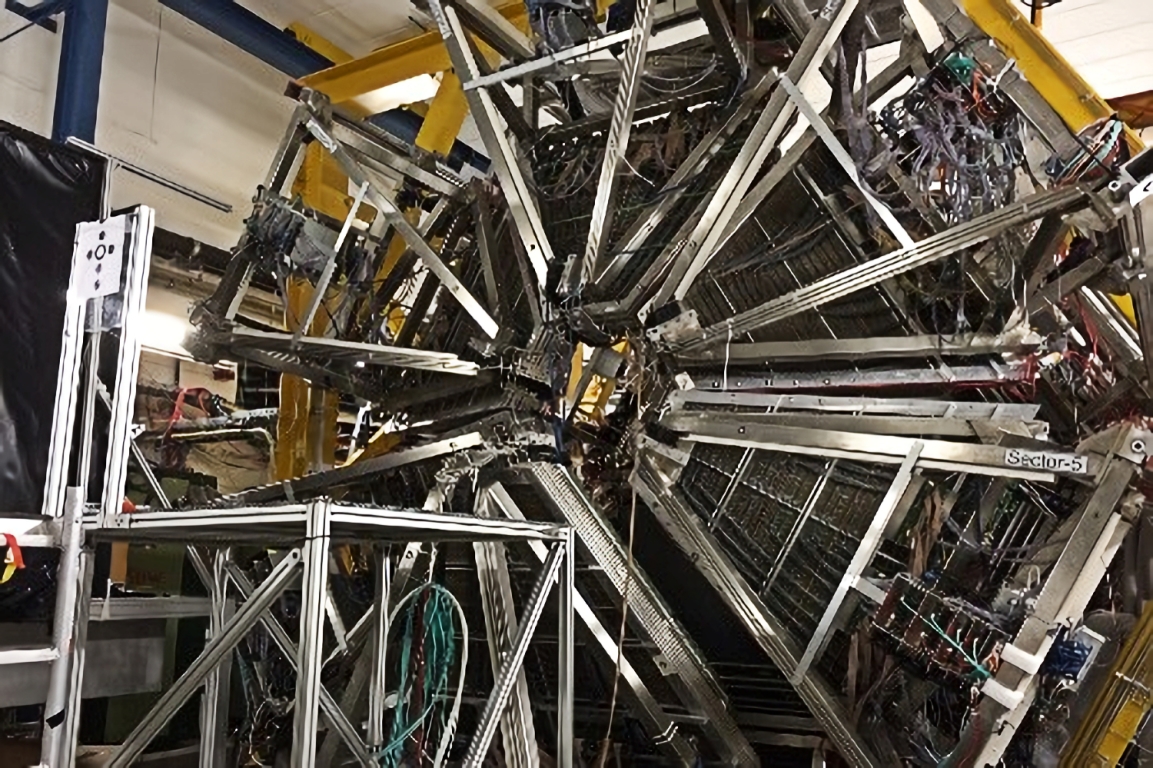
Particle accelerator
Source: University of Bristol

Researchers studying the magnetic behavior of a cuprate superconductor may have explained some of the unusual properties of their conduction electrons.

Cuprate superconductors are used in levitating trains, quantum computing and power transmission. They are of a family of materials made of layers of copper oxides alternating with layers of other metal oxides, which act as charge reservoirs.

The largest use of superconductors is currently for manufacturing superconducting magnets used for medical MRI machines and for scientific applications such as particle accelerators.

For the potential applications of superconducting materials to be fully realized, developing superconductors that maintain their properties at higher temperatures is crucial for scientists. The cuprate superconductors currently exhibit relatively high transition point temperatures and therefore give scientists an opportunity to study what makes higher temperature superconductivity possible.

Study yields clues to why Alzheimer’s disease damages certain parts of the brain

Red and orange areas on these heat maps of human brains show where the gene APOE is most active (top two brain images) and where tangles of the protein tau are most concentrated (bottom two brain images). APOE is the biggest genetic risk factor for Alzheimer’s, and tau tangles drive brain damage in the disease. The similarities in the two sets of maps suggested to researchers at Washington University School of Medicine in St. Louis that APOE plays a role in making certain brain areas particularly vulnerable to Alzheimer’s damage.
Image Credit: Diana Hobbs

Memory loss is often the first sign of Alzheimer’s disease, followed by confusion and difficulty thinking. These symptoms reflect the typical pattern of worsening damage to brain tissues. Toxic clusters of proteins first concentrate in the temporal lobes of the brain — the memory area — before spreading to parts of the brain important for thinking and planning.

A study by researchers at Washington University School of Medicine in St. Louis yields clues to why certain parts of the brain are particularly vulnerable to Alzheimer’s damage. It comes down to the gene APOE, the greatest genetic risk factor for Alzheimer’s disease. The parts of the brain where APOE is most active are the areas that sustain the most damage, they found.

The findings, published in Science Translational Medicine, help explain why symptoms of Alzheimer’s disease sometimes vary, and highlights an understudied aspect of Alzheimer’s disease that suggests yet-to-be discovered biological mechanisms may play an important role in the disease.

New nanoscale 3D printing material could offer better structural protection for satellites, drones, and microelectronics

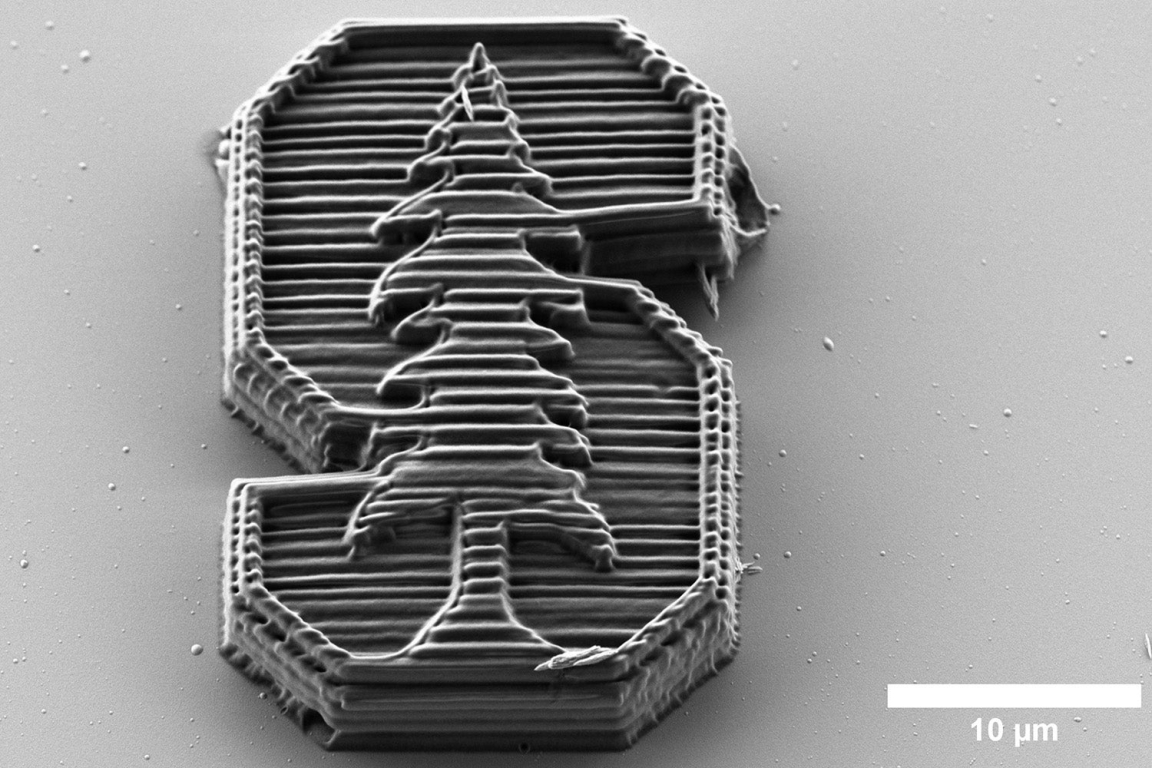
A tiny but strong Stanford logo was made using nanoscale 3D printing.
Image credit: John Kulikowski

Engineers have designed a new material for nanoscale 3D printing that is able to absorb twice as much energy as other similarly dense materials and could be used to create better lightweight protective lattices.

Science fiction envisions rapid 3D printing processes that can quickly create new objects out of any number of materials. But in reality, 3D printing is still limited in the properties and types of materials that are available for use, especially when printing at very small scales.

Researchers at Stanford have developed a new material for printing at the nanoscale – creating structures that are a fraction of the width of a human hair – and used it to print minuscule lattices that are both strong and light. In a paper published in Science, the researchers demonstrated that the new material is able to absorb twice as much energy than other 3D-printed materials of a comparable density. In the future, their invention could be used to create better lightweight protection for fragile pieces of satellites, drones, and microelectronics.

Featured Article

What Is: Biological Plasticity

Image Credit: Scientific Frontline The Paradigm of the Reactive Genome  The history of biological thought has long been dominated by a tensi...

Top Viewed Articles