. Scientific Frontline

Thursday, December 9, 2021

Burrowing snakes have far worse eyesight than their ancestors

The prong-snouted blind snake (Anilios bituberculatus)
is common across southern Australia.
Credit: Tom Charlton
The ancestor of all living snakes probably had substantially better vision than present-day burrowing snakes, according to new research.

An international team of scientists – led by the Natural History Museum and the University of Plymouth – carried out the first detailed analysis of gene sequence data for any species of the so-called 'blindsnakes' (Scolecophidia), a group of small-eyed burrowers.

They found that seven of the 12 genes associated with bright-light vision in most snakes and lizards species are not present in scolecophidians.

This, they say, demonstrates extensive vision gene loss over tens of millions of years of evolutionary history, similar to that which has also been observed in burrowing mammals with reduced vision.

It also challenges the hypothesis that all snakes living across the world today evolved from extreme burrowers, because the vision genes lost in scolecophidians are present in most other living snakes. The researchers say it would be extremely unlikely for such genetic deficiencies to have been reversed through evolution.

Scolecophidians are dedicated burrowers and form one half of the oldest divergence in the snake tree.

They comprise around 460 of the approximately 3,850 currently recognized living snake species, and likely diverged from their closest living relatives (Alethinophidia, which includes all other living snakes) more than 65 million years ago.


Wednesday, December 8, 2021

ESO telescope images planet around most massive star pair to date

This image shows the most massive planet-hosting star pair to date, b Centauri, and its giant planet b Centauri b. This is the first time astronomers have directly observed a planet orbiting a star pair this massive and hot.   The star pair, which has a total mass of at least six times that of the Sun, is the bright object in the top left corner of the image, the bright and dark rings around it being optical artefacts. The planet, visible as a bright dot in the lower right of the frame, is ten times as massive as Jupiter and orbits the pair at 100 times the distance Jupiter orbits the Sun. The other bright dot in the image (top right) is a background star. By taking different images at different times, astronomers were able to distinguish the planet from the background stars.   The image was captured by the SPHERE instrument on ESO’s Very Large Telescope and using a coronagraph, which blocked the light from the massive star system and allowed astronomers to detect the faint planet. 
Credit: ESO/Janson et al.

The European Southern Observatory’s Very Large Telescope (ESO’s VLT) has captured an image of a planet orbiting b Centauri, a two-star system that can be seen with the naked eye. This is the hottest and most massive planet-hosting star system found to date, and the planet was spotted orbiting it at 100 times the distance Jupiter orbits the Sun. Some astronomers believed planets could not exist around stars this massive and this hot — until now.

“Finding a planet around b Centauri was very exciting since it completely changes the picture about massive stars as planet hosts,” explains Markus Janson, an astronomer at Stockholm University, Sweden and first author of the new study published online today in Nature.

A new algorithm increases the efficiency of quantum computers

Photo: Mikko Raskinen
Quantum computing is taking a new leap forward due to research that has proposed a scheme to reduce the number of calculations needed to read out data stored in the state of a quantum processor. This will make quantum computers more efficient, faster, and ultimately more sustainable.

Quantum computers have the potential to solve important problems that are beyond reach even for the most powerful supercomputers, but they require an entirely new way of programming and creating algorithms. Universities and major tech companies are spearheading research on how to develop these new algorithms.

In a recent collaboration between the University of Helsinki, Aalto University, the University of Turku, and IBM Research Europe-Zurich, a team of researchers developed a new method to speed up calculations on quantum computers. The results were published in the prestigious journal PRX Quantum of the American Physical Society.

‘Unlike classical computers, which use bits to store ones and zeros, information is stored in the qubits of a quantum processor in the form of a quantum state, or a wavefunction,’ says postdoctoral researcher Guillermo García-Pérez from the University of Helsinki, first author of the paper. Therefore, special procedures are required to read out data from quantum computers.

Ancient DNA found in soil samples reveals mammoths survived thousands of years longer than believed

Anthropology PhD student Tyler Murchie is a lead author on research
about a new DNA recovery technique that pulls genomes of thousands
of ancient species from less than a gram of soil.
Photo by Emil Karpinski/McMaster University
Mere spoonsful of soil pulled from Canada’s permafrost are opening vast windows into ancient life in the Yukon, revealing rich new information and rewriting previous beliefs about the extinction dynamics, dates and survival of megafauna like mammoths, horses and other long-lost life forms.

In a new paper, published in the journal Nature Communications, researchers from McMaster University, the University of Alberta, the American Museum of Natural History and the Yukon government present a 30,000-year DNA record of past environments, drawn from cored permafrost sediments extracted from the Klondike region of central Yukon.

Researchers used DNA capture-enrichment technology developed at McMaster to isolate and rebuild, in remarkable detail, the fluctuating animal and plant communities at different time points during the Pleistocene-Holocene transition, an unstable climatic period 11,000-14,000 years ago when a number of large species such as mammoths, mastodons and sabre-toothed cats disappeared.

They reconstructed the ancient ecosystems using tiny soil samples which contain billions of microscopic genomic sequences from animal and plant species.

Optical cavities could be key to next generation interferometers

A new concept has been developed that has the potential to assist new instruments in the investigation of fundamental science topics such as gravitational waves and dark matter.

The concept is described in a paper written by UK Quantum Technology Hub Sensors and Timing researchers at the University of Birmingham and published in Communications Physics, and a related patent application filed by University of Birmingham Enterprise.

It proposes a new method of using optical cavities to enhance atom interferometers – highly sensitive devices that use light and atoms to make ultra-precise measurements.

Although itself challenging to implement, the concept presents a method of overcoming substantial technological challenges involved in the pursuit of atom interferometers operating at extreme momentum transfer – a technique which would allow atoms to be placed into a quantum superposition over large distances.

This is key to enabling the sensitivities required for these devices to investigate signals from dark matter and gravitational waves. The exploration of dark matter, and the detection of gravitational waves from the very early Universe is key to developing our collective knowledge of fundamental physics.

The new paper, written by Dr Rustin Nourshargh, Dr Samuel Lellouch and colleagues from the School of Physics and Astronomy, describes how synchronization of the input pulses, to realize a spatially resolved circulating pulse within the optical cavity, can facilitate a large momentum transfer without the need for drastic improvements in available laser power.

Azure-tailed lizard species rediscovered on Hawaiʻi Island

Azure-tailed skink
Photo credit: Gary Miller

When a former student sent William Mautz, a professor emeritus of biology at the University of Hawaiʻi at Hilo, a snapshot of a lizard once thought to be extinct in Hawaiʻi—he was instantly curious.

It was a recently snapped photograph of what appeared to be an azure-tailed skink, a lizard species once commonly found in the Hawaiian Islands and only known to dwell on a tiny 10-acre islet off Molokaʻi. UH Hilo Tropical Conservation Biology and Environmental Science alumnus Aaron Mickelson sent Mautz the photo to get his expert opinion.

“I said I know what it is, but it is not supposed to be here anymore,” Mautz explained. “The little brown skinks common in Hilo backyards are a different species called the delicate skink. They may have a slate-colored tail but it is not a true blue. The azure-tailed skink also has a stripe over the top of its head.”

To confirm its existence on Hawaiʻi Island, Mautz set off on a hike to the lizard population spotted within a small grove of pandanus trees at the edge of the ocean cliffs near Nīnole on the Hāmākua Coast. Mautz recently published an article about the species’ rediscovery in Herpetological Review.

Quetzalcoatlus, Earth’s largest flier ever

An artist’s rendition of Quetzalcoatlus northropi, a type of pterosaur and the largest flying animal that ever lived on Earth. Quetzalcoatlus stood about 12 feet tall and walked with a unique gait because of its enormous 20-foot wings, which touched the ground when folded.
Artwork courtesy of James Kuether

Look around any wetland today and you’re likely to see 3-foot-tall egrets or 4-foot-tall herons wading in the shallows in stealthy search of fish, insects or crustaceans.

But 70 million years ago, along the Rio Grande River in Texas, a more impressive and scarier creature stalked the marshes: the 12-foot-tall pterosaur known as Quetzalcoatlus. With a 37- to 40-foot wingspan, it was the largest flying animal that ever lived on Earth.

In six papers published today as a Memoir by the Society of Vertebrate Paleontology, scientists and an artist provide the most complete picture yet of this dinosaur relative, the largest example of which is represented by just a single set of fossilized bones collected in the late 1970s from Big Bend National Park. The papers describe the pterosaur’s geological and ecological setting during the Upper Cretaceous, its anatomy and taxonomic position, and how it moved on the ground and in the air.

One of the papers, co-authored by University of California, Berkeley, paleontologist Kevin Padian, emeritus professor of integrative biology and emeritus curator in the UC Museum of Paleontology, answers some of the mysteries surrounding the flying and walking behavior of this unique animal, about which little has been published since its discovery more than 45 years ago. How can an animal walk with wings so long that they touch the ground when folded? What did it eat, and how did it feed? How strong a flier was it? And how does an animal whose wings span 40 feet, yet whose legs are only 6 feet high at the hip, launch itself into the air?

Early warning signals could help monitor disease outbreaks

New research suggests early warning signals (EWSs) could help in the monitoring of disease outbreaks, such as COVID-19. The study, led by the University of Bristol, found warnings could be detected weeks earlier than any rapid increase in cases. The findings could help governments and policy makers improve the accuracy of their decisions and allow timely interventions if needed.

Using a novel, sequential analysis combined with daily COVID-19 case data across 24 countries, the research, published today [8 December] in Biology Letters, suggests EWSs can predict COVID-19 waves. The researchers found that warnings were regularly detectable prior to exponential cases changes. but the reliability of these signals depended on the amount of time between successive waves of infection and the mathematical likelihood of a critical transition, Consequently, EWSs showed highest accuracy for waves that experienced a suppressed R number over a long period before the outbreak.

As the ongoing COVID-19 pandemic has shown, being able to identify rapid increases in cases before they occur is important for people to modify their behaviors, and to inform government actions.

Duncan O’Brien in Bristol’s School of Biological Sciences said: “We’ve always been aware that any technique that’s able to predict the appearance of disease would be useful in protecting human health. This has never been more apparent with the global COVID-19 pandemic and the many discussions around when governments should put interventions in place.

“Our research found that hotly debated early warning signals were most reliable before the second COVID-19 wave that was experienced by many, and whilst these signals performed less well for the first and third waves, any rapid increase in cases could be identified well in advance.

Tuesday, December 7, 2021

Regular exercise reduces the risk of and death from pneumonia

People who exercise regularly can reduce their risk of developing and dying from pneumonia, new research has found. The study, led by the University of Bristol and published in GeroScience, analyzed, for the first time, ten population cohort studies with over one million participants.

The benefits of regular exercise are well-known and can reduce the risk, length or severity of infectious diseases. Previous research has suggested that regular exercise might be associated with a reduced risk of pneumonia, but the studies have had mixed findings with some reporting evidence of a relationship and others no evidence.

The researchers carried out a pooled analysis of all published studies to re-evaluate the relationship between regular exercise and the risk of developing pneumonia.

The questions the study aimed to answer included:

  • Is there an association between regular physical activity and future risk of pneumonia?
  • If there is an association, what is the strength and nature of the association?
  • If there is an association, is it stronger or weaker in specific groups of people?

The study found people who exercise regularly have a lower risk of developing pneumonia and pneumonia-related death compared to those who were the least or not physically active. The relationship was shown for pneumonias that did not result in death and those that resulted in death. The results did not change on taking into account known factors that can affect pneumonia such as age, sex, body mass index, socioeconomic status, alcohol consumption, smoking, and pre-existing diseases. The strength of the association did not vary by age or sex.

You can help scientists study the Sun

In this new citizen science project, participants will help identify bursts of plasma coming off the Sun, called solar jets, in thousands of images captured over the last 11 years by NASA’s Solar Dynamic Observatory.
Image credit: NASA, Zooniverse

If you ever wanted to be an astronomer, now is your chance. A new citizen science project, led by researchers at the University of Minnesota with support from NASA, allows volunteers to play an important role in learning more about the Sun by using their personal computers.

Participants will help identify bursts of plasma coming off the Sun, called solar jets, in thousands of images captured over the last 11 years by NASA’s Solar Dynamic Observatory.

The project, called Solar Jet Hunter, is the newest citizen science project under the Zooniverse platform originated at the University of Minnesota. Zooniverse is the world’s largest and most popular people-powered online research platform with more than two million volunteers from around the world. These volunteers act as armchair scientists and archivists helping academic research teams with their projects from the comfort of their own homes.

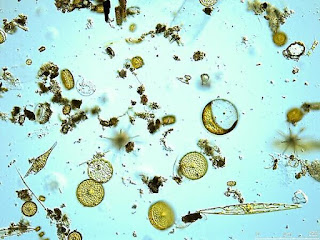
Innovative plankton monitoring tool holds key to assessing health of ocean life

Researchers from the University of Plymouth have helped to create a free, online tool to make complex plankton datasets easier and more accessible for all.

The Plankton Lifeform Extraction Tool (PLET) brings together separate plankton datasets into one central database and formats the data into pre-defined lifeforms, making it easier for marine biologists to access robust, reliable plankton data.

This data will give a more accurate picture of the spatial and temporal location of ocean plankton and in turn provide data and critical information to inform policy, public interest and scientific discovery.

The online tool, hosted by the Archive for Marine Species and Habitats Data (DASSH) was developed by researchers from 15 partners across Europe.

Lead author Dr Clare Ostle, from the Marine Biological Association, said:

“This has been many years in the making, and it’s great to see it come together. Plankton underpin so many important processes in the marine world, and making that data more user-friendly and accessible is key to answering important questions.”

Plankton form the base of the marine food web, help to regulate the ocean chemistry and provide approximately half of the world’s oxygen.

Because plankton have short life cycles, drift freely in the ocean and have wide distributions, they are sensitive indicators to climate change, and therefore play an important role for scientists monitoring changes in ocean biodiversity.

Although there are a number of programs that monitor plankton, the lack of direct comparison between datasets means that assessing plankton changes has been difficult and limited.

Melting glaciers may produce thousands of kilometers of new Pacific salmon habitat

Sockeye salmon (Photo: Freshwaters Illustrated)
Retreating glaciers in the Pacific mountains of western North America could produce around 6,150 kilometers of new Pacific salmon habitat by the year 2100, according to a new study.

Scientists have ‘peeled back the ice’ from 46,000 glaciers between southern British Columbia and south-central Alaska to look at how much potential salmon habitat would be created when underlying bedrock is exposed and new streams flow over the landscape.

Modeling glacier retreat under different climate change scenarios, researchers discovered that, under a moderate temperature increase, the glaciers could reveal potential new Pacific salmon habitat nearly equal to the length of the Mississippi River (6,275 km).

Desirable for salmon, in this case, means low-gradient streams (less than 10% incline) connected to the ocean with retreating glaciers at their headwaters. The team discovered that 315 of the glaciers examined met this criteria.

The international team, led by researchers at Simon Fraser University (Canada) with the University of Birmingham and other organizations, published their findings today in Nature Communications.

Lead author, Simon Fraser University spatial analyst Dr. Kara Pitman comments: “We predict that most of the emerging salmon habitat will occur in Alaska and the transboundary region, at the British Columbia‒Alaska border, where large coastal glaciers still exist. The Gulf of Alaska sub-region is predicted to see the most gains—a 27% increase in salmon-accessible habitat by 2100.

For the first time, civil /commercial operators in the U.S can purchase new Black Hawk aircraft

The first-of-type S-70M Black Hawk helicopter departs from the Sikorsky Training Academy in Florida Nov. 18 having received the FAA’s Certificate of Airworthiness.
Source/Credit: Lockheed Martin Corporation
The Federal Aviation Administration (FAA) has completed its certification of the S-70M Black Hawk helicopter — a new type designation — by issuing Sikorsky, a Lockheed Martin company (NYSE: LMT) a Restricted Category Special Airworthiness Certificate. FAA certification, and the establishment of a pilot type rating, are expected to broaden the market for the military-designed helicopter by allowing civil and commercial operators in the United States to purchase new Black Hawk aircraft direct from the factory.

“With type certification, new production S-70M Black Hawk helicopters in the latest configuration are available to the U.S. commercial/civil market for the first time,” said Jason Lambert, vice president of Sikorsky Global Commercial & Military Systems. “Internationally, where the FAA restricted category is not widely accepted, we can now discuss with other civil aviation authorities the potential of validating the aircraft for challenging civil operations in their countries’ airspace.”

“We thank the FAA for its rigorous evaluation of the first S-70M aircraft, and FlightSafety International for its partnership to upgrade an S-70i™ flight simulator and training curriculum to S-70M FAA standards,” he said. “We also congratulate and welcome our first S-70M customer, San Diego Gas & Electric, which requires the rugged design and lift capacity of the Black Hawk helicopter to perform the demanding aerial firefighting mission.”

Iron integral to the development of life on Earth, and the possibility of life on other planets

Early Earth on the left, had seas infused with life-enhancing iron, whereas Earth today, seen on the right, does not.
Image credit: Mark A. Garlick / markgarlick.com

Iron integral to the development of life on Earth – and the possibility of life on other planets

Researchers at the University of Oxford uncover the importance of iron for the development of complex life on Earth – which also may hint at the likelihood of complex life on other planets.

Iron is an essential nutrient that almost all life requires to grow and thrive. Iron’s importance goes all the way back to the formation of the planet Earth, where the amount of iron in the Earth’s rocky mantle was ‘set’ by the conditions under which the planet formed and went on to have major ramifications for how life developed. Now, scientists at the University of Oxford have uncovered the likely mechanisms by which iron influenced the development of complex life forms, which can also be used to understand how likely (or unlikely) advanced life forms might be on other planets. The work was published today in PNAS.

‘The initial amount of iron in Earth’s rocks is ‘set’ by the conditions of planetary accretion, during which the Earth’s metallic core segregated from its rocky mantle,’ says co-author Jon Wade, Associate Professor of Planetary Materials at the Department of Earth Sciences, University of Oxford. ‘Too little iron in the rocky portion of the planet, like the planet Mercury, and life is unlikely. Too much, like Mars, and water may be difficult to keep on the surface for times relevant to the evolution of complex life.’

Study untangles mitochondria to reap rewards of exercise

New research has uncovered how mitochondria – the energy powerhouse of our cells implicated in devastating mitochondrial disease, type 2 diabetes and cancers – respond to exercise training in unprecedented detail.

 joint study between the University of Melbourne and Victoria University, with collaborators at the German Diabetes Center, Monash University, and the Murdoch Children’s Research Institute, have successfully linked minutes of exercise to specific mitochondrial changes that support improved metabolism.

In work published in Nature Communications, the University of Melbourne’s Dr Stroud from the School of Biomedical Sciences, and colleagues detail how they used state-of-the art equipment at the University of Melbourne’s Bio21 Molecular Science and Biotechnology Institute’s Mass Spectrometry and Proteomics Faculty to analyze in detail how our muscles respond to exercise.

While mitochondria are hugely important as they convert sugars, fats and protein into energy used for muscle contraction, cell growth and brain activity among other things, maintaining mitochondrial health is critical not just to various debilitating disease states where mitochondrial function is impaired, but also the quality of life of otherwise healthy people.

The team were able to discover ten times more mitochondrial proteins that respond to exercise training than documented in previous studies.

Featured Article

What Is: Macrophage

A realistic scientific visualization of a macrophage, a crucial immune cell, actively engulfing bacteria with its extended pseudopods. The i...

Top Viewed Articles