
 |
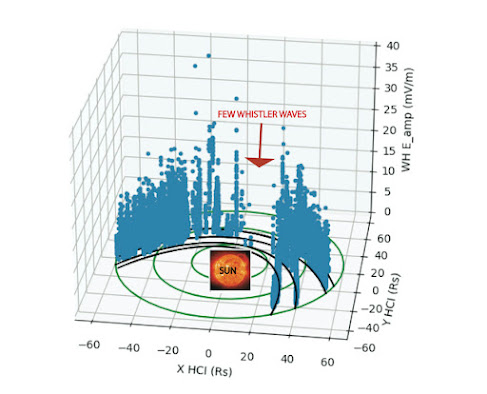
| NASA’s Parker Solar Probe, provides insight into how solar wind is generated and accelerated. Photo credits: Cynthia Cattell, NASA/Johns Hopkins APL/Steve Gribben |
A new study led by University of Minnesota Twin Cities researchers, using data from NASA’s Parker Solar Probe, provides insight into what generates and accelerates the solar wind, a stream of charged particles released from the sun’s corona. Understanding how the solar wind works can help scientists predict “space weather,” or the response to solar activity—such as solar flares—that can impact both astronauts in space and much of the technology people on Earth depend on.
The paper is published in Astrophysical Journal Letters, a scientific journal from the American Astronomical Society (AAS) that publishes high-impact astrophysical research.
The scientists used data gathered from Parker Solar Probe, which launched in 2018 with the goal to help scientists understand what heats the Sun’s corona (the outer atmosphere of the sun) and generates the solar wind. To answer these questions, scientists need to understand the ways in which energy flows from the sun. The latest round of data was obtained in August 2021 at a distance of 4.8 million miles from the sun—the closest a spacecraft has ever been to the star.








.jpg)