. Scientific Frontline

Friday, January 14, 2022

Risky food-finding strategy could be the key to human success

A group of Hadza women share a meal of roasted tubers. Food sharing allows them to spend more energy to find food, knowing they won’t starve if they return to camp empty-handed. (
Credit: Herman Pontzer)

It’s a cold and rainy Sunday afternoon: would you rather be running after tasteless wild berries, or curled up on your couch with fuzzy socks and a good book?

You might not have had that choice if our ancestors had not taken a big gamble with their food.

A new study published in Science shows that early human foragers and farmers adopted an inefficient high-risk, high-reward strategy to find food. They spent more energy in pursuit of food than their great ape cousins, but brought home much more calorie-rich meals that could be shared with the rest of their group. This strategy allowed some to rest or tackle other tasks while food was being acquired.

“Hunting and gathering is risky and inefficient, but the rate of return is enormous,” said study co-leader, Herman Pontzer, an associate professor of Evolutionary Anthropology at Duke University. “We can share our food, and because we got so many calories before noon, we can hang out around each other in this new space, a free-time space.”

Humans spend a lot more energy than great apes. We have big brains that eat up a lot of calories, we live a long time, we can have long pregnancies that produce big babies, and these babies rely on adults for a long time.

A spray to protect against lung damage from Covid-19

Prof. Stefan Engelhardt and startup rnatics develop an RNA-based drug that can prevent inflammatory lung conditions associated with Covid-19.
Image Credit: Andreas Heddergott / TUM

rnatics, a startup at the Technical University of Munich (TUM), has created an RNA-based drug to prevent lung damage from infections as seen in serious Covid-19 cases. The Federal Ministry of Education and Research (BMBF) is providing 7 million euros in funding to support the development of the drug. The team is using a substance that inhibits the inflammation-promoting microRNA. The therapy is expected to be efficacious in current and future mutations of SARS-CoV2.

Covid-19 infections can lead to serious inflammations of the lung and the formation of scar tissue (fibrosis). This can have a long-term impact on lung function and is one of the causes of “long covid”. A team working with Stefan Engelhardt, Professor of Pharmacology and Toxicology at TUM has developed a new RNA-based drug that can prevent these inflammatory lung conditions. When administered via the respiratory passages, it quickly targets immune cells in the alveoli (tiny air sacs in the lungs) and inhibits a microRNA molecule found in these cells.

In Covid patients, misguided immune cells called macrophages play a substantial role in severe inflammatory infections and lung damage. However, when the new drug blocked the microRNA molecule in macrophages in mice, there was a significant reduction in inflammation and lung damage and a considerable improvement in lung function. Stefan Engelhardt is confident that serious infections and thus the kind of lung damage associated with long covid can be prevented in human patients receiving the drug through an inhaler.

Earth’s interior is cooling faster than expected

The Earth's core gives off heat to the mantle (or­ange to dark red),
which con­trib­utes to the slow cool­ing of the Earth
Source: ETH Zurich
Re­search­ers at ETH Zurich have demon­strated in the lab how well a min­eral com­mon at the bound­ary between the Earth’s core and mantle con­ducts heat. This leads them to sus­pect that the Earth’s heat may dis­sip­ate sooner than pre­vi­ously thought.

The evol­u­tion of our Earth is the story of its cool­ing: 4.5 bil­lion years ago, ex­treme tem­per­at­ures pre­vailed on the sur­face of the young Earth, and it was covered by a deep ocean of magma. Over mil­lions of years, the planet’s sur­face cooled to form a brittle crust. How­ever, the enorm­ous thermal en­ergy em­an­at­ing from the Earth’s in­terior set dy­namic pro­cesses in mo­tion, such as mantle con­vec­tion, plate tec­ton­ics and vol­can­ism.

Still un­answered, though, are the ques­tions of how fast the Earth cooled and how long it might take for this on­go­ing cool­ing to bring the afore­men­tioned heat-​driven pro­cesses to a halt.

One pos­sible an­swer may lie in the thermal con­duct­iv­ity of the min­er­als that form the bound­ary between the Earth’s core and mantle.

This bound­ary layer is rel­ev­ant be­cause it is here that the vis­cous rock of the Earth’s mantle is in dir­ect con­tact with the hot iron-​nickel melt of the planet’s outer core. The tem­per­at­ure gradi­ent between the two lay­ers is very steep, so there is po­ten­tially a lot of heat flow­ing here. The bound­ary layer is formed mainly of the min­eral bridg­man­ite. How­ever, re­search­ers have a hard time es­tim­at­ing how much heat this min­eral con­ducts from the Earth’s core to the mantle be­cause ex­per­i­mental veri­fic­a­tion is very dif­fi­cult.

New Study Sheds Light on Origins of Life on Earth

A Rutgers-led team has discovered the structures of proteins that may be responsible for the origins of life in the primordial soup of ancient Earth.

Addressing one of the most profoundly unanswered questions in biology, a Rutgers-led team has discovered the structures of proteins that may be responsible for the origins of life in the primordial soup of ancient Earth.

The study appears in the journal Science Advances.

The researchers explored how primitive life may have originated on our planet from simple, non-living materials. They asked what properties define life as we know it and concluded that anything alive would have needed to collect and use energy, from sources such as the Sun or hydrothermal vents.

In molecular terms, this would mean that the ability to shuffle electrons was paramount to life. Since the best elements for electron transfer are metals (think standard electrical wires) and most biological activities are carried out by proteins, the researchers decided to explore the combination of the two — that is, proteins that bind metals.

They compared all existing protein structures that bind metals to establish any common features, based on the premise that these shared features were present in ancestral proteins and were diversified and passed down to create the range of proteins we see today.

New research may help scientists unravel the physics of the solar wind

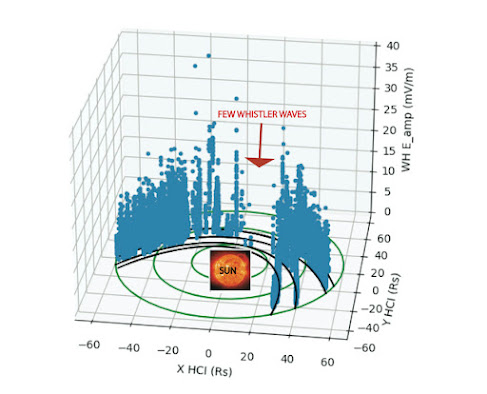
NASA’s Parker Solar Probe, provides insight into how solar wind is generated and accelerated.
Photo credits: Cynthia Cattell, NASA/Johns Hopkins APL/Steve Gribben

A new study led by University of Minnesota Twin Cities researchers, using data from NASA’s Parker Solar Probe, provides insight into what generates and accelerates the solar wind, a stream of charged particles released from the sun’s corona. Understanding how the solar wind works can help scientists predict “space weather,” or the response to solar activity—such as solar flares—that can impact both astronauts in space and much of the technology people on Earth depend on.

The paper is published in Astrophysical Journal Letters, a scientific journal from the American Astronomical Society (AAS) that publishes high-impact astrophysical research.

The scientists used data gathered from Parker Solar Probe, which launched in 2018 with the goal to help scientists understand what heats the Sun’s corona (the outer atmosphere of the sun) and generates the solar wind. To answer these questions, scientists need to understand the ways in which energy flows from the sun. The latest round of data was obtained in August 2021 at a distance of 4.8 million miles from the sun—the closest a spacecraft has ever been to the star.

Earth on trajectory to Sixth Mass Extinction say biologists

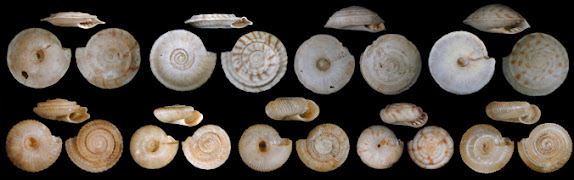
Shells from recently extinct land snails from French Polynesia. 
Photo credit: O.Gargominy, A.Sartori.

Scientific Frontline: "At a Glance" Summary: Sixth Mass Extinction

  • Main Discovery: Earth is currently undergoing a human-driven Sixth Mass Extinction, a reality confirmed by a comprehensive assessment of biodiversity loss that accounts for previously overlooked invertebrate species.
  • Methodology: Researchers from the University of Hawaiʻi at Mānoa and the Muséum National d’Histoire Naturelle extrapolated global extinction rates by utilizing estimates obtained specifically from land snails and slugs to calculate broader biodiversity loss since the year 1500.
  • Key Data: Current estimates indicate that between 7.5% and 13% of the two million known species—amounting to a staggering 150,000 to 260,000 species—have already gone extinct since 1500.
  • Significance: This analysis refutes denials of a mass extinction by proving the crisis is deeply impacting invertebrates, which constitute the vast majority of biodiversity. It also reveals that island species are disproportionately affected compared to continental species, while marine environments and terrestrial plants currently face lower extinction rates.
  • Future Application: These findings emphasize the urgent necessity of expanding conservation initiatives beyond charismatic vertebrate animals, accelerating the documentation of vulnerable biodiversity before it vanishes, and mobilizing international political action to halt the current extinction trajectory.
  • Branch of Science: Evolutionary Biology, Ecology, and Environmental Science.

Thursday, January 13, 2022

Scientists uncover ‘resistance gene’ in deadly E. coli

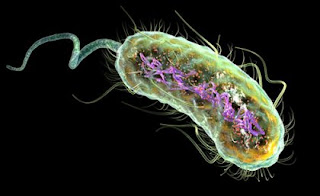
An artist's impression of E. coli, which infects
over 150 million people worldwide.
Scientists have pinpointed a gene that helps deadly E. coli bacteria evade antibiotics, potentially leading to better treatments for millions of people worldwide.

The University of Queensland-led study found a particular form of the bacteria – E. coli ST131 – had a previously unnoticed gene that made it highly resistant to commonly prescribed antibiotics.

Professor Mark Schembri, from UQ’s School of Chemistry and Molecular Biosciences, said this ‘resistance gene’ can spread incredibly quickly.

“Unlike gene transfer in humans, where sex is required to transfer genes, bacteria have genetic structures in their cells – called plasmids – that are traded quickly and easily between each other,” Professor Schembri said.

“This resistance gene is in one such plasmid and is swiftly making E. coli ST131 extremely resistant to widely prescribed fluoroquinolone antibiotics.

“These antibiotics are used to treat a wide range of infections, including urinary tract infections (UTIs), bloodstream infections and pneumonia.

“Importantly, this gene works with other resistance genes to achieve resistance at a level greater than the highest antibiotic concentrations that we can achieve during treatment.

“So we’re going to have to rethink our treatment plan, and strive to create antibiotics that can tackle these infections in spite of this antibiotic resistance mechanism.”

A treasure map for the realm of electrocatalysts

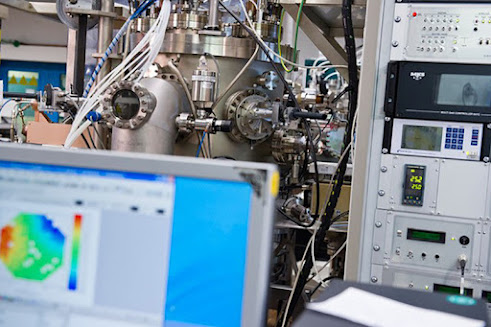
A look at the sputter system at the RUB, with which the material libraries were manufactured.  Credit: Christian Nielinger

The number of options makes it difficult to find promising materials. A German-Danish team has developed an efficient method for this.

Efficient electrocatalysts are hidden in materials that are composed of five or more elements, which are used, for example, for the production of green hydrogen. A team from the Ruhr University Bochum (RUB) and the University of Copenhagen has developed an efficient method to find the promising candidates in the countless possible materials. The researchers combined experiments and simulation. They report in the magazine "Advanced Energy Materials."

Millions of systems are conceivable

High entropy alloys, or HEAs for short, are chemically complex materials that consist of mixtures of five or more elements. The interesting thing about them is that they offer completely new opportunities for the development of electrocatalysts. These are urgently needed to make energy conversion processes more efficient, for example for the production and use of green hydrogen. "The problem with HEAs is that in principle millions of high entropy systems are possible and each system contains tens of thousands of different compositions," explains Prof. Dr. Alfred Ludwig, who heads the Materials Discovery and Interfaces chair at the RUB. This complexity can hardly be overcome with conventional methods and traditional high-throughput methods.

Researchers develop cancer immunotherapy treatment

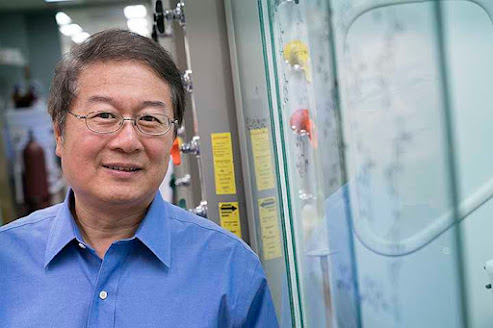
Zhong-Yin Zhang of Purdue’s College of Pharmacy and his team of researchers have developed a cancer immunotherapy. The novel lead compound showed no in vivo side effects and leads to reduced Photo provided by Zhong-Yin Zhang

Researchers in Purdue University's College of Pharmacy are further developing a potential immunotherapy treatment for cancer, one focused on the mutation of an enzyme.

"While recent progress in cancer immunotherapy has led to revolutionary success in multiple cancer types, most cancer patients do not benefit from immunotherapy. Thus, there is an urgent need for additional strategies," said Zhong-Yin Zhang, Distinguished Professor of Medicinal Chemistry, the Robert C. and Charlotte P. Anderson Chair in Pharmacology, head of the Department of Medicinal Chemistry and Molecular Pharmacology, and director of the Purdue Institute for Drug Discovery.

Zhang said cancer immunotherapy relies on T-cells to recognize and attack foreign substances such as tumors in the body.

"There is an intricate signaling network within T-cells that determines their activity," he said. "Previous studies have revealed that an enzyme called PTPN22 regulates the critical signals that activate them. People with a mutation in the gene have a lower incidence of cancer than people without the mutation.

2021 was Northeast’s third-warmest year since 1895

Credit: Cornell University
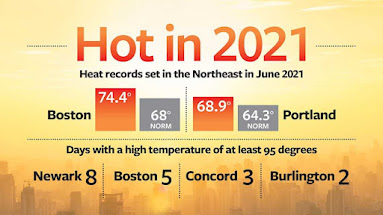
You’re going to sweat just thinking about it: For the Northeast United States, the year 2021 was third warmest – at an average of 49.5 degrees Fahrenheit, which ties the year 2020 – since 1895, when consistent record-keeping started, according to the Cornell’s Northeast Regional Climate Center (NRCC).

The region’s warmest year was 2012, at an average 50.1 degrees, while the second-warmest year was 1998 at 49.8 degrees.

“Unfortunately, the climate events of 2021 – with above-normal and record-breaking temperatures, along with intense precipitation events – are a harbinger of future climate conditions, as they align with climate-model projections in a world with increasing greenhouse gas concentrations,” said Art DeGaetano, director of the climate center and professor in the Department of Earth and Atmospheric Sciences in the College of Agriculture and Life Sciences.

For five cities – Boston; Newark, New Jersey; Providence, Rhode Island; and Erie and Harrisburg, Pennsylvania – the year 2021 was the warmest ever, according to NRCC climatologists Jessica Spaccio and Samantha Borisoff.

The Northeast region also endured three back-to-back tropical storms – Fred, Henri and Ida in late August and early September – and historic, record-breaking rains.

Boston; Portland and Caribou, Maine, shattered records for average June temperatures. That month, Boston was an average of 74.4 degrees (68 degrees, normal), while Portland averaged 68.9 degrees (64.3 degrees, normal) and Caribou – one of the region’s perennial cool spots – experienced 64.9 degrees (61.4, normal.)

Your gut senses the difference between real sugar and artificial sweetener

A section of mouse intestines shows in green the relatively scarce neuropod cells in the epithelium that are responsible for communicating conditions inside the gut to the nervous system outside. 
Credit: Borhoquez Lab, Duke

Your taste buds may or may not be able to tell real sugar from a sugar substitute like Splenda, but there are cells in your intestines that can and do distinguish between the two sweet solutions. And they can communicate the difference to your brain in milliseconds.

Not long after the sweet taste receptor was identified in the mouths of mice 20 years ago, scientists attempted to knock those taste buds out. But they were surprised to find that mice could still somehow discern and prefer natural sugar to artificial sweetener, even without a sense of taste.

The answer to this riddle lies much further down in the digestive tract, at the upper end of the gut just after the stomach, according to research led by Diego Bohórquez, an associate professor of medicine and neurobiology in the Duke University School of Medicine.

In a paper appearing Jan. 13 in Nature Neuroscience, “we’ve identified the cells that make us eat sugar, and they are in the gut,” Bohórquez said. Infusing sugar directly into the lower intestine or colon does not have the same effect. The sensing cells are in the upper reaches of the gut, he said.

Better mental health found among transgender people who started hormones as teens

For transgender people, starting gender-affirming hormone treatment in adolescence is linked to better mental health than waiting until adulthood, according to new research led by the Stanford University School of Medicine.

The study, which appeared online Jan. 12 in PLOS ONE, drew on data from the largest-ever survey of U.S. transgender adults, a group of more than 27,000 people who responded in 2015. The new study found that transgender people who began hormone treatment in adolescence had fewer thoughts of suicide, were less likely to experience major mental health disorders and had fewer problems with substance abuse than those who started hormones in adulthood. The study also documented better mental health among those who received hormones at any age than those who desired but never received the treatment.

Gender-affirming hormone treatment with estrogen or testosterone can help bring a transgender person’s physical characteristics in line with their gender identity. In adolescence, hormone therapy can enable a transgender teenager to go through puberty in a way that matches their gender identity.

“This study is particularly relevant now because many state legislatures are introducing bills that would outlaw this kind of care for transgender youth,” said Jack Turban, MD, a postdoctoral scholar in pediatric and adolescent psychiatry at Stanford Medicine. “We are adding to the evidence base that shows why gender-affirming care is beneficial from a mental health perspective.”

Turban is the study’s lead author. The senior author is Alex Keuroghlian, MD, associate professor of psychiatry at Harvard Medical School and director of the National LGBTQIA+ Health Education Center at the Fenway Institute.

New photonic effect could speed drug development

Twisted semiconductor nanostructures convert red light into the twisted blue light in tiny volumes, which may help develop chiral drugs

Twisted nanoscale semiconductors manipulate light in a new way, researchers at the University of Bath and the University of Michigan have shown. The effect could be harnessed to accelerate the discovery and development of life-saving medicines as well as photonic technologies.

Specifically, the photonic effect could help enable rapid development and screening of new antibiotics and other drugs through automation—essentially, robotic chemists. It offers a new analysis tool for high-throughput screening, a method to analyze vast libraries of chemical compounds. A tiny sample of each compound fills a well on a microplate. The wells can be as small as a cubic millimeter, and a plate the size of a chocolate bar can contain a thousand of them.

“To meet the requirements of the emerging robotized chemistry, wells are getting really tiny—too small for current analytical methods,” said Ventsislav Valev, professor of physics at the University of Bath in the U.K. and co-corresponding author of the paper in Nature Photonics. “So, fundamentally new methods are needed to analyze would-be drugs.”

One of the key measurements in drug analysis is chirality, or which way the molecule twists. Biological systems, including the human body, typically prefer one direction over the other, a right-handed or left-handed curl. At best, a drug molecule with the wrong twist does nothing, but at worst, it can cause harm. The effect discovered by the researchers allows chirality to be measured in volumes that are 10,000 times smaller than a cubic millimeter.

Newly-discovered planets will be ‘swallowed’ by their stars

Artist’s rendition of what a planetary system similar to the planets discovered might look like. 
Credit: Karen Teramura/IfA

Astronomers at the University of Hawaiʻi Institute for Astronomy (IfA) are part of a team that recently discovered three planets orbiting dangerously close to stars nearing the ends of their lives.

Out of the thousands of extrasolar planets found so far, these three gas giant planets, first detected by the NASA TESS (Transiting Exoplanet Survey Satellite) Mission, have some of the shortest-period orbits around subgiant or giant stars. One of the planets, TOI-2337b, will be consumed by its host star in less than 1 million years, sooner than any other planet currently known.

These discoveries are crucial to understanding a new frontier in exoplanet studies: how planetary systems evolve over time.
Samuel Grunblatt

“These discoveries are crucial to understanding a new frontier in exoplanet studies: how planetary systems evolve over time,” explained lead author Samuel Grunblatt, a postdoctoral fellow at the American Museum of Natural History and the Flatiron Institute in New York City. Grunblatt, who earned his PhD from the IfA, added that “these observations offer new windows into planets nearing the end of their lives, before their host stars swallow them up.”

Copper-based chemicals may be contributing to ozone depletion

Bourdeaux mix, a fungicide made of copper sulfate and lime,
on grape leaves near Montevibiano in the province of Perugia, Italy.
Wikipedia image licensed under Creative Commons
Copper released into the environment from fungicides, brake pads, antifouling paints on boats and other sources may be contributing significantly to stratospheric ozone depletion, according to a new study from the University of California, Berkeley.

In a paper appearing this week in the journal Nature Communications, UC Berkeley geochemists show that copper in soil and seawater acts as a catalyst to turn organic matter into both methyl bromide and methyl chloride, two potent halocarbon compounds that destroy ozone. Sunlight worsens the situation, producing about 10 times the amount of these methyl halides.

The findings answer, at least in part, a long-standing mystery about the origin of much of the methyl bromide and methyl chloride in the stratosphere. Since the worldwide ban on chlorofluorocarbon (CFC) refrigerants and brominated halons used in fire extinguishers starting in 1989, these methyl halides have become the new dominant sources of ozone-depleting bromine and chlorine in the stratosphere. As the long-lived CFCs and halons slowly disappear from the atmosphere, the role of methyl halides increases.

“If we don’t know where methyl bromide and methyl chloride are coming from, then how can we make sure that those compounds are reduced along with CFCs?” said the paper’s senior author, Robert Rhew, UC Berkeley professor of geography and of environmental science, policy and management. “By 2050, we should be back to relatively normal ozone, but things like the continued emissions of methyl bromide and methyl chloride are road bumps in the road to recovery. Copper usage in the environment is projected to increase rapidly in the next few years, and this should be considered when predicting future halogen load and ozone recovery.”

Featured Article

What Is: Macrophage

A realistic scientific visualization of a macrophage, a crucial immune cell, actively engulfing bacteria with its extended pseudopods. The i...

Top Viewed Articles