. Scientific Frontline

Sunday, January 16, 2022

Researchers discover how deep-sea worms help keep natural gases on ice

Sabellidae, or feather duster worms, are a family
of marine polychaete tube worms
It is well known that natural gas hydrates, crystalline lattices of hydrogen-bonded water molecules that encapsulate small hydrocarbon molecules, on the ocean floors constitute both a potential accelerator of climate change and one of the greatest energy sources on Earth. But whether the huge amounts of natural gas that are so confined remain safely locked in crystalline hydrate cages, or are liberated into the ocean potentially to become atmospheric greenhouse gases, may depend in part on an unusual sea-floor symbiosis between worms and their microbial neighbors.

Researchers at the NYU Tandon School of Engineering discovered that this natural ecosystem involving feather duster worms (Sabellidae, Annelida) and both heat-generating and heat-absorbing bacteria (Archaea) that consume methane enclathrated — or locked into a crystalline structure — by hydrates in deep marine environments play a key role in maintaining equilibrium that keeps hydrates frozen.

Seeking to examine the influence that subtle temperature fluctuations may have on the dynamic stability of the hydrate deposits, the investigators, led by Ryan Hartman, professor of chemical and biomolecular engineering at NYU Tandon, found that feather duster worms, which thrive around crystalline hydrates, by selectively consuming heat-generating bacteria called methanotrophs that metabolize methane, put the brakes on the potential melting of these crystal structures (releasing trapped methane) due to the microbes’ exothermic metabolism.

In a newly published study, “Microbe-Worm Symbiosis Stabilizes Methane Hydrates in Deep Marine Environments,” in Energy & Fuels, researchers including lead author Tianyi Hua, Maisha Ahmad, and Tenzin Choezin, simulated the ecosystem by solving the associated energy balance and methane hydrate dissociation kinetics. They examined and analyzed the dissociation rate — the rate at which frozen hydrates disassembled into molecular components — and found that the symbiosis established among methanogens (methane-producing bacteria), methanotrophs, and feather duster worms indeed stabilizes methane hydrates at depths where the crystals are exposed to the ocean and its living organisms.

Saturday, January 15, 2022

Citizen science helps nurture our health through nature

From lifting our moods, to boosting our immune systems, the intrinsic health benefits of being in nature are well known. But as urbanization continues to encroach on green spaces, finding ways to connect with natural environments is becoming more challenging.

Now, University of South Australia researchers are urging governments to consider nature-based citizen science as part of their public health policies in an effort improve the health and wellbeing of people living in urban areas.

By 2050, the United Nations estimates that 88 per cent of the population will be living in urban areas.

Given such mass urbanization, UniSA’s Professor Craig Williams says it’s more important than ever to maintain a connection with natural environments.

“Whether you’re watering the garden, taking a stroll around the block, or simply watching the world go by, getting out into nature is good for your health,” Prof Williams says.

“Natural environments can enhance human performance, improve success at work (or school) and are known to provide significant mental, emotional, and physical health benefits.

“Conversely, urbanization can negatively affect human health by increasing the prevalence of allergic, autoimmune, inflammatory, and infectious diseases, with some of these factors contributing to rise in cancers, depression and cardiovascular disease.

“As cities grow, fewer people have access to natural environments, which is part of the reason urban living can be bad for your health.

World's largest fish breeding area discovered in Antarctica

Fish nests in Weddell Sea 
Photo: PS124, AWI OFOBS team
Near the Filchner Ice Shelf in the south of the Antarctic Weddell Sea, a research team has found the world's largest fish breeding area known to date. A towed camera system photographed and filmed thousands of nests of icefish of the species Neopagetopsis ionah on the seabed. The density of the nests and the size of the entire breeding area suggest a total number of about 60 million icefish breeding at the time of observation. These findings provide support for the establishment of a Marine Protected Area in the Atlantic sector of the Southern Ocean. A team led by Autun Purser from the Alfred Wegener Institute publish their results in the current issue of the scientific journal Current Biology.

The joy was great when, in February 2021, researchers viewed numerous fish nests on the monitors aboard the German research vessel Polarstern, which their towed camera system transmitted live to the vessel from the seabed, 535 to 420 meters below the ship, from the seafloor of the Antarctic Weddell Sea. The longer the mission lasted, the more the excitement grew, finally ending in disbelief: nest followed nest, with later precise evaluation showing that there were on average one breeding site per three square meters, with the team even finding a maximum of one to two active nests per square meter.

The mapping of the area suggests a total extent of 240 square kilometers, which is roughly the size of the island of Malta. Extrapolated to this area size, the total number of fish nests was estimated to be about 60 million. "The idea that such a huge breeding area of icefish in the Weddell Sea was previously undiscovered is totally fascinating," says Autun Purser, deep-sea biologist at the Alfred Wegener Institute, Helmholtz Centre for Polar and Marine Research (AWI) and lead author of the current publication. After all, the Alfred Wegener Institute has been exploring the area with its icebreaker Polarstern since the early 1980s. So far, only individual Neopagetopsis ionah or small clusters of nests have been detected here.

Using Only 100 Atoms, Electric Fields Can Be Detected and Changed

A conceptual drawing of the new molecular device. for experiments outside the human body (in vitro), the device would nest on the cell’s membrane: A “reporter” molecule would detect the local electric field when activated by red light; An attached “modifier” molecule would alter that electric field when activated by blue light.
Illustration by katya kadyshevskaya

Bioelectricity, the current that flows between our cells, is fundamental to our ability to think and talk and walk.

In addition, there is a growing body of evidence that recording and altering the bioelectric fields of cells and tissue plays a vital role in wound healing and even potentially fighting diseases like cancer and heart disease.

Now, for the first time, researchers at the USC Viterbi School of Engineering have created a molecular device that can do both: record and manipulate its surrounding bioelectric field.

The triangle-shaped device is made of two small, connected molecules — much smaller than a virus and similar to the diameter of a DNA strand.

It’s a completely new material for “reading and writing” the electric field without damaging nearby cells and tissue. Each of the two molecules, linked by a short chain of carbon atoms, has its own separate function: one molecule acts as a “sensor” or detector that measures the local electric field when triggered by red light; a second molecule, “the modifier,” generates additional electrons when exposed to blue light. Notably, each function is independently controlled by different wavelengths of light.

Though not intended for use in humans, the organic device would sit partially inside and outside the cell’s membrane for in vitro experiments.

Researchers discover a new approach to breaking bacterial antibiotic resistance and rescue frontline drug treatments

Dr Erin Brazel from the University of Adelaide’s
Research Center for Infectious Diseases.
Researchers at the Peter Doherty Institute for Infection and Immunity (Doherty Institute), The University of Queensland, Griffith University, The University of Adelaide, and St Jude Children’s Research Hospital (USA), have unlocked a key to making existing frontline antibiotics work again against the deadly bacteria that cause pneumonia.

In a world first, this international team discovered how to repurpose a molecule called PBT2 – originally developed as a potential treatment for disorders such as Alzheimer's, Parkinson’s and Huntington’s diseases – to break bacterial resistance to commonly used frontline antibiotics.

Led by University of Melbourne’s Professor Christopher McDevitt, a laboratory head at the Doherty Institute, this discovery may soon see the comeback of readily available and cheap antibiotics, such as penicillin and ampicillin, as effective weapons in the fight against the rapidly rising threat of antibiotic resistance.

In a paper published today in Cell Reports Professor McDevitt and his collaborators described how they discovered a way to break bacterial drug resistance and then developed a therapeutic approach to rescue the use of the antibiotic ampicillin to treat drug-resistant bacterial pneumonia caused by Streptococcus pneumoniae in a mouse model of infection.

This may become a game-changer against the global health threat of antibiotic resistance. Last year the World Health Organization (WHO) described antibiotic resistance as one of the greatest threats to global health, food security, and development. Rising numbers of bacterial infections – such as pneumonia, tuberculosis, gonorrhoea, and salmonellosis – are becoming harder to treat as the antibiotics used against them are becoming less effective. With few new drugs on the horizon, it is predicted that by 2050 antibiotic resistant infections will cause more deaths than cancers and cardiac disease, accounting for more than 10 million deaths per year.

Friday, January 14, 2022

Risky food-finding strategy could be the key to human success

A group of Hadza women share a meal of roasted tubers. Food sharing allows them to spend more energy to find food, knowing they won’t starve if they return to camp empty-handed. (
Credit: Herman Pontzer)

It’s a cold and rainy Sunday afternoon: would you rather be running after tasteless wild berries, or curled up on your couch with fuzzy socks and a good book?

You might not have had that choice if our ancestors had not taken a big gamble with their food.

A new study published in Science shows that early human foragers and farmers adopted an inefficient high-risk, high-reward strategy to find food. They spent more energy in pursuit of food than their great ape cousins, but brought home much more calorie-rich meals that could be shared with the rest of their group. This strategy allowed some to rest or tackle other tasks while food was being acquired.

“Hunting and gathering is risky and inefficient, but the rate of return is enormous,” said study co-leader, Herman Pontzer, an associate professor of Evolutionary Anthropology at Duke University. “We can share our food, and because we got so many calories before noon, we can hang out around each other in this new space, a free-time space.”

Humans spend a lot more energy than great apes. We have big brains that eat up a lot of calories, we live a long time, we can have long pregnancies that produce big babies, and these babies rely on adults for a long time.

A spray to protect against lung damage from Covid-19

Prof. Stefan Engelhardt and startup rnatics develop an RNA-based drug that can prevent inflammatory lung conditions associated with Covid-19.
Image Credit: Andreas Heddergott / TUM

rnatics, a startup at the Technical University of Munich (TUM), has created an RNA-based drug to prevent lung damage from infections as seen in serious Covid-19 cases. The Federal Ministry of Education and Research (BMBF) is providing 7 million euros in funding to support the development of the drug. The team is using a substance that inhibits the inflammation-promoting microRNA. The therapy is expected to be efficacious in current and future mutations of SARS-CoV2.

Covid-19 infections can lead to serious inflammations of the lung and the formation of scar tissue (fibrosis). This can have a long-term impact on lung function and is one of the causes of “long covid”. A team working with Stefan Engelhardt, Professor of Pharmacology and Toxicology at TUM has developed a new RNA-based drug that can prevent these inflammatory lung conditions. When administered via the respiratory passages, it quickly targets immune cells in the alveoli (tiny air sacs in the lungs) and inhibits a microRNA molecule found in these cells.

In Covid patients, misguided immune cells called macrophages play a substantial role in severe inflammatory infections and lung damage. However, when the new drug blocked the microRNA molecule in macrophages in mice, there was a significant reduction in inflammation and lung damage and a considerable improvement in lung function. Stefan Engelhardt is confident that serious infections and thus the kind of lung damage associated with long covid can be prevented in human patients receiving the drug through an inhaler.

Earth’s interior is cooling faster than expected

The Earth's core gives off heat to the mantle (or­ange to dark red),
which con­trib­utes to the slow cool­ing of the Earth
Source: ETH Zurich
Re­search­ers at ETH Zurich have demon­strated in the lab how well a min­eral com­mon at the bound­ary between the Earth’s core and mantle con­ducts heat. This leads them to sus­pect that the Earth’s heat may dis­sip­ate sooner than pre­vi­ously thought.

The evol­u­tion of our Earth is the story of its cool­ing: 4.5 bil­lion years ago, ex­treme tem­per­at­ures pre­vailed on the sur­face of the young Earth, and it was covered by a deep ocean of magma. Over mil­lions of years, the planet’s sur­face cooled to form a brittle crust. How­ever, the enorm­ous thermal en­ergy em­an­at­ing from the Earth’s in­terior set dy­namic pro­cesses in mo­tion, such as mantle con­vec­tion, plate tec­ton­ics and vol­can­ism.

Still un­answered, though, are the ques­tions of how fast the Earth cooled and how long it might take for this on­go­ing cool­ing to bring the afore­men­tioned heat-​driven pro­cesses to a halt.

One pos­sible an­swer may lie in the thermal con­duct­iv­ity of the min­er­als that form the bound­ary between the Earth’s core and mantle.

This bound­ary layer is rel­ev­ant be­cause it is here that the vis­cous rock of the Earth’s mantle is in dir­ect con­tact with the hot iron-​nickel melt of the planet’s outer core. The tem­per­at­ure gradi­ent between the two lay­ers is very steep, so there is po­ten­tially a lot of heat flow­ing here. The bound­ary layer is formed mainly of the min­eral bridg­man­ite. How­ever, re­search­ers have a hard time es­tim­at­ing how much heat this min­eral con­ducts from the Earth’s core to the mantle be­cause ex­per­i­mental veri­fic­a­tion is very dif­fi­cult.

New Study Sheds Light on Origins of Life on Earth

A Rutgers-led team has discovered the structures of proteins that may be responsible for the origins of life in the primordial soup of ancient Earth.

Addressing one of the most profoundly unanswered questions in biology, a Rutgers-led team has discovered the structures of proteins that may be responsible for the origins of life in the primordial soup of ancient Earth.

The study appears in the journal Science Advances.

The researchers explored how primitive life may have originated on our planet from simple, non-living materials. They asked what properties define life as we know it and concluded that anything alive would have needed to collect and use energy, from sources such as the Sun or hydrothermal vents.

In molecular terms, this would mean that the ability to shuffle electrons was paramount to life. Since the best elements for electron transfer are metals (think standard electrical wires) and most biological activities are carried out by proteins, the researchers decided to explore the combination of the two — that is, proteins that bind metals.

They compared all existing protein structures that bind metals to establish any common features, based on the premise that these shared features were present in ancestral proteins and were diversified and passed down to create the range of proteins we see today.

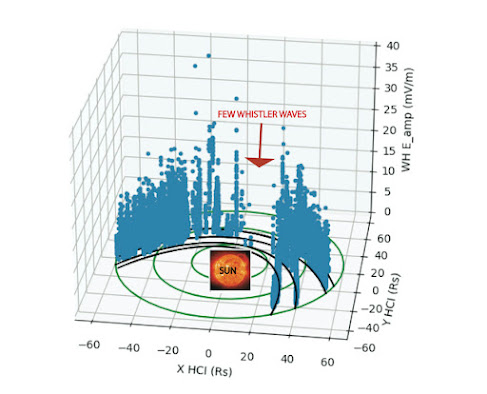
New research may help scientists unravel the physics of the solar wind

NASA’s Parker Solar Probe, provides insight into how solar wind is generated and accelerated.
Photo credits: Cynthia Cattell, NASA/Johns Hopkins APL/Steve Gribben

A new study led by University of Minnesota Twin Cities researchers, using data from NASA’s Parker Solar Probe, provides insight into what generates and accelerates the solar wind, a stream of charged particles released from the sun’s corona. Understanding how the solar wind works can help scientists predict “space weather,” or the response to solar activity—such as solar flares—that can impact both astronauts in space and much of the technology people on Earth depend on.

The paper is published in Astrophysical Journal Letters, a scientific journal from the American Astronomical Society (AAS) that publishes high-impact astrophysical research.

The scientists used data gathered from Parker Solar Probe, which launched in 2018 with the goal to help scientists understand what heats the Sun’s corona (the outer atmosphere of the sun) and generates the solar wind. To answer these questions, scientists need to understand the ways in which energy flows from the sun. The latest round of data was obtained in August 2021 at a distance of 4.8 million miles from the sun—the closest a spacecraft has ever been to the star.

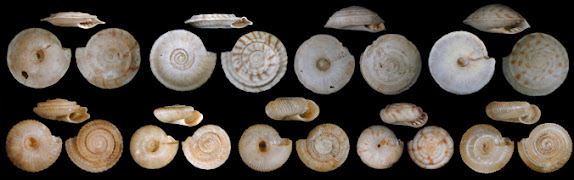
Earth on trajectory to Sixth Mass Extinction say biologists

Shells from recently extinct land snails from French Polynesia. 
Photo credit: O.Gargominy, A.Sartori.

Scientific Frontline: "At a Glance" Summary: Sixth Mass Extinction

  • Main Discovery: Earth is currently undergoing a human-driven Sixth Mass Extinction, a reality confirmed by a comprehensive assessment of biodiversity loss that accounts for previously overlooked invertebrate species.
  • Methodology: Researchers from the University of Hawaiʻi at Mānoa and the Muséum National d’Histoire Naturelle extrapolated global extinction rates by utilizing estimates obtained specifically from land snails and slugs to calculate broader biodiversity loss since the year 1500.
  • Key Data: Current estimates indicate that between 7.5% and 13% of the two million known species—amounting to a staggering 150,000 to 260,000 species—have already gone extinct since 1500.
  • Significance: This analysis refutes denials of a mass extinction by proving the crisis is deeply impacting invertebrates, which constitute the vast majority of biodiversity. It also reveals that island species are disproportionately affected compared to continental species, while marine environments and terrestrial plants currently face lower extinction rates.
  • Future Application: These findings emphasize the urgent necessity of expanding conservation initiatives beyond charismatic vertebrate animals, accelerating the documentation of vulnerable biodiversity before it vanishes, and mobilizing international political action to halt the current extinction trajectory.
  • Branch of Science: Evolutionary Biology, Ecology, and Environmental Science.

Thursday, January 13, 2022

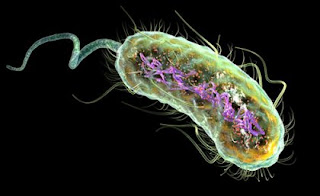
Scientists uncover ‘resistance gene’ in deadly E. coli

An artist's impression of E. coli, which infects
over 150 million people worldwide.
Scientists have pinpointed a gene that helps deadly E. coli bacteria evade antibiotics, potentially leading to better treatments for millions of people worldwide.

The University of Queensland-led study found a particular form of the bacteria – E. coli ST131 – had a previously unnoticed gene that made it highly resistant to commonly prescribed antibiotics.

Professor Mark Schembri, from UQ’s School of Chemistry and Molecular Biosciences, said this ‘resistance gene’ can spread incredibly quickly.

“Unlike gene transfer in humans, where sex is required to transfer genes, bacteria have genetic structures in their cells – called plasmids – that are traded quickly and easily between each other,” Professor Schembri said.

“This resistance gene is in one such plasmid and is swiftly making E. coli ST131 extremely resistant to widely prescribed fluoroquinolone antibiotics.

“These antibiotics are used to treat a wide range of infections, including urinary tract infections (UTIs), bloodstream infections and pneumonia.

“Importantly, this gene works with other resistance genes to achieve resistance at a level greater than the highest antibiotic concentrations that we can achieve during treatment.

“So we’re going to have to rethink our treatment plan, and strive to create antibiotics that can tackle these infections in spite of this antibiotic resistance mechanism.”

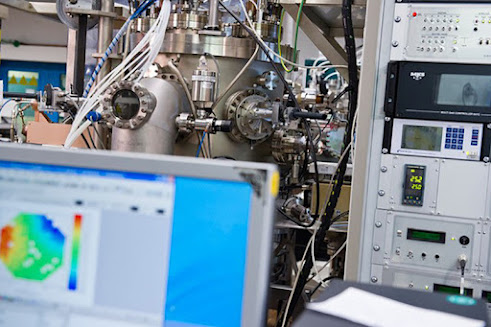
A treasure map for the realm of electrocatalysts

A look at the sputter system at the RUB, with which the material libraries were manufactured.  Credit: Christian Nielinger

The number of options makes it difficult to find promising materials. A German-Danish team has developed an efficient method for this.

Efficient electrocatalysts are hidden in materials that are composed of five or more elements, which are used, for example, for the production of green hydrogen. A team from the Ruhr University Bochum (RUB) and the University of Copenhagen has developed an efficient method to find the promising candidates in the countless possible materials. The researchers combined experiments and simulation. They report in the magazine "Advanced Energy Materials."

Millions of systems are conceivable

High entropy alloys, or HEAs for short, are chemically complex materials that consist of mixtures of five or more elements. The interesting thing about them is that they offer completely new opportunities for the development of electrocatalysts. These are urgently needed to make energy conversion processes more efficient, for example for the production and use of green hydrogen. "The problem with HEAs is that in principle millions of high entropy systems are possible and each system contains tens of thousands of different compositions," explains Prof. Dr. Alfred Ludwig, who heads the Materials Discovery and Interfaces chair at the RUB. This complexity can hardly be overcome with conventional methods and traditional high-throughput methods.

Researchers develop cancer immunotherapy treatment

Zhong-Yin Zhang of Purdue’s College of Pharmacy and his team of researchers have developed a cancer immunotherapy. The novel lead compound showed no in vivo side effects and leads to reduced Photo provided by Zhong-Yin Zhang

Researchers in Purdue University's College of Pharmacy are further developing a potential immunotherapy treatment for cancer, one focused on the mutation of an enzyme.

"While recent progress in cancer immunotherapy has led to revolutionary success in multiple cancer types, most cancer patients do not benefit from immunotherapy. Thus, there is an urgent need for additional strategies," said Zhong-Yin Zhang, Distinguished Professor of Medicinal Chemistry, the Robert C. and Charlotte P. Anderson Chair in Pharmacology, head of the Department of Medicinal Chemistry and Molecular Pharmacology, and director of the Purdue Institute for Drug Discovery.

Zhang said cancer immunotherapy relies on T-cells to recognize and attack foreign substances such as tumors in the body.

"There is an intricate signaling network within T-cells that determines their activity," he said. "Previous studies have revealed that an enzyme called PTPN22 regulates the critical signals that activate them. People with a mutation in the gene have a lower incidence of cancer than people without the mutation.

2021 was Northeast’s third-warmest year since 1895

Credit: Cornell University
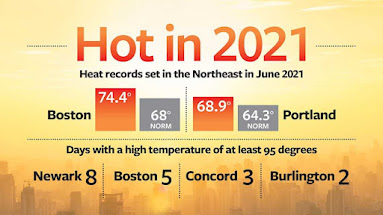
You’re going to sweat just thinking about it: For the Northeast United States, the year 2021 was third warmest – at an average of 49.5 degrees Fahrenheit, which ties the year 2020 – since 1895, when consistent record-keeping started, according to the Cornell’s Northeast Regional Climate Center (NRCC).

The region’s warmest year was 2012, at an average 50.1 degrees, while the second-warmest year was 1998 at 49.8 degrees.

“Unfortunately, the climate events of 2021 – with above-normal and record-breaking temperatures, along with intense precipitation events – are a harbinger of future climate conditions, as they align with climate-model projections in a world with increasing greenhouse gas concentrations,” said Art DeGaetano, director of the climate center and professor in the Department of Earth and Atmospheric Sciences in the College of Agriculture and Life Sciences.

For five cities – Boston; Newark, New Jersey; Providence, Rhode Island; and Erie and Harrisburg, Pennsylvania – the year 2021 was the warmest ever, according to NRCC climatologists Jessica Spaccio and Samantha Borisoff.

The Northeast region also endured three back-to-back tropical storms – Fred, Henri and Ida in late August and early September – and historic, record-breaking rains.

Boston; Portland and Caribou, Maine, shattered records for average June temperatures. That month, Boston was an average of 74.4 degrees (68 degrees, normal), while Portland averaged 68.9 degrees (64.3 degrees, normal) and Caribou – one of the region’s perennial cool spots – experienced 64.9 degrees (61.4, normal.)

Featured Article

What Is: Psychopathy | Part three of the "Dark Tetrad"

Scientific Frontline: Extended "At a Glance" Summary : Psychopathy The Core Concept : Psychopathy is a profound personality disord...

Top Viewed Articles