. Scientific Frontline

Tuesday, August 30, 2022

University Created Glass with Outstanding Radiation Protection Properties

Boron-based glass is one of the best known and highest quality systems.
Photo credit: Ilya Safarov

Physicists at Ural Federal University, together with colleagues from universities in Germany, Pakistan, and Egypt, have synthesized new glass with outstanding radiation protection properties. The glass can be used in such fields as nuclear medicine, astronaut spacesuits, and spacecraft production. An article about the research was published in the Journal of Inorganic and Organometallic Polymers and Materials.

A novel boro-bariofluoride sodium calcium nickel glasses were created using a conventional melt-hardening technique. By heating the composition to melting temperature and then abruptly cooling it to room temperature, the researchers obtained a homogeneous mixture of boron oxide, barium fluoride, calcium oxide, sodium oxide, and nickel oxide.

"Research of physical and optical properties of glasses synthesized in this way showed that as nickel oxide is added to the composition, all optical characteristics of the initial boro-bariofluoride and sodium-calcium glass samples obtained from it improve. The density of glasses increases, the absorption spectrum increases, shifting towards longer wavelengths of radiation, and the ability of the system to shield photons carrying electromagnetic radiation increases," explains Ali Abouhaswa, Senior Researcher of the Section of Solid State Magnetism at UrFU, a co-author of the article.

According to the scientist, the adding of nickel oxide makes the glass applicable to optoelectronic and photoelectric devices, such as gas sensors, UV-photosensors, photovoltaic cells, photocatalysts, and electrochromic devices.

Novel Coronaviruses Are Riskiest for Spillover

A wildlife surveillance team member samples a bumblee bat for viruses in Myanmar.
Credit: Smithsonian Conservation Biology Institute

In the past decade, scientists have described hundreds of novel viruses with the potential to pass between wildlife and humans. But how can they know which are riskiest for spillover and therefore which to prioritize for further surveillance in people?

Scientists from the University of California, Davis created network-based models to prioritize novel and known viruses for their risk of zoonotic transmission, which is when infectious diseases pass between animals and humans.

Their study, published in the journal Communications Biology, provides further evidence that coronaviruses are riskiest for spillover and should continue to be prioritized for enhanced surveillance and research.

The machine learning models were designed by the EpiCenter for Disease Dynamics at the UC Davis One Health Institute in the School of Veterinary Medicine.

Prioritizing novel viruses

The models found that novel viruses from the coronavirus family are expected to have a larger number of species as hosts. This is consistent with known viruses, indicating this family of viruses should be most highly prioritized for surveillance.

‘Long COVID’ effects on business and education

Wenlong Yuan is the Stu Clark Chair in Entrepreneurship and Innovation at UM
Credit: University of Manitoba

The pandemic has affected many aspects of our lives, from health consequences to collateral damage to restaurants and “mom and pop stores.” Supply chain problems have created panic shopping among consumers and many entertainment venues have seen the number of patrons decimate.

But what about large corporations such as Wal-Mart, BMO, or Exxon? What has COVID done to them?

Wenlong Yuan is the Stu Clark Chair in Entrepreneurship and Innovation at the UM Asper School of Business. His current research includes the implications of the COVID-19 pandemic for international business strategy and small and medium-sized enterprises (SMEs).

“Every kind of firm was affected by COVID,” he says, “so on the macro level we can see a very broad impact of the pandemic. Smaller businesses were hit worse than larger companies, mostly because they had fewer employees, and they couldn’t operate when even a few were sick. But nevertheless, larger businesses felt the effects too.”

Yuan says that previous to COVID, global markets were linked to one another and increases in one sector usually meant a parallel increase in another, like oil and tech stocks varying together.

But COVID created a situation where decoupling emerged, so that the economies of traditionally linked countries began doing their own thing.

Rat lungworm transmitted by many more species than slugs, snails

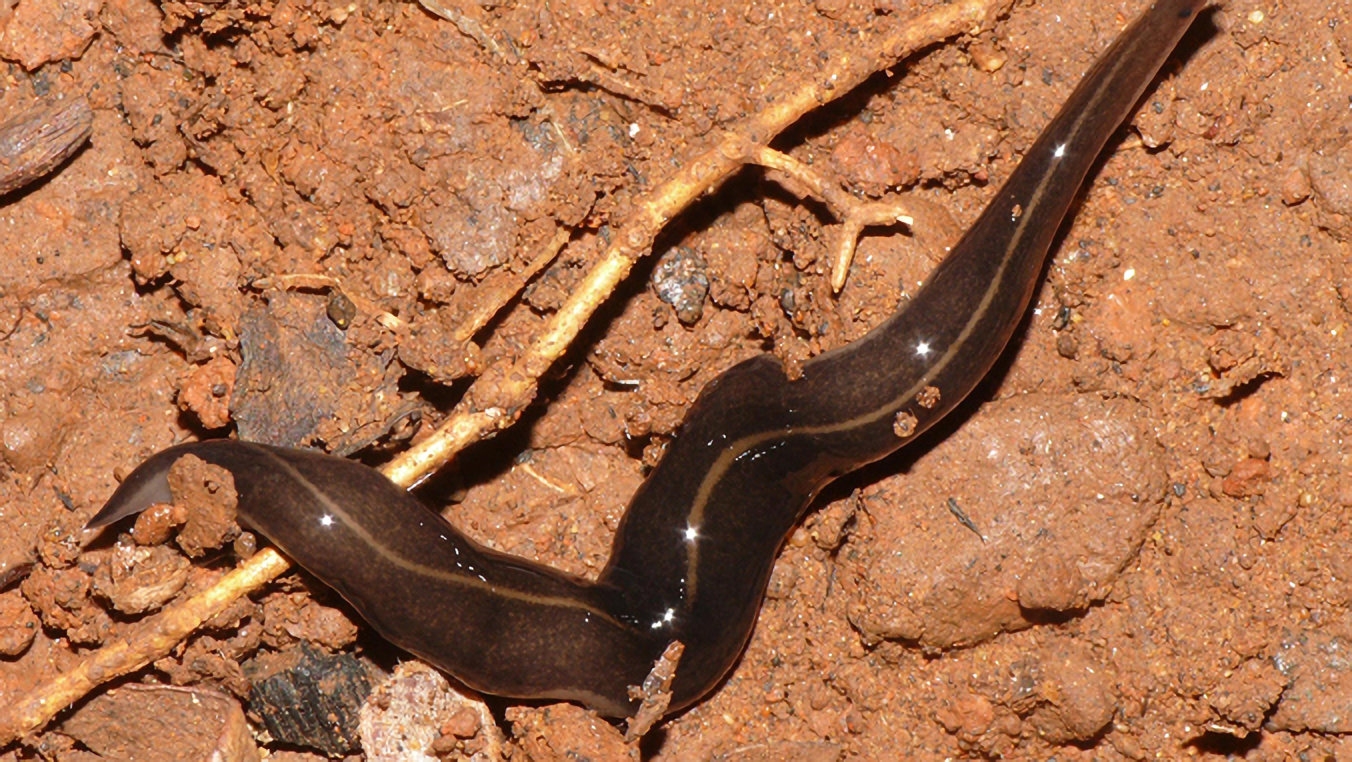
Flatworm in Hawaiʻi can act as a paratenic host of rat lungworm.
Photo credit: Shinji Sugiura CC4

While many people know that rat lungworm disease can be spread to humans by slugs and snails, new research shows those creatures are not the only ones that have been transmitting the illness.

Researchers from the University of Hawaiʻi at Mānoa and the University of London, UK, combed through nearly 140 scientific studies published between 1962–2022 and found 32 species of freshwater prawns/shrimp, crayfish, crabs, flatworms, fish, sea snakes, frogs, toads, lizards, centipedes, cattle, pigs and snails can act as carriers of the rat lungworm parasite (Angiostrongylus cantonensis). Of these, at least 13 species of prawns/shrimp, crabs, flatworms, fish, frogs, toads, lizards and centipedes have been associated with causing rat lungworm disease in humans.

Robert Cowie, senior author on the study and faculty member in UH Mānoa’s School of Ocean and Earth Science and Technology (SOEST), supervised Helena Turck, first author and graduate student at the University of London, UK, who did this study as her master’s degree thesis research, remotely during the pandemic. Professor Mark Fox of the Royal Veterinary College also collaborated on the study.

Cowie explained that the rat lungworm has a complex life cycle that involves slugs and snails as so-called “intermediate” hosts and rats as “definitive” hosts in which the worms reach maturity and reproduce. Rats become infected when they eat an infected snail or slug. People also become infected when they eat an infected snail or slug, and this can lead to serious illness and occasionally death.

Sensor-based early detection of age-related diseases from home

Exemplary apartment, highlighting the sensor system used in the study. Individual rooms are equipped with motion sensors, entrance and fridge doors are equipped with magnetic door sensors, and a bed sensor is placed beneath the mattress.
Credit: NeuroTec/Nature Scientific Reports, Creative Commons License

Researchers at the University of Bern and Inselspital, Bern University Hospital have demonstrated how sensors that record movement patterns could help detect health problems in the elderly, including old-age depression, risk of falls or cognitive impairment, at an early stage. In the future, this could help seniors to live a self-determined life at home for longer and relieve increasing pressure on the healthcare system.

Specific changes in our movement patterns can be indicators of several health problems: For instance, decrease in strength often correlates with risk of falls, mild cognitive impairment, depression, sleep problems, respiratory problems, cardiac arrhythmias and increasing myocardial weakness or worsening of a COVID-19 infection. In older individuals, systematic detection of such changes could help identify chronic diseases such as dementia, Parkinson's disease, or heart disease at an early stage. These age-related health problems are often discovered late, and their progression is usually difficult to assess objectively.

Treat hepatitis E virus better after transplantation

The joint partners of the HepEDiaSeq project (from left): André Gömer (RUB); Prof. Dr. Heiner Wedemeyer (MHH); Dr. Patrick Behrendt (MHH); Dr. Christina Hecker (Kairos GmbH); Timothy Göhring (Kairos GmbH); Prof. Dr. Tanja Vollmer (HDZ); Prof. Dr. Eike Steinmann (RUB); Birgit Drawe (HDZ); Dr. Daniel Todt (RUB).
Credit: Department of Molecular and Medical Virology

A precise analysis procedure is intended to enable decision aids for the treatment of hepatitis E infection.

Hundreds of thousands of people are infected with the hepatitis E virus (HEV) in Germany every year; most don't notice it. With a weakened immune system, the disease can become dangerous, even after an organ transplant. Treating the disease more successfully in this case is the goal of the “HepEDiaSeq” project, which is coordinated by Prof. Dr. Eike Steinmann, head of the Molecular and Medical Virology Department at RUB, has started. The project team develops a procedure to recognize viral variants and thus give decision aids for the therapy. The project is funded by the Federal Ministry of Education and Research for around 1.5 million euros for three years.

In addition to Prof. Dr. Eike Steinmann private lecturer Dr. Tanja Vollmer from the Institute for Laboratory and Transfusion Medicine at the Heart and Diabetes Center North Rhine-Westphalia - University Clinic of the RUB, Prof. Dr. Heiner Wedemeyer from the Clinic for Gastroenterology, Hepatology and Endocrinology at the Hannover Medical School and private lecturer Dr. Christian Stephan from KAIROS GmbH. The scientists hope to develop a reliable method that diagnoses HEV infections highly sensitively and at the same time identifies viral variants through an interdisciplinary approach that combines specialist knowledge from medicine, virology and computer science. In order to record the enormous amounts of data from the various locations in a structured manner and to use them for in-depth analysis, the biomedical research portal CentraXX of KAIROS GmbH will be used as part of the study management.

Widespread, rarely recognized

In pregnant women or people with weakened immune systems, the infection with HEV can be chronic and at worst fatal. "This makes hepatitis E a serious problem for organ transplant people whose immune systems have to be suppressed with medication so that the foreign organ is not rejected," explains Eike Steinmann.

In the project, the partners want to develop a so-called depth sequencing process, which not only detects HEV in a highly sensitive manner, but also recognizes different variants of the virus in parallel. This should make it possible to treat the infection better. "We currently only have the active ingredient ribavirin available for the treatment," says Steinmann. “But the decision about the administration and dosage is difficult. Here we want to develop a so-called decision support tool that enables a personalized treatment approach and thus supports the therapy decisions of the treating doctors.

Source/Credit: Ruhr University Bochum

vi083022_01

Wednesday, August 24, 2022

An extrasolar world covered in water?

Artistic rendition of the exoplanet TOI-1452 b, a small planet that may be entirely covered in a deep ocean.
Credit: Benoit Gougeon, Université de Montréal.

An international team of researchers led by Charles Cadieux, a Ph.D. student at the Université de Montréal and member of the Institute for Research on Exoplanets (iREx), has announced the discovery of TOI-1452 b, an exoplanet orbiting one of two small stars in a binary system located in the Draco constellation about 100 light-years from Earth.

The exoplanet is slightly greater in size and mass than Earth and is located at a distance from its star where its temperature would be neither too hot nor too cold for liquid water to exist on its surface. The astronomers believe it could be an “ocean planet,” a planet completely covered by a thick layer of water, similar to some of Jupiter’s and Saturn’s moons.

In an article published in The Astronomical Journal, Cadieux and his team describe the observations that elucidated the nature and characteristics of this unique exoplanet.

“I’m extremely proud of this discovery because it shows the high caliber of our researchers and instrumentation,” said René Doyon, Université de Montréal Professor and Director of iREx and of the Observatoire du Mont-Mégantic (OMM). “It is thanks to the OMM, a special instrument designed in our labs called SPIRou, and an innovative analytic method developed by our research team that we were able to detect this one-of-a-kind exoplanet.”

Researchers reveal origin of ultrafast mystery signals in valleytronic materials

 By exciting the transitional metal dichalcogenide monolayers — atomically thin semiconductors — with ultrashort pump pulses, atoms can coherently vibrate and modulate optical responses. The probe pulses can detect ultrafast modulation that shows peculiar high-frequency overtones of K-point acoustic phonons
Credit: Yokohama National University.

Tiny materials hold big mysteries, the solutions to which could bring about next-generation electronics. An international collaboration led by researchers based in Japan has solved the whodunit of cryptic overtone signals in an analysis of molybdenum diselenide, an atomically thin crystal lattice with desirable properties unique from its bulkier three-dimensional form.

They published their results in Nature Communications.

The compound belongs to a family of similarly two-dimensional semiconductors called transitional metal dichalcogenide (TMD) monolayers, all of which have electronic band structures containing so-called valleys. TMD lattices are organized as hexagons, with the corresponding wavevector, known as k-space, along the side. The side center point of the k-space is known as the “M point” and the six corners as “K (-K) points.” The valleys are the dips and rises of the electronic band at the corners of the hexagons, where energy or information-carrying particles can move to tip the material to action. The intervalley activities, especially as related to electron scattering, have remained elusive, though. In this process, phonons, or units of energy manifested as vibrations, cause the electrons to disperse and transition states in the intervalley space at ultrafast speed.

30-million-year-old amphibious beaver fossil is oldest ever found

A comparison of anklebones from the giant beaver and the newly identified species, Microtheriomys articulaquaticus, at the same scale.
Credit: Jonathan Calede / Ohio State University

A new analysis of a beaver anklebone fossil found in Montana suggests the evolution of semi-aquatic beavers may have occurred at least 7 million years earlier than previously thought, and happened in North America rather than Eurasia.

In the study, Ohio State University evolutionary biologist Jonathan Calede describes the find as the oldest known amphibious beaver in the world and the oldest amphibious rodent in North America. He named the newly discovered species Microtheriomys articulaquaticus.

Calede’s findings resulted from comparing measurements of the new species’ anklebone to about 340 other rodent specimens to categorize how it moved around in its environment – which indicated this animal was a swimmer. The Montana-based bone was determined to be 30 million years old – the oldest previously identified semi-aquatic beaver lived in France 23 million years ago.

"Beavers and other rodents can tell us a lot about mammalian evolution," said Calede, an assistant professor of evolution, ecology and organismal biology at Ohio State’s Marion campus.

Study of Ancient Skulls Sheds Light on Human Interbreeding With Neandertals

Homo neanderthalensis adult male. Reconstruction based on Shanidar 1 by John Gurche for the Human Origins Program, NMNH.
Photo Credit: Chip Clark.

Research has established that there are traces of Neandertal DNA in the genome of modern humans. Now an exploratory study that assessed the facial structure of prehistoric skulls is offering new insights, and supports the hypothesis that much of this interbreeding took place in the Near East – the region ranging from North Africa to Iraq.

“Ancient DNA caused a revolution in how we think about human evolution,” says Steven Churchill, co-author of the study and a professor of evolutionary anthropology at Duke University. “We often think of evolution as branches on a tree, and researchers have spent a lot of time trying to trace back the path that led to us, Homo sapiens. But we’re now beginning to understand that it isn’t a tree – it’s more like a series of streams that converge and diverge at multiple points.”

“Our work here gives us a deeper understanding of where those streams came together,” says Ann Ross, corresponding author of the study and a professor of biological sciences at North Carolina State University.

“The picture is really complicated,” Churchill says. “We know there was interbreeding. Modern Asian populations seem to have more Neandertal DNA than modern European populations, which is weird – because Neandertals lived in what is now Europe. That has suggested that Neandertals interbred with what are now modern humans as our prehistoric ancestors left Africa, but before spreading to Asia. Our goal with this study was to see what additional light we could shed on this by assessing the facial structure of prehistoric humans and Neandertals.”

Scientists Calculate What Could Throw El Niño Out of Balance

Abnormal temperature spikes can also lead to unpredictable results during the El Niño period, Dmitry Aleksandrov believes.
Photo credit: Ilya Safarov

Wind, humidity, temperature, ocean currents, and other parameters can lead to unpredictable El Niño results. It is a phenomenon in which the temperature of the upper Pacific Ocean rises and the near-surface waters shift eastward. The onset of El Niño affects precipitation, fisheries in Peru, Chile, Ecuador, and changes in the planet's climate. How external factors determine the behavior of atmospheric-oceanic processes in the Pacific region was calculated by UrFU physicists. They published a description of the features of the unusual phenomenon and its scenarios in the journal Physica D: Nonlinear Phenomena.

"We used the classic Vallis model, which describes El Niño. This is a simple model, it takes into account the temperature difference between the east and west coasts, the heat exchange between the Pacific Ocean and the atmosphere, and the speed of air masses movement. We also took into account external noise - parameters that also affect atmospheric and oceanic processes, such as pressure changes, humidity, wind gusts, and ocean currents," says Dmitry Aleksandrov, Head of the Ural Federal University's Laboratory of Multi-Scale Mathematical Modeling.

According to UrFU physicists' calculations, external factors have a serious influence on this phenomenon. For example, the stronger the wind, the greater the temperature amplitude. Moreover, this can throw the system out of balance and cause unpredictable weather conditions.

Tuesday, August 23, 2022

Sleepless and selfish: Lack of sleep makes us less generous

The new study shows how sleep loss dramatically reduces the desire to help others, triggered by a breakdown in the activity of key prosocial brain networks.
Image credit: Eti Ben Simon and Matthew Walker, UC Berkeley

Humans help each other — it’s one of the foundations of civilized society. But a new study by scientists at the University of California, Berkeley, reveals that a lack of sleep blunts this fundamental human attribute, with real-world consequences.

Lack of sleep is known to be associated with an increased risk of cardiovascular disease, depression, diabetes, hypertension and overall mortality. However, these new discoveries show that a lack of sleep also impairs our basic social conscience, making us withdraw our desire and willingness to help other people.

In one portion of the new study, the scientists showed that charitable giving in the week after the beginning of Daylight-Saving Time, when residents of most states “spring forward” and lose one hour of their day, dropped by 10% — a decrease not seen in states that do not change their clocks or when states return to standard time in the fall.

The study, led by UC Berkeley research scientist Eti Ben Simon and Matthew Walker, a UC Berkeley professor of psychology, adds to a growing body of evidence demonstrating that inadequate sleep not only harms the mental and physical well-being of an individual, but also compromises the bonds between individuals — and even the altruistic sentiment of an entire nation.

Study finds that ocean cooling over millennia led to larger fish

Dahiana Arcila in Reykjavík, Iceland. Arcila is the recipient of a National Science Foundation CAREER award to study the evolutionary history of marine fish.
Source: University of Oklahoma

Earth’s geological history is characterized by many dynamic climate shifts that are often associated with large changes in temperature. These environmental shifts can lead to trait changes, such as body size, that can be directly observed using the fossil record.

To investigate whether temperature shifts that occurred before direct measurements were recorded, called paleoclimatology, are correlated with body size changes, several members of the University of Oklahoma’s Fish Evolution Lab decided to test their hypothesis using tetraodontiform fishes as a model group. Tetradontiform fishes are primarily tropical marine fishes, and include pufferfish, boxfishes and filefish.

The study was led by Dahiana Arcila, assistant professor of biology and assistant curator at the Sam Noble Oklahoma Museum of Natural History, with Ricardo Betancur, assistant professor of biology, along with biology graduate student Emily Troyer, and involved collaborators from the Smithsonian Institution, University of Chicago and George Washington University in the United States, as well as the University of Turin in Italy, University of Lyon in France and CSIRO Australia.

The researchers discovered that the body sizes of these fishes have grown larger over the past hundred million years in conjunction with the gradual cooling of ocean temperatures.

How new motion-sensing technology may help standardize back-pain care

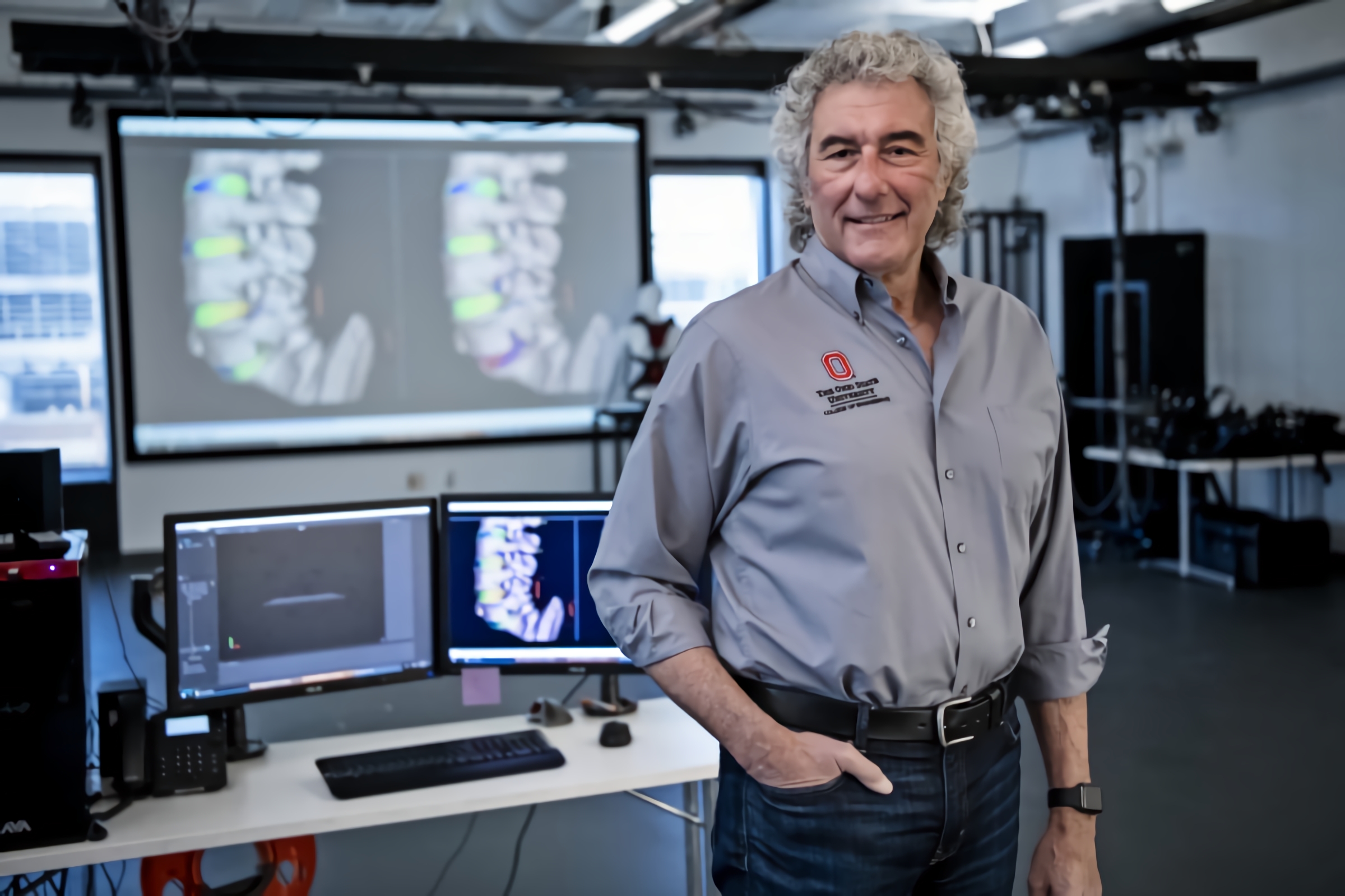
William S. Marras Professor Neurological Surgery, Orthopedics, Physical Medicine and Rehabilitation
 Credit/Source: Ohio State University

Digital health systems can tell clinicians when someone’s heart-disease risk calls for a drug to lower cholesterol or whether insulin shots are warranted for a person with type 2 diabetes.

But for millions of low-back pain sufferers, care decisions rely heavily on subjective measures of patient discomfort – often leading to expensive tests and treatments (back pain is the third-highest U.S. health care expenditure, after diabetes and heart disease) that don’t necessarily offer a permanent solution.

Ohio State University engineering and medical researchers are developing a digital health system approach designed to enhance back-pain clinical decision-making. After completing a series of studies testing precise, objective measurements they’ve perfected in the lab, the team aims to apply the data-driven practices to the assessment and repair of back problems brought on by dysfunction in the spine.

In a recent study published in Clinical Biomechanics, researchers combined self-reported pain and disability measures with data from a wearable motion-sensing system to evaluate low-back function in lumbar fusion surgery patients. While post-operative pain relief and lower disability were self-reported within six weeks, the objective metrics didn’t detect actual functional improvement in the spine for at least six months after surgery.

Researchers complete first comprehensive threat assessment of all U.S. trees

 Saplings of Endangered Q. Oglethorpensis at The Morton Arboretum
Credit: The Morton Arboretum

For the first time, researchers have completed threat assessments for all 881 native tree species in the contiguous United States, resulting in a comprehensive checklist and synthesis that will serve as a critical baseline to guide future tree conservation efforts.

The new assessment of U.S. trees reveals that 11-16% of tree species in the contiguous 48 U.S. states are threatened with extinction, with the most common threat being invasive and problematic pests and diseases. According to Abby Meyer, executive director of Botanic Gardens Conservation International-U.S. (BGCI-US), a partner on the project, “These results lay the groundwork for U.S. tree and ecosystem conservation efforts that will contribute to achieving critical international conservation goals, including the United Nations Decade for Ecosystem Restoration and the Global Tree Assessment.”

Murphy Westwood, Ph.D., vice president of science and conservation at The Morton Arboretum and senior author of the report, noted that much of the world’s biodiversity depends on trees, which offer food and habitat for countless plant, animal and fungal species while providing invaluable benefits to humans. “Understanding the current state of trees within the U.S. is imperative to protecting those species, their habitats and the countless communities they support,” she said.

Featured Article

What Is: Psychopathy | Part three of the "Dark Tetrad"

Scientific Frontline: Extended "At a Glance" Summary : Psychopathy The Core Concept : Psychopathy is a profound personality disord...

Top Viewed Articles